Supplied ready in solution
Cognitive & Neurological
At a glance
Ten answers, each one line. Open any row for the detail behind it.
What it does Widely used across Eastern Europe and Asia, and one of the few peptide products with…
Widely used across Eastern Europe and Asia, and one of the few peptide products with Cochrane systematic reviews. Those reviews are not favourable, which makes this a useful case study in how volume of use and quality of evidence can diverge.
Half-life Not applicable — heterogeneous mixture — Documented
Not applicable — heterogeneous mixture
Typical studied dose Set by the label of the regulator that approved it, which is not an FDA… — On the label
Set by the label of the regulator that approved it, which is not an FDA label and may not be in English. The approving country decides the dose, and it is not always the same as the dose studied elsewhere.
How often it is used Set on the approved label. The interval follows the half-life above… — On the label
Set on the approved label. The interval follows the half-life above, which is why some of these are weekly and others daily.
How it is taken Intravenous or intramuscular — Documented
Intravenous or intramuscular
Main side effects Cochrane review found no benefit in acute stroke · Possible increase in serious adverse events · Trial quality and publication bias concerns — Carries serious risk
Cochrane review found no benefit in acute stroke — The systematic review concluded there was no evidence of benefit on death or dependence — the outcomes that matter most.
Possible increase in serious adverse events — The same review raised a signal for non-fatal serious adverse events, though confidence intervals were wide.
Trial quality and publication bias concerns — Much of the positive literature comes from a limited set of investigators and sponsors.
Storage before mixing Supplied already in solution and kept refrigerated, not frozen. Freezing…
Supplied already in solution and kept refrigerated, not frozen. Freezing a protein solution can aggregate it, which is not always visible.
Shelf life after mixing Nothing to mix — it is not supplied as a powder. The relevant date is…
Nothing to mix — it is not supplied as a powder. The relevant date is the one printed on the product.
Evidence level 3/5 · Moderate — Depends on the study
Small or early-phase human trials, or good controlled topical human data.
Regulatory status Limited Approval — Documented
Approved in around 40 countries for stroke, dementia and traumatic brain injury. Not approved in the US, UK or most of Western Europe. Approved in many countries; unapproved and not lawfully marketed in the US.
Overview
Widely used across Eastern Europe and Asia, and one of the few peptide products with Cochrane systematic reviews. Those reviews are not favourable, which makes this a useful case study in how volume of use and quality of evidence can diverge.
Limited or non-US approvalApproved in many countries; unapproved and not lawfully marketed in the US.
| Regulatory status | Approved in around 40 countries for stroke, dementia and traumatic brain injury. Not approved in the US, UK or most of Western Europe. |
|---|---|
| Drug class | Porcine brain-derived peptide preparation — a mixture, not a single molecule |
| Route | Intravenous or intramuscular |
| Half-life | Not applicable — heterogeneous mixture |
| Evidence rating |
3/5 Moderate
Evidence rating 3 out of 5: Moderate
Small or early-phase human trials, or good controlled topical human data. |
| Studied in | Numerous randomized trials in acute ischemic stroke, vascular dementia, Alzheimer disease and traumatic brain injury; multiple Cochrane systematic reviews. |
Cerebrolysin sequence & structure
Cerebrolysin is a mixture rather than a single molecule, so it has no sequence to state; Not a single molecule: a standardised enzymatic hydrolysate of lipid-free porcine (Sus scrofa) brain protein, classed by FDA GSRS as 'structurally diverse', so no sequence, formula or MW applies. Per the product profile quoted in NCT06070753, 1 mL contains 215.2 mg Cerebrolysin concentrate with roughly 25% low-molecular-weight peptides (by total nitrogen; commonly described as <10 kDa in secondary literature) stabilised with free amino acids; individual peptides such as LLNLQPPPR, LSPSLRLP and WPFPR have been identified by nanoLC-MS (Yang 2023). CAS 12656-61-0 (check digit valid) is confirmed by FDA SRS/GSRS and PubChem/ChemIDplus; PubChem has substance deposits but no compound CID. DrugBank DB16599 is confirmed by DrugBank's own indexed page titles and the Wikipedia infobox, though the DrugBank page itself returned HTTP 403. Not FDA/EMA approved.
| Identifiers | CAS 12656-61-0 · DrugBank DB16599 |
|---|---|
| Which molecule | This record describes the EVER Neuro Pharma product Cerebrolysin (developmental code FPF-1070; UNII 37KZM6S21G; also marketed as Renacenz/Abrineurin), which is what the pepteyes monograph covers. Other porcine 'cerebroprotein hydrolysate' preparations sold under similar names are distinct products with different peptide profiles and are not covered here. |
| Sources | FDA Substance Registration System (precision.fda.gov) – UNII 37KZM6S21GFDA GSRS substance record and codes (UNII 37KZM6S21G)PubChem Substance SID 135307256 (ChemIDplus deposit)ClinicalTrials.gov NCT06070753 – drug profile and compositionYang et al. 2023, J Chromatogr B – nanoLC-MS peptide identification in Cerebrolysin |
Record confidence: medium — one authoritative source, or sources agree on the sequence but not on every identifier. Every sequence on the site is listed with its sources on the peptide sequences index.
How it works
Enzymatically processed porcine brain protein yielding low-molecular-weight peptides and amino acids with claimed neurotrophic activity mimicking endogenous factors such as BDNF and GDNF. The exact active constituents are not fully defined.
Evidence base
Rated 3 of 5 — Moderate. Small or early-phase human trials, or good controlled topical human data.
- Unusual for a peptide product: enough trials to be systematically reviewed. The reviews are the key evidence.
Benefits and risks, weighed against the evidence
Every entry below carries the strength of the evidence behind it — three bars for strong human data, two for moderate, one for preliminary or preclinical work. The two columns are not equal by design: where a compound has more documented risk than demonstrated benefit, the lists say so.
Reported benefits
3 entries
-
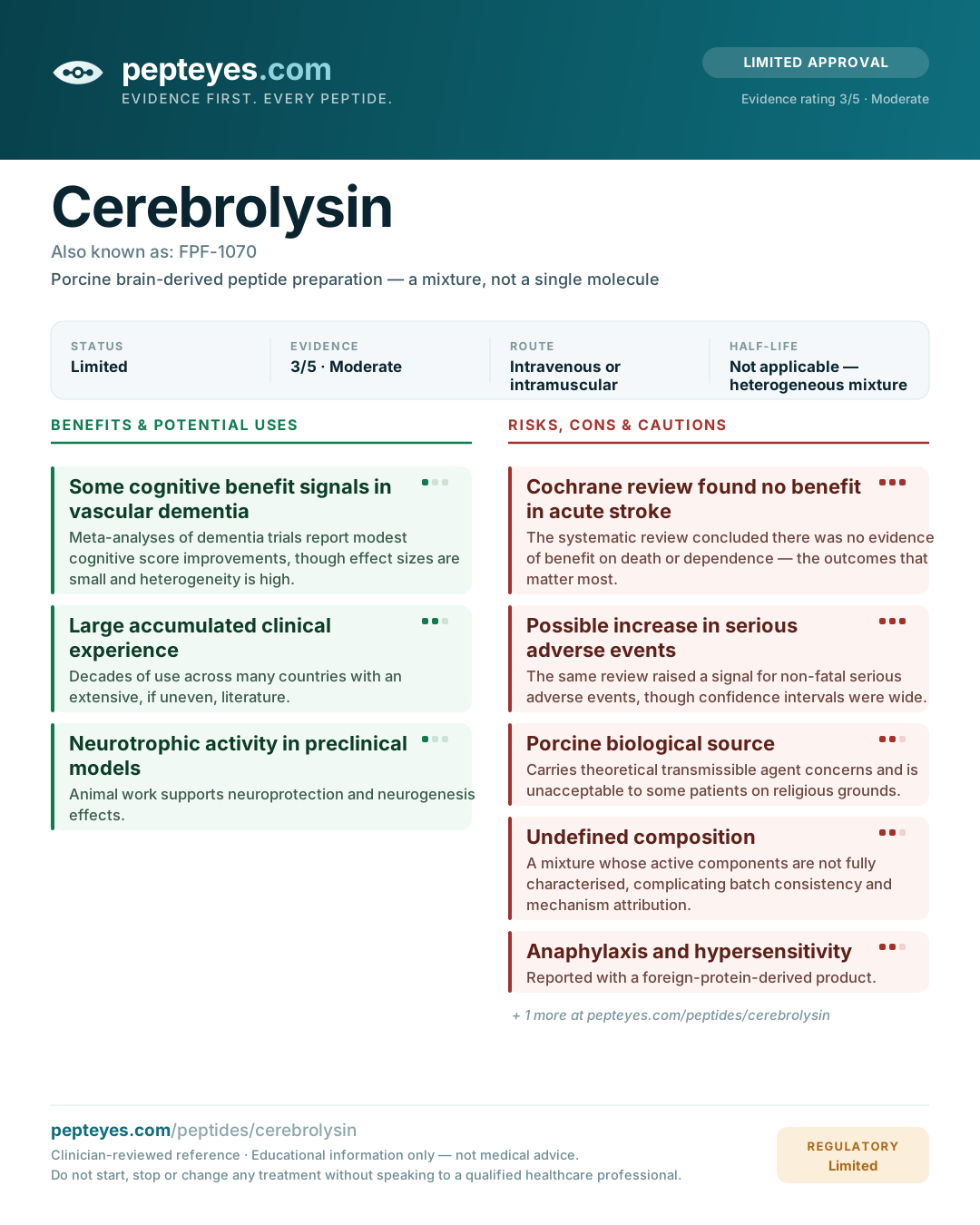
Some cognitive benefit signals in vascular dementia
Meta-analyses of dementia trials report modest cognitive score improvements, though effect sizes are small and heterogeneity is high.
Evidence: Preliminary -
Large accumulated clinical experience
Decades of use across many countries with an extensive, if uneven, literature.
Evidence: Moderate evidence -
Neurotrophic activity in preclinical models
Animal work supports neuroprotection and neurogenesis effects.
Evidence: Preliminary
Risks and cautions
6 entries · 3 serious or common
-
Cochrane review found no benefit in acute stroke
The systematic review concluded there was no evidence of benefit on death or dependence — the outcomes that matter most.
Evidence: Serious -
Possible increase in serious adverse events
The same review raised a signal for non-fatal serious adverse events, though confidence intervals were wide.
Evidence: Serious -
Porcine biological source
Carries theoretical transmissible agent concerns and is unacceptable to some patients on religious grounds.
Evidence: Moderate evidence -
Undefined composition
A mixture whose active components are not fully characterised, complicating batch consistency and mechanism attribution.
Evidence: Moderate evidence -
Anaphylaxis and hypersensitivity
Reported with a foreign-protein-derived product.
Evidence: Moderate evidence -
Trial quality and publication bias concerns
Much of the positive literature comes from a limited set of investigators and sponsors.
Evidence: Serious
Counts are not a score. A single serious risk can outweigh several well-supported benefits, and a long benefit list built on preclinical work outweighs nothing at all.
Opinion — what people actually report
5 themes · 1 reported benefit · 3 reported problems
This is the weakest tier on this site. These are themes drawn from public discussion — forums, subreddits and patient threads — not from trials. There is no control group, no denominator, and no way to confirm that what someone injected matched its label. People post when a result is dramatic and when something goes wrong, and rarely when nothing happens, so treat everything below as a description of the conversation rather than of the compound. The bars count how often a thing is said, not how well it is supported.
-
Cumulative rather than acute effects Reported benefit. Recurring: Raised regularly, though not by everyone.
Reports consistently describe changes appearing over a course rather than after a dose, which distinguishes it from the nootropic peptides.
-
Administration is a serious commitment Reported problem. Dominant theme: Comes up in most discussions of this compound.
Daily intramuscular or intravenous dosing over weeks is the most-discussed barrier, and it deters most people who look into it.
-
Used with real conditions more than for enhancement Practical note. Dominant theme: Comes up in most discussions of this compound.
A notable share of accounts involve stroke recovery, traumatic brain injury or dementia in a family member, which gives the discussion a different tone.
-
Cost and sourcing Reported problem. Recurring: Raised regularly, though not by everyone.
Not available in most Western markets, so supply routes are a constant topic.
-
Dizziness, flushing or headache during infusion Reported problem. Occasional: Reported by a minority, or in specific contexts.
Dizziness, flushing or headache during or shortly after infusion are reported, and described as settling within the session.
Where the reports and the evidence part ways
Cerebrolysin has a much larger human trial literature than most things discussed in nootropic communities — it is approved in a number of countries and has been studied in stroke, traumatic brain injury and dementia. The results are the problem rather than the absence of results: independent meta-analyses, including Cochrane reviews, have generally found no convincing benefit on functional outcomes, and much of the positive literature comes from the manufacturer or from regions with weaker trial oversight. It is also not a defined peptide but a porcine brain-derived hydrolysate of variable composition, which makes both replication and quality assurance harder than the discussion implies.
Cheat sheet
The full sheet, all 77 compounds →The community reference numbers for this compound — reconstitution, working dose, cycle and bloodwork. Research and education only, not medical advice, and not part of the evidence-rated monograph above. Doses assume a 1mL / 100-unit insulin syringe — the calculator does the units for you.
Protocol overview
Dosing & reconstitution 60 mg vial
| WEEK | DAILY DOSE | ADMINISTRATION |
|---|---|---|
| Week 1 | 20 mg | 100 units (1.00 mL) x 1 |
| Week 2 | 24 mg | 60 units AM + 60 units PM |
| Week 3 | 28 mg | 70 units AM + 70 units PM |
| Week 4+ | 32 mg | 80 units AM + 80 units PM |
Frequency: Inject once or twice daily subcutaneously. Doses exceeding 100 units (1.00 mL) should be split into AM and PM administrations. Clinical literature describes daily doses ranging from 215 mg (1 mL of commercial solution) up to higher IV infusions; this protocol uses a conservative subcutaneous approach with gradual titration.
On the master sheet
- Vial
- 60mg
- BAC
- 3mL
- Dose
- 20–32mg daily (titrate)
- Route
- SubQ
- Cycle
- 8–12 wks
- Time Off
- Between courses
Readers on Cerebrolysin
Questions and answers from readers, under generated names. Nothing here has been checked or reviewed by the site and none of it is medical advice. It is the least verified thing on this page — and it is here because people ask each other these things anyway, and most of the other places they can ask are run by sellers.
0 questions · 0 answers
No questions yet. Ask the first one above — it takes one box and an email address.
How names work, and the house rules
Names. Every verified address is given one generated name — two ordinary words — and keeps it. Nobody chooses a name and nobody can take another's. Posts marked desk were written by the site's own editorial desk, usually to open a thread; they carry a generated name like everyone else's and are held to the site's rules, which means they never state an amount.
What is not allowed. Selling, sourcing, vendor names, coupon codes and "message me" — posts that read that way are held and usually removed. Personal medical details you would not want public. Abuse. Instructions framed as what someone else should do.
What this is not. A reader's report of what happened to them is a report, not a finding, and an answer here is one person's view. Nothing in this section changes the evidence rating above it. If something you read here would change what you take, take it to a pharmacist or physician first.
Your data. Delete any post of yours at any time, or remove everything you have written together with your name. Details in the privacy notice.
Who should avoid it
- Epilepsy (relative — seizure reports exist)
- Severe renal impairment
- Pregnancy
- Known protein hypersensitivity
If used under medical supervision, monitor
- Renal function
- Allergic reaction observation during infusion
- Cognitive assessment scales
Regulatory & legal status
Approved in many countries; unapproved and not lawfully marketed in the US.
Infographic
Where to read further
We link to live literature searches rather than a frozen citation list, so you always see current results — including anything published after our last review.
- PubMed — all published literature on Cerebrolysin
- PubMed — randomized controlled trials only
- ClinicalTrials.gov — registered human trials
Related peptides in Cognitive & Neurological
Terms used on this page
- GRADE Certainty of Evidence
- GRADE rates the certainty of evidence for each outcome as high, moderate, low or very low, separately from the size of the effect and from the strength of any recommendation built on it.
- Systematic Review
- A systematic review answers a defined question using a prespecified protocol, an explicit multi-database search, stated eligibility criteria and formal risk-of-bias assessment, unlike a narrative review.
- Amino Acid
- An amino acid is the monomer unit of a peptide, built from an alpha carbon carrying an amino group, a carboxyl group, a hydrogen and a variable side chain that defines its chemistry.
- Brain-Derived Neurotrophic Factor (BDNF)
- BDNF is a neurotrophin that signals through the TrkB receptor to support neuronal survival, dendritic growth and the late, protein-synthesis-dependent phase of synaptic potentiation.
- Heterogeneity (I²)
- Heterogeneity is variation in the true effects across studies in a meta-analysis, and I-squared estimates the share of observed variation that exceeds what sampling error alone would produce.
- Meta-Analysis
- A meta-analysis statistically combines effect estimates from several studies into a pooled estimate, weighting each by its precision, and is a method rather than a grade of evidence.
This page is educational information, not medical advice. It cannot account for your medical history, medications, or risk factors. Do not start, stop or change any treatment based on it. Speak to a qualified healthcare professional who knows your case.