Supplied as a lyophilised powder to reconstitute
Healing & Tissue Repair
At a glance
Ten answers, each one line. Open any row for the detail behind it.
What it does A rare case where a research peptide has real clinical trial data — but for the eye, in a…
A rare case where a research peptide has real clinical trial data — but for the eye, in a topical formulation, using the full-length protein. The injectable fragment sold for tendon and muscle repair is a different product with a different evidence base, which is to say almost none.
Half-life Full-length Tβ4 ~0.5–2 hours intravenously in healthy… — Documented
Full-length Tβ4 ~0.5–2 hours intravenously in healthy volunteers; the LKKTETQ fragment actually sold has no published pharmacokinetics.
Typical studied dose None established. No dose has ever been set for a human being, because… — Nothing established
None established. No dose has ever been set for a human being, because the studies that would set one have not been done. Any figure circulating for this compound was chosen by somebody selling it or by somebody guessing.
How often it is used No schedule exists. Cycles and intervals quoted for this compound come… — Nothing established
No schedule exists. Cycles and intervals quoted for this compound come from forums rather than from any study, and they vary because nothing anchors them.
How it is taken Every registered systemic human study used the intravenous route with… — Documented
Every registered systemic human study used the intravenous route with the intact 43-residue protein; the eye trials were topical drops. The subcutaneous and intramuscular injection of the TB-500 fragment that the consumer market runs on has no human pharmacokinetic study behind it.
Main side effects Injectable fragment is untested in humans · Angiogenesis and tumour concern · No established systemic dosing or safety — Carries serious risk
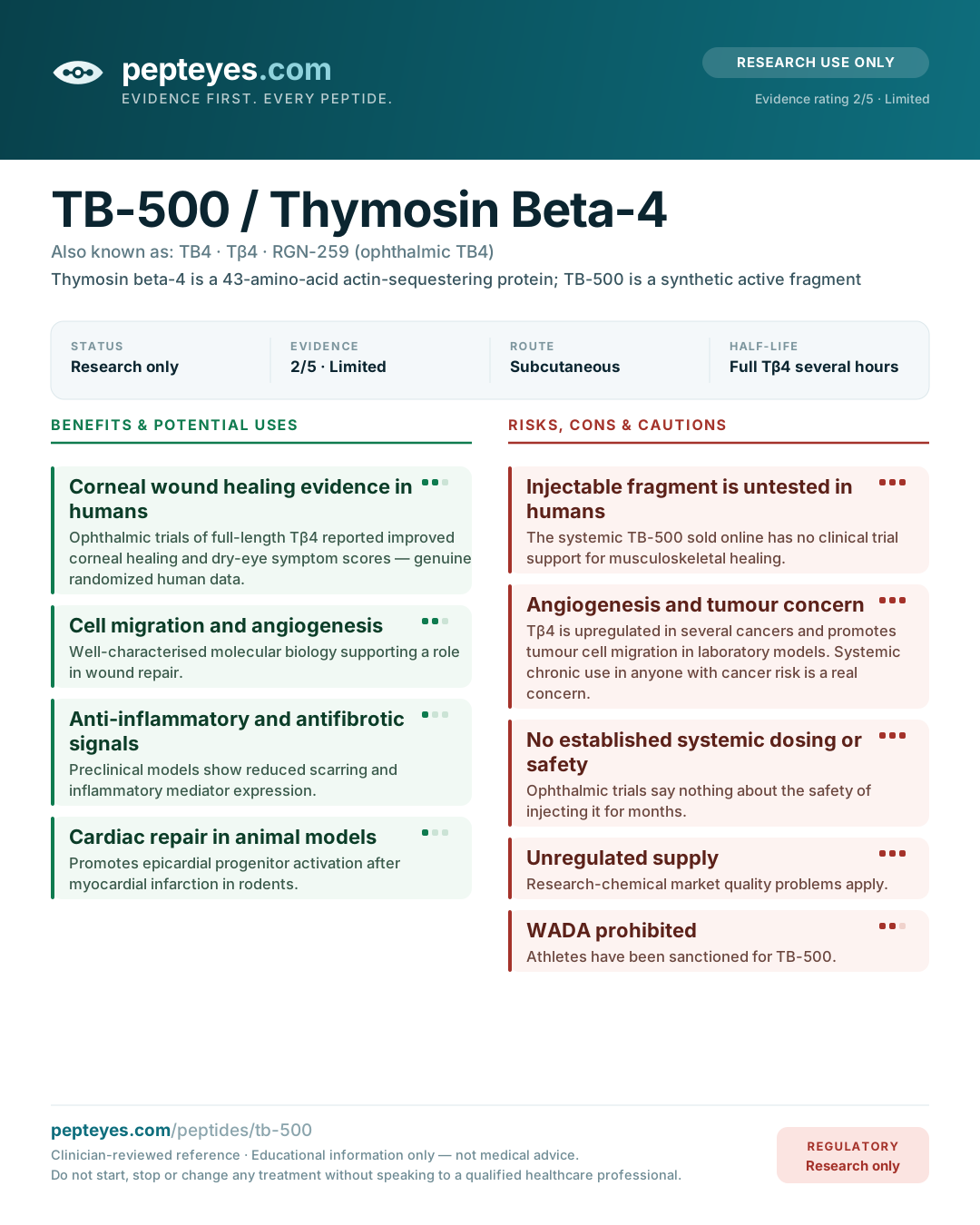
Injectable fragment is untested in humans — The systemic TB-500 sold online has no clinical trial support for musculoskeletal healing.
Angiogenesis and tumour concern — Tβ4 is upregulated in several cancers and promotes tumour cell migration in laboratory models. Systemic chronic use in anyone with cancer risk is a real concern.
No established systemic dosing or safety — Ophthalmic trials say nothing about the safety of injecting it for months.
Storage before mixing As a sealed lyophilised powder, refrigerated is typical and a freezer…
As a sealed lyophilised powder, refrigerated is typical and a freezer suits long storage; both should be dark and dry. A dry powder tolerates a few days out of the cold far better than anything in solution — which is why it ships that way.
Shelf life after mixing Once mixed it is refrigerated and treated as short-lived. Bacteriostatic…
Once mixed it is refrigerated and treated as short-lived. Bacteriostatic water contains a preservative and buys the longer window; sterile water contains none and buys a much shorter one. Peptides in solution also degrade on their own, so the container is only half the question.
Evidence level 2/5 · Limited — Nothing established
Preclinical work plus scattered human reports, uncontrolled use, or negative trials.
Regulatory status Research Use Only — Nothing established
Full-length Tβ4 has reached phase 2/3 trials for dry eye and corneal wounds. The injectable TB-500 fragment sold to consumers is unapproved. WADA-prohibited. Ophthalmic Tβ4 remains investigational. Injectable TB-500 is unapproved and not lawfully sold for human use.
Overview
A rare case where a research peptide has real clinical trial data — but for the eye, in a topical formulation, using the full-length protein. The injectable fragment sold for tendon and muscle repair is a different product with a different evidence base, which is to say almost none.
Not approved for human use anywhereNo approval anywhere for human use. Sold under research-use labelling. Ophthalmic Tβ4 remains investigational. Injectable TB-500 is unapproved and not lawfully sold for human use.
| Regulatory status | Full-length Tβ4 has reached phase 2/3 trials for dry eye and corneal wounds. The injectable TB-500 fragment sold to consumers is unapproved. WADA-prohibited. |
|---|---|
| Drug class | Thymosin beta-4 is a 43-amino-acid actin-sequestering protein; TB-500 is a synthetic active fragment |
| Route | Every registered systemic human study used the intravenous route with the intact 43-residue protein; the eye trials were topical drops. The subcutaneous and intramuscular injection of the TB-500 fragment that the consumer market runs on has no human pharmacokinetic study behind it. |
| Half-life | Full-length Tβ4 ~0.5–2 hours intravenously in healthy volunteers; the LKKTETQ fragment actually sold has no published pharmacokinetics. |
| Evidence rating |
2/5 Limited
Evidence rating 2 out of 5: Limited
Preclinical work plus scattered human reports, uncontrolled use, or negative trials. |
| Studied in | Randomised topical trials of full-length Tβ4 in the eye: ARISE-1, ARISE-2 and ARISE-3 in dry eye, and a neurotrophic keratopathy programme (SEER-1 closed early, SEER-2 recruiting, the European SEER-3 missing its primary endpoint). Phase 2 dermal wound trials in venous stasis and pressure ulcers, with the epidermolysis bullosa and diabetic corneal wound trials terminated. Intravenous phase 1 studies of the intact protein in healthy volunteers, and randomised phase 2 cardiac trials of recombinant Tβ4 after myocardial infarction. The marketed TB-500 heptapeptide entered its first registered human trial in 2026, in stable atherosclerotic disease with biomarker endpoints. |
TB-500 / Thymosin Beta-4 sequence & structure
TB-500 / Thymosin Beta-4 is a 43-residue linear peptide with a free C-terminal acid; molecular weight 4,963.5 Da.
| Three-letter | Ac-Ser-Asp-Lys-Pro-Asp-Met-Ala-Glu-Ile-Glu-Lys-Phe-Asp-Lys-Ser-Lys-Leu-Lys-Lys-Thr-Glu-Thr-Gln-Glu-Lys-Asn-Pro-Leu-Pro-Ser-Lys-Glu-Thr-Ile-Glu-Gln-Glu-Lys-Gln-Ala-Gly-Glu-Ser-OH |
|---|---|
| Length | 43 amino acid residues |
| Modifications |
|
| Molecular formula | C212H350N56O78S |
| Molecular weight | 4,963.5 Da (average, free base) |
| Identifiers | CAS 77591-33-4 · PubChem CID 16132341 · UniProt P62328 |
| Which molecule | This record describes full-length human thymosin beta-4 (Tbeta4; INN/USAN timbetasin, UNII 2D5MRE3SSY; the active in RGN-259 eye drops and RGN-352 injectable), the 43-residue N-acetylated peptide, because it is the only molecule under this name with authoritative registry records (UniProt, ChEMBL, FDA GSRS, PubChem) and it is the molecule behind the ophthalmic trial evidence the monograph cites. The pepteyes monograph deliberately treats 'TB-500' as a different product: the synthetic active fragment of the actin-binding region, residues 17-23 of Tbeta4, Ac-LKKTETQ-OH (Ac-Leu-Lys-Lys-Thr-Glu-Thr-Gln-OH; C38H68N10O14, MW 889.0, CAS 885340-08-9, PubChem CID 62707662), which has no human trial data. Research vendors use 'TB-500' for either the 7-mer or the full 43-mer, so check which one a product actually contains against the expected mass (889 vs 4963). |
| Sources | ChEMBL CHEMBL4594313 (TIMBETASIN) - sequence and N-acetyl-Ser modified residueFDA GSRS / NCATS Inxight - TIMBETASIN, UNII 2D5MRE3SSY - codes (CAS 77591-33-4, PubChem 16132341, INN 10716)UniProt P62328 (TYB4_HUMAN)PubChem CID 16132341 (Timbetasin) - formula and MWPubChem CID 62707662 (TB-500 7-mer fragment, CAS 885340-08-9) - formula and MW |
Numbering: UniProt P62328 is a 44-residue precursor (Met1 removed; Ac-Ser2 ... Ser44); the mature peptide is numbered 1-43 here, so the LKKTETQ actin-binding motif is residues 17-23. Formula C212H350N56O78S is given by PubChem for both CID 16132341 (Timbetasin, the record FDA GSRS and ChemIDplus link to) and the duplicate CID 45382195 (Thymosin Beta 4); MW 4963.50 is the average mass from that formula and agrees with PubChem (4963), chemBlink (4963.50) and NovoPro (4963.44) within rounding. CAS 77591-33-4 is the free peptide per FDA GSRS; the acetate salt (timbetasin acetate, UNII 945CRJ0XZ0) is CAS 1346423-89-9, and commercial material is usually an acetate or TFA salt, so vendor weights run higher. GSRS records the acetyl on the free-peptide entry with zero modifications and on the acetate entry as 'O-acetylserine' at residue 1, but ChEMBL and the PubChem formula both carry an N-acetyl; N-acetyl-Ser is the established endogenous structure. DrugBank ID DB19119 (timbetasin) could not be opened (bot check) and is omitted.
Record confidence: high — two independent authoritative sources agree on the sequence and modifications. Every sequence on the site is listed with its sources on the peptide sequences index.
How it works
Thymosin beta-4 sequesters G-actin and regulates cytoskeletal dynamics, promoting cell migration and angiogenesis, downregulating inflammatory mediators, and upregulating laminin-5 and the matrix metalloproteinases involved in remodelling. Those activities do not all live in the same place on the molecule, which matters because the marketed product is only a piece of it. The central actin-binding motif LKKTETQ at residues 17-23 — the region TB-500 is built from — carries the pro-migratory, pro-angiogenic and wound-closing activity, and the angiogenic effect runs partly through a VEGF-dependent pathway in endothelial and endothelial progenitor cells. The anti-fibrotic arm largely runs through a different piece entirely: the N-terminal tetrapeptide Ac-SDKP at residues 1-4, which prolyl oligopeptidase cleaves from the intact protein and which the heptapeptide has no way to release. Less often mentioned, Tβ4 also induces plasminogen activator inhibitor-1 in endothelial cells through MAPK and AP-1 signalling — an anti-fibrinolytic effect that sits oddly beside the pro-repair story.
Evidence base
Rated 2 of 5 — Limited. Preclinical work plus scattered human reports, uncontrolled use, or negative trials.
- Human evidence exists but is confined to topical ophthalmic use of the full protein.
- Do not transfer that evidence to injectable fragment use — the two are not equivalent.
- The ophthalmic programme is larger than almost anything else in this corner of the market and it still produced no approved product anywhere. Three randomised dry-eye trials of the intact protein as eye drops — ARISE-1, ARISE-2 in 601 patients, and ARISE-3 — missed their pre-specified co-primary endpoints while hitting scattered secondary symptom and corneal-staining measures; in neurotrophic keratopathy, SEER-1 closed early with 18 patients analysed and complete corneal healing in 6 of 10 on drug against 1 of 8 on placebo, just short of significance at p=0.0656, the European SEER-3 trial missed its primary endpoint in 2026, and a US phase 3 is still recruiting. Every one of those trials delivered the 43-residue protein topically to the ocular surface. None of it is evidence for injecting a fragment.
- Registered systemic human exposure is real but thin and mostly unfinished, and it is all the intact protein given intravenously: an early-phase intravenous safety study in healthy volunteers, a separate first-in-human phase 1 programme for a recombinant version, two completed phase 2 acute-MI trials with no results posted to the registry, and one published randomised trial whose overall infarct-area comparison was not significant. The sponsor's own planned phase 2 cardiac efficacy trial, NCT01311518, was withdrawn with the registry reason "Trial never initiated" and zero patients enrolled — so the safety study's promised efficacy follow-up never reported because it never ran.
- No randomised trial has tested injected TB-500 for tendon, ligament or muscle injury in any human population — not a small one, not an unpublished one, none. A 2026 scoping review by McGuire and colleagues screened 1,772 records, included 80 studies, and found the literature weighted toward in vitro and mixed designs with human evidence concentrated in the eye and in wounds rather than in musculoskeletal tissue. The first registered human trial of the heptapeptide itself opened in 2026 — a phase 1/2 study in stable atherosclerotic disease with biomarker endpoints, which is not an injury trial and will not answer the question the market is already selling an answer to.
Benefits and risks, weighed against the evidence
Every entry below carries the strength of the evidence behind it — three bars for strong human data, two for moderate, one for preliminary or preclinical work. The two columns are not equal by design: where a compound has more documented risk than demonstrated benefit, the lists say so.
Reported benefits
6 entries
-
Corneal wound healing evidence in humans
Ophthalmic trials of full-length Tβ4 reported improved corneal healing and dry-eye symptom scores — genuine randomized human data.
Evidence: Moderate evidence -
Cell migration and angiogenesis
Well-characterised molecular biology supporting a role in wound repair.
Evidence: Moderate evidence -
Anti-inflammatory and antifibrotic signals
Preclinical models show reduced scarring and inflammatory mediator expression.
Evidence: Preliminary -
Cardiac repair in animal models
Promotes epicardial progenitor activation after myocardial infarction in rodents.
Evidence: Preliminary -
A randomised human cardiac trial now exists — and it was negative overall
A double-blind, placebo-controlled trial of 96 patients with ST-elevation myocardial infarction after primary PCI tested recombinant full-length thymosin beta-4 against placebo, with infarcted area at 90 days as the outcome. The overall comparison was not statistically significant. A reduction was reported in the 43 patients who received their first dose within eight hours of PCI, and the authors themselves conclude that further rigorous randomised studies are needed to assess early use. That is a timing hypothesis, not a result, and it belongs to the intact 43-residue protein given intravenously — not to an injected fragment.
Evidence: Preliminary -
The marketed fragment does have preclinical activity of its own
The study that dissected thymosin beta-4 into short active sites found that the sequence containing LKKTETQ — the central actin-binding domain at residues 17-23, which is the region TB-500 is built from — promoted angiogenesis, cell migration and wound healing in cell and animal models. So the fragment is not inert, and the mechanism story is not fabricated. It is also, essentially, the whole of the direct evidence for the molecule actually sold: activity in dishes and rodents, with nothing measured in a human being.
Evidence: Preliminary
Risks and cautions
7 entries · 7 serious or common
-
Injectable fragment is untested in humans
The systemic TB-500 sold online has no clinical trial support for musculoskeletal healing.
Evidence: Serious -
Angiogenesis and tumour concern
Tβ4 is upregulated in several cancers and promotes tumour cell migration in laboratory models. Systemic chronic use in anyone with cancer risk is a real concern.
Evidence: Serious -
No established systemic dosing or safety
Ophthalmic trials say nothing about the safety of injecting it for months.
Evidence: Serious -
Unregulated supply
Research-chemical market quality problems apply.
Evidence: Serious -
Named on the WADA Prohibited List, with a whole-squad precedent
Not a grey area and not an inference. "Thymosin-β4 and its derivatives, e.g. TB-500" were added as explicit examples of prohibited growth factors under S2.3, a class prohibited at all times, in and out of competition, and treated as non-specified — so the default sanction is the long one, and strict liability means intent is not a defence. The best-documented case is the Essendon Football Club supplements programme: in January 2016 the Court of Arbitration for Sport upheld WADA's appeal and found to its comfortable satisfaction that 34 past and present players had used thymosin beta-4, imposing two-year ineligibility periods backdated to March 2015 and costing most of them the entire 2016 season. Anyone in a tested sport, or in a military or law-enforcement programme that has adopted the WADA categories, is risking a career rather than a fine.
Evidence: Serious -
In the laboratory it makes tumour cells harder to kill, not just more mobile
The tumour concern is usually framed as migration and angiogenesis, but the apoptosis work is the sharper part. SW480 colon carcinoma cells overexpressing thymosin beta-4 resisted killing by FasL-bearing T cells through reduced Fas expression, and resisted doxorubicin and etoposide through raised survivin with caspase-9 and caspase-3 activation abolished; separate work tied the protein to paclitaxel resistance via ERK activation and caspase-3 inhibition. These were engineered overexpression models, not animals or people dosed with a peptide, and the effect was not universal — 5-FU and irinotecan sensitivity was unchanged. But there is no human data pointing the other way, and "we have never looked" is not reassurance.
Evidence: Serious -
You cannot tell which molecule is in the vial without weighing it
Two entirely different molecules are sold under this one name: the 43-residue protein that ran every human trial, and the seven-residue fragment built around the actin-binding motif. They differ roughly five-fold in mass, they do not carry the same set of activities, and vendors use the name for both. A certificate of analysis that does not state which sequence was made, and an expected mass to check it against, cannot answer the only question that matters about the product — and the two are not interchangeable in either direction.
Evidence: Serious
Counts are not a score. A single serious risk can outweigh several well-supported benefits, and a long benefit list built on preclinical work outweighs nothing at all.
Opinion — what people actually report
6 themes · 2 reported benefits · 2 reported problems
This is the weakest tier on this site. These are themes drawn from public discussion — forums, subreddits and patient threads — not from trials. There is no control group, no denominator, and no way to confirm that what someone injected matched its label. People post when a result is dramatic and when something goes wrong, and rarely when nothing happens, so treat everything below as a description of the conversation rather than of the compound. The bars count how often a thing is said, not how well it is supported.
-
Usually run alongside BPC-157, rarely alone Reported benefit. Dominant theme: Comes up in most discussions of this compound.
The defining feature of the discussion. Almost every account is of a combination, which means almost no report can attribute an effect to this compound specifically.
-
Reported to help flexibility and stiffness Reported benefit. Recurring: Raised regularly, though not by everyone.
Where people do try to separate the two, this one is more often credited with range of motion and general stiffness than with a specific injury site.
-
The cancer concern is raised more sharply here Reported problem. Recurring: Raised regularly, though not by everyone.
Because thymosin beta-4 is involved in cell migration and angiogenesis, the community worry about tumour promotion is discussed more seriously than for most compounds.
-
What is in the vial is genuinely unclear Practical note. Dominant theme: Comes up in most discussions of this compound.
A persistent theme: "TB-500" usually denotes a synthetic fragment rather than full-length thymosin beta-4, vendors label both inconsistently, and buyers frequently cannot tell which they have.
-
Head rush or lethargy after dosing Reported problem. Occasional: Reported by a minority, or in specific contexts.
Reported by a minority in the minutes after dosing, and generally described as passing without consequence.
-
Loading-then-maintenance schedules are folklore Practical note. Recurring: Raised regularly, though not by everyone.
Widely repeated protocols that trace back to vendor copy and forum consensus rather than to any pharmacokinetic study.
Where the reports and the evidence part ways
There is essentially nothing to reconcile the reports against — no published randomized human trials for musculoskeletal injury. Full-length thymosin beta-4 did reach human trials for corneal and cardiac indications, which is where the plausibility comes from, but that is a different molecule from the fragment usually sold under this name, and the community frequently cites the former as evidence for the latter. Because it is almost always stacked with BPC-157, even the anecdotal evidence base cannot separate the two. The honest position is that this compound is discussed with a confidence that nothing in the record supports.
Cheat sheet
The full sheet, all 77 compounds →The community reference numbers for this compound — reconstitution, working dose, cycle and bloodwork. Research and education only, not medical advice, and not part of the evidence-rated monograph above. Doses assume a 1mL / 100-unit insulin syringe — the calculator does the units for you.
Protocol overview
Dosing & reconstitution 10 mg vial
| PHASE | DAILY DOSE | UNITS PER INJECTION |
|---|---|---|
| Weeks 1 to 2 | 500 mcg | 5 units (0.05 mL) |
| Weeks 3 to 4 | 600 mcg | 6 units (0.06 mL) |
| Weeks 5 to 8 | 750 mcg | 7.7 units (0.08 mL) |
| Weeks 9 to 12 | 1,000 mcg | 10 units (0.10 mL) |
Frequency: Inject once daily subcutaneously. Total weekly dose averages ~5 mg, consistent with research protocols.
On the master sheet
- Vial
- 10mg
- BAC
- 2mL
- Dose
- 2–5mg weekly, split 2x
- Route
- SubQ
- Cycle
- 4–8 wks
- Time Off
- 2–4 wks
- Bloodwork
- CBC, CRP
Storage note: May appear milky — normal. Full storage guide →
Side-effect family — BPC-157 and TB-500: Nausea (oral BPC) · Injection site irritation · Cancer growth concern (theoretical). What helps, and the red flags →
Readers on TB-500 / Thymosin Beta-4
Questions and answers from readers, under generated names. Nothing here has been checked or reviewed by the site and none of it is medical advice. It is the least verified thing on this page — and it is here because people ask each other these things anyway, and most of the other places they can ask are run by sellers.
1 question · 1 answer
-
Pale River desk — written by the site's editorial desk asked
TB-500 for a tendon that will not heal — has anyone seen it actually help, and how would you know it was the peptide?
Reply
Show 1 answerCollapse 1 answer
- Oak Owl desk — written by the site's editorial desk answered
Reports of tendons and joints settling are common, and the honest problem is the second half of the question. Tendons heal slowly anyway, people start rehab at the same time, and nobody posts the cases where nothing happened. There is no human trial of TB-500 to compare against, and the vial contents are unverified, so a reader is weighing one person's timeline against another's.
The stronger reports in the threads tend to come from people who also changed their loading — which is the part with evidence behind it.
How names work, and the house rules
Names. Every verified address is given one generated name — two ordinary words — and keeps it. Nobody chooses a name and nobody can take another's. Posts marked desk were written by the site's own editorial desk, usually to open a thread; they carry a generated name like everyone else's and are held to the site's rules, which means they never state an amount.
What is not allowed. Selling, sourcing, vendor names, coupon codes and "message me" — posts that read that way are held and usually removed. Personal medical details you would not want public. Abuse. Instructions framed as what someone else should do.
What this is not. A reader's report of what happened to them is a report, not a finding, and an answer here is one person's view. Nothing in this section changes the evidence rating above it. If something you read here would change what you take, take it to a pharmacist or physician first.
Your data. Delete any post of yours at any time, or remove everything you have written together with your name. Details in the privacy notice.
Who should avoid it
- Cancer history or active malignancy
- Pregnancy
- Tested athletes
If used under medical supervision, monitor
- No validated monitoring for systemic use
Interactions
Not exhaustive. Always have a pharmacist or physician review your full medication list — including supplements.
- Active malignancy and cancer therapy — the interaction that matters, and it is inferred from mechanism rather than observed in people. Colon carcinoma cells engineered to overexpress thymosin beta-4 became harder to kill: more resistant to apoptosis triggered by FasL-bearing T cells (via downregulated Fas), more resistant to doxorubicin and etoposide (via upregulated survivin, with caspase-9 and caspase-3 activation abrogated), and more resistant to paclitaxel through raised basal ERK phosphorylation and blocked caspase-3. Susceptibility to 5-FU and irinotecan was unchanged. These are overexpression experiments in cell lines, not people given a peptide, and there is no human interaction data at all — but the direction of effect runs against cytotoxic chemotherapy and against T-cell-mediated killing, which is the mechanism most immunotherapy depends on. An undiagnosed malignancy is the same problem without the warning.
- Anticoagulants, antiplatelets and thrombolytics — inferred, and the direction is the opposite of what most people assume. Thymosin beta-4 upregulates plasminogen activator inhibitor-1 in cultured endothelial cells through MAPK signalling and an AP-1 element in the PAI-1 promoter, and PAI-1 is the principal brake on fibrinolysis. The theoretical concern is therefore blunted clot breakdown rather than bleeding, which would run against a thrombolytic and sit awkwardly with anticoagulation. The effect was cell-type specific in vitro and has never been measured in a person taking either drug; no case reports exist.
- VEGF inhibitors and other anti-angiogenic drugs — inferred antagonism. Bevacizumab, ramucirumab, aflibercept and the VEGF-receptor tyrosine kinase inhibitors are prescribed to shut down the pathway thymosin beta-4 and its actin-binding fragment act through: their pro-angiogenic effect on endothelial and endothelial progenitor cells is VEGF-dependent. No interaction study exists in any species, and the ophthalmic trials cannot speak to it because they dripped the protein onto the ocular surface rather than dosing it systemically.
- ACE inhibitors — inferred, and this one applies to the intact protein and not to the marketed fragment. Ac-SDKP, the anti-fibrotic N-terminal tetrapeptide that prolyl oligopeptidase cleaves from full-length thymosin beta-4, is a specific substrate of the N-terminal active site of angiotensin-converting enzyme (Rousseau and colleagues, 1995), so an ACE inhibitor would be expected to slow its clearance and raise its levels. The seven-residue TB-500 does not contain the SDKP sequence and has nothing to release, which is a clean illustration of why the two molecules should not be reasoned about interchangeably.
- BPC-157 and other stacked repair peptides — inferred additive pro-angiogenic and pro-migratory load, with no pharmacokinetic or safety data for the combination in any species. This is also the reason the anecdotal record is uninformative: the two are almost always run together, so no report can attribute an effect, or an adverse effect, to either one.
- Nothing is established with any supplement or nutrient. No interaction study exists in any species, there is no human pharmacokinetic data for the fragment sold under this name, and the anecdotal record is uninformative because it is almost always run inside a blend.
- Zinc, at the level of chemistry rather than of people - the first experimental work on metal binding found that full-length thymosin beta-4 forms zinc adducts and aggregates into poorly soluble assemblies once free zinc passes a threshold. The authors calculated that plasma and basal tissue zinc sit well below that threshold, so this is a laboratory observation.
- The zinc chemistry describes the forty-three-residue protein, not the seven-residue fragment that is actually sold - the same distinction that runs through the rest of this entry. Nobody has tested whether the fragment binds zinc at all, and treating the protein's chemistry as the fragment's is the recurring error with this compound.
Commonly confused with
These mix-ups cause real harm — two products sold under one name, or two molecules whose effects run in opposite directions.
Commonly stacked. Both lack human trial evidence for tendon and muscle repair.
Compare side by sideNothing but the word "thymosin" connects them. Thymosin alpha-1 is a defined 28-residue immune-modulating peptide with randomised hepatitis trials and approval in dozens of countries; thymosin beta-4 is an actin-binding repair protein whose human trials are in the eye. The harm runs in both directions — immune-support expectations get transferred onto a pro-angiogenic molecule, and thymosin alpha-1's regulatory standing gets borrowed to make this one sound vetted.
Compare side by sideThe "thymus peptide" shelf holds three unrelated products and this is the third. Thymalin is an undefined bovine thymic extract registered only in Russia — not a single molecule at all — and shares nothing with thymosin beta-4 beyond the shelf it sits on. Treating them as a family means accepting an extract of unknown composition on the strength of a different peptide's trial record.
Compare side by sideRegulatory & legal status
Ophthalmic Tβ4 remains investigational. Injectable TB-500 is unapproved and not lawfully sold for human use.
Off Category 2 since April 2026 and recommended by the FDA’s advisory committee in July 2026 — but not yet on the 503A bulks list, so not yet lawfully compoundable.
- Removed from Category 2
- 22 April 2026
- Advisory committee vote
- 8–6, one abstention on 23–24 July 2026, considered for wound healing
- Approved as a drug?
- No. Compounding status and drug approval are separate questions; this compound has no approval for the uses it is sold for.
The full dated record, with sources, and every affected peptide →
Infographic
What this entry was checked against
The specific records this monograph was verified against on its last research pass. We link live literature searches below as well, because these are a snapshot and the literature is not.
- Sosne, Qiu, Goldstein, Wheater — "Biological activities of thymosin beta4 defined by active sites in short peptide sequences", FASEB J 2010;24(7):2144-51: the LKKTETQ sequence (residues 17-23 plus Q) promotes angiogenesis, wound healing and cell migration
- Al-Nedawi et al. — "Thymosin beta 4 induces the synthesis of plasminogen activator inhibitor 1 in cultured endothelial cells and increases its extracellular expression", Blood 2004 (PMID 14592829): PAI-1 upregulation via MAPK and an AP-1 element, cell-type specific
- Zhang et al. — "Recombinant human thymosin beta 4 improves ischemic cardiac dysfunction in mice and patients with acute ST-segment elevation myocardial infarction after reperfusion", Cardiovascular Research 2025;121(17): the 96-patient randomised trial, overall infarct-area difference not significant
- Hsiao, Wang, Chen, Su — "Overexpression of thymosin beta-4 renders SW480 colon carcinoma cells more resistant to apoptosis triggered by FasL and two topoisomerase II inhibitors via downregulating Fas and upregulating Survivin expression", Carcinogenesis 2006
- ClinicalTrials.gov NCT01311518 — phase 2 injectable thymosin beta 4 (RGN-352) in acute myocardial infarction: status WITHDRAWN, reason "Trial never initiated", 0 of ~75 planned patients enrolled
- ClinicalTrials.gov NCT07487363 — the first registered human trial of the TB-500 heptapeptide (thymosin beta 4 17-23 fragment): phase 1/2, stable atherosclerotic cardiovascular disease, biomarker endpoints, recruiting from 2026
- USADA athlete advisory, Prohibited List changes — "Thymosin-β4 and its derivatives, e.g. TB-500, were added as examples of prohibited growth factors under S2.3"
- ABC News, 12 January 2016 — Court of Arbitration for Sport upholds WADA's appeal: 34 Essendon players found to have used thymosin beta-4, two-year ineligibility backdated to 31 March 2015
- Zinc coordination by thymosin beta-4: structural determinants and functional implications. Int J Mol Sci 2026;27:1740 - first experimental demonstration of zinc adducts and zinc-induced aggregation of the full-length peptide, with the authors' own calculation that aggregation is unlikely at plasma or basal interstitial zinc
- Zinc - Linus Pauling Institute Micronutrient Information Center: what sustained high supplemental zinc does to copper status, independent of any peptide
- Metal coordination of thymosin beta-4: chemistry and possible implications - the wider review context for metal binding by the full-length protein rather than the marketed fragment
Where to read further
We link to live literature searches rather than a frozen citation list, so you always see current results — including anything published after our last review.
- PubMed — all published literature on TB-500 / Thymosin Beta-4
- PubMed — randomized controlled trials only
- ClinicalTrials.gov — registered human trials
Related peptides in Healing & Tissue Repair
Terms used on this page
- Tendon Structure
- Tendon is a hierarchical collagen composite transmitting muscle force to bone, built from fibrils and fascicles held in a sliding matrix and populated sparsely by tenocytes.
- Matrix Metalloproteinase (MMP)
- Matrix metalloproteinases are zinc-dependent enzymes that cut extracellular matrix proteins, and their balance against tissue inhibitors decides whether tissue remodels or degrades.
- Angiogenesis
- Angiogenesis is the sprouting of new capillaries from existing vessels, the process that supplies oxygen and nutrients to a healing wound or a growing tumour alike.
- N-Terminus
- The N-terminus is the end of a peptide chain bearing a free alpha-amino group, the point from which sequences are written and from which aminopeptidases and DPP-4 begin degrading the molecule.
- Amino Acid Residue
- An amino acid residue is what remains of an amino acid once it has been joined into a chain and a molecule of water has been lost, and residue count is how peptide length is stated.
- Primary vs Secondary Endpoint
- The primary endpoint is the single prespecified outcome a trial is powered and statistically budgeted for, while secondary endpoints are additional measures that support interpretation but cannot replace it.
This page is educational information, not medical advice. It cannot account for your medical history, medications, or risk factors. Do not start, stop or change any treatment based on it. Speak to a qualified healthcare professional who knows your case.