Supplied as a lyophilised powder to reconstitute
Healing & Tissue Repair
At a glance
Ten answers, each one line. Open any row for the detail behind it.
What it does The single most popular peptide in the wellness market, and the widest gap on this site…
The single most popular peptide in the wellness market, and the widest gap on this site between reputation and evidence. Hundreds of rodent studies show impressive healing effects. Published randomized human trials showing the same: none.
Half-life Not established in humans. In rats and dogs the plasma… — Nothing established
Not established in humans. In rats and dogs the plasma elimination half-life of the intact peptide is well under thirty minutes with linear, dose-proportional kinetics, and intramuscular bioavailability is roughly 14-51% depending on species; the two-person human infusion pilot was consistent with rapid clearance. Reported biological effects last hours to days, a mismatch no one has explained.
Typical studied dose None established. No dose has ever been set for a human being, because… — Nothing established
None established. No dose has ever been set for a human being, because the studies that would set one have not been done. Any figure circulating for this compound was chosen by somebody selling it or by somebody guessing.
How often it is used No schedule exists. Cycles and intervals quoted for this compound come… — Nothing established
No schedule exists. Cycles and intervals quoted for this compound come from forums rather than from any study, and they vary because nothing anchors them.
How it is taken No approved route. Research and grey-market use is mostly subcutaneous… — Documented
No approved route. Research and grey-market use is mostly subcutaneous, intramuscular or oral; the small published human literature used rectal enema, intra-articular injection, intravesical instillation and intravenous infusion, and the first randomised trial uses subcutaneous injection.
Main side effects No published randomized human trials · Angiogenesis cuts both ways · The safety findings behind the 2023 listing were never answered — Carries serious risk
No published randomized human trials — Every efficacy claim made for BPC-157 in humans is extrapolated from rodents or drawn from anecdote. This is the central fact about it.
Angiogenesis cuts both ways — The same new-blood-vessel formation that helps a tendon heal is a mechanism tumours depend on. There is no data on use in people with occult or prior malignancy.
The safety findings behind the 2023 listing were never answered — FDA reviewers judged the substance not well characterised: no control of specified impurities, aggregates, bioburden or endotoxin on a certificate of analysis, immunogenicity risk that rises for injected routes, and no identified molecular target. The listing that followed has since been withdrawn, but no new data resolved those findings — the position changed, the evidence did not.
Storage before mixing As a sealed lyophilised powder, refrigerated is typical and a freezer…
As a sealed lyophilised powder, refrigerated is typical and a freezer suits long storage; both should be dark and dry. A dry powder tolerates a few days out of the cold far better than anything in solution — which is why it ships that way.
Shelf life after mixing Once mixed it is refrigerated and treated as short-lived. Bacteriostatic…
Once mixed it is refrigerated and treated as short-lived. Bacteriostatic water contains a preservative and buys the longer window; sterile water contains none and buys a much shorter one. Peptides in solution also degrade on their own, so the container is only half the question.
Evidence level 1/5 · Minimal — Nothing established
Animal or laboratory data only. No human efficacy evidence.
Regulatory status Research Use Only — Nothing established
Not approved anywhere. Its US pharmacy-compounding status moved twice in 2026 (see the dated record below); it remains an unapproved drug. WADA-prohibited since 2022. Not an approved drug in any country, and not a lawful dietary supplement. Sold under "research use only" labelling that confers no legality for human use. Whether a US pharmacy may compound it is a separate, moving question, recorded with dates below; no answer to it makes a research-use vial lawful to sell for human use.
Overview
The single most popular peptide in the wellness market, and the widest gap on this site between reputation and evidence. Hundreds of rodent studies show impressive healing effects. Published randomized human trials showing the same: none.
Not approved for human use anywhereNo approval anywhere for human use. Sold under research-use labelling. Not an approved drug in any country, and not a lawful dietary supplement. Sold under "research use only" labelling that confers no legality for human use. Whether a US pharmacy may compound it is a separate, moving question, recorded with dates below; no answer to it makes a research-use vial lawful to sell for human use.
| Regulatory status | Not approved anywhere. Its US pharmacy-compounding status moved twice in 2026 (see the dated record below); it remains an unapproved drug. WADA-prohibited since 2022. |
|---|---|
| Drug class | Synthetic pentadecapeptide derived from a sequence in human gastric juice protein BPC |
| Route | No approved route. Research and grey-market use is mostly subcutaneous, intramuscular or oral; the small published human literature used rectal enema, intra-articular injection, intravesical instillation and intravenous infusion, and the first randomised trial uses subcutaneous injection. |
| Half-life | Not established in humans. In rats and dogs the plasma elimination half-life of the intact peptide is well under thirty minutes with linear, dose-proportional kinetics, and intramuscular bioavailability is roughly 14-51% depending on species; the two-person human infusion pilot was consistent with rapid clearance. Reported biological effects last hours to days, a mismatch no one has explained. |
| Evidence rating |
1/5 Minimal
Evidence rating 1 out of 5: Minimal
Animal or laboratory data only. No human efficacy evidence. |
| Studied in | Extensive rodent models of tendon, ligament, muscle, bone, gut, liver, nerve and vascular injury, with more than 80% of the published literature coming from a single affiliated group at the University of Zagreb. Human exposure is small and almost entirely uncontrolled: a Pliva programme in inflammatory bowel disease (PL 14736) delivered as a rectal enema — a phase 1 in healthy volunteers and a randomised placebo-controlled phase 2 in ulcerative colitis, both reported only as meeting abstracts, the phase 2 showing no separation from placebo — a separate oral-tablet phase 1 that closed without posting results, and three small pilot reports covering intra-articular injection for knee pain, intravesical instillation for interstitial cystitis, and intravenous infusion in two people. A randomised placebo-controlled phase 2 in acute hamstring strain began recruiting in 2026. |
BPC-157 sequence & structure
BPC-157 is a 15-residue linear peptide with a free C-terminal acid; molecular weight 1,419.56 Da.
| Three-letter | H-Gly-Glu-Pro-Pro-Pro-Gly-Lys-Pro-Ala-Asp-Asp-Ala-Gly-Leu-Val-OH |
|---|---|
| Length | 15 amino acid residues |
| Modifications | None — an unmodified chain of standard L-amino acids |
| Molecular formula | C62H98N16O22 |
| Molecular weight | 1,419.56 Da (average, free base) |
| Identifiers | CAS 137525-51-0 · PubChem CID 9941957 · DrugBank DB11882 |
| Which molecule | Describes the free pentadecapeptide itself (the molecule sold as BPC-157 acetate or trifluoroacetate). The arginate salt marketed as pentadeca arginate (PDA) is the same 15-residue sequence with a different counter-ion and has its own monograph. |
| Sources | PubChem CID 9941957 (properties)PubChem CID 9941957 (synonyms: CAS, sequence, UNII, DrugBank ID)US Patent 9,850,282 (Diagen d.o.o.) — Stable pentadecapeptide salts; gives Gly-Glu-Pro-Pro-Pro-Gly-Lys-Pro-Ala-Asp-Asp-Ala-Gly-Leu-Val and [M+H]+ 1419.8ChEMBL CHEMBL4297358FDA GSRS UNII 8ED8NXK95P |
Linear, unmodified all-L pentadecapeptide with free N-terminus and free-acid C-terminus; no cysteines, so no disulfide. Formula and MW recomputed from the sequence (C62H98N16O22, 1419.56; PubChem lists 1419.5, monoisotopic 1418.70). Also known as bepecin and research code PL 14736. Usually sold as the acetate or trifluoroacetate salt, whose MW exceeds the free-base value; the parent gastric-juice 'BPC' protein has no UniProt accession.
Record confidence: high — two independent authoritative sources agree on the sequence and modifications. Every sequence on the site is listed with its sources on the peptide sequences index.
How it works
Proposed to upregulate VEGFR2 signalling and angiogenesis, to raise nitric oxide by displacing endothelial nitric oxide synthase from caveolin-1 through Src, to increase fibroblast migration and tendon-derived cell outgrowth, and to interact with the gut-brain axis. No receptor or molecular target has been identified, which is why FDA's reviewers concluded the biological plausibility of the reported effects is hard to assess. The common description of BPC-157 as a fragment of a natural human gastric-juice protein should also be read as unverified: sequencing of the parent protein never progressed beyond these fifteen residues, the parent has no database accession, and the sequence has no exact match in the human proteome. Mechanistic work is almost entirely rodent and in-vitro, with a small amount in isolated human artery.
Evidence base
Rated 1 of 5 — Minimal. Animal or laboratory data only. No human efficacy evidence.
- Rodent evidence base is unusually large for a research peptide — but preclinical promise routinely fails to replicate in humans.
- The absence of human trials after two decades of interest is itself informative.
- The rodent literature is large but structurally narrow. A count in mid-2025 found more than 190 PubMed records under "BPC 157", over 80% of them with the same two Zagreb investigators as first or senior author, and the nonclinical bibliography FDA assembled for its own evaluation is dominated by the same senior author. Nearly all of those studies use one or two fixed dose levels that produce effects of the same size rather than a dose-response design, so no minimum effective or maximum tolerated exposure has ever been established — a point FDA's reviewers reached independently, adding that no molecular target has been identified either. Independent laboratories have reproduced fragments of the mechanism, such as endothelium-dependent vasodilation in isolated vessels, but not the headline healing outcomes. A large internally consistent literature and a large independently replicated one are different things, and only the second predicts human results.
- The 2025 study described as the first human intravenous safety data enrolled two people. Published in a complementary-medicine journal, it gave infusions on two consecutive days at a private Florida clinic to two adults who had both already received intravenous BPC-157 before enrolling, and measured vital signs, ECGs and blood panels covering cardiac, liver, kidney and thyroid markers and glucose before and after each infusion, with a final check the next morning. Nothing changed and nothing was reported. But there was no control group, no blinding, no randomisation and three days of observation: a sample of two can only exclude harms common and severe enough to appear in two people over three days, enrolling two prior users selects against finding a problem, and it says nothing about repeated, subcutaneous or long-term use. Counting every published human study together — rectal enema, intra-articular injection for knee pain, intravesical instillation, and this infusion pilot — total documented human exposure in the literature is on the order of thirty people, none of them in a completed randomised efficacy trial.
- The inflammatory bowel disease programme did report a result, and it was null. Pliva took the peptide (as PL 14736) through a phase 1 in healthy volunteers and a multicentre randomised double-blind placebo-controlled phase 2 in mild-to-moderate ulcerative colitis, both by rectal enema — not orally. The phase 2 survives only as a 2005 meeting abstract: 53 patients randomised one-to-one for two weeks, 46 completing, and a between-group difference in a composite disease-activity score whose confidence interval crossed zero, with the endpoint itself never properly defined. It was never published in full and no phase 3 followed; a separate registered phase 1 of an oral tablet has posted no results in over a decade and its status is listed as unknown. One further detail undercuts the claim that clinical trials proved the peptide safe: in those enema studies it was largely undetectable in plasma, so whatever tolerability they showed applies to a route that delivered little systemically. The first registered randomised efficacy trial — an industry-sponsored, single-site, placebo-controlled phase 2 in MRI-confirmed grade II hamstring strain, planned for 120 adults with return to sport and MRI injury volume as co-primary endpoints — only began recruiting in February 2026. Until it reports, nothing in the human record tests the musculoskeletal claims the compound is actually bought for.
Benefits and risks, weighed against the evidence
Every entry below carries the strength of the evidence behind it — three bars for strong human data, two for moderate, one for preliminary or preclinical work. The two columns are not equal by design: where a compound has more documented risk than demonstrated benefit, the lists say so.
Reported benefits
6 entries
-
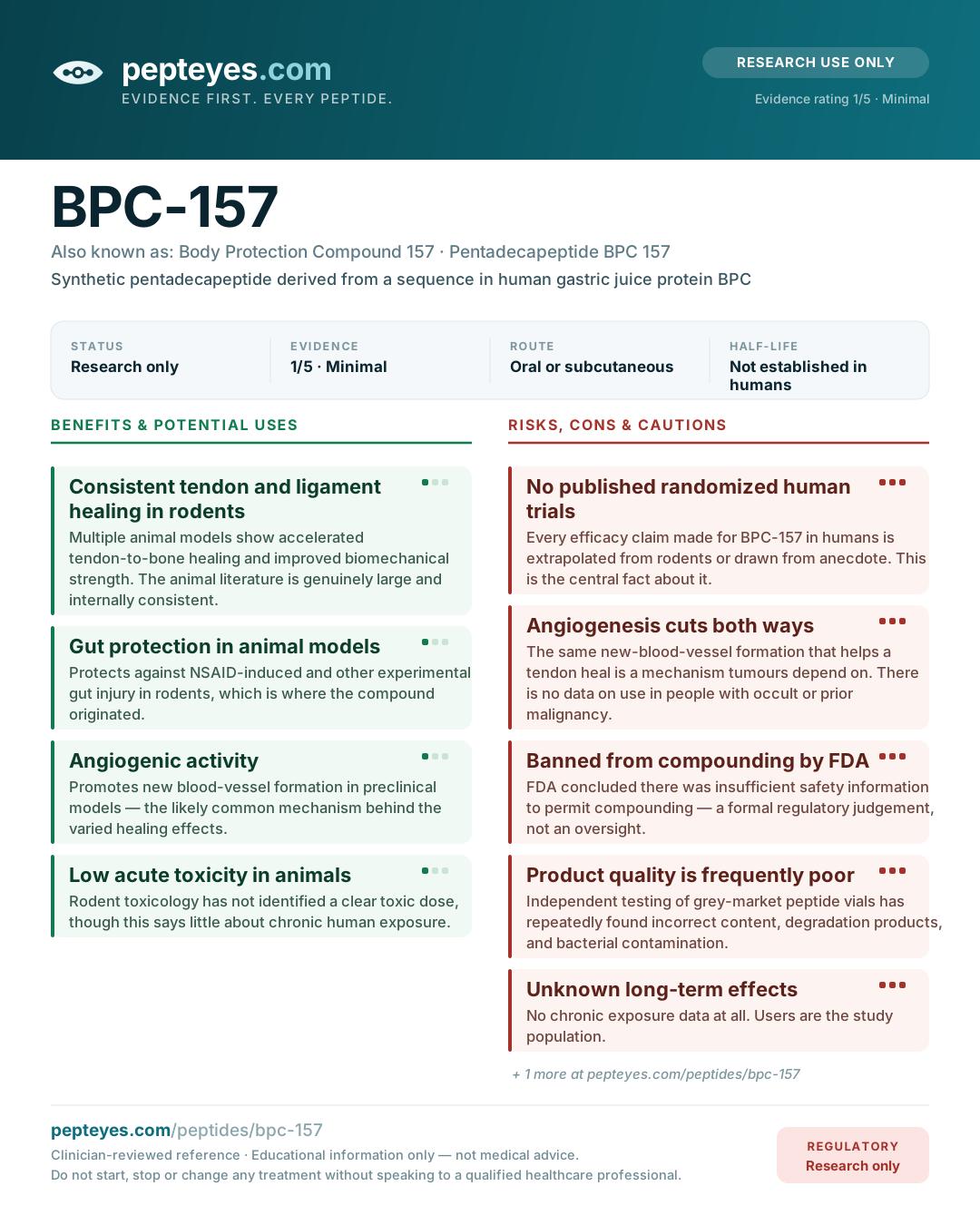
Consistent tendon and ligament healing in rodents
Multiple animal models show accelerated tendon-to-bone healing and improved biomechanical strength. The animal literature is genuinely large and internally consistent.
Evidence: Preliminary -
Gut protection in animal models
Protects against NSAID-induced and other experimental gut injury in rodents, which is where the compound originated.
Evidence: Preliminary -
Angiogenic activity
Promotes new blood-vessel formation in preclinical models — the likely common mechanism behind the varied healing effects.
Evidence: Preliminary -
Low acute toxicity in animals
Rodent toxicology has not identified a clear toxic dose, though this says little about chronic human exposure.
Evidence: Preliminary -
Closure of surgically created gut fistulas in rats
More specific than general mucosal protection. In the fistula work FDA summarised for its own review, colocutaneous fistulas in treated rats were about 40% smaller than vehicle controls from the third day after surgery and had closed macroscopically by day 28, while vehicle fistulas had shrunk by under a quarter. That is a hard surgical endpoint rather than a symptom score, which is what makes it interesting — but FDA also noted no supporting histopathology, no dose-response (two dose levels gave the same result), no test of treatment started later after the injury, and it comes from the same affiliated group as most of the literature, with no independent replication and no human counterpart.
Evidence: Preliminary -
The nitric-oxide mechanism has been shown in human tissue — not in patients
Rings of leftover internal mammary artery from twelve bypass-graft operations relaxed in response to BPC-157 in a concentration-dependent way; the effect largely disappeared when the endothelium was stripped or nitric oxide synthase was blocked. An independent group had shown the same endothelium- and nitric-oxide-dependent relaxation in rat aorta. This establishes that a proposed mechanism operates in human tissue, which is more than most of the mechanistic literature can say. It is not evidence of clinical benefit for any condition, and vasodilation is not by itself a therapeutic effect.
Evidence: Preliminary
Risks and cautions
8 entries · 7 serious or common
-
No published randomized human trials
Every efficacy claim made for BPC-157 in humans is extrapolated from rodents or drawn from anecdote. This is the central fact about it.
Evidence: Serious -
Angiogenesis cuts both ways
The same new-blood-vessel formation that helps a tendon heal is a mechanism tumours depend on. There is no data on use in people with occult or prior malignancy.
Evidence: Serious -
The safety findings behind the 2023 listing were never answered
FDA reviewers judged the substance not well characterised: no control of specified impurities, aggregates, bioburden or endotoxin on a certificate of analysis, immunogenicity risk that rises for injected routes, and no identified molecular target. The listing that followed has since been withdrawn, but no new data resolved those findings — the position changed, the evidence did not.
Evidence: Serious -
Product quality is frequently poor
Independent testing of grey-market peptide vials has repeatedly found incorrect content, degradation products, and bacterial contamination.
Evidence: Serious -
Unknown long-term effects
No chronic exposure data at all. Users are the study population.
Evidence: Serious -
Prohibited in sport
Added to the WADA prohibited list in 2022; athletes have been sanctioned.
Evidence: Moderate evidence -
There is no agreed chemical definition of "BPC-157"
FDA's own scientists made this point in July 2026: BPC-157 is a common name, not a United States Adopted Name or INN, there is no USP or NF monograph for either the free base or the acetate, and the agency had encountered multiple salts and derivatives — including different active moieties, which are not interchangeable and can differ in safety and effect — sold commercially under the one name. It noted there is no way to determine which substance a given reference standard refers to, and that both formal nominations it examined named the free base while supplying a certificate of analysis for the acetate. The consequence is specific and separate from grey-market quality control: two products both labelled BPC-157 need not be the same molecule at the same purity, a scrupulous manufacturer has no public standard to conform to, and a buyer comparing one against another has nothing to compare them on.
Evidence: Serious -
The standard nonclinical safety package was never completed
The single published toxicology package FDA identified ran four weeks, by intramuscular injection only, and still produced clinically relevant signals: altered clotting in rats and dogs, and liver-associated changes including rising ALT, glucose and triglycerides. No longer study exists to show whether those reproduce or worsen. There is no carcinogenicity study of either form — which matters given the angiogenesis question — no assessment across a full reproductive cycle or of peri- and postnatal development, and no toxicology at all by the routes people actually use, because bioavailability by those routes is unknown and the intramuscular safety margins cannot be carried across to them.
Evidence: Serious
Counts are not a score. A single serious risk can outweigh several well-supported benefits, and a long benefit list built on preclinical work outweighs nothing at all.
Opinion — what people actually report
8 themes · 2 reported benefits · 3 reported problems
This is the weakest tier on this site. These are themes drawn from public discussion — forums, subreddits and patient threads — not from trials. There is no control group, no denominator, and no way to confirm that what someone injected matched its label. People post when a result is dramatic and when something goes wrong, and rarely when nothing happens, so treat everything below as a description of the conversation rather than of the compound. The bars count how often a thing is said, not how well it is supported.
-
Tendon and joint pain reported to improve fast Reported benefit. Dominant theme: Comes up in most discussions of this compound.
The dominant claim, usually about elbows, shoulders, knees and Achilles. Reports commonly describe improvement within one to two weeks of consistent use, which is faster than most people expected.
-
Gut symptoms improving Reported benefit. Dominant theme: Comes up in most discussions of this compound.
The second big theme, and the one with the most enthusiastic reports — reflux, IBS-type symptoms and NSAID-related stomach pain. Often described by people who tried it for an injury and noticed the gut effect incidentally.
-
Nothing at all happened Reported problem. Recurring: Raised regularly, though not by everyone.
A substantial and easily overlooked strand of reports. Non-responders post less than responders, but they are there in every long thread, and the honest ones note they cannot tell whether the compound failed or the vial was not what it claimed.
-
Worry about the cancer question Reported problem. Recurring: Raised regularly, though not by everyone.
The most-raised safety concern by some distance. It is a mechanistic worry about angiogenesis and growth signalling rather than anything documented, but it drives a lot of people to keep courses short.
-
Product identity is the real argument Practical note. Dominant theme: Comes up in most discussions of this compound.
Third-party testing, purity certificates, reconstitution and storage take up more discussion than effects do. The recurring theme is that you cannot evaluate a compound you cannot verify.
-
Mild nausea or head pressure early on Reported problem. Occasional: Reported by a minority, or in specific contexts.
Reported by a minority in the first days, generally described as transient.
-
Oral versus injectable is unresolved Practical note. Recurring: Raised regularly, though not by everyone.
A long-running dispute. The common position is that oral may work for gut complaints while injection is preferred for a specific injury, but this is reasoning from mechanism, not from data.
-
Placebo is openly acknowledged Practical note. Occasional: Reported by a minority, or in specific contexts.
Unusually for this space, many posters raise it themselves — injuries heal on their own, people start using it at their worst point, and regression to the mean does the rest.
Where the reports and the evidence part ways
This is the widest gap on the site between what people report and what has been demonstrated. There are no published randomized human trials of BPC-157 for any indication, so the tendon and gut reports have nothing to be checked against — they are neither confirmed nor refuted, they are simply untested. The rodent literature is genuinely large and consistent, which is why the compound is plausible enough to be interesting, but preclinical results routinely fail to survive contact with human trials, and two decades of interest have not produced one. The cancer concern the community worries about is equally unresolved in the opposite direction: there is no human evidence of harm either. What deserves more attention than it gets is the point the forums themselves keep making — that unverified grey-market material is a concrete, present risk, while both the benefit and the cancer risk remain hypothetical.
Cheat sheet
The full sheet, all 77 compounds →The community reference numbers for this compound — reconstitution, working dose, cycle and bloodwork. Research and education only, not medical advice, and not part of the evidence-rated monograph above. Doses assume a 1mL / 100-unit insulin syringe — the calculator does the units for you.
Protocol overview
Dosing & reconstitution 10 mg vial
| WEEK | DAILY DOSE | UNITS PER INJECTION |
|---|---|---|
| Weeks 1 to 2 | 200 mcg | 2 units (0.02 mL) |
| Weeks 3 to 4 | 400 mcg | 4 units (0.04 mL) |
| Weeks 5 to 8+ | 600 mcg | 6 units (0.06 mL) |
Frequency: Inject once daily subcutaneously. Dosing is extrapolated from preclinical models; human clinical validation remains limited.
On the master sheet
- Vial
- 10mg
- BAC
- 2mL
- Dose
- 250–750mcg daily
- Route
- SubQ
- Cycle
- 4–8 wks
- Time Off
- 2–4 wks
- Bloodwork
- CBC, CRP, liver
Storage note: Stable. 4 weeks reconstituted. Full storage guide →
Side-effect family — BPC-157 and TB-500: Nausea (oral BPC) · Injection site irritation · Cancer growth concern (theoretical). What helps, and the red flags →
Readers on BPC-157
Questions and answers from readers, under generated names. Nothing here has been checked or reviewed by the site and none of it is medical advice. It is the least verified thing on this page — and it is here because people ask each other these things anyway, and most of the other places they can ask are run by sellers.
1 question · 1 answer
-
Velvet Loch desk — written by the site's editorial desk asked
Is there any human trial of BPC-157 at all, or is it entirely animal work?
Reply
Show 1 answerCollapse 1 answer
- Marsh Beacon desk — written by the site's editorial desk answered
No published human trial. What exists is rodent and cell work, most of it from one research group in Zagreb, which is why this site rates it 1 of 5 despite the number of papers — volume from one lab is not the same as independent replication.
The FDA advisory committee vote in July 2026 was a recommendation about whether pharmacies may compound it, not a finding that it works and not an approval. The monograph above carries the dated record.
How names work, and the house rules
Names. Every verified address is given one generated name — two ordinary words — and keeps it. Nobody chooses a name and nobody can take another's. Posts marked desk were written by the site's own editorial desk, usually to open a thread; they carry a generated name like everyone else's and are held to the site's rules, which means they never state an amount.
What is not allowed. Selling, sourcing, vendor names, coupon codes and "message me" — posts that read that way are held and usually removed. Personal medical details you would not want public. Abuse. Instructions framed as what someone else should do.
What this is not. A reader's report of what happened to them is a report, not a finding, and an answer here is one person's view. Nothing in this section changes the evidence rating above it. If something you read here would change what you take, take it to a pharmacist or physician first.
Your data. Delete any post of yours at any time, or remove everything you have written together with your name. Details in the privacy notice.
Who should avoid it
- Anyone with a cancer history or undiagnosed mass
- Pregnancy and breastfeeding
- Tested athletes
- Anyone who cannot verify product identity and sterility
If used under medical supervision, monitor
- No validated monitoring exists; discuss any use with your physician
Interactions
Not exhaustive. Always have a pharmacist or physician review your full medication list — including supplements.
- Anticoagulants and antiplatelet drugs (heparin, warfarin, direct oral anticoagulants, aspirin, clopidogrel) — inferred, and the most concrete of these. In rat tail-amputation models BPC-157 shortened bleeding time, reduced haemorrhage and counteracted thrombocytopenia even in animals anticoagulated with heparin or warfarin, an effect its investigators attribute to nitric-oxide-linked haemostatic balance rather than to the coagulation cascade itself. Against that, the one repeat-dose toxicology package FDA reviewed found altered clotting after four weeks of intramuscular dosing — activated partial thromboplastin time shortened in rats and lengthened in dogs, opposite directions in two species. No human interaction study exists, and the direction of effect in a person on an anticoagulant is genuinely unknown rather than reassuring; the first randomised human trial, which began recruiting in 2026, excludes anyone on anticoagulation.
- NSAIDs including aspirin — inferred from the rodent literature, which is built on this pairing: rats given high doses of aspirin, indomethacin or diclofenac develop stomach, small-bowel and liver lesions that are largely prevented by co-treatment. This is where the gut-protection reputation comes from, and the claim cuts both ways — protection against a drug injury in rodents is not a demonstrated human interaction, and a blunted or masked NSAID injury cannot be distinguished from a prevented one. No human data.
- Corticosteroids — inferred from animal work in which BPC-157 opposed 6-alpha-methylprednisolone aggravation of Achilles tendon-to-bone healing in rats and corticosteroid impairment of burn healing in mice, and reversed steroid-suppressed splenic cell reactivity. That last effect, if it were real in people, would work against the reason the steroid was prescribed. No human data.
- Nitrates, PDE5 inhibitors and other nitric-oxide-pathway drugs — inferred from mechanism. BPC-157 relaxes isolated rat aorta and human internal mammary artery in an endothelium- and nitric-oxide-dependent way, reported to act by displacing endothelial nitric oxide synthase from caveolin-1 via Src, and its effects in rodents shift when nitric oxide synthase is blocked (L-NAME) or its substrate supplied (L-arginine). Additive vasodilation or unpredictable blood pressure alongside nitrates, PDE5 inhibitors, riociguat, antihypertensives or arginine and citrulline supplements is plausible and has never been measured in a person.
- Dopamine-blocking antipsychotics and prokinetics — inferred: rodent work from the originating group reports BPC-157 attenuating haloperidol- and fluphenazine-induced catalepsy and counteracting the QTc prolongation produced by several neuroleptics and by metoclopramide. Interference with a psychiatric drug's intended effect is plausible in either direction and untested in humans, and an apparent QTc benefit in rats is not a reason to assume cardiac safety.
- VEGF-targeted anti-angiogenic drugs, and active or recent cancer — inferred from directly opposing mechanism: the healing effects are attributed to VEGFR2 signalling and new vessel growth, which is exactly what agents such as bevacizumab and the anti-VEGF eye injections are given to suppress. No in-vivo tumour-growth or metastasis study of BPC-157 has been published in either direction, so neither opposition to these drugs nor tumour promotion has been excluded; the anti-tumour claims sometimes made for it rest on one unreplicated melanoma cell-line abstract from 2004 and on a cachexia study that did not measure tumour growth.
- No supplement or nutrient has been tested with it, in any species. There is no human pharmacokinetic study of the peptide at all, so there is no baseline against which a combination could even be measured. Anything written online about what to take alongside it is convention, not evidence.
- Arginine, citrulline and dietary nitrate - the only supplements with a mechanistic connection, and it comes from the laboratory tools rather than a supplement study. The rodent work manipulates the same nitric oxide pathway by supplying arginine or blocking nitric oxide synthase, and the effects shift accordingly. What that means for someone taking arginine has never been measured.
- Zinc-carnosine, the gut supplement most often taken alongside it - a comparison rather than an interaction. It has a randomised crossover study in healthy volunteers in which it prevented the rise in gut permeability caused by an anti-inflammatory drug, and it has been a prescription ulcer treatment in Japan for decades. The supplement has better human evidence than the peptide.
- Heavy zinc intake alongside it - not an interaction with the peptide, but worth stating where a repair stack is involved, because sustained high zinc from any source depletes copper and produces anaemia, neutropenia and a myelopathy. The peptide contributes nothing to that either way; the zinc does it on its own.
Commonly confused with
These mix-ups cause real harm — two products sold under one name, or two molecules whose effects run in opposite directions.
PDA is the same pentadecapeptide as an arginate salt, marketed as a compliant alternative after FDA barred BPC-157 from compounding. Renaming a substance does not make it approved, and PDA has no independent studies of its own.
Compare side by sideRoutinely sold and used together for injury recovery. Neither has published randomized human trials for musculoskeletal healing, and both are WADA-prohibited.
Compare side by sideRegulatory & legal status
Not an approved drug in any country, and not a lawful dietary supplement. Sold under "research use only" labelling that confers no legality for human use. Whether a US pharmacy may compound it is a separate, moving question, recorded with dates below; no answer to it makes a research-use vial lawful to sell for human use.
Off Category 2 since April 2026 and recommended by the FDA’s advisory committee in July 2026 — but not yet on the 503A bulks list, so not yet lawfully compoundable.
- Removed from Category 2
- 22 April 2026
- Advisory committee vote
- 8–6, one abstention on 23–24 July 2026, considered for ulcerative colitis
- Approved as a drug?
- No. Compounding status and drug approval are separate questions; this compound has no approval for the uses it is sold for.
The full dated record, with sources, and every affected peptide →
Infographic
What this entry was checked against
The specific records this monograph was verified against on its last research pass. We link live literature searches below as well, because these are a snapshot and the literature is not.
- FDA Briefing Document, Pharmacy Compounding Advisory Committee, July 2026 — BPC-157 (free base) and BPC-157 acetate: chemical characterisation and naming, likely impurities and immunogenicity, nonclinical toxicology gaps, the 2005 Ruenzi ulcerative colitis abstract, FAERS reports
- Lee E, Burgess K. Safety of Intravenous Infusion of BPC157 in Humans: A Pilot Study. Altern Ther Health Med 2025 (two participants, private Florida clinic)
- Józwiak M et al. Reply to Sikiric et al. Pharmaceuticals 2025 — over 80% of the literature from one group, single-dose-level designs, absence of any in-vivo tumour-growth study, and the unreported oral phase 1
- Stupnisek M et al. Pentadecapeptide BPC 157 Reduces Bleeding and Thrombocytopenia after Amputation in Rats Treated with Heparin, Warfarin, L-NAME and L-Arginine. PLoS One 2015
- Krivic A et al. Achilles detachment in rat and BPC 157: promoted tendon-to-bone healing and opposed corticosteroid aggravation. J Orthop Res 2006
- Strinic D et al. BPC 157 counteracts QTc prolongation induced by haloperidol, fluphenazine, clozapine, olanzapine, quetiapine, sulpiride and metoclopramide in rats. Life Sci 2017
- Yildirim AK et al. Endothelium-dependent nitric oxide-mediated vasorelaxant effects of BPC 157 in human internal mammary artery. J Clin Med 2026
- ClinicalTrials.gov NCT07437547 — randomised, double-blind, placebo-controlled phase 2 of BPC 157 in MRI-confirmed acute grade II hamstring strain; recruiting from February 2026, 120 planned, single site
- Regeneration or risk? A narrative review of BPC-157 for musculoskeletal healing - only three pilot studies in humans, no human pharmacokinetic data, and the nitric oxide and VEGFR2 mechanisms described from animal work
- Mahmood A et al. Zinc carnosine, a health food supplement that stabilises small bowel integrity and stimulates gut repair processes. Gut 2007;56:168-75 - randomised crossover in healthy volunteers; indomethacin tripled gut permeability, and no significant rise occurred with zinc carnosine co-administered
- Zinc - Linus Pauling Institute Micronutrient Information Center: sustained high zinc intake induces metallothionein and depletes copper, the basis for the upper intake level
Where to read further
We link to live literature searches rather than a frozen citation list, so you always see current results — including anything published after our last review.
- PubMed — all published literature on BPC-157
- PubMed — randomized controlled trials only
- ClinicalTrials.gov — registered human trials
Related peptides in Healing & Tissue Repair
Terms used on this page
- Nitric Oxide
- Nitric oxide is a short-lived gaseous signalling molecule made from arginine by nitric oxide synthase that relaxes vascular smooth muscle and participates in immunity and repair.
- Angiogenesis
- Angiogenesis is the sprouting of new capillaries from existing vessels, the process that supplies oxygen and nutrients to a healing wound or a growing tumour alike.
- Fibroblast
- A fibroblast is the mesenchymal cell that produces and maintains connective tissue matrix, and which differentiates into a contractile myofibroblast during wound repair.
- Amino Acid Residue
- An amino acid residue is what remains of an amino acid once it has been joined into a chain and a molecule of water has been lost, and residue count is how peptide length is stated.
- Preclinical Study and Animal Model
- Preclinical studies are the laboratory, cell and animal experiments done before any human exposure, establishing mechanism, target engagement and the toxicology package that permits a first trial.
- Dose-Response Curve
- A dose-response curve plots the magnitude of an effect against dose or concentration, usually on a logarithmic scale, where it takes the familiar S shape described by three fitted parameters.
This page is educational information, not medical advice. It cannot account for your medical history, medications, or risk factors. Do not start, stop or change any treatment based on it. Speak to a qualified healthcare professional who knows your case.