BPC-157 vs TB-500 / Thymosin Beta-4
The two most commonly stacked healing peptides, and what evidence each has.
The distinction that mattersRoutinely sold and used together for injury recovery. Neither has published randomized human trials for musculoskeletal healing, and both are WADA-prohibited.
These are not equivalent in evidence TB-500 / Thymosin Beta-4 is rated 2/5 and BPC-157 is rated 1/5 — a gap of 1 level on our scale. Similar marketing does not mean similar proof.
| BPC-157 Research Use Only | TB-500 / Thymosin Beta-4 Research Use Only | |
|---|---|---|
| Evidence rating |
1/5 Minimal
Evidence rating 1 out of 5: Minimal
|
2/5 Limited
Evidence rating 2 out of 5: Limited
|
| Regulatory status | Not approved anywhere. Its US pharmacy-compounding status moved twice in 2026 (see the dated record below); it remains an unapproved drug. WADA-prohibited since 2022. | Full-length Tβ4 has reached phase 2/3 trials for dry eye and corneal wounds. The injectable TB-500 fragment sold to consumers is unapproved. WADA-prohibited. |
| Category | Healing & Tissue Repair | Healing & Tissue Repair |
| Drug class | Synthetic pentadecapeptide derived from a sequence in human gastric juice protein BPC | Thymosin beta-4 is a 43-amino-acid actin-sequestering protein; TB-500 is a synthetic active fragment |
| Route | No approved route. Research and grey-market use is mostly subcutaneous, intramuscular or oral; the small published human literature used rectal enema, intra-articular injection, intravesical instillation and intravenous infusion, and the first randomised trial uses subcutaneous injection. | Every registered systemic human study used the intravenous route with the intact 43-residue protein; the eye trials were topical drops. The subcutaneous and intramuscular injection of the TB-500 fragment that the consumer market runs on has no human pharmacokinetic study behind it. |
| Half-life | Not established in humans. In rats and dogs the plasma elimination half-life of the intact peptide is well under thirty minutes with linear, dose-proportional kinetics, and intramuscular bioavailability is roughly 14-51% depending on species; the two-person human infusion pilot was consistent with rapid clearance. Reported biological effects last hours to days, a mismatch no one has explained. | Full-length Tβ4 ~0.5–2 hours intravenously in healthy volunteers; the LKKTETQ fragment actually sold has no published pharmacokinetics. |
| Sequence length | 15 residues | 43 residues |
| Molecular weight | 1,419.6 Da | 4,963.5 Da |
| Studied in | Extensive rodent models of tendon, ligament, muscle, bone, gut, liver, nerve and vascular injury, with more than 80% of the published literature coming from a single affiliated group at the University of Zagreb. Human exposure is small and almost entirely uncontrolled: a Pliva programme in inflammatory bowel disease (PL 14736) delivered as a rectal enema — a phase 1 in healthy volunteers and a randomised placebo-controlled phase 2 in ulcerative colitis, both reported only as meeting abstracts, the phase 2 showing no separation from placebo — a separate oral-tablet phase 1 that closed without posting results, and three small pilot reports covering intra-articular injection for knee pain, intravesical instillation for interstitial cystitis, and intravenous infusion in two people. A randomised placebo-controlled phase 2 in acute hamstring strain began recruiting in 2026. | Randomised topical trials of full-length Tβ4 in the eye: ARISE-1, ARISE-2 and ARISE-3 in dry eye, and a neurotrophic keratopathy programme (SEER-1 closed early, SEER-2 recruiting, the European SEER-3 missing its primary endpoint). Phase 2 dermal wound trials in venous stasis and pressure ulcers, with the epidermolysis bullosa and diabetic corneal wound trials terminated. Intravenous phase 1 studies of the intact protein in healthy volunteers, and randomised phase 2 cardiac trials of recombinant Tβ4 after myocardial infarction. The marketed TB-500 heptapeptide entered its first registered human trial in 2026, in stable atherosclerotic disease with biomarker endpoints. |
| Who should avoid it |
|
|
| Legal status | Not an approved drug in any country, and not a lawful dietary supplement. Sold under "research use only" labelling that confers no legality for human use. Whether a US pharmacy may compound it is a separate, moving question, recorded with dates below; no answer to it makes a research-use vial lawful to sell for human use. | Ophthalmic Tβ4 remains investigational. Injectable TB-500 is unapproved and not lawfully sold for human use. |
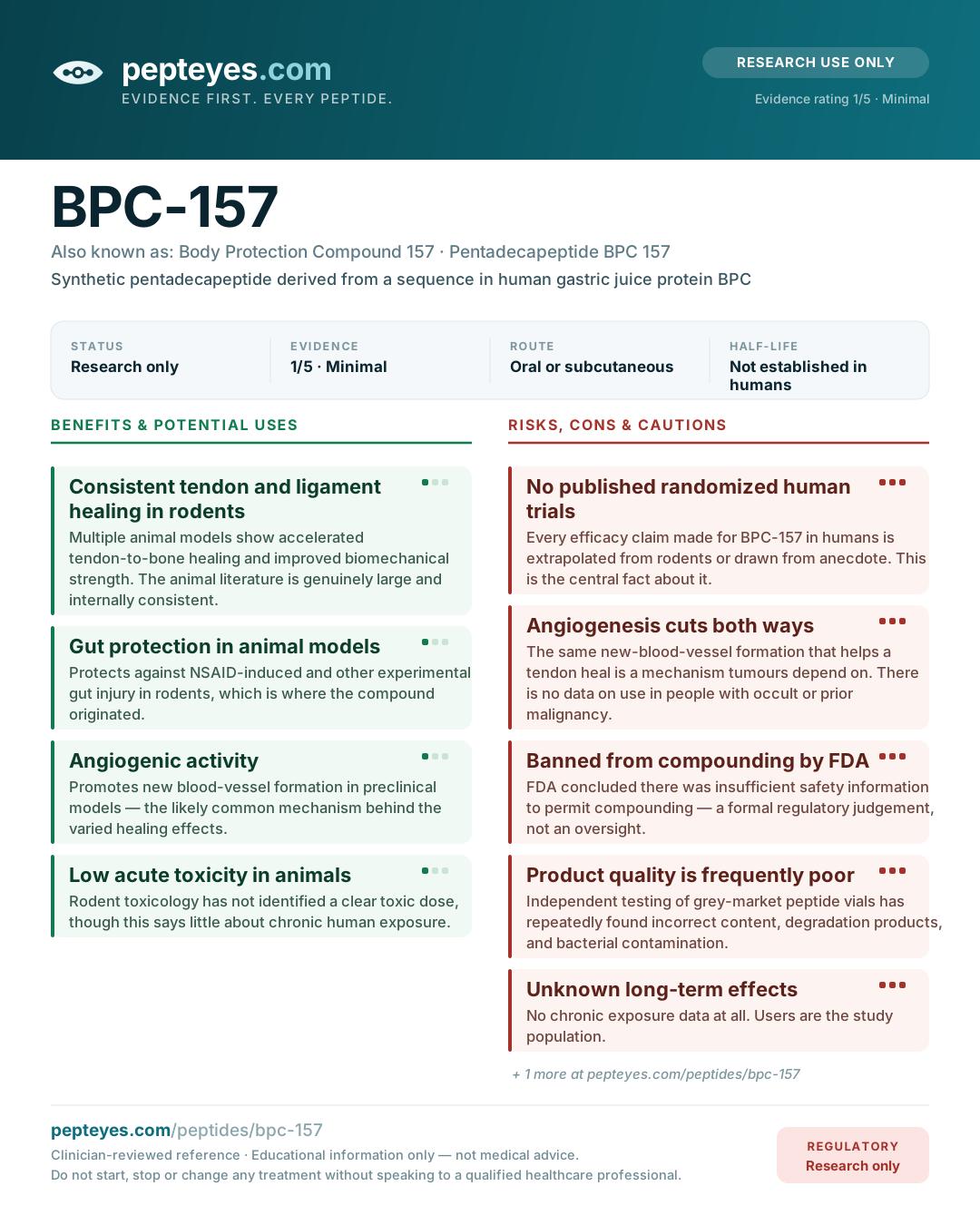
Benefits — BPC-157
- Consistent tendon and ligament healing in rodents
Multiple animal models show accelerated tendon-to-bone healing and improved biomechanical strength. The animal literature is genuinely large and internally consistent.
- Gut protection in animal models
Protects against NSAID-induced and other experimental gut injury in rodents, which is where the compound originated.
- Angiogenic activity
Promotes new blood-vessel formation in preclinical models — the likely common mechanism behind the varied healing effects.
- Low acute toxicity in animals
Rodent toxicology has not identified a clear toxic dose, though this says little about chronic human exposure.
- Closure of surgically created gut fistulas in rats
More specific than general mucosal protection. In the fistula work FDA summarised for its own review, colocutaneous fistulas in treated rats were about 40% smaller than vehicle controls from the third day after surgery and had closed macroscopically by day 28, while vehicle fistulas had shrunk by under a quarter. That is a hard surgical endpoint rather than a symptom score, which is what makes it interesting — but FDA also noted no supporting histopathology, no dose-response (two dose levels gave the same result), no test of treatment started later after the injury, and it comes from the same affiliated group as most of the literature, with no independent replication and no human counterpart.
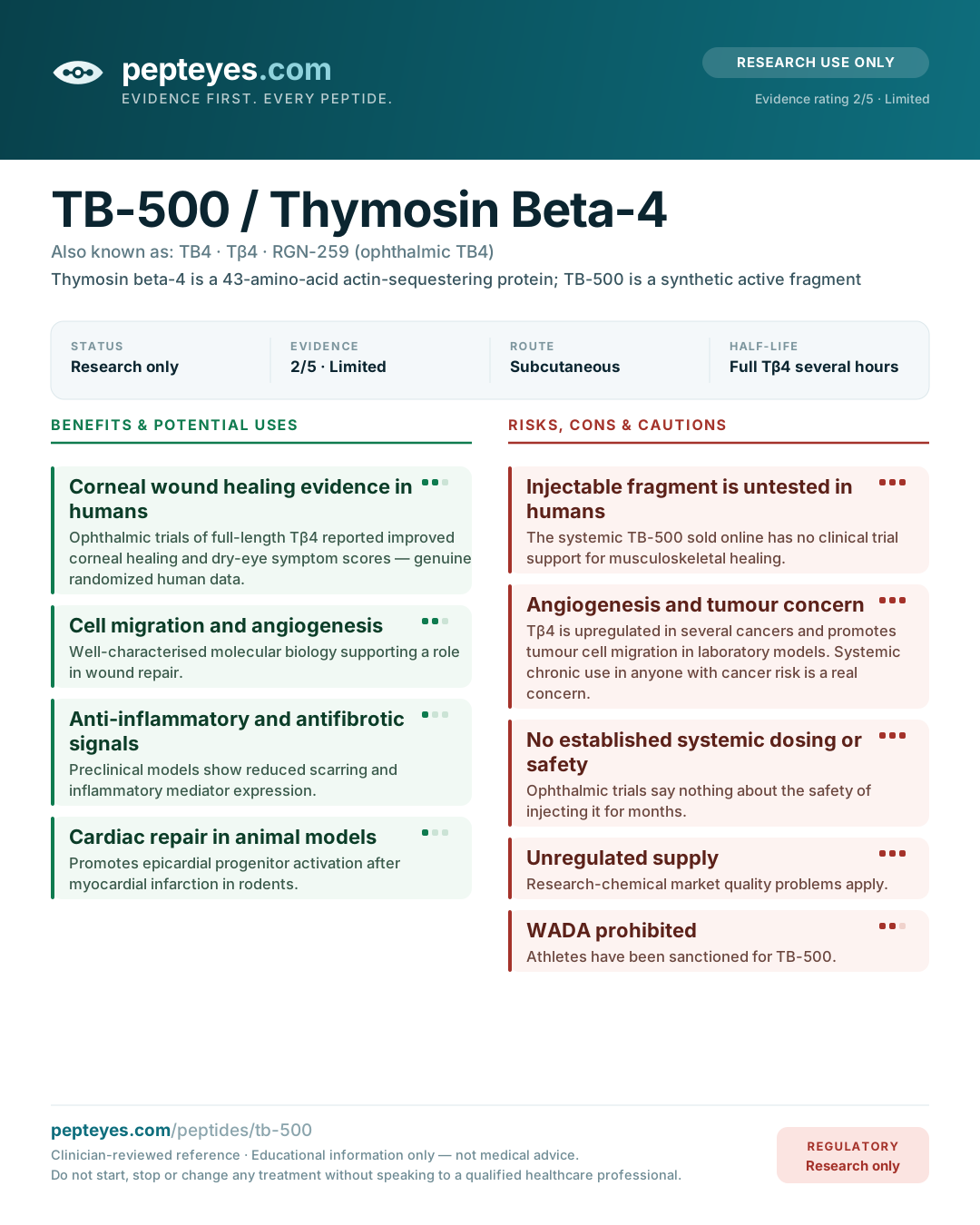
Benefits — TB-500 / Thymosin Beta-4
- Corneal wound healing evidence in humans
Ophthalmic trials of full-length Tβ4 reported improved corneal healing and dry-eye symptom scores — genuine randomized human data.
- Cell migration and angiogenesis
Well-characterised molecular biology supporting a role in wound repair.
- Anti-inflammatory and antifibrotic signals
Preclinical models show reduced scarring and inflammatory mediator expression.
- Cardiac repair in animal models
Promotes epicardial progenitor activation after myocardial infarction in rodents.
- A randomised human cardiac trial now exists — and it was negative overall
A double-blind, placebo-controlled trial of 96 patients with ST-elevation myocardial infarction after primary PCI tested recombinant full-length thymosin beta-4 against placebo, with infarcted area at 90 days as the outcome. The overall comparison was not statistically significant. A reduction was reported in the 43 patients who received their first dose within eight hours of PCI, and the authors themselves conclude that further rigorous randomised studies are needed to assess early use. That is a timing hypothesis, not a result, and it belongs to the intact 43-residue protein given intravenously — not to an injected fragment.
Risks & cons — BPC-157
- No published randomized human trials
Every efficacy claim made for BPC-157 in humans is extrapolated from rodents or drawn from anecdote. This is the central fact about it.
- Angiogenesis cuts both ways
The same new-blood-vessel formation that helps a tendon heal is a mechanism tumours depend on. There is no data on use in people with occult or prior malignancy.
- The safety findings behind the 2023 listing were never answered
FDA reviewers judged the substance not well characterised: no control of specified impurities, aggregates, bioburden or endotoxin on a certificate of analysis, immunogenicity risk that rises for injected routes, and no identified molecular target. The listing that followed has since been withdrawn, but no new data resolved those findings — the position changed, the evidence did not.
- Product quality is frequently poor
Independent testing of grey-market peptide vials has repeatedly found incorrect content, degradation products, and bacterial contamination.
- Unknown long-term effects
No chronic exposure data at all. Users are the study population.
Risks & cons — TB-500 / Thymosin Beta-4
- Injectable fragment is untested in humans
The systemic TB-500 sold online has no clinical trial support for musculoskeletal healing.
- Angiogenesis and tumour concern
Tβ4 is upregulated in several cancers and promotes tumour cell migration in laboratory models. Systemic chronic use in anyone with cancer risk is a real concern.
- No established systemic dosing or safety
Ophthalmic trials say nothing about the safety of injecting it for months.
- Unregulated supply
Research-chemical market quality problems apply.
- Named on the WADA Prohibited List, with a whole-squad precedent
Not a grey area and not an inference. "Thymosin-β4 and its derivatives, e.g. TB-500" were added as explicit examples of prohibited growth factors under S2.3, a class prohibited at all times, in and out of competition, and treated as non-specified — so the default sanction is the long one, and strict liability means intent is not a defence. The best-documented case is the Essendon Football Club supplements programme: in January 2016 the Court of Arbitration for Sport upheld WADA's appeal and found to its comfortable satisfaction that 34 past and present players had used thymosin beta-4, imposing two-year ineligibility periods backdated to March 2015 and costing most of them the entire 2016 season. Anyone in a tested sport, or in a military or law-enforcement programme that has adopted the WADA categories, is risking a career rather than a fine.
A comparison is not a recommendation. Neither column is being suggested for you. Which — if either — is appropriate depends on your diagnosis, history and medications, and that is a conversation for a qualified clinician.