Supplied as a lyophilised powder to reconstitute
Immune & Anti-inflammatory
At a glance
Ten answers, each one line. Open any row for the detail behind it.
What it does A genuine immunomodulatory drug with real approvals — just not in the United States.
A genuine immunomodulatory drug with real approvals — just not in the United States. It has been studied in hepatitis, sepsis, cancer immunotherapy adjuvancy and severe infection, with a body of evidence far beyond the typical wellness peptide.
Half-life ~2 hours — Documented
~2 hours
Typical studied dose Set by the label of the regulator that approved it, which is not an FDA… — On the label
Set by the label of the regulator that approved it, which is not an FDA label and may not be in English. The approving country decides the dose, and it is not always the same as the dose studied elsewhere.
How often it is used Set on the approved label. The interval follows the half-life above… — On the label
Set on the approved label. The interval follows the half-life above, which is why some of these are weekly and others daily.
How it is taken Subcutaneous — Documented
Subcutaneous
Main side effects Autoimmune disease flare risk · Transplant rejection risk · Not FDA-approved — Carries serious risk
Autoimmune disease flare risk — Immune stimulation is contraindicated in active autoimmune conditions and after organ transplant.
Transplant rejection risk — Enhancing T-cell function in a transplant recipient is directly counterproductive.
Not FDA-approved — US access is via compounding or importation; FDA has scrutinised the compounded supply of thymic peptides.
Storage before mixing As a sealed lyophilised powder, refrigerated is typical and a freezer…
As a sealed lyophilised powder, refrigerated is typical and a freezer suits long storage; both should be dark and dry. A dry powder tolerates a few days out of the cold far better than anything in solution — which is why it ships that way.
Shelf life after mixing Once mixed it is refrigerated and treated as short-lived. Bacteriostatic…
Once mixed it is refrigerated and treated as short-lived. Bacteriostatic water contains a preservative and buys the longer window; sterile water contains none and buys a much shorter one. Peptides in solution also degrade on their own, so the container is only half the question.
Evidence level 4/5 · Strong — Documented
Consistent human randomized trials, or approval outside the United States.
Regulatory status Limited Approval — Documented
Approved in more than 30 countries for hepatitis B/C and as a vaccine adjuvant. Not FDA-approved; US orphan designations exist. Approved outside the US. In the US it is unapproved; access routes are legally constrained.
Overview
A genuine immunomodulatory drug with real approvals — just not in the United States. It has been studied in hepatitis, sepsis, cancer immunotherapy adjuvancy and severe infection, with a body of evidence far beyond the typical wellness peptide.
Limited or non-US approvalApproved outside the US. In the US it is unapproved; access routes are legally constrained.
| Regulatory status | Approved in more than 30 countries for hepatitis B/C and as a vaccine adjuvant. Not FDA-approved; US orphan designations exist. |
|---|---|
| Drug class | Naturally occurring 28-amino-acid thymic peptide |
| Route | Subcutaneous |
| Half-life | ~2 hours |
| Evidence rating |
4/5 Strong
Evidence rating 4 out of 5: Strong
Consistent human randomized trials, or approval outside the United States. |
| Studied in | Randomized trials in chronic hepatitis B and C, sepsis (including a large Chinese sepsis RCT), severe COVID-19 cohorts, and as an adjunct in several cancers. |
Thymosin Alpha-1 sequence & structure
Thymosin Alpha-1 is a 28-residue linear peptide with a free C-terminal acid; molecular weight 3,108.31 Da.
| Three-letter | Ac-Ser-Asp-Ala-Ala-Val-Asp-Thr-Ser-Ser-Glu-Ile-Thr-Thr-Lys-Asp-Leu-Lys-Glu-Lys-Lys-Glu-Val-Val-Glu-Glu-Ala-Glu-Asn-OH |
|---|---|
| Length | 28 amino acid residues |
| Modifications |
|
| Molecular formula | C129H215N33O55 |
| Molecular weight | 3,108.31 Da (average, free base) |
| Identifiers | CAS 62304-98-7 · PubChem CID 16130571 · DrugBank DB04900 · UniProt P06454 |
| Which molecule | This record describes thymosin alpha-1 (INN thymalfasin, USAN FF-51, brand Zadaxin; UNII W0B22ISQ1C), the N-acetylated 28-residue peptide corresponding to residues 2-29 of human prothymosin alpha (UniProt P06454). It is not thymosin beta-4/TB-500, thymosin alpha-11 (a longer 35-residue fragment), or the thymalin/thymus-extract mixtures. |
| Sources | UniProt P06454 (PTMA_HUMAN, prothymosin alpha; PEPTIDE 2-29 Thymosin alpha-1, MOD_RES N-acetylserine)FDA GSRS substance W0B22ISQ1C (THYMALFASIN; sequence, N-acetyl-L-serine modification, CAS, DrugBank/ChEMBL codes)KEGG DRUG D06116 (Thymalfasin USAN/INN; Ac- sequence, C129H215N33O55, MW 3108.28, CAS 62304-98-7)PubChem CID 16130571 (thymalfasin; formula C129H215N33O55, MW 3108.3)ChEMBL CHEMBL2103979 (THYMALFASIN; sequence and HELM PEPTIDE1{[ac].S.D...N}) |
Sequence and N-acetylation agree across UniProt, FDA GSRS, KEGG DRUG, ChEMBL and PubChem; formula C129H215N33O55 matches the value computed from the acetylated sequence, and MW 3108.28 (KEGG) / 3108.3 (PubChem) / 3108.31-3108.315 (ChEMBL, computed) differ only by rounding. CAS 62304-98-7 is the free peptide (check digit verified); it is commonly sold as the acetate salt, which carries its own CAS number, so vendor CAS values may differ.
Record confidence: high — two independent authoritative sources agree on the sequence and modifications. Every sequence on the site is listed with its sources on the peptide sequences index.
How it works
Acts largely through Toll-like receptor signalling on dendritic cells, promoting T-cell maturation and shifting responses toward a Th1 phenotype. Increases IL-2 and interferon-gamma production and restores lymphocyte counts in immunodepleted states.
Evidence base
Rated 4 of 5 — Strong. Consistent human randomized trials, or approval outside the United States.
- Among the strongest evidence bases of any peptide sold in the wellness market — but with real geographic and quality caveats.
Benefits and risks, weighed against the evidence
Every entry below carries the strength of the evidence behind it — three bars for strong human data, two for moderate, one for preliminary or preclinical work. The two columns are not equal by design: where a compound has more documented risk than demonstrated benefit, the lists say so.
Reported benefits
5 entries · 2 on strong human evidence
-
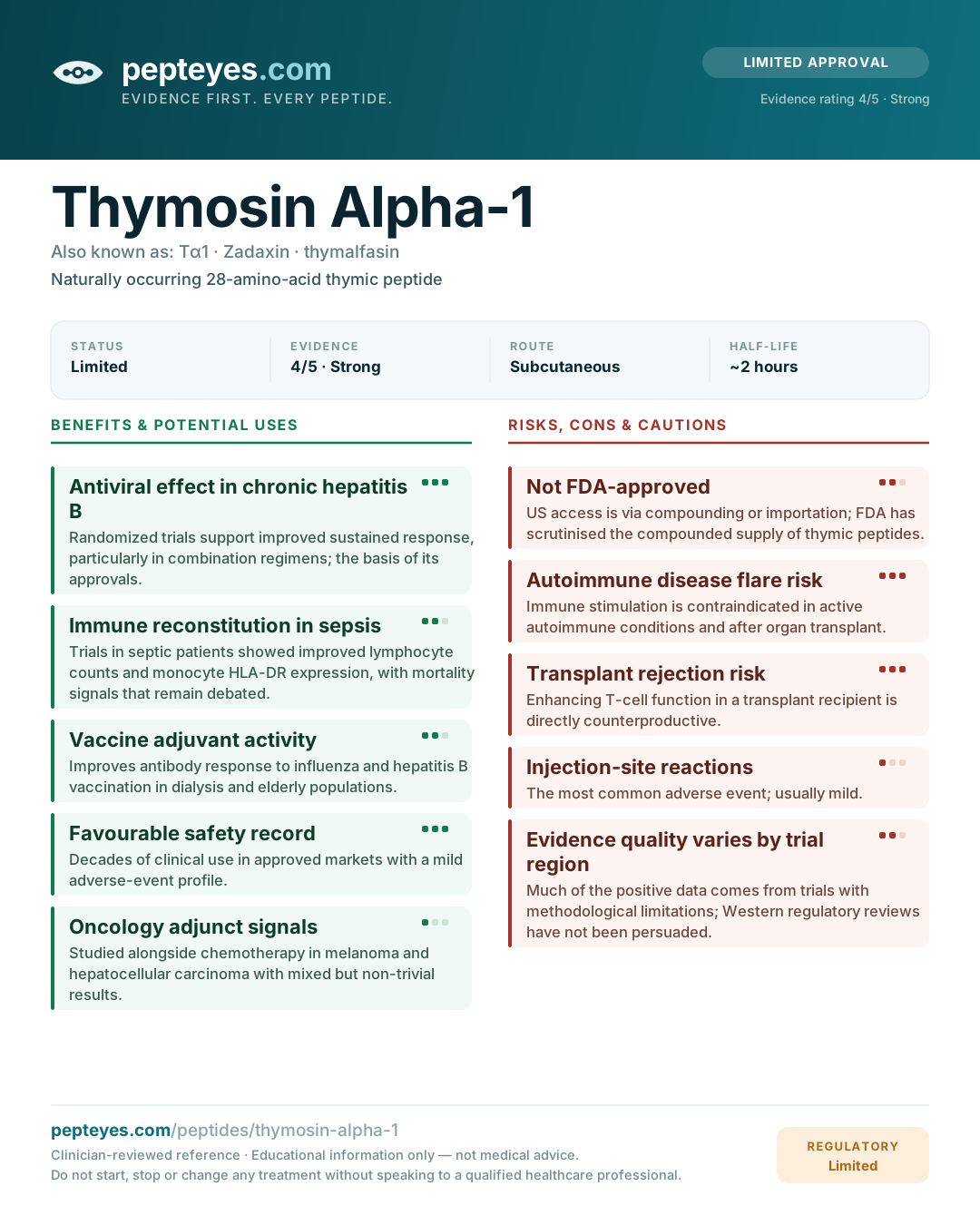
Antiviral effect in chronic hepatitis B
Randomized trials support improved sustained response, particularly in combination regimens; the basis of its approvals.
Evidence: Strong evidence -
Immune reconstitution in sepsis
Trials in septic patients showed improved lymphocyte counts and monocyte HLA-DR expression, with mortality signals that remain debated.
Evidence: Moderate evidence -
Vaccine adjuvant activity
Improves antibody response to influenza and hepatitis B vaccination in dialysis and elderly populations.
Evidence: Moderate evidence -
Favourable safety record
Decades of clinical use in approved markets with a mild adverse-event profile.
Evidence: Strong evidence -
Oncology adjunct signals
Studied alongside chemotherapy in melanoma and hepatocellular carcinoma with mixed but non-trivial results.
Evidence: Preliminary
Risks and cautions
5 entries · 2 serious or common
-
Not FDA-approved
US access is via compounding or importation; FDA has scrutinised the compounded supply of thymic peptides.
Evidence: Moderate evidence -
Autoimmune disease flare risk
Immune stimulation is contraindicated in active autoimmune conditions and after organ transplant.
Evidence: Serious -
Transplant rejection risk
Enhancing T-cell function in a transplant recipient is directly counterproductive.
Evidence: Serious -
Injection-site reactions
The most common adverse event; usually mild.
Evidence: Minor -
Evidence quality varies by trial region
Much of the positive data comes from trials with methodological limitations; Western regulatory reviews have not been persuaded.
Evidence: Moderate evidence
Counts are not a score. A single serious risk can outweigh several well-supported benefits, and a long benefit list built on preclinical work outweighs nothing at all.
Opinion — what people actually report
5 themes · 2 reported benefits · 1 reported problem
This is the weakest tier on this site. These are themes drawn from public discussion — forums, subreddits and patient threads — not from trials. There is no control group, no denominator, and no way to confirm that what someone injected matched its label. People post when a result is dramatic and when something goes wrong, and rarely when nothing happens, so treat everything below as a description of the conversation rather than of the compound. The bars count how often a thing is said, not how well it is supported.
-
Fewer infections reported over a season Reported benefit. Recurring: Raised regularly, though not by everyone.
The most common claim, and one that is almost impossible to evaluate from individual accounts.
-
Interest surged during COVID and has partly persisted Practical note. Dominant theme: Comes up in most discussions of this compound.
A defining feature of recent discussion, with the Chinese hospital data widely circulated.
-
Used by people with chronic infections or immune conditions Reported benefit. Recurring: Raised regularly, though not by everyone.
A distinct group whose reports are more specific than general wellness use.
-
Injection site reactions Reported problem. Recurring: Raised regularly, though not by everyone.
The most commonly reported adverse effect, generally mild.
-
Approved in many countries but not the US Practical note. Recurring: Raised regularly, though not by everyone.
A frequently noted asymmetry that shapes both availability and how credible people find it.
Where the reports and the evidence part ways
This has more standing than most immune peptides — it is approved in numerous countries for hepatitis B and as a vaccine adjuvant, and has a real trial literature including work in sepsis and in COVID-19. The results are mixed rather than clearly positive, much of the strongest data comes from regions with different trial oversight, and it has not gained US approval. The general immune-support use that dominates wellness discussion is not what the evidence covers; the evidence is in specific infectious and oncological contexts, in patients with defined conditions.
Cheat sheet
The full sheet, all 77 compounds →The community reference numbers for this compound — reconstitution, working dose, cycle and bloodwork. Research and education only, not medical advice, and not part of the evidence-rated monograph above. Doses assume a 1mL / 100-unit insulin syringe — the calculator does the units for you.
Protocol overview
Dosing & reconstitution 10 mg vial
| WEEK | DAILY DOSE | UNITS PER INJECTION |
|---|---|---|
| Week 1 | 300 mcg (0.3 mg) | 3 units (0.03 mL) |
| Weeks 2 to 8 | 500 mcg (0.5 mg) | 5 units (0.05 mL) |
Frequency: Inject once daily subcutaneously. This 8-week protocol begins at 300 mcg to assess tolerance, then increases to a maintenance dose of 500 mcg daily from Week 2 onward. The 500 mcg daily dose yields ~3.5 mg/week, consistent with clinical dosing ranges. For 10 unit (0.10 mL) or smaller administrations, consider 30- or
On the master sheet
- Vial
- 10mg
- BAC
- 2mL
- Dose
- 1.6mg twice weekly
- Route
- SubQ
- Cycle
- 4–12 wks
- Time Off
- 4 wks
- Bloodwork
- CBC diff, CD4/CD8, CRP
- Vial
- 10mg
- BAC
- 2mL
- Dose
- 1.6mg twice weekly
- Route
- SubQ
- Cycle
- 4–12 wks
- Time Off
- 4 wks
- Bloodwork
- CBC diff, CD4/CD8, CRP
Readers on Thymosin Alpha-1
Questions and answers from readers, under generated names. Nothing here has been checked or reviewed by the site and none of it is medical advice. It is the least verified thing on this page — and it is here because people ask each other these things anyway, and most of the other places they can ask are run by sellers.
0 questions · 0 answers
No questions yet. Ask the first one above — it takes one box and an email address.
How names work, and the house rules
Names. Every verified address is given one generated name — two ordinary words — and keeps it. Nobody chooses a name and nobody can take another's. Posts marked desk were written by the site's own editorial desk, usually to open a thread; they carry a generated name like everyone else's and are held to the site's rules, which means they never state an amount.
What is not allowed. Selling, sourcing, vendor names, coupon codes and "message me" — posts that read that way are held and usually removed. Personal medical details you would not want public. Abuse. Instructions framed as what someone else should do.
What this is not. A reader's report of what happened to them is a report, not a finding, and an answer here is one person's view. Nothing in this section changes the evidence rating above it. If something you read here would change what you take, take it to a pharmacist or physician first.
Your data. Delete any post of yours at any time, or remove everything you have written together with your name. Details in the privacy notice.
Who should avoid it
- Solid organ transplant recipients
- Active autoimmune disease
- Pregnancy (insufficient data)
- Concurrent immunosuppressive therapy
If used under medical supervision, monitor
- CBC with differential and lymphocyte subsets
- Liver function tests where used for hepatitis
- Autoimmune symptom review
Interactions
Not exhaustive. Always have a pharmacist or physician review your full medication list — including supplements.
- Immunosuppressants — directly opposed mechanisms; combination is generally inappropriate
- Corticosteroids — may blunt the immunomodulatory effect
Commonly confused with
These mix-ups cause real harm — two products sold under one name, or two molecules whose effects run in opposite directions.
Different molecules despite similar names. Thymosin alpha-1 is a defined 28-residue immune peptide approved in 30+ countries; thymosin beta-4 (TB-500) is an actin-binding repair peptide that is approved nowhere.
Compare side by sideThymosin alpha-1 is a single defined peptide with randomized hepatitis trials. Thymalin is an undefined bovine thymus extract registered only in Russia.
Compare side by sideRegulatory & legal status
Approved outside the US. In the US it is unapproved; access routes are legally constrained.
Still in Category 2 of the 503A review, so not eligible for lawful pharmacy compounding in the United States.
- Listed since
- September 2023
- Court challenge
- Placement under challenge; a final rule is expected no later than March 2027
- Approved as a drug?
- No. Compounding status and drug approval are separate questions; this compound has no approval for the uses it is sold for.
Thymosin alpha-1 is approved as a medicine in a number of countries outside the United States; the Category 2 placement concerns its use as a bulk substance in US pharmacy compounding, which is a separate question.
The full dated record, with sources, and every affected peptide →
Infographic
Where to read further
We link to live literature searches rather than a frozen citation list, so you always see current results — including anything published after our last review.
- PubMed — all published literature on Thymosin Alpha-1
- PubMed — randomized controlled trials only
- ClinicalTrials.gov — registered human trials
Related peptides in Immune & Anti-inflammatory
Terms used on this page
- Immunomodulation
- Immunomodulation is the deliberate shifting of immune activity in either direction, a category covering suppression, stimulation and restored regulation, often used precisely to avoid naming which is meant.
- Toll-Like Receptor (TLR)
- Toll-like receptors are pattern recognition receptors that detect conserved microbial molecules such as lipopolysaccharide and viral nucleic acid, triggering innate inflammatory and interferon responses.
- Interferon
- Interferons are antiviral and immunoregulatory cytokines, grouped into type I, type II and type III families, that signal through JAK-STAT to switch on hundreds of interferon-stimulated genes.
- T Cell
- T cells are the lymphocytes of adaptive cellular immunity, each carrying a uniquely rearranged receptor that recognises a peptide fragment only when it is displayed by an MHC molecule.
- Antibody (Immunoglobulin)
- An antibody is a Y-shaped immunoglobulin whose variable regions bind one epitope while its constant Fc region sets effector function, half-life and isotype-specific behaviour.
- Thymic Peptide
- Thymic peptides are small peptides originally isolated from thymus tissue and proposed as immune-regulating hormones; only thymosin alpha-1 has meaningful clinical use, and it is not FDA-approved.
This page is educational information, not medical advice. It cannot account for your medical history, medications, or risk factors. Do not start, stop or change any treatment based on it. Speak to a qualified healthcare professional who knows your case.