Thymalin vs Thymosin Alpha-1
A defined peptide with randomized trials versus an undefined extract.
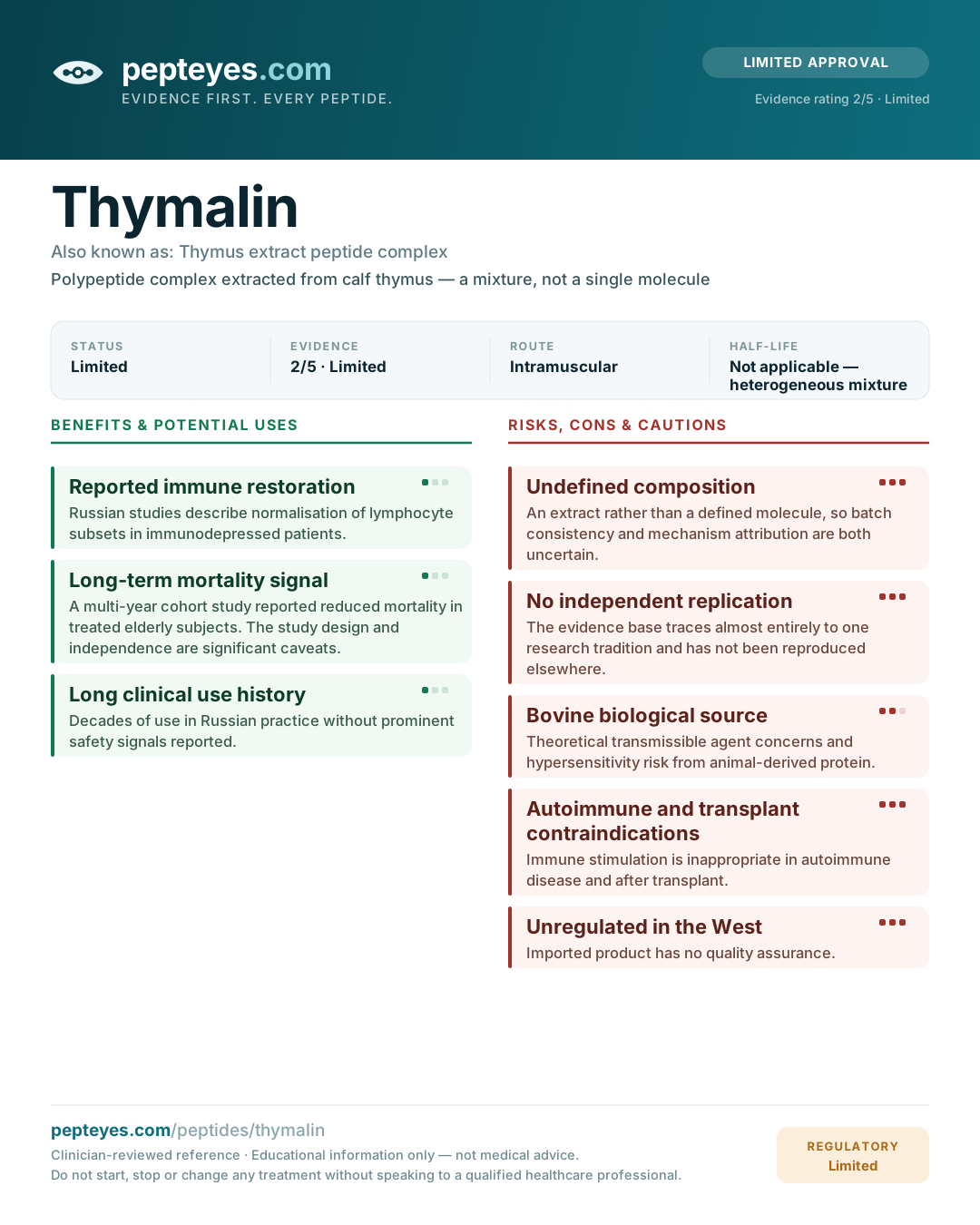
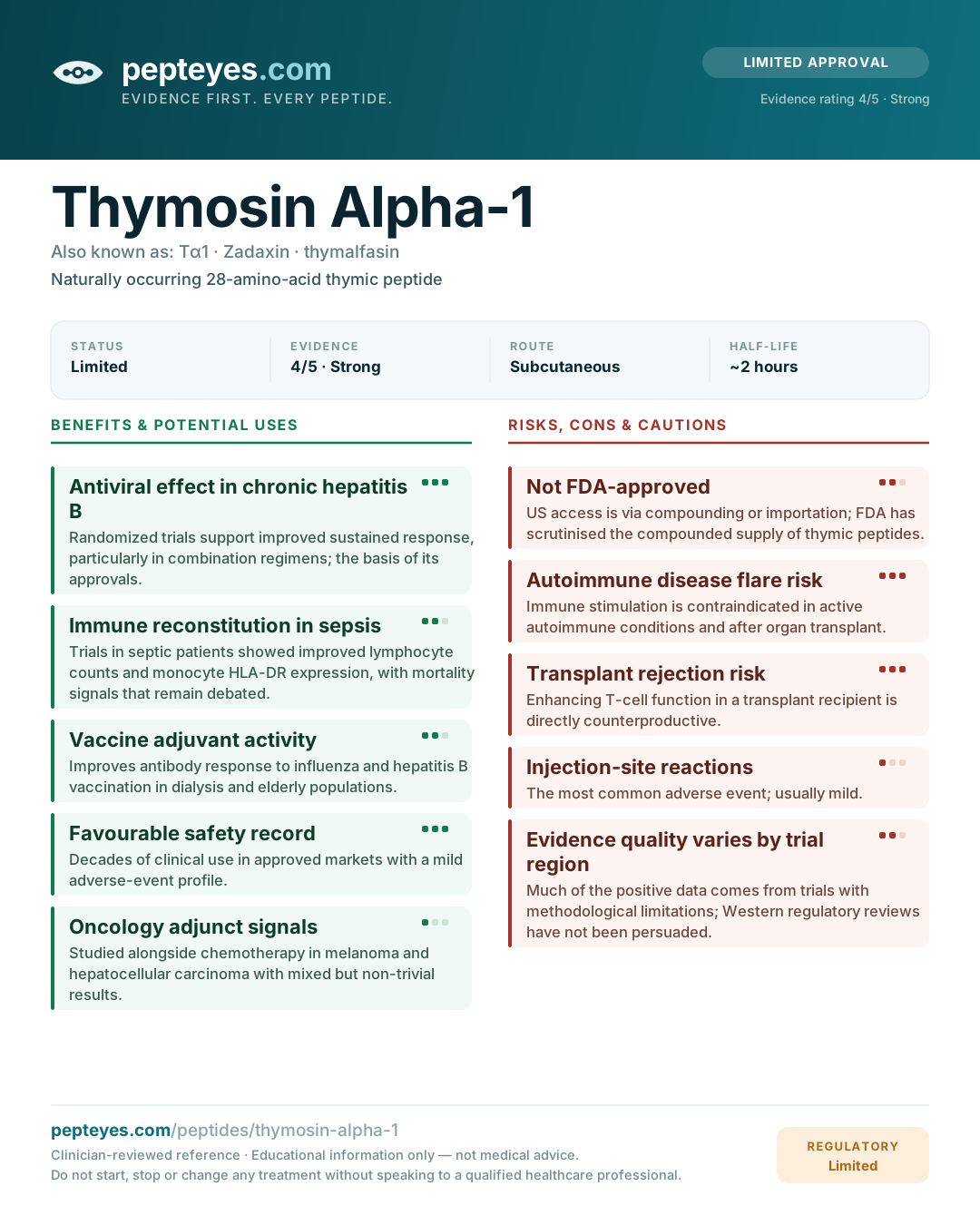
The distinction that mattersThymosin alpha-1 is a single defined 28-amino-acid peptide approved in more than 30 countries with randomized hepatitis trials behind it. Thymalin is an undefined bovine extract registered only in Russia.
These are not equivalent in evidence Thymosin Alpha-1 is rated 4/5 and Thymalin is rated 2/5 — a gap of 2 levels on our scale. Similar marketing does not mean similar proof.
| Thymalin Limited Approval | Thymosin Alpha-1 Limited Approval | |
|---|---|---|
| Evidence rating |
2/5 Limited
Evidence rating 2 out of 5: Limited
|
4/5 Strong
Evidence rating 4 out of 5: Strong
|
| Regulatory status | Registered in Russia as an immunomodulator. Not approved in the US, EU or UK. | Approved in more than 30 countries for hepatitis B/C and as a vaccine adjuvant. Not FDA-approved; US orphan designations exist. |
| Category | Immune & Anti-inflammatory | Immune & Anti-inflammatory |
| Drug class | Polypeptide complex extracted from calf thymus — a mixture, not a single molecule | Naturally occurring 28-amino-acid thymic peptide |
| Route | Intramuscular | Subcutaneous |
| Half-life | Not applicable — heterogeneous mixture | ~2 hours |
| Sequence length | Mixture — no single sequence | 28 residues |
| Molecular weight | — | 3,108.3 Da |
| Studied in | Russian clinical studies in immunodeficiency and post-surgical infection; a long-term gerontology cohort study reporting mortality reduction in elderly participants. | Randomized trials in chronic hepatitis B and C, sepsis (including a large Chinese sepsis RCT), severe COVID-19 cohorts, and as an adjunct in several cancers. |
| Who should avoid it |
|
|
| Legal status | Registered in Russia; unapproved elsewhere. | Approved outside the US. In the US it is unapproved; access routes are legally constrained. |
Benefits — Thymalin
- Reported immune restoration
Russian studies describe normalisation of lymphocyte subsets in immunodepressed patients.
- Long-term mortality signal
A multi-year cohort study reported reduced mortality in treated elderly subjects. The study design and independence are significant caveats.
- Long clinical use history
Decades of use in Russian practice without prominent safety signals reported.
Benefits — Thymosin Alpha-1
- Antiviral effect in chronic hepatitis B
Randomized trials support improved sustained response, particularly in combination regimens; the basis of its approvals.
- Immune reconstitution in sepsis
Trials in septic patients showed improved lymphocyte counts and monocyte HLA-DR expression, with mortality signals that remain debated.
- Vaccine adjuvant activity
Improves antibody response to influenza and hepatitis B vaccination in dialysis and elderly populations.
- Favourable safety record
Decades of clinical use in approved markets with a mild adverse-event profile.
- Oncology adjunct signals
Studied alongside chemotherapy in melanoma and hepatocellular carcinoma with mixed but non-trivial results.
Risks & cons — Thymalin
- Undefined composition
An extract rather than a defined molecule, so batch consistency and mechanism attribution are both uncertain.
- No independent replication
The evidence base traces almost entirely to one research tradition and has not been reproduced elsewhere.
- Bovine biological source
Theoretical transmissible agent concerns and hypersensitivity risk from animal-derived protein.
- Autoimmune and transplant contraindications
Immune stimulation is inappropriate in autoimmune disease and after transplant.
- Unregulated in the West
Imported product has no quality assurance.
Risks & cons — Thymosin Alpha-1
- Not FDA-approved
US access is via compounding or importation; FDA has scrutinised the compounded supply of thymic peptides.
- Autoimmune disease flare risk
Immune stimulation is contraindicated in active autoimmune conditions and after organ transplant.
- Transplant rejection risk
Enhancing T-cell function in a transplant recipient is directly counterproductive.
- Injection-site reactions
The most common adverse event; usually mild.
- Evidence quality varies by trial region
Much of the positive data comes from trials with methodological limitations; Western regulatory reviews have not been persuaded.
A comparison is not a recommendation. Neither column is being suggested for you. Which — if either — is appropriate depends on your diagnosis, history and medications, and that is a conversation for a qualified clinician.