Supplied as a lyophilised powder to reconstitute
Longevity & Mitochondrial
At a glance
Ten answers, each one line. Open any row for the detail behind it.
What it does A genuinely interesting discovery — a hormone encoded by the mitochondrial genome rather…
A genuinely interesting discovery — a hormone encoded by the mitochondrial genome rather than the nucleus. The exercise-mimetic and metabolic findings in mice are striking, and after a decade the compound has finally entered a randomised human trial, which began enrolling in 2026 and has reported nothing. Everything claimed for it in people is still extrapolation, and two of the load-bearing human findings have weakened: the plasma-level associations rest on an assay that mass spectrometry does not corroborate, and the longevity variant has since been reinterpreted as a type 2 diabetes risk signal.
Half-life Not characterised. No pharmacokinetic study of MOTS-c has been… — Nothing established
Not characterised. No pharmacokinetic study of MOTS-c has been published in humans or in any animal species. The phase 1 programme of the analogue CB4211 collected pharmacokinetic data but never released it. In vitro plasma work done for doping control identified four rapid degradation products and two oxidation products, which is consistent with a short-lived unmodified peptide — but that is an inference from metabolite chemistry, not a measured half-life.
Typical studied dose None established. No dose has ever been set for a human being, because… — Nothing established
None established. No dose has ever been set for a human being, because the studies that would set one have not been done. Any figure circulating for this compound was chosen by somebody selling it or by somebody guessing.
How often it is used No schedule exists. Cycles and intervals quoted for this compound come… — Nothing established
No schedule exists. Cycles and intervals quoted for this compound come from forums rather than from any study, and they vary because nothing anchors them.
How it is taken Subcutaneous (research) — Documented
Subcutaneous (research)
Main side effects No completed human trial, and none with results · Unknown dosing and pharmacokinetics · Unregulated supply — Carries serious risk
No completed human trial, and none with results — Everything claimed for MOTS-c in people rests on correlational data. The first randomised placebo-controlled trial of the peptide itself began recruiting in 2026 — a phase 2 study in prediabetes and overweight, with insulin sensitivity as its endpoint and primary completion scheduled for 2027 — so as of now no controlled trial has reported. The only MOTS-c analogue previously taken into humans was suspended during phase 1 to address injection-site reactions, and its results were never published.
Unknown dosing and pharmacokinetics — Circulating protocols are invented, not derived from human PK data.
Unregulated supply — Research-chemical market.
Storage before mixing As a sealed lyophilised powder, refrigerated is typical and a freezer…
As a sealed lyophilised powder, refrigerated is typical and a freezer suits long storage; both should be dark and dry. A dry powder tolerates a few days out of the cold far better than anything in solution — which is why it ships that way.
Shelf life after mixing Once mixed it is refrigerated and treated as short-lived. Bacteriostatic…
Once mixed it is refrigerated and treated as short-lived. Bacteriostatic water contains a preservative and buys the longer window; sterile water contains none and buys a much shorter one. Peptides in solution also degrade on their own, so the container is only half the question.
Evidence level 1/5 · Minimal — Nothing established
Animal or laboratory data only. No human efficacy evidence.
Regulatory status Research Use Only — Nothing established
Not approved. Active academic research subject; no completed human efficacy trials. Not approved for human use.
Overview
A genuinely interesting discovery — a hormone encoded by the mitochondrial genome rather than the nucleus. The exercise-mimetic and metabolic findings in mice are striking, and after a decade the compound has finally entered a randomised human trial, which began enrolling in 2026 and has reported nothing. Everything claimed for it in people is still extrapolation, and two of the load-bearing human findings have weakened: the plasma-level associations rest on an assay that mass spectrometry does not corroborate, and the longevity variant has since been reinterpreted as a type 2 diabetes risk signal.
Not approved for human use anywhereNo approval anywhere for human use. Sold under research-use labelling. Not approved for human use.
| Regulatory status | Not approved. Active academic research subject; no completed human efficacy trials. |
|---|---|
| Drug class | Mitochondrial-derived peptide — 16 amino acids encoded in mitochondrial DNA |
| Route | Subcutaneous (research) |
| Half-life | Not characterised. No pharmacokinetic study of MOTS-c has been published in humans or in any animal species. The phase 1 programme of the analogue CB4211 collected pharmacokinetic data but never released it. In vitro plasma work done for doping control identified four rapid degradation products and two oxidation products, which is consistent with a short-lived unmodified peptide — but that is an inference from metabolite chemistry, not a measured half-life. |
| Evidence rating |
1/5 Minimal
Evidence rating 1 out of 5: Minimal
Animal or laboratory data only. No human efficacy evidence. |
| Studied in | Mouse and rat metabolic, exercise, liver and cardiac models; human observational work correlating plasma MOTS-c with metabolic health, exercise and longevity phenotypes. MOTS-c itself entered human testing for the first time in February 2026, in a Phase 2a randomised, double-blind, placebo-controlled trial in adults with prediabetes and overweight or obesity (NCT07505745; industry-sponsored, one listed site, 120 participants planned, insulin sensitivity at 12 weeks as the efficacy endpoint) — recruiting, with no results. Separately, a modified MOTS-c analogue, CB4211, completed a randomised placebo-controlled phase 1 programme in 2021 (NCT03998514) whose results were never published or posted to the registry. |
MOTS-c sequence & structure
MOTS-c is a 16-residue linear peptide with a free C-terminal acid; molecular weight 2,174.6 Da.
| Three-letter | H-Met-Arg-Trp-Gln-Glu-Met-Gly-Tyr-Ile-Phe-Tyr-Pro-Arg-Lys-Leu-Arg-OH |
|---|---|
| Length | 16 amino acid residues |
| Modifications | None — an unmodified chain of standard L-amino acids |
| Molecular formula | C101H152N28O22S2 |
| Molecular weight | 2,174.6 Da (average, free base) |
| SMILES | CCC(C)C(C(=O)NC(CC1=CC=CC=C1)C(=O)NC(CC2=CC=C(C=C2)O)C(=O)N3CCCC3C(=O)NC(CCCNC(=N)N)C(=O)NC(CCCCN)C(=O)NC(CC(C)C)C(=O)NC(CCCNC(=N)N)C(=O)O)NC(=O)C(CC4=CC=C(C=C4)O)NC(=O)CNC(=O)C(CCSC)NC(=O)C(CCC(=O)O)NC(=O)C(CCC(=O)N)NC(=O)C(CC5=CNC6=CC=CC=C65)NC(=O)C(CCCNC(=N)N)NC(=O)C(CCSC)N |
| Identifiers | CAS 1627580-64-6 · PubChem CID 146675088 · UniProt A0A0C5B5G6 |
| Which molecule | This record describes human MOTS-c, the 16-residue peptide translated from a short open reading frame inside the mitochondrial 12S rRNA gene (MT-RNR1) using the standard cytoplasmic genetic code (the mitochondrial code would give tandem start/stop codons), as first described by Lee et al. 2015. PubChem holds several CIDs for the same sequence (146675088, 176489569, 255386757); 146675088 is the one carrying the CAS number. Rodent MOTS-c orthologues differ in sequence and are not covered here. |
| Sources | UniProtKB/Swiss-Prot A0A0C5B5G6 (MOTSC_HUMAN), reviewed, PE=1: sequence MRWQEMGYIFYPRKLR, 16 aa, mass 2175 Da, gene MT-RNR1PubChem CID 146675088 (Mots-c): formula, MW, CAS, SMILESLee C et al., Cell Metab 2015;21(3):443-54, PMID 25738459 (abstract via NCBI E-utilities)Wikipedia: MOTS-c (sequence, MT-RNR1 origin, cites Lee 2015)NovoPro Labs MOTS-c product page (cross-check) |
Unmodified linear 16-mer with free N-terminal methionine and free C-terminal acid; no D-residues, amidation or disulfides. The sequence in UniProt/Swiss-Prot A0A0C5B5G6 and the PubChem structure (SMILES) agree exactly, and the formula C101H152N28O22S2 / MW 2174.6 recomputed from the sequence matches PubChem (UniProt rounds to 2175). Vendor material is usually the acetate or TFA salt; the formula and MW given are for the free base. Not in DrugBank; the CAS number is taken from PubChem only (check digit valid).
Record confidence: high — two independent authoritative sources agree on the sequence and modifications. Every sequence on the site is listed with its sources on the peptide sequences index.
How it works
Translocates to the nucleus under metabolic stress and regulates adaptive nuclear gene expression, notably via AMPK activation and the folate-methionine cycle. Improves insulin sensitivity and glucose utilisation in skeletal muscle in animal models.
Evidence base
Rated 1 of 5 — Minimal. Animal or laboratory data only. No human efficacy evidence.
- Legitimate and active academic science; zero human interventional evidence.
- The human observational literature rests on a measurement nobody has cross-validated. Anti-doping chemists who built a MOTS-c mass-spectrometry method to WADA's laboratory standard could not confirm the endogenous plasma concentrations that a commercially available ELISA reported in the same reference population of twenty healthy subjects, and recorded considerable differences between the two methods. Every association between 'plasma MOTS-c' and exercise, metabolic health or longevity is built on that assay class.
- The human genetics has been revised against MOTS-c by the same investigators who proposed it. A 2015 paper suggested the Asian-specific m.1382A>C variant, which changes residue 14 of MOTS-c, contributed to Japanese longevity, on the basis of a small centenarian sample. A 2021 meta-analysis of three cohorts totalling more than 27,000 people instead found that men carrying the C allele had a higher prevalence of type 2 diabetes, concentrated in those with the least physical activity, with no lifespan effect in the expanded longevity dataset; the variant peptide was less insulin-sensitising in cells and failed to reproduce wild-type MOTS-c's effects in mice. The variant now reads as pro-diabetogenic rather than pro-longevity, which is the opposite of how it is usually cited.
- Much of the foundational work comes from one programme with a commercial stake, and the biology is still moving. The senior authors of the 2015 discovery paper declared consulting relationships and equity in CohBar — the company that took the only MOTS-c analogue into humans — in the 2021 exercise paper, the 2021 genetics paper and the 2026 host-defence paper. That is disclosed rather than concealed, but it means the influential mouse literature and the clinical programme were not independent of each other. The map is also visibly incomplete: a decade after the metabolic characterisation, the same group reported the peptide is an interferon-linked antibacterial host-defence factor, a function nobody was accounting for when the exercise and longevity claims were made.
Benefits and risks, weighed against the evidence
Every entry below carries the strength of the evidence behind it — three bars for strong human data, two for moderate, one for preliminary or preclinical work. The two columns are not equal by design: where a compound has more documented risk than demonstrated benefit, the lists say so.
Reported benefits
7 entries
-
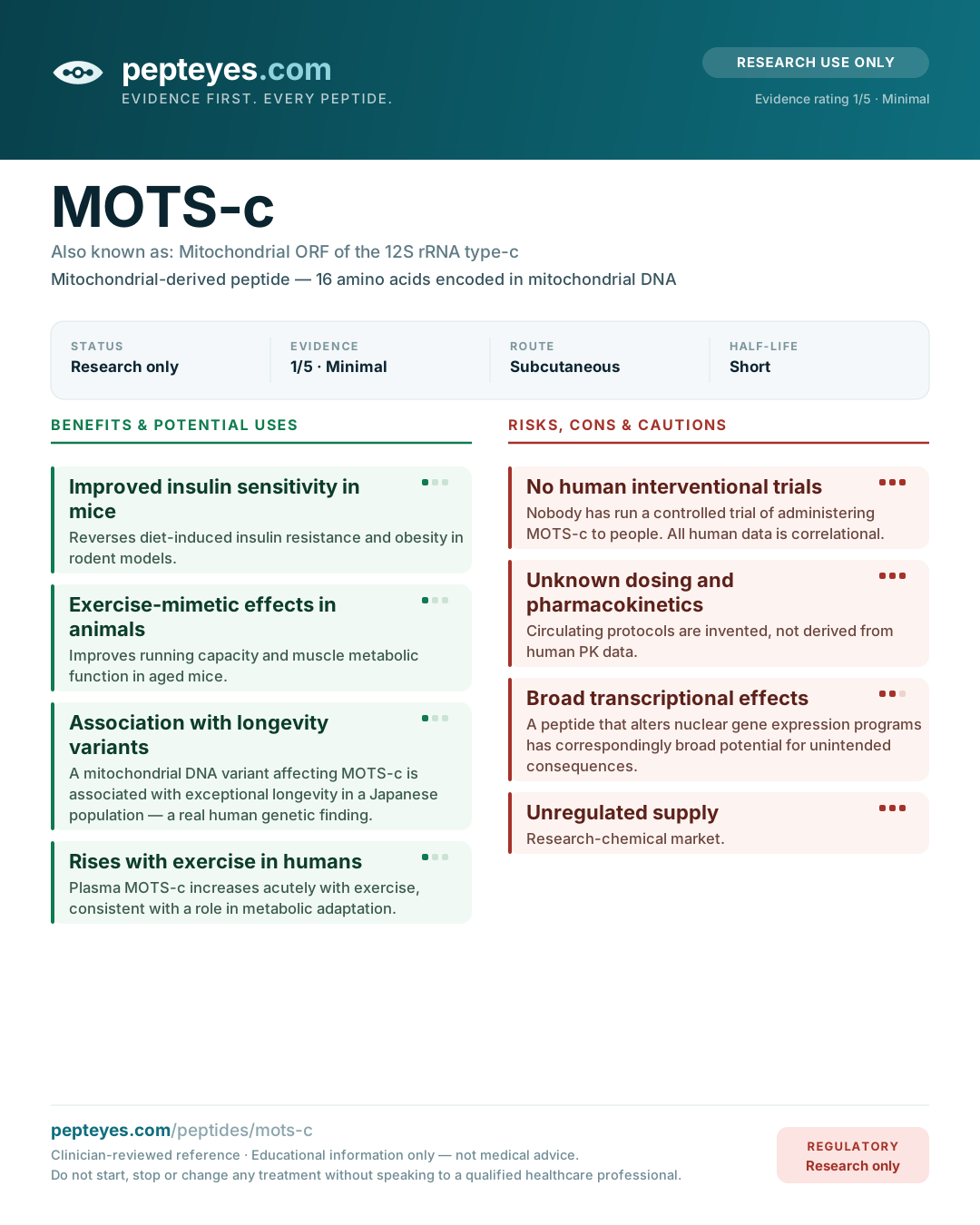
Improved insulin sensitivity in mice
Reverses diet-induced insulin resistance and obesity in rodent models.
Evidence: Preliminary -
Exercise-mimetic effects in animals
Improves running capacity and muscle metabolic function in aged mice.
Evidence: Preliminary -
A human genetic signal that later reversed direction
A mitochondrial variant altering MOTS-c was proposed as a longevity factor from a small Japanese centenarian sample. A far larger follow-up by the same consortium, across three cohorts and tens of thousands of people, found no lifespan effect in the expanded data and instead associated the variant with higher type 2 diabetes prevalence in men, with reduced peptide activity in cell and mouse experiments. It is a genuine human finding, and it now points the other way.
Evidence: Preliminary -
Rises with exercise in humans
Plasma MOTS-c increases acutely with exercise, consistent with a role in metabolic adaptation.
Evidence: Preliminary -
A metabolic signal in the only human trial of a MOTS-c analogue
CB4211, a modified MOTS-c analogue, was tested in a randomised, placebo-controlled, triple-masked phase 1 programme of 88 participants that completed in 2021. Its four-week stage in roughly twenty adults with fatty liver disease was reported to show reductions in ALT and AST, lower glucose and a trend to lower body weight versus placebo. Read that carefully: these were exploratory pharmacodynamic endpoints inside a safety and pharmacokinetic study, the findings were announced only by company press release and have never been published or posted to the registry, and the sponsor later stated the formulation used was not suitable for further development. It is the closest thing to human efficacy evidence anywhere in this family, and it is very thin.
Evidence: Preliminary -
Reversed diet-induced steatohepatitis in mice
In a 2024 Cell Reports study, both long-term preventive and short-term therapeutic MOTS-c treatment reduced liver steatosis, apoptosis, inflammation and fibrosis in mice on a NASH-inducing diet, and the effect depended on a direct interaction with the BH3 domain of Bcl-2 — a target distinct from the AMPK mechanism MOTS-c is usually described through. Mice only, one laboratory, and no liver endpoint has ever been measured in a human given MOTS-c itself.
Evidence: Preliminary -
Direct antibacterial and immune-programming activity
A 2026 eLife report identified MOTS-c as a mitochondrial-encoded host-defence peptide: it targeted the membranes of E. coli and methicillin-resistant Staphylococcus aureus in vitro, neutralised MRSA infectivity in a mouse peritonitis model, was induced in human monocytes by interferon gamma and by bacterial lipopolysaccharide, and reprogrammed mouse monocytes toward macrophages with an interferon and antigen-presentation signature. This is a striking and unexpected piece of biology rather than a reason to inject anything, and it cuts both ways — it means the peptide's functions were incompletely mapped when the metabolic and longevity claims were built.
Evidence: Preliminary
Risks and cautions
7 entries · 5 serious or common
-
No completed human trial, and none with results
Everything claimed for MOTS-c in people rests on correlational data. The first randomised placebo-controlled trial of the peptide itself began recruiting in 2026 — a phase 2 study in prediabetes and overweight, with insulin sensitivity as its endpoint and primary completion scheduled for 2027 — so as of now no controlled trial has reported. The only MOTS-c analogue previously taken into humans was suspended during phase 1 to address injection-site reactions, and its results were never published.
Evidence: Serious -
Unknown dosing and pharmacokinetics
Circulating protocols are invented, not derived from human PK data.
Evidence: Serious -
Broad transcriptional effects
A peptide that alters nuclear gene expression programs has correspondingly broad potential for unintended consequences.
Evidence: Moderate evidence -
Unregulated supply
Research-chemical market.
Evidence: Serious -
Prohibited in sport at all times
MOTS-c is named explicitly on the WADA 2026 Prohibited List, under S4.4.1 as an activator of AMP-activated protein kinase alongside AICAR and BAM15, and is prohibited both in and out of competition. Substances in class S4.4 are non-Specified, meaning an adverse finding carries the standard sanction without the mitigation route available for Specified substances. This is also detectable rather than theoretical: anti-doping laboratories validated a plasma mass-spectrometry method for MOTS-c, four of its metabolites and two oxidation products in 2019, explicitly for doping control.
Evidence: Serious -
"Exercise in a vial" is marketing, not a finding
The claim rests entirely on rodent work. The headline result — doubled treadmill running capacity — was in 22-month-old mice. A separate single-dose experiment in untrained mice improved running time and distance by roughly twelve and fifteen percent. The human component of that same body of work measured endogenous MOTS-c rising with exercise in ten sedentary young men; it did not administer anything. No study in any species has compared MOTS-c against training, and no human has been given MOTS-c and tested for physical performance. The real cost of the slogan is substituting an injection for the one intervention in this area that has hard outcome data behind it.
Evidence: Moderate evidence -
You cannot verify that a vial contains MOTS-c
There is no pharmacopoeial monograph or reference standard for MOTS-c, so research-use-only material carries no enforceable identity, potency, sterility or endotoxin requirement, and no independent test the buyer can run. The measurement problem is not only commercial: when anti-doping chemists validated a mass-spectrometry assay against a commercially available ELISA, the two methods returned materially different MOTS-c concentrations in the same human plasma — specialists do not yet agree on how to quantify this peptide. The molecule is also an unmodified linear sequence containing two methionines and a tryptophan, all oxidation-prone, which is why the doping assay had to include oxidation products; material can degrade after a certificate of analysis was issued. Peer-reviewed analysis of peptides bought from online research-chemical sellers (Journal of Medical Internet Research, 2024) found measured content a small fraction of the label claim and detectable endotoxin in every sample tested.
Evidence: Serious
Counts are not a score. A single serious risk can outweigh several well-supported benefits, and a long benefit list built on preclinical work outweighs nothing at all.
Opinion — what people actually report
5 themes · 1 reported benefit · 2 reported problems
This is the weakest tier on this site. These are themes drawn from public discussion — forums, subreddits and patient threads — not from trials. There is no control group, no denominator, and no way to confirm that what someone injected matched its label. People post when a result is dramatic and when something goes wrong, and rarely when nothing happens, so treat everything below as a description of the conversation rather than of the compound. The bars count how often a thing is said, not how well it is supported.
-
Endurance and perceived energy Reported benefit. Recurring: Raised regularly, though not by everyone.
The most common claim, usually from endurance athletes describing easier sessions rather than measured performance gains.
-
A large share of reports are of no effect Reported problem. Dominant theme: Comes up in most discussions of this compound.
Non-response is prominent in most threads, and the enthusiasm is noticeably thinner than for compounds with an obvious subjective signal.
-
The exercise-mimetic framing drives interest Practical note. Dominant theme: Comes up in most discussions of this compound.
The mitochondrial-peptide story is what sells it, and posters frequently repeat the mechanism in more detail than they report any effect.
-
Almost no long-term accounts exist Practical note. Recurring: Raised regularly, though not by everyone.
Discussion is dominated by short trials of a few weeks, with very little follow-through.
-
Injection site irritation Reported problem. Occasional: Reported by a minority, or in specific contexts.
Redness or a small lump at the injection site is mentioned occasionally, and is generally attributed to technique.
Where the reports and the evidence part ways
MOTS-c is a genuine discovery — a mitochondrial-derived peptide with real and interesting biology around AMPK activation and metabolic regulation. That biology is established in cells and mice. What does not exist is human trial evidence for exercise performance, metabolic health or longevity in the people using it, so the entire benefit case is extrapolation from mouse work that showed improved insulin sensitivity and exercise capacity. The community is unusually candid about non-response, which is worth noting: when a compound has a strong mechanistic story and weak subjective effects, forums typically resolve that in the compound's favour, and here they largely have not.
Cheat sheet
The full sheet, all 77 compounds →The community reference numbers for this compound — reconstitution, working dose, cycle and bloodwork. Research and education only, not medical advice, and not part of the evidence-rated monograph above. Doses assume a 1mL / 100-unit insulin syringe — the calculator does the units for you.
Protocol overview
Dosing & reconstitution 10 mg vial
| WEEK | DAILY DOSE | UNITS PER INJECTION |
|---|---|---|
| Weeks 1 to 2 | 200 mcg (0.2 mg) | 2 units (0.02 mL) |
| Weeks 3 to 4 | 400 mcg (0.4 mg) | 4 units (0.04 mL) |
| Weeks 5 to 6 | 600 mcg (0.6 mg) | 6 units (0.06 mL) |
| Weeks 7 to 8 | 800 mcg (0.8 mg) | 8 units (0.08 mL) |
| Weeks 9 to 10+ | 1,000 mcg (1.0 mg) | 10 units (0.10 mL) |
Frequency: Inject once daily subcutaneously. Stay at each dose level for approximately 2 weeks before increasing, and monitor for any adverse reactions. For 10 unit (0.10 mL) or smaller administrations, consider 30- or 50-unit insulin syringes for improved readability.
On the master sheet
- Vial
- 10mg
- BAC
- 3mL isotonic
- Dose
- 5–10mg weekly, split
- Route
- SubQ
- Cycle
- 4–8 wks
- Time Off
- 2–4 wks
- Bloodwork
- HbA1c, insulin, lipids
- Vial
- 10mg
- BAC
- 3mL isotonic
- Dose
- 5–10mg weekly, split
- Route
- SubQ
- Cycle
- 4–8 wks
- Time Off
- 2–4 wks
- Bloodwork
- HbA1c, insulin
Readers on MOTS-c
Questions and answers from readers, under generated names. Nothing here has been checked or reviewed by the site and none of it is medical advice. It is the least verified thing on this page — and it is here because people ask each other these things anyway, and most of the other places they can ask are run by sellers.
0 questions · 0 answers
No questions yet. Ask the first one above — it takes one box and an email address.
How names work, and the house rules
Names. Every verified address is given one generated name — two ordinary words — and keeps it. Nobody chooses a name and nobody can take another's. Posts marked desk were written by the site's own editorial desk, usually to open a thread; they carry a generated name like everyone else's and are held to the site's rules, which means they never state an amount.
What is not allowed. Selling, sourcing, vendor names, coupon codes and "message me" — posts that read that way are held and usually removed. Personal medical details you would not want public. Abuse. Instructions framed as what someone else should do.
What this is not. A reader's report of what happened to them is a report, not a finding, and an answer here is one person's view. Nothing in this section changes the evidence rating above it. If something you read here would change what you take, take it to a pharmacist or physician first.
Your data. Delete any post of yours at any time, or remove everything you have written together with your name. Details in the privacy notice.
Who should avoid it
- Human use outside research settings
If used under medical supervision, monitor
- No validated monitoring exists
Interactions
Not exhaustive. Always have a pharmacist or physician review your full medication list — including supplements.
- Metformin and other AMPK-directed agents — inferred: MOTS-c's characterised cellular action converges on the same folate/AICAR/AMPK node that metformin acts through, so additive or wholly redundant signalling is plausible and the combination has never been tested in any species. The one relevant human observation is null — in a randomised breast-cancer trial, 24 weeks of daily metformin did not change circulating MOTS-c, which the authors attributed to metformin not reaching skeletal muscle, the main tissue producing it.
- Insulin, sulfonylureas and glucose-lowering drugs generally — inferred: the core rodent finding is improved insulin sensitivity and glucose disposal in skeletal muscle, so additive glucose lowering is the predictable hazard. There is no human interaction data of any kind. The Phase 2a trial now enrolling excludes anyone who has taken metformin, a GLP-1 receptor agonist or an SGLT2 inhibitor in the prior three months — the sponsor avoided the question rather than answered it.
- Antifolates such as methotrexate, pemetrexed and trimethoprim — inferred: MOTS-c was characterised as an inhibitor of the folate one-carbon cycle and the de novo purine synthesis tethered to it, which is the pathway these drugs already block. Overlapping inhibition of one pathway from two directions is a mechanistic concern with no data behind it in either direction, and no case reports.
- Exercise and training programmes — inferred: exercise is itself a strong AMPK stimulus and raises endogenous MOTS-c in human skeletal muscle roughly twelve-fold, so exogenous peptide is being layered onto an already-activated pathway. Whether that adds anything, or blunts the adaptive signal the way some antioxidant supplements blunt training response, has not been studied in humans or animals.
- Immunomodulators and antibiotics — inferred: MOTS-c was reported in 2026 to be an interferon-linked host-defence peptide with direct antibacterial activity and the ability to reprogram monocyte differentiation, so an immune interaction is now mechanistically plausible where nobody would have predicted one in 2015. Entirely untested, in either direction.
Commonly confused with
These mix-ups cause real harm — two products sold under one name, or two molecules whose effects run in opposite directions.
Both are mitochondrial-derived peptides from the same USC research programme — humanin found first, MOTS-c second — and they are sold and discussed side by side as interchangeable 'mitochondrial peptides'. They are not interchangeable: humanin's characterised action is anti-apoptotic cytoprotection via Bcl-2 family proteins, studied mostly in neurons and cardiomyocytes, while MOTS-c's is metabolic signalling through AMPK and the folate cycle in skeletal muscle. A reader who treats them as one compound imports humanin's Alzheimer and stroke model literature into MOTS-c and concludes the metabolic peptide has been studied for brain protection, which it has not.
Compare side by sideBoth are described as mitochondrial peptides given by subcutaneous injection and are routinely listed together, but elamipretide works by binding cardiolipin in the inner mitochondrial membrane — an unrelated mechanism — and has been through multiple phase 3 trials with an approval in one ultra-rare disease. MOTS-c has one randomised trial, which began enrolling in 2026 and has reported nothing. Reading across from elamipretide's regulatory history produces the false impression that MOTS-c has a completed clinical development record behind it, and that its safety profile in humans is therefore known.
Compare side by sideRegulatory & legal status
Not approved for human use.
Off Category 2 since April 2026 and recommended by the FDA’s advisory committee in July 2026 — but not yet on the 503A bulks list, so not yet lawfully compoundable.
- Removed from Category 2
- 22 April 2026
- Advisory committee vote
- 7–5, two abstentions on 23–24 July 2026, considered for obesity and osteoporosis
- Approved as a drug?
- No. Compounding status and drug approval are separate questions; this compound has no approval for the uses it is sold for.
The full dated record, with sources, and every affected peptide →
Infographic
What this entry was checked against
The specific records this monograph was verified against on its last research pass. We link live literature searches below as well, because these are a snapshot and the literature is not.
- WADA 2026 Prohibited List (official PDF): S4.4.1 names "mitochondrial open reading frame of the 12S rRNA-c (MOTS-c)" as an AMPK activator; S4.4 substances are non-Specified; prohibited at all times
- ClinicalTrials.gov NCT07505745 — Phase 2a randomised, double-blind, placebo-controlled trial of MOTS-c in prediabetes with overweight/obesity; recruiting since February 2026, 120 planned, Matsuda Index at 12 weeks, no results
- ClinicalTrials.gov NCT03998514 — randomised, triple-masked, placebo-controlled phase 1a/1b of the MOTS-c analogue CB4211, 88 participants, completed April 2021, injection-site assessment as a primary outcome, no results posted
- CohBar Inc. Form 10-Q (SEC EDGAR, Q1 2023): CB4211 trial "suspended in November 2018 in order to address injection site reactions"; formulation used in the phase 1b stage not considered "suitable for further development"
- Knoop A, Thomas A, Thevis M. Mass-spectrometric detection of MOTS-c in plasma for doping control. Rapid Commun Mass Spectrom 2019;33(4):371-380 — ELISA-derived endogenous levels could not be confirmed by LC/MS; four metabolites and two oxidation products characterised (PMID 30394592)
- Zempo H et al. A pro-diabetogenic mtDNA polymorphism in the mitochondrial-derived peptide, MOTS-c. Aging (Albany NY) 2021;13(2):1692-1717 — m.1382A>C / K14Q, meta-analysis of three cohorts (n=27,527), higher T2D prevalence in men, no lifespan effect in expanded data (PMID 33468709)
- Cuyàs E et al. Circulating levels of MOTS-c in patients with breast cancer treated with metformin. Aging (Albany NY) 2022 — randomised metformin arm, 24 weeks, no significant change in circulating MOTS-c (PMID 36490309)
- Rice MC et al. MOTS-c is a mitochondrial-encoded interferon-linked host defense peptide. eLife 2026 — antibacterial activity against E. coli and MRSA, MRSA neutralisation in mouse peritonitis, monocyte reprogramming (PMID 42611943)
Where to read further
We link to live literature searches rather than a frozen citation list, so you always see current results — including anything published after our last review.
- PubMed — all published literature on MOTS-c
- PubMed — randomized controlled trials only
- ClinicalTrials.gov — registered human trials
Related peptides in Longevity & Mitochondrial
Terms used on this page
- Mass Spectrometry Identity Confirmation
- Mass spectrometry identity confirmation ionises a sample and compares its measured mass-to-charge ratio against the mass calculated from the sequence the product claims to be.
- Insulin Resistance
- Insulin resistance is a state in which a given insulin concentration produces less than the expected effect on glucose uptake, hepatic glucose output or lipolysis.
- Preclinical Study and Animal Model
- Preclinical studies are the laboratory, cell and animal experiments done before any human exposure, establishing mechanism, target engagement and the toxicology package that permits a first trial.
- Meta-Analysis
- A meta-analysis statistically combines effect estimates from several studies into a pooled estimate, weighting each by its precision, and is a method rather than a grade of evidence.
- Amino Acid Residue
- An amino acid residue is what remains of an amino acid once it has been joined into a chain and a molecule of water has been lost, and residue count is how peptide length is stated.
- Peptide Analog
- A peptide analog is a molecule built from a native peptide sequence with deliberate substitutions or chemical modifications intended to change its stability, duration or receptor profile.
This page is educational information, not medical advice. It cannot account for your medical history, medications, or risk factors. Do not start, stop or change any treatment based on it. Speak to a qualified healthcare professional who knows your case.