Supplied as a lyophilised powder to reconstitute
Longevity & Mitochondrial
At a glance
Ten answers, each one line. Open any row for the detail behind it.
What it does The most publicly contested molecule in aging research.
The most publicly contested molecule in aging research. A 2013 paper reported that GDF-11 declines with age and that restoring it rejuvenates heart, muscle and brain in mice. Subsequent work from other groups found the opposite on several points, including the direction of the age-related change.
Half-life Not characterised. Circulates largely as a latent propeptide… — Nothing established
Not characterised. Circulates largely as a latent propeptide complex; one review cites ~12 h for GDF11 without naming a species or study.
Typical studied dose None established. No dose has ever been set for a human being, because… — Nothing established
None established. No dose has ever been set for a human being, because the studies that would set one have not been done. Any figure circulating for this compound was chosen by somebody selling it or by somebody guessing.
How often it is used No schedule exists. Cycles and intervals quoted for this compound come… — Nothing established
No schedule exists. Cycles and intervals quoted for this compound come from forums rather than from any study, and they vary because nothing anchors them.
How it is taken Intraperitoneal or subcutaneous (research) — Documented
Intraperitoneal or subcutaneous (research)
Main side effects Core findings contested by independent groups · Assay cross-reactivity problem · Muscle atrophy in some studies — Carries serious risk
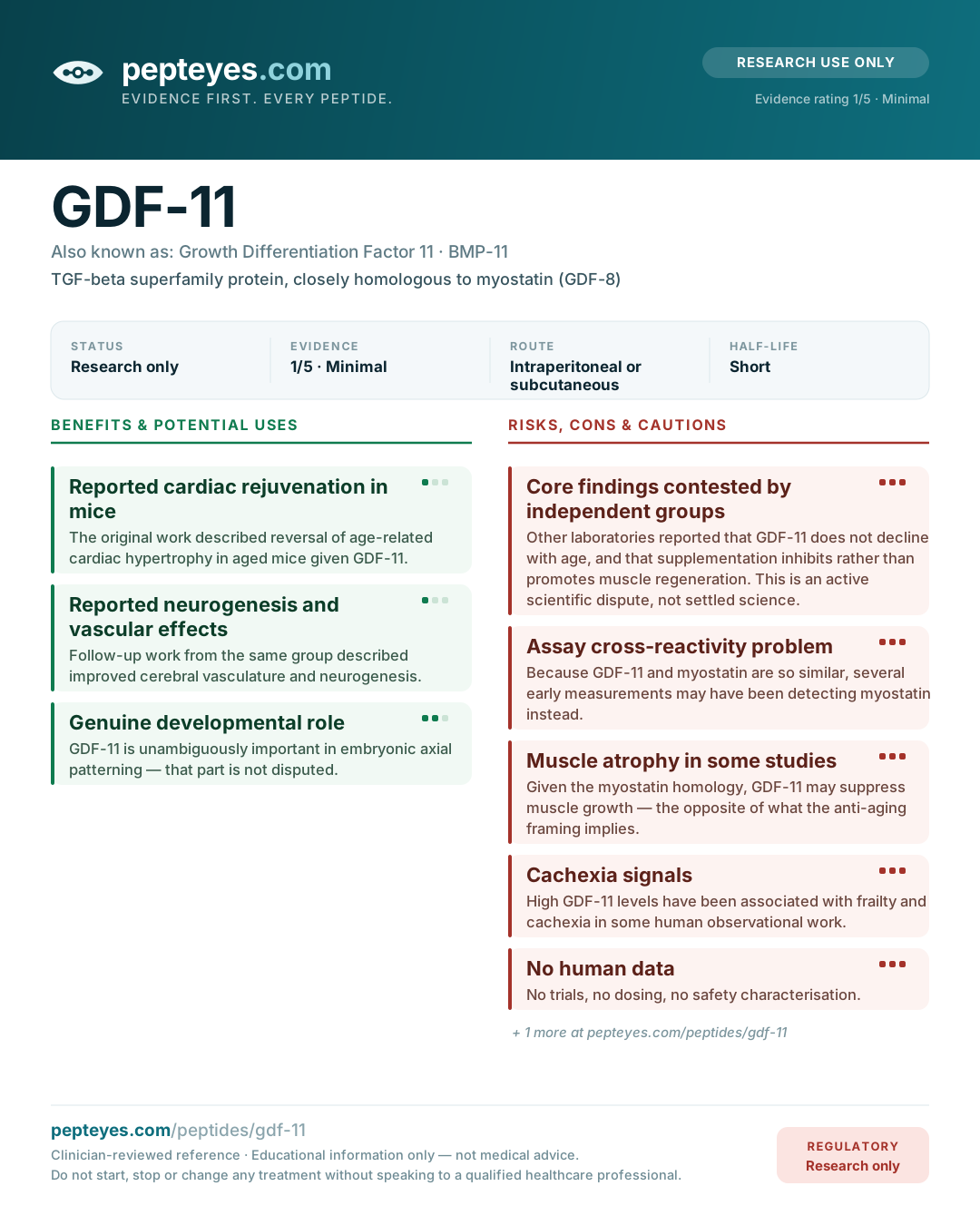
Core findings contested by independent groups — Other laboratories reported that GDF-11 does not decline with age, and that supplementation inhibits rather than promotes muscle regeneration. This is an active scientific dispute, not settled science.
Assay cross-reactivity problem — Because GDF-11 and myostatin are so similar, several early measurements may have been detecting myostatin instead.
Muscle atrophy in some studies — Given the myostatin homology, GDF-11 may suppress muscle growth — the opposite of what the anti-aging framing implies.
Storage before mixing As a sealed lyophilised powder, refrigerated is typical and a freezer…
As a sealed lyophilised powder, refrigerated is typical and a freezer suits long storage; both should be dark and dry. A dry powder tolerates a few days out of the cold far better than anything in solution — which is why it ships that way.
Shelf life after mixing Once mixed it is refrigerated and treated as short-lived. Bacteriostatic…
Once mixed it is refrigerated and treated as short-lived. Bacteriostatic water contains a preservative and buys the longer window; sterile water contains none and buys a much shorter one. Peptides in solution also degrade on their own, so the container is only half the question.
Evidence level 1/5 · Minimal — Nothing established
Animal or laboratory data only. No human efficacy evidence.
Regulatory status Research Use Only — Nothing established
Preclinical research protein. No human trials. Not approved. Its central claims are scientifically contested. Not approved for human use.
Overview
The most publicly contested molecule in aging research. A 2013 paper reported that GDF-11 declines with age and that restoring it rejuvenates heart, muscle and brain in mice. Subsequent work from other groups found the opposite on several points, including the direction of the age-related change.
Not approved for human use anywhereNo approval anywhere for human use. Sold under research-use labelling. Not approved for human use.
| Regulatory status | Preclinical research protein. No human trials. Not approved. Its central claims are scientifically contested. |
|---|---|
| Drug class | TGF-beta superfamily protein, closely homologous to myostatin (GDF-8) |
| Route | Intraperitoneal or subcutaneous (research) |
| Half-life | Not characterised. Circulates largely as a latent propeptide complex; one review cites ~12 h for GDF11 without naming a species or study. |
| Evidence rating |
1/5 Minimal
Evidence rating 1 out of 5: Minimal
Animal or laboratory data only. No human efficacy evidence. |
| Studied in | Mouse parabiosis and supplementation studies with directly conflicting results across laboratories. No human interventional trials. |
GDF-11 sequence & structure
GDF-11 is a 218-residue protein of about 24,896.25 Da, catalogued under UniProt O95390. The full sequence is shown below.
| Three-letter | H-Asn-Leu-Gly-Leu-Asp-Cys-Asp-Glu-His-Ser-Ser-Glu-Ser-Arg-Cys-Cys-Arg-Tyr-Pro-Leu-Thr-Val-Asp-Phe-Glu-Ala-Phe-Gly-Trp-Asp-Trp-Ile-Ile-Ala-Pro-Lys-Arg-Tyr-Lys-Ala-Asn-Tyr-Cys-Ser-Gly-Gln-Cys-Glu-Tyr-Met-Phe-Met-Gln-Lys-Tyr-Pro-His-Thr-His-Leu-Val-Gln-Gln-Ala-Asn-Pro-Arg-Gly-Ser-Ala-Gly-Pro-Cys-Cys-Thr-Pro-Thr-Lys-Met-Ser-Pro-Ile-Asn-Met-Leu-Tyr-Phe-Asn-Asp-Lys-Gln-Gln-Ile-Ile-Tyr-Gly-Lys-Ile-Pro-Gly-Met-Val-Val-Asp-Arg-Cys-Gly-Cys-Ser-OH/H-Asn-Leu-Gly-Leu-Asp-Cys-Asp-Glu-His-Ser-Ser-Glu-Ser-Arg-Cys-Cys-Arg-Tyr-Pro-Leu-Thr-Val-Asp-Phe-Glu-Ala-Phe-Gly-Trp-Asp-Trp-Ile-Ile-Ala-Pro-Lys-Arg-Tyr-Lys-Ala-Asn-Tyr-Cys-Ser-Gly-Gln-Cys-Glu-Tyr-Met-Phe-Met-Gln-Lys-Tyr-Pro-His-Thr-His-Leu-Val-Gln-Gln-Ala-Asn-Pro-Arg-Gly-Ser-Ala-Gly-Pro-Cys-Cys-Thr-Pro-Thr-Lys-Met-Ser-Pro-Ile-Asn-Met-Leu-Tyr-Phe-Asn-Asp-Lys-Gln-Gln-Ile-Ile-Tyr-Gly-Lys-Ile-Pro-Gly-Met-Val-Val-Asp-Arg-Cys-Gly-Cys-Ser-OH |
|---|---|
| Length | 218 amino acid residues |
| Modifications |
|
| Molecular formula | C1090H1632N298O318S28 |
| Molecular weight | 24,896.25 Da (average, free base) |
| Identifiers | UniProt O95390 |
| Which molecule | This record describes the mature, biologically active human GDF-11 growth-factor domain (UniProt O95390 residues 299-407, Asn299-Ser407) as the disulfide-linked homodimer - the species sold and injected as "GDF-11", written here as two identical 109-residue chains. The name is also used loosely for the 407-residue GDF11 preproprotein and for the latent propeptide-bound complex, neither of which is the active ligand. Research-grade GDF-11 is usually E. coli-derived (non-glycosylated, ~25 kDa dimer); HEK293-expressed versions are also sold, and some vendors ship a His-tagged construct whose mass and sequence differ from the values here. |
| Sources | UniProt O95390 (GDF11_HUMAN) - 407-aa precursor, chain 299-407, disulfide bonds 304-314, 313-372, 341-404, 345-406, interchain 371RCSB PDB 5E4G - crystal structure of human GDF-11 at 1.5 A; polymer entity sequence identical to the 109-residue mature chain [independent check]PDBe SIFTS mapping API for O95390 - structures 5E4G, 5UHM, 5JHW, 7MRZ all map to UniProt residues 299-407 (109 residues)NCBI RefSeq NP_005802.1 - GDF11 preproprotein, sig_peptide 1-24, mat_peptide 299-407, furin cleavage siteProSpec CYT-402 - recombinant human GDF11, 2 x 10⁹-aa E. coli homodimer, 24.9 kDa [vendor cross-check] |
Sequence verified independently against the UniProt O95390 FASTA and the RCSB PDB 5E4G polymer entity, which are identical over all 109 mature residues; RefSeq NP_005802.1 gives the same precursor. Formula and MW are calculated for the covalent homodimer (four intrachain disulfides per chain plus one interchain bond) and match the 24.9 kDa that suppliers quote; a single reduced chain is C545H817N149O159S14, 12,449.13 Da (~12.5 kDa monomer). The N-linked glycan reported at Asn94 sits in the propeptide and is absent from the mature 109-residue chain, so the injected material carries no glycosylation. No CAS number, PubChem CID or DrugBank entry exists - GDF-11 is an unapproved research protein, not a registered drug. The mature domain is ~90% identical to myostatin/GDF-8 (11 differences over 109 residues), which is why many anti-GDF11 antibodies and assays cross-react and why several "GDF11 declines with age" claims were later disputed.
Record confidence: high — two independent authoritative sources agree on the sequence and modifications. Every sequence on the site is listed with its sources on the peptide sequences index.
How it works
Signals through activin type II receptors and SMAD2/3, sharing roughly 90% sequence identity with myostatin in its mature domain. That homology is central to the controversy: assays that could not distinguish GDF-11 from myostatin were used in the original work.
Evidence base
Rated 1 of 5 — Minimal. Animal or laboratory data only. No human efficacy evidence.
- A genuine and unresolved scientific controversy. Any source presenting the rejuvenation claims as established is not describing the current literature.
Benefits and risks, weighed against the evidence
Every entry below carries the strength of the evidence behind it — three bars for strong human data, two for moderate, one for preliminary or preclinical work. The two columns are not equal by design: where a compound has more documented risk than demonstrated benefit, the lists say so.
Reported benefits
3 entries
-
Reported cardiac rejuvenation in mice
The original work described reversal of age-related cardiac hypertrophy in aged mice given GDF-11.
Evidence: Preliminary -
Reported neurogenesis and vascular effects
Follow-up work from the same group described improved cerebral vasculature and neurogenesis.
Evidence: Preliminary -
Genuine developmental role
GDF-11 is unambiguously important in embryonic axial patterning — that part is not disputed.
Evidence: Moderate evidence
Risks and cautions
6 entries · 6 serious or common
-
Core findings contested by independent groups
Other laboratories reported that GDF-11 does not decline with age, and that supplementation inhibits rather than promotes muscle regeneration. This is an active scientific dispute, not settled science.
Evidence: Serious -
Assay cross-reactivity problem
Because GDF-11 and myostatin are so similar, several early measurements may have been detecting myostatin instead.
Evidence: Serious -
Muscle atrophy in some studies
Given the myostatin homology, GDF-11 may suppress muscle growth — the opposite of what the anti-aging framing implies.
Evidence: Serious -
Cachexia signals
High GDF-11 levels have been associated with frailty and cachexia in some human observational work.
Evidence: Serious -
No human data
No trials, no dosing, no safety characterisation.
Evidence: Serious -
Sold as a research chemical
Marketed on the strength of the disputed 2013 findings, with the contradicting literature unmentioned.
Evidence: Serious
Counts are not a score. A single serious risk can outweigh several well-supported benefits, and a long benefit list built on preclinical work outweighs nothing at all.
Opinion — what people actually report
4 themes · 2 reported problems
This is the weakest tier on this site. These are themes drawn from public discussion — forums, subreddits and patient threads — not from trials. There is no control group, no denominator, and no way to confirm that what someone injected matched its label. People post when a result is dramatic and when something goes wrong, and rarely when nothing happens, so treat everything below as a description of the conversation rather than of the compound. The bars count how often a thing is said, not how well it is supported.
-
The parabiosis story is what people know Practical note. Dominant theme: Comes up in most discussions of this compound.
Interest comes from the young-blood experiments and the initial claims about rejuvenating heart and muscle in old mice.
-
The reversal in the literature is widely known Reported problem. Dominant theme: Comes up in most discussions of this compound.
Better-informed posters cite the later papers that contradicted the original findings, and the assay problems that produced them.
-
Concern it may impair muscle rather than help it Reported problem. Recurring: Raised regularly, though not by everyone.
The myostatin similarity is raised as a reason it could do the opposite of what people want.
-
Very few personal accounts Practical note. Recurring: Raised regularly, though not by everyone.
Largely a discussion topic rather than a used compound.
Where the reports and the evidence part ways
This is an unusually clear case of a scientific claim being retracted in practice while its popular version persists. The original rejuvenation findings were substantially challenged by subsequent work showing that the antibody assays could not distinguish GDF-11 from the closely related myostatin, and later studies reported GDF-11 increasing rather than decreasing with age and impairing muscle regeneration. The community has largely absorbed this, which is creditable. There are no human trials, and the mechanistic case now points as easily toward harm as toward benefit.
Readers on GDF-11
Questions and answers from readers, under generated names. Nothing here has been checked or reviewed by the site and none of it is medical advice. It is the least verified thing on this page — and it is here because people ask each other these things anyway, and most of the other places they can ask are run by sellers.
0 questions · 0 answers
No questions yet. Ask the first one above — it takes one box and an email address.
How names work, and the house rules
Names. Every verified address is given one generated name — two ordinary words — and keeps it. Nobody chooses a name and nobody can take another's. Posts marked desk were written by the site's own editorial desk, usually to open a thread; they carry a generated name like everyone else's and are held to the site's rules, which means they never state an amount.
What is not allowed. Selling, sourcing, vendor names, coupon codes and "message me" — posts that read that way are held and usually removed. Personal medical details you would not want public. Abuse. Instructions framed as what someone else should do.
What this is not. A reader's report of what happened to them is a report, not a finding, and an answer here is one person's view. Nothing in this section changes the evidence rating above it. If something you read here would change what you take, take it to a pharmacist or physician first.
Your data. Delete any post of yours at any time, or remove everything you have written together with your name. Details in the privacy notice.
Who should avoid it
- All human use — the underlying science is unresolved and the direction of effect is disputed
If used under medical supervision, monitor
- Not applicable
Commonly confused with
These mix-ups cause real harm — two products sold under one name, or two molecules whose effects run in opposite directions.
Follistatin inhibits myostatin and activins to increase muscle. GDF-11 is myostatin-like and may reduce it. They are marketed adjacently but may act in opposite directions.
Compare side by sideRegulatory & legal status
Not approved for human use.
Infographic
Where to read further
We link to live literature searches rather than a frozen citation list, so you always see current results — including anything published after our last review.
- PubMed — all published literature on GDF-11
- PubMed — randomized controlled trials only
- ClinicalTrials.gov — registered human trials
Related peptides in Longevity & Mitochondrial
Terms used on this page
- Myostatin
- Myostatin is a muscle-secreted member of the TGF-beta family that acts as a brake on muscle growth, and blocking it enlarges muscle far more reliably than it improves function.
- Neurogenesis
- Neurogenesis is the generation of new neurons from neural stem and progenitor cells, which in the adult mammalian brain is confined to a small number of restricted niches.
- Muscle Hypertrophy
- Muscle hypertrophy is an increase in the cross-sectional area of existing muscle fibres through net accumulation of contractile protein, rather than an increase in fibre number.
- Antibody (Immunoglobulin)
- An antibody is a Y-shaped immunoglobulin whose variable regions bind one epitope while its constant Fc region sets effector function, half-life and isotype-specific behaviour.
This page is educational information, not medical advice. It cannot account for your medical history, medications, or risk factors. Do not start, stop or change any treatment based on it. Speak to a qualified healthcare professional who knows your case.