Follistatin-344 vs GDF-11
The distinction that mattersFollistatin blocks myostatin and activins to increase muscle. GDF-11 is myostatin-like and may reduce it. They are sold adjacently but may act in opposite directions.
| Follistatin-344 Research Use Only | GDF-11 Research Use Only | |
|---|---|---|
| Evidence rating |
1/5 Minimal
Evidence rating 1 out of 5: Minimal
|
1/5 Minimal
Evidence rating 1 out of 5: Minimal
|
| Regulatory status | Not approved. Follistatin gene therapy has been studied in muscular dystrophy trials; injectable recombinant follistatin has not been developed for human use. | Preclinical research protein. No human trials. Not approved. Its central claims are scientifically contested. |
| Category | Bone, Muscle & Other | Longevity & Mitochondrial |
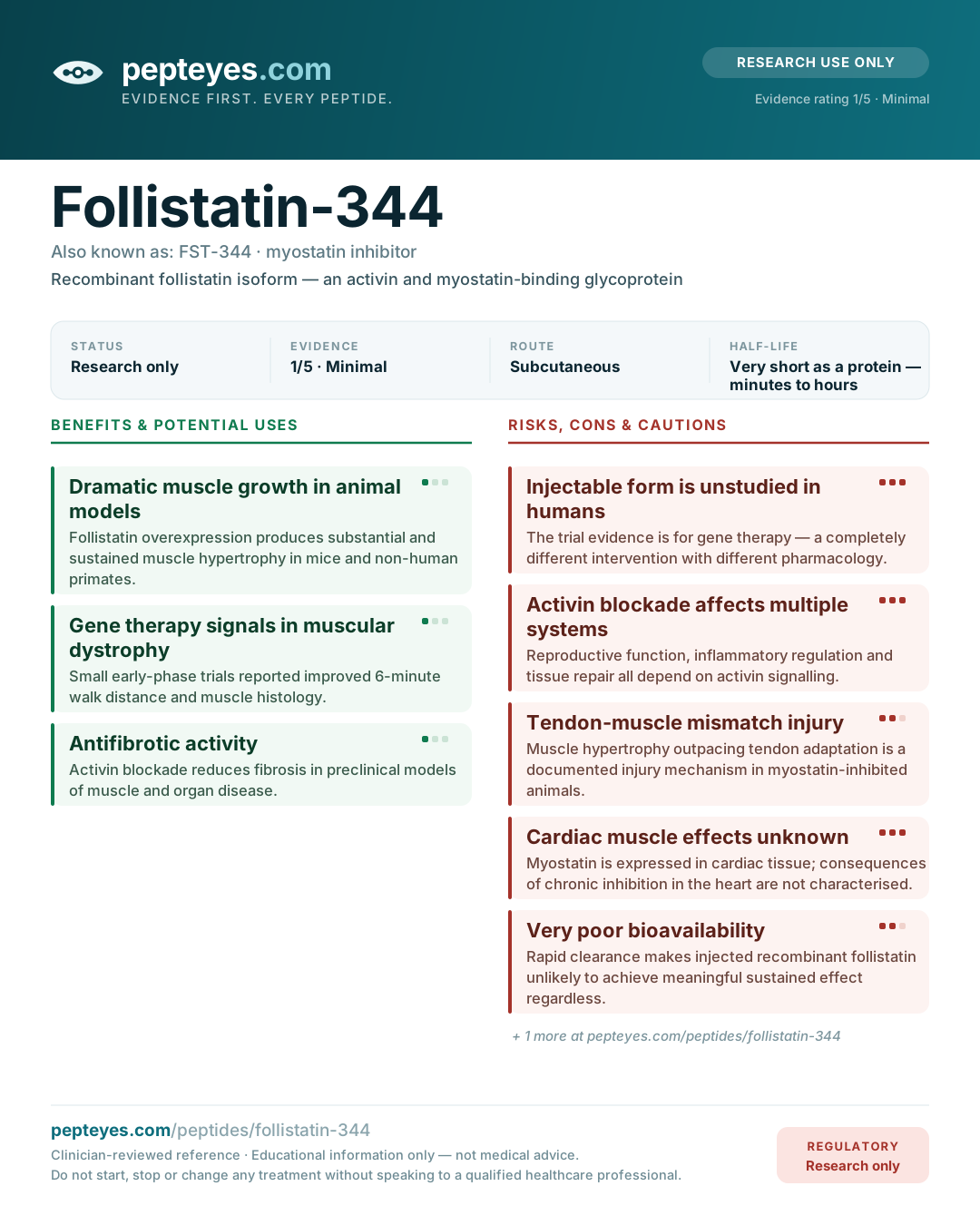
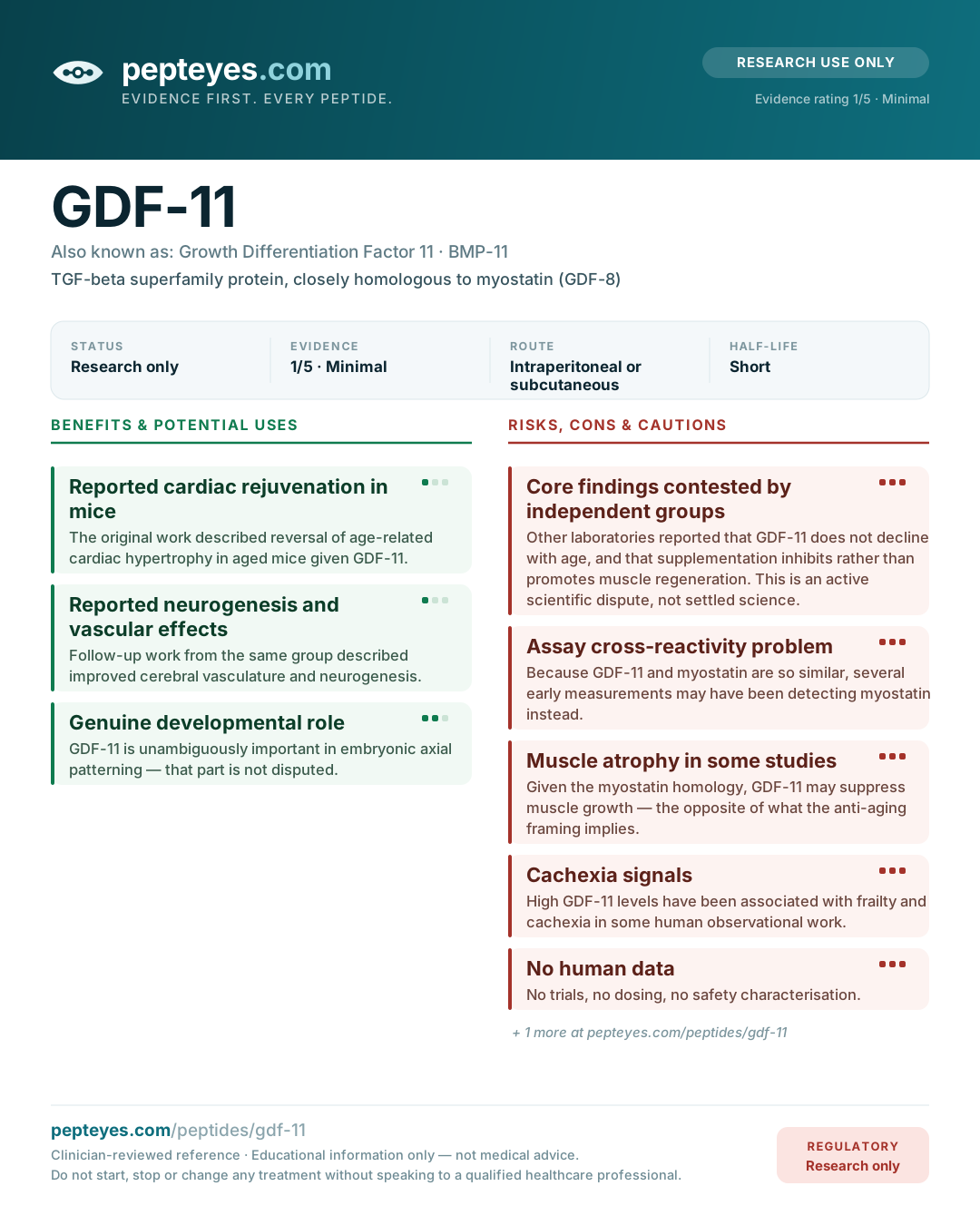
| Drug class | Recombinant follistatin isoform — an activin and myostatin-binding glycoprotein | TGF-beta superfamily protein, closely homologous to myostatin (GDF-8) |
| Route | Subcutaneous (research); gene therapy in trials | Intraperitoneal or subcutaneous (research) |
| Half-life | Not measured in humans. In mice the native follistatin-315 it yields clears fast; adding an Fc raised the terminal half-life about 100-fold. | Not characterised. Circulates largely as a latent propeptide complex; one review cites ~12 h for GDF11 without naming a species or study. |
| Sequence length | 315 residues (protein) | 218 residues (protein) |
| Molecular weight | 34,718 Da | 24,896.3 Da |
| Studied in | AAV-delivered follistatin gene therapy phase 1/2 trials in Becker muscular dystrophy and inclusion body myositis; extensive animal work. No trials of injectable recombinant follistatin. | Mouse parabiosis and supplementation studies with directly conflicting results across laboratories. No human interventional trials. |
| Who should avoid it |
|
|
| Legal status | Not approved for human use. | Not approved for human use. |
Benefits — Follistatin-344
- Dramatic muscle growth in animal models
Follistatin overexpression produces substantial and sustained muscle hypertrophy in mice and non-human primates.
- Gene therapy signals in muscular dystrophy
Small early-phase trials reported improved 6-minute walk distance and muscle histology.
- Antifibrotic activity
Activin blockade reduces fibrosis in preclinical models of muscle and organ disease.
Benefits — GDF-11
- Reported cardiac rejuvenation in mice
The original work described reversal of age-related cardiac hypertrophy in aged mice given GDF-11.
- Reported neurogenesis and vascular effects
Follow-up work from the same group described improved cerebral vasculature and neurogenesis.
- Genuine developmental role
GDF-11 is unambiguously important in embryonic axial patterning — that part is not disputed.
Risks & cons — Follistatin-344
- Injectable form is unstudied in humans
The trial evidence is for gene therapy — a completely different intervention with different pharmacology.
- Activin blockade affects multiple systems
Reproductive function, inflammatory regulation and tissue repair all depend on activin signalling.
- Tendon-muscle mismatch injury
Muscle hypertrophy outpacing tendon adaptation is a documented injury mechanism in myostatin-inhibited animals.
- Cardiac muscle effects unknown
Myostatin is expressed in cardiac tissue; consequences of chronic inhibition in the heart are not characterised.
- Very poor bioavailability
Rapid clearance makes injected recombinant follistatin unlikely to achieve meaningful sustained effect regardless.
Risks & cons — GDF-11
- Core findings contested by independent groups
Other laboratories reported that GDF-11 does not decline with age, and that supplementation inhibits rather than promotes muscle regeneration. This is an active scientific dispute, not settled science.
- Assay cross-reactivity problem
Because GDF-11 and myostatin are so similar, several early measurements may have been detecting myostatin instead.
- Muscle atrophy in some studies
Given the myostatin homology, GDF-11 may suppress muscle growth — the opposite of what the anti-aging framing implies.
- Cachexia signals
High GDF-11 levels have been associated with frailty and cachexia in some human observational work.
- No human data
No trials, no dosing, no safety characterisation.
A comparison is not a recommendation. Neither column is being suggested for you. Which — if either — is appropriate depends on your diagnosis, history and medications, and that is a conversation for a qualified clinician.