Supplied ready in solution
Hormonal & Reproductive
At a glance
Ten answers, each one line. Open any row for the detail behind it.
What it does The natural hypothalamic hormone itself.
The natural hypothalamic hormone itself. Its modern popularity comes from men on testosterone therapy using it to maintain testicular function — a use with a coherent physiological rationale but limited comparative trial evidence against the better-established hCG.
Half-life ~4 minutes — rapidly hydrolysed in plasma; reported human… — Documented
~4 minutes — rapidly hydrolysed in plasma; reported human figures run about 2–8 minutes after IV.
Typical studied dose Set by the label of the regulator that approved it, which is not an FDA… — On the label
Set by the label of the regulator that approved it, which is not an FDA label and may not be in English. The approving country decides the dose, and it is not always the same as the dose studied elsewhere.
How often it is used Set on the approved label. The interval follows the half-life above… — On the label
Set on the approved label. The interval follows the half-life above, which is why some of these are weekly and others daily.
How it is taken Subcutaneous or intravenous — Documented
Subcutaneous or intravenous
Main side effects Paradoxical suppression with incorrect dosing · Ovarian hyperstimulation in women · Limited comparative evidence in TRT use — Carries serious risk
Paradoxical suppression with incorrect dosing — Too-frequent or continuous administration downregulates the axis and achieves the opposite of the intended effect. Pulsatility is not optional.
Ovarian hyperstimulation in women — A risk when used for ovulation induction without monitoring.
Limited comparative evidence in TRT use — The popular indication is supported mostly by physiology and clinical experience, not head-to-head trials against hCG.
Storage before mixing Supplied already in solution and kept refrigerated, not frozen. Freezing…
Supplied already in solution and kept refrigerated, not frozen. Freezing a protein solution can aggregate it, which is not always visible.
Shelf life after mixing Nothing to mix — it is not supplied as a powder. The relevant date is…
Nothing to mix — it is not supplied as a powder. The relevant date is the one printed on the product.
Evidence level 3/5 · Moderate — Depends on the study
Small or early-phase human trials, or good controlled topical human data.
Regulatory status Limited Approval — Documented
Historically FDA-approved as a diagnostic (Factrel, since discontinued in the US). Now widely supplied through compounding pharmacies for testicular support during testosterone therapy. No approved US product; lawful access is via patient-specific compounding under prescription.
Overview
The natural hypothalamic hormone itself. Its modern popularity comes from men on testosterone therapy using it to maintain testicular function — a use with a coherent physiological rationale but limited comparative trial evidence against the better-established hCG.
Limited or non-US approvalNo approved US product; lawful access is via patient-specific compounding under prescription.
| Regulatory status | Historically FDA-approved as a diagnostic (Factrel, since discontinued in the US). Now widely supplied through compounding pharmacies for testicular support during testosterone therapy. |
|---|---|
| Drug class | Synthetic gonadotropin-releasing hormone — decapeptide identical to the endogenous hormone |
| Route | Subcutaneous or intravenous |
| Half-life | ~4 minutes — rapidly hydrolysed in plasma; reported human figures run about 2–8 minutes after IV. |
| Evidence rating |
3/5 Moderate
Evidence rating 3 out of 5: Moderate
Small or early-phase human trials, or good controlled topical human data. |
| Studied in | Historic diagnostic validation studies; pulsatile pump therapy for hypogonadotropic hypogonadism; limited data in the TRT-adjunct context where it is now mostly used. |
Gonadorelin sequence & structure
Gonadorelin is a 10-residue linear peptide with a C-terminal amide; molecular weight 1,182.31 Da.
[bracketed] = non-standard residue
| Three-letter | pGlu-His-Trp-Ser-Tyr-Gly-Leu-Arg-Pro-Gly-NH2 |
|---|---|
| Length | 10 amino acid residues |
| Modifications |
|
| Molecular formula | C55H75N17O13 |
| Molecular weight | 1,182.31 Da (average, free base) |
| Identifiers | CAS 33515-09-2 · PubChem CID 638793 · DrugBank DB00644 · UniProt P01148 |
| Which molecule | Gonadorelin is the INN for synthetic native mammalian GnRH-I (LHRH), identical to the endogenous decapeptide; the record describes the free base. Marketed forms are salts (hydrochloride, e.g. Factrel; diacetate, e.g. Fertagyl/Lutrepulse) with their own CAS numbers, and GnRH-II or des-pGlu1 variants are different molecules. |
| Sources | ChEMBL CHEMBL1007 gonadorelin (HELM PEPTIDE1{[Glp].H.W.S.Y.G.L.R.P.G.[am]}, C55H75N17O13, 1182.31)PubChem CID 638793 (formula, MW, IUPAC name)PubChem CID 638793 (synonyms/CAS)UniProt P01148 GON1_HUMAN progonadoliberin-1 (residues 24-33 QHWSYGLRPG)DrugCentral 2958 gonadorelin (CAS, formula, MW) |
Sequence is residues 24-33 of human progonadoliberin-1 (UniProt P01148) with Gln24 cyclised to pyroglutamate and Gly33 amidated; ChEMBL's HELM notation, PubChem's IUPAC name and DrugCentral agree on the structure and on C55H75N17O13 / 1182.31. Salt forms (hydrochloride CAS 51952-41-1, diacetate CAS 71447-49-9) raise the MW quoted on labels and vendor pages.
Record confidence: high — two independent authoritative sources agree on the sequence and modifications. Every sequence on the site is listed with its sources on the peptide sequences index.
How it works
Binds pituitary GnRH receptors to stimulate LH and FSH release. The critical detail is pulsatility: intermittent dosing stimulates the axis, while continuous exposure downregulates receptors and suppresses it — the mechanism behind GnRH agonist chemical castration.
Evidence base
Rated 3 of 5 — Moderate. Small or early-phase human trials, or good controlled topical human data.
- Strong evidence for the classic endocrine indications; thin evidence for the popular modern one.
Benefits and risks, weighed against the evidence
Every entry below carries the strength of the evidence behind it — three bars for strong human data, two for moderate, one for preliminary or preclinical work. The two columns are not equal by design: where a compound has more documented risk than demonstrated benefit, the lists say so.
Reported benefits
4 entries · 2 on strong human evidence
-
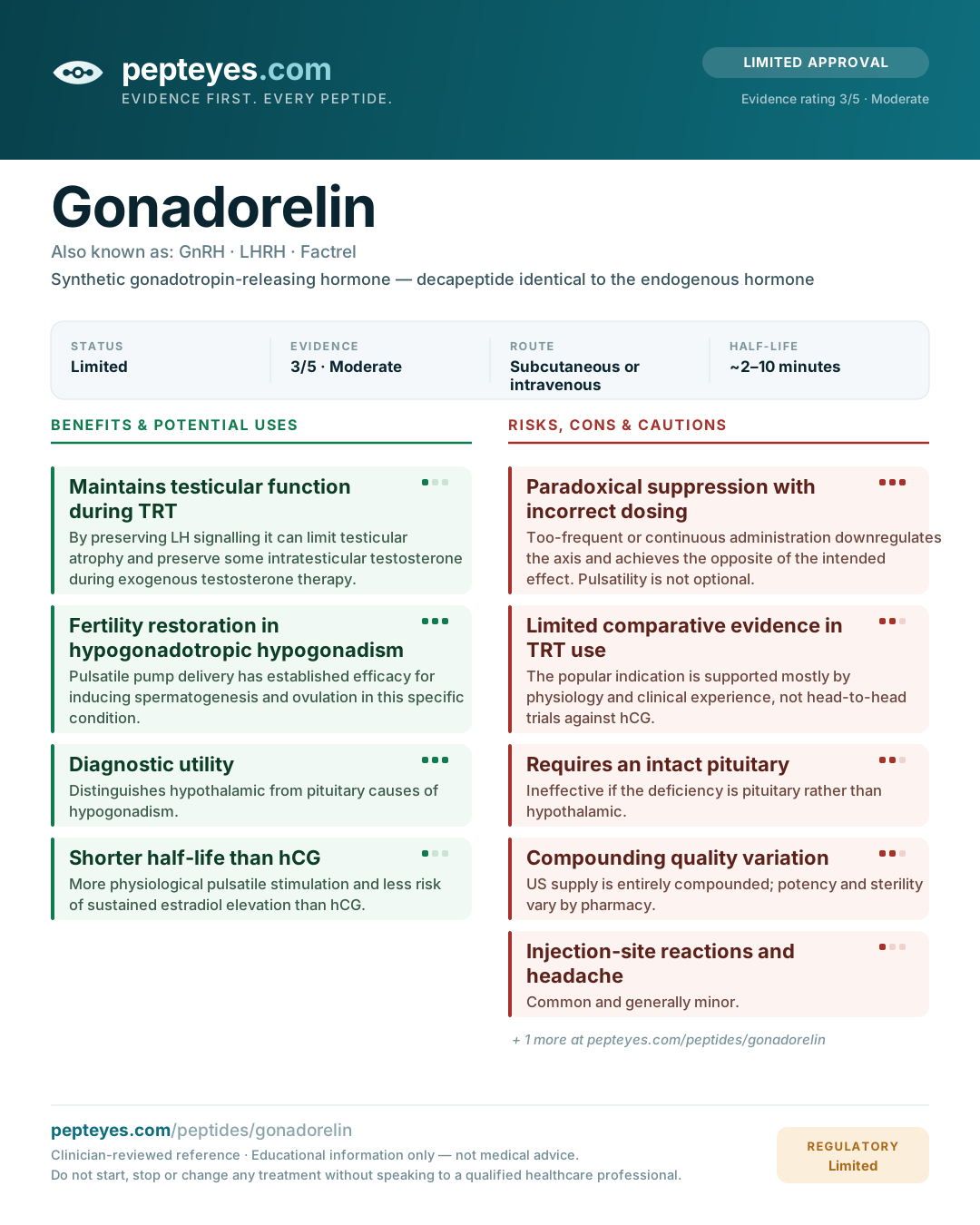
Maintains testicular function during TRT
By preserving LH signalling it can limit testicular atrophy and preserve some intratesticular testosterone during exogenous testosterone therapy.
Evidence: Preliminary -
Fertility restoration in hypogonadotropic hypogonadism
Pulsatile pump delivery has established efficacy for inducing spermatogenesis and ovulation in this specific condition.
Evidence: Strong evidence -
Diagnostic utility
Distinguishes hypothalamic from pituitary causes of hypogonadism.
Evidence: Strong evidence -
Shorter half-life than hCG
More physiological pulsatile stimulation and less risk of sustained estradiol elevation than hCG.
Evidence: Preliminary
Risks and cautions
6 entries · 2 serious or common
-
Paradoxical suppression with incorrect dosing
Too-frequent or continuous administration downregulates the axis and achieves the opposite of the intended effect. Pulsatility is not optional.
Evidence: Serious -
Limited comparative evidence in TRT use
The popular indication is supported mostly by physiology and clinical experience, not head-to-head trials against hCG.
Evidence: Moderate evidence -
Requires an intact pituitary
Ineffective if the deficiency is pituitary rather than hypothalamic.
Evidence: Moderate evidence -
Compounding quality variation
US supply is entirely compounded; potency and sterility vary by pharmacy.
Evidence: Moderate evidence -
Injection-site reactions and headache
Common and generally minor.
Evidence: Minor -
Ovarian hyperstimulation in women
A risk when used for ovulation induction without monitoring.
Evidence: Serious
Counts are not a score. A single serious risk can outweigh several well-supported benefits, and a long benefit list built on preclinical work outweighs nothing at all.
Opinion — what people actually report
4 themes · 1 reported benefit · 2 reported problems
This is the weakest tier on this site. These are themes drawn from public discussion — forums, subreddits and patient threads — not from trials. There is no control group, no denominator, and no way to confirm that what someone injected matched its label. People post when a result is dramatic and when something goes wrong, and rarely when nothing happens, so treat everything below as a description of the conversation rather than of the compound. The bars count how often a thing is said, not how well it is supported.
-
Increasingly prescribed in place of hCG Practical note. Dominant theme: Comes up in most discussions of this compound.
The dominant theme, driven by hCG supply problems and by compounding pharmacy availability rather than by any comparative evidence.
-
The half-life problem is the central argument Reported problem. Dominant theme: Comes up in most discussions of this compound.
Better-informed posters point out that gonadorelin lasts minutes, so infrequent injection cannot plausibly reproduce what hCG does. This is the most substantive technical debate in the TRT space.
-
Some report maintained testicular size Reported benefit. Recurring: Raised regularly, though not by everyone.
Positive accounts exist, and are contested by others as expectation or as coincident with other changes.
-
Many report it doing nothing Reported problem. Recurring: Raised regularly, though not by everyone.
Non-response is prominent, particularly among people who switched from hCG.
Where the reports and the evidence part ways
The sceptical side of this argument has the better of it. Gonadorelin is native GnRH with a half-time measured in minutes, and physiological LH release depends on pulsatile stimulation — which is why the licensed therapeutic use of GnRH involves a pump delivering pulses every 90 minutes, not a subcutaneous injection every few days. There are no trials showing that intermittent gonadorelin preserves fertility or testicular volume on testosterone therapy the way hCG does. Its widespread adoption followed hCG supply and regulatory pressures, not a comparative study, and that distinction is often lost.
Readers on Gonadorelin
Questions and answers from readers, under generated names. Nothing here has been checked or reviewed by the site and none of it is medical advice. It is the least verified thing on this page — and it is here because people ask each other these things anyway, and most of the other places they can ask are run by sellers.
0 questions · 0 answers
No questions yet. Ask the first one above — it takes one box and an email address.
How names work, and the house rules
Names. Every verified address is given one generated name — two ordinary words — and keeps it. Nobody chooses a name and nobody can take another's. Posts marked desk were written by the site's own editorial desk, usually to open a thread; they carry a generated name like everyone else's and are held to the site's rules, which means they never state an amount.
What is not allowed. Selling, sourcing, vendor names, coupon codes and "message me" — posts that read that way are held and usually removed. Personal medical details you would not want public. Abuse. Instructions framed as what someone else should do.
What this is not. A reader's report of what happened to them is a report, not a finding, and an answer here is one person's view. Nothing in this section changes the evidence rating above it. If something you read here would change what you take, take it to a pharmacist or physician first.
Your data. Delete any post of yours at any time, or remove everything you have written together with your name. Details in the privacy notice.
Who should avoid it
- Hormone-sensitive malignancy
- Pregnancy
- Unsupervised use without hormonal monitoring
If used under medical supervision, monitor
- Total and free testosterone, LH, FSH, estradiol
- Semen analysis if fertility is the goal
- Hematocrit if on concurrent TRT
Commonly confused with
These mix-ups cause real harm — two products sold under one name, or two molecules whose effects run in opposite directions.
The single most consequential confusion in this category. Both target the GnRH receptor. Pulsatile gonadorelin stimulates the axis; continuous leuprolide suppresses it to castrate levels. Dosing frequency reverses the effect.
Compare side by sideBoth used to preserve testicular function on testosterone therapy, but at different levels. hCG acts directly on the LH receptor in the testis; gonadorelin acts upstream at the pituitary and needs an intact pituitary to work.
Compare side by sideRegulatory & legal status
No approved US product; lawful access is via patient-specific compounding under prescription.
Infographic
Where to read further
We link to live literature searches rather than a frozen citation list, so you always see current results — including anything published after our last review.
- PubMed — all published literature on Gonadorelin
- PubMed — randomized controlled trials only
- ClinicalTrials.gov — registered human trials
Related peptides in Hormonal & Reproductive
Terms used on this page
- Testosterone
- Testosterone is the principal androgen, a 19-carbon steroid made mainly by testicular Leydig cells and converted peripherally to dihydrotestosterone by 5-alpha-reductase and to estradiol by aromatase.
- GnRH Agonist vs Antagonist
- GnRH agonists suppress gonadotropins only after an initial hormonal flare and receptor downregulation, while GnRH antagonists block the receptor immediately and produce no flare.
- Pulsatile vs Tonic Signalling
- Pulsatile signalling delivers a hormone in discrete bursts whose frequency and amplitude carry the message, while tonic signalling exposes the receptor continuously, and the two can produce opposite effects.
- Spermatogenesis
- Spermatogenesis is the roughly 74-day process by which spermatogonia in the seminiferous tubules become spermatozoa, driven by FSH on Sertoli cells and by very high intratesticular testosterone.
- Primary vs Secondary Hypogonadism
- Primary hypogonadism is gonadal failure with raised gonadotropins, while secondary hypogonadism is a low sex steroid with low or inappropriately normal LH and FSH from a pituitary or hypothalamic cause.
- Estradiol (E2)
- Estradiol is the most potent endogenous estrogen, an 18-carbon steroid produced by aromatization of androgens and acting mainly through the nuclear receptors ER-alpha and ER-beta.
This page is educational information, not medical advice. It cannot account for your medical history, medications, or risk factors. Do not start, stop or change any treatment based on it. Speak to a qualified healthcare professional who knows your case.