Gonadorelin vs Leuprolide
Same receptor, opposite effect — dosing frequency reverses the outcome.
The distinction that mattersThe single most consequential confusion in this category. Both target the GnRH receptor. Pulsatile gonadorelin stimulates the axis; continuous leuprolide suppresses it to castrate levels. Dosing frequency reverses the effect.
These are not equivalent in evidence Leuprolide is rated 5/5 and Gonadorelin is rated 3/5 — a gap of 2 levels on our scale. Similar marketing does not mean similar proof.
| Gonadorelin Limited Approval | Leuprolide FDA Approved | |
|---|---|---|
| Evidence rating |
3/5 Moderate
Evidence rating 3 out of 5: Moderate
|
5/5 Very strong
Evidence rating 5 out of 5: Very strong
|
| Regulatory status | Historically FDA-approved as a diagnostic (Factrel, since discontinued in the US). Now widely supplied through compounding pharmacies for testicular support during testosterone therapy. | FDA-approved for advanced prostate cancer, endometriosis, uterine fibroids and central precocious puberty. |
| Category | Hormonal & Reproductive | Hormonal & Reproductive |
| Drug class | Synthetic gonadotropin-releasing hormone — decapeptide identical to the endogenous hormone | GnRH receptor superagonist — nonapeptide analog of gonadotropin-releasing hormone |
| Route | Subcutaneous or intravenous | Subcutaneous or intramuscular depot (monthly to 6-monthly) |
| Half-life | ~4 minutes — rapidly hydrolysed in plasma; reported human figures run about 2–8 minutes after IV. | ~3 hours (depot formulations release over months) |
| Sequence length | 10 residues | 9 residues |
| Molecular weight | 1,182.3 Da | 1,209.4 Da |
| Studied in | Historic diagnostic validation studies; pulsatile pump therapy for hypogonadotropic hypogonadism; limited data in the TRT-adjunct context where it is now mostly used. | Decades of randomized trials in prostate cancer, endometriosis, uterine fibroids and central precocious puberty. |
| Who should avoid it |
|
|
| Legal status | No approved US product; lawful access is via patient-specific compounding under prescription. | Prescription drug. |
Benefits — Gonadorelin
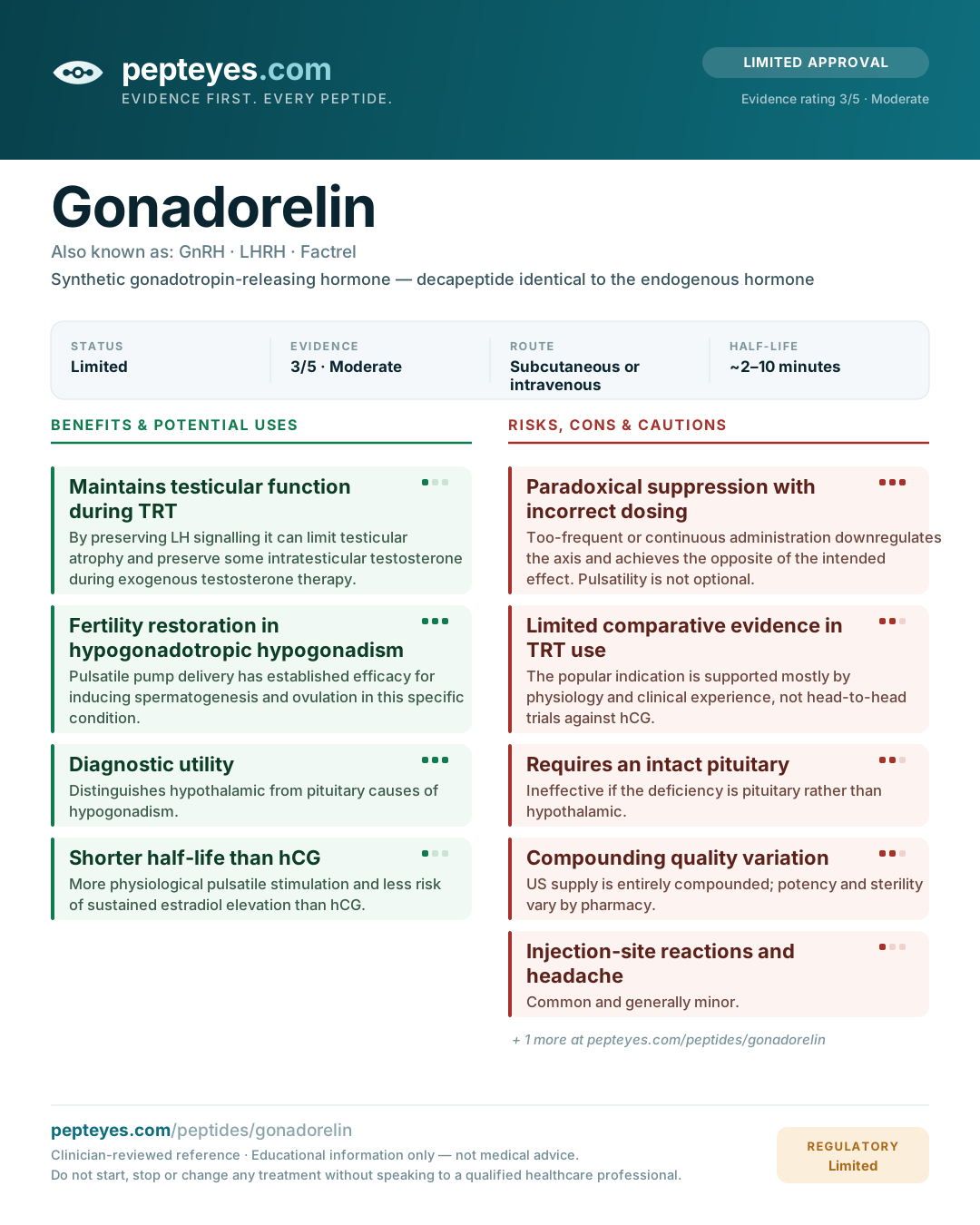
- Maintains testicular function during TRT
By preserving LH signalling it can limit testicular atrophy and preserve some intratesticular testosterone during exogenous testosterone therapy.
- Fertility restoration in hypogonadotropic hypogonadism
Pulsatile pump delivery has established efficacy for inducing spermatogenesis and ovulation in this specific condition.
- Diagnostic utility
Distinguishes hypothalamic from pituitary causes of hypogonadism.
- Shorter half-life than hCG
More physiological pulsatile stimulation and less risk of sustained estradiol elevation than hCG.
Benefits — Leuprolide
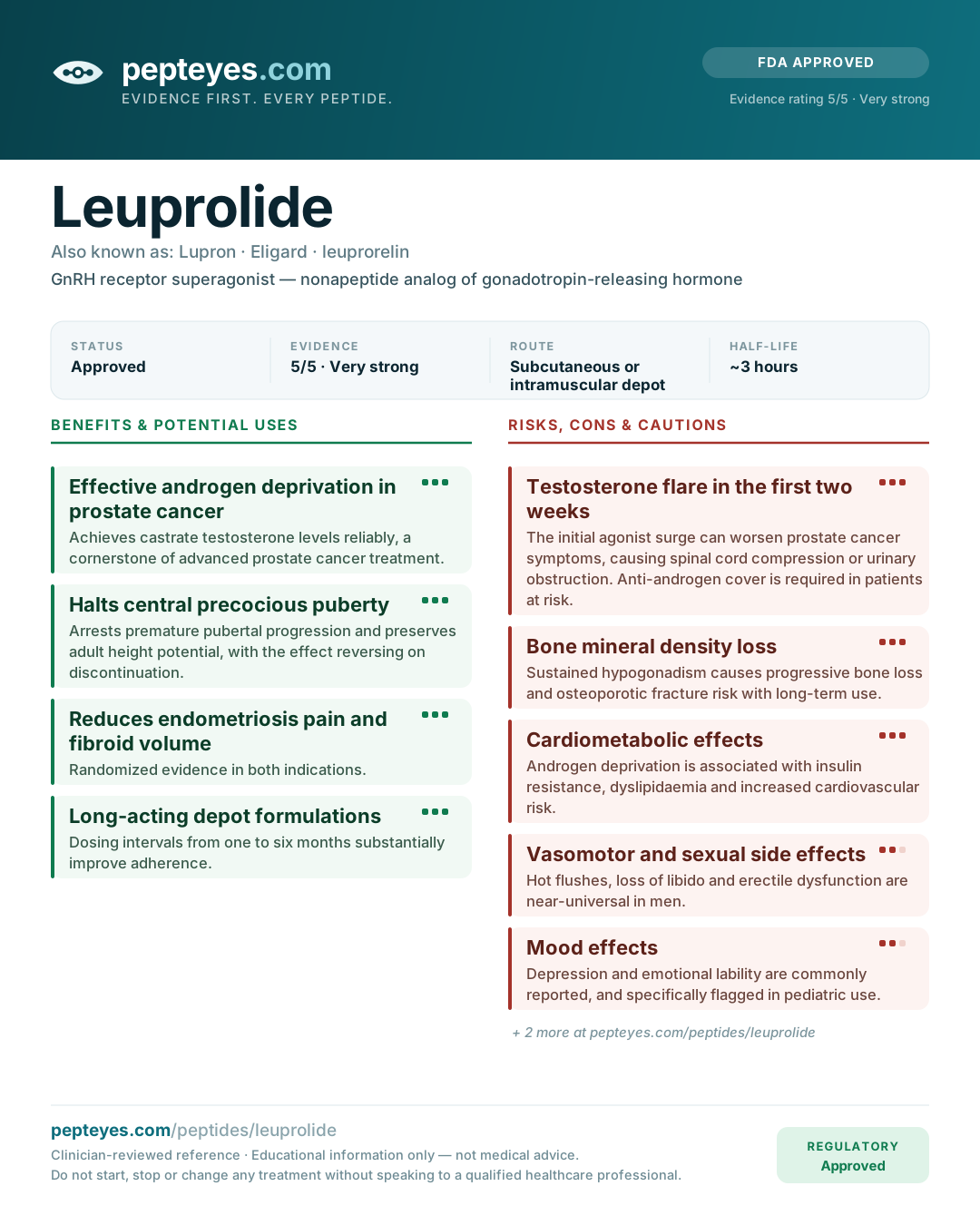
- Effective androgen deprivation in prostate cancer
Achieves castrate testosterone levels reliably, a cornerstone of advanced prostate cancer treatment.
- Halts central precocious puberty
Arrests premature pubertal progression and preserves adult height potential, with the effect reversing on discontinuation.
- Reduces endometriosis pain and fibroid volume
Randomized evidence in both indications.
- Long-acting depot formulations
Dosing intervals from one to six months substantially improve adherence.
Risks & cons — Gonadorelin
- Paradoxical suppression with incorrect dosing
Too-frequent or continuous administration downregulates the axis and achieves the opposite of the intended effect. Pulsatility is not optional.
- Limited comparative evidence in TRT use
The popular indication is supported mostly by physiology and clinical experience, not head-to-head trials against hCG.
- Requires an intact pituitary
Ineffective if the deficiency is pituitary rather than hypothalamic.
- Compounding quality variation
US supply is entirely compounded; potency and sterility vary by pharmacy.
- Injection-site reactions and headache
Common and generally minor.
Risks & cons — Leuprolide
- Testosterone flare in the first two weeks
The initial agonist surge can worsen prostate cancer symptoms, causing spinal cord compression or urinary obstruction. Anti-androgen cover is required in patients at risk.
- Bone mineral density loss
Sustained hypogonadism causes progressive bone loss and osteoporotic fracture risk with long-term use.
- Cardiometabolic effects
Androgen deprivation is associated with insulin resistance, dyslipidaemia and increased cardiovascular risk.
- Vasomotor and sexual side effects
Hot flushes, loss of libido and erectile dysfunction are near-universal in men.
- Mood effects
Depression and emotional lability are commonly reported, and specifically flagged in pediatric use.
A comparison is not a recommendation. Neither column is being suggested for you. Which — if either — is appropriate depends on your diagnosis, history and medications, and that is a conversation for a qualified clinician.