Gonadorelin vs Human Chorionic Gonadotropin (hCG)
The distinction that mattersBoth used to preserve testicular function on testosterone therapy, but at different levels. hCG acts directly on the LH receptor in the testis; gonadorelin acts upstream at the pituitary and needs an intact pituitary to work.
These are not equivalent in evidence Human Chorionic Gonadotropin (hCG) is rated 5/5 and Gonadorelin is rated 3/5 — a gap of 2 levels on our scale. Similar marketing does not mean similar proof.
| Gonadorelin Limited Approval | Human Chorionic Gonadotropin (hCG) FDA Approved | |
|---|---|---|
| Evidence rating |
3/5 Moderate
Evidence rating 3 out of 5: Moderate
|
5/5 Very strong
Evidence rating 5 out of 5: Very strong
|
| Regulatory status | Historically FDA-approved as a diagnostic (Factrel, since discontinued in the US). Now widely supplied through compounding pharmacies for testicular support during testosterone therapy. | FDA-approved for hypogonadotropic hypogonadism, prepubertal cryptorchidism, and ovulation induction. FDA prohibited OTC hCG weight-loss products in 2011. |
| Category | Hormonal & Reproductive | Hormonal & Reproductive |
| Drug class | Synthetic gonadotropin-releasing hormone — decapeptide identical to the endogenous hormone | Glycoprotein hormone with an LH-like beta subunit — technically a glycoprotein rather than a simple peptide |
| Route | Subcutaneous or intravenous | Intramuscular or subcutaneous |
| Half-life | ~4 minutes — rapidly hydrolysed in plasma; reported human figures run about 2–8 minutes after IV. | ~29 hours terminal after subcutaneous recombinant hCG; ~27 hours after intravenous dosing. |
| Sequence length | 10 residues | 237 residues (protein) |
| Molecular weight | 1,182.3 Da | — |
| Studied in | Historic diagnostic validation studies; pulsatile pump therapy for hypogonadotropic hypogonadism; limited data in the TRT-adjunct context where it is now mostly used. | Decades of trials in fertility, hypogonadism and cryptorchidism; multiple randomized trials specifically testing and refuting the hCG diet. |
| Who should avoid it |
|
|
| Legal status | No approved US product; lawful access is via patient-specific compounding under prescription. | Prescription drug. OTC and homeopathic hCG weight-loss products are unlawful in the US. |
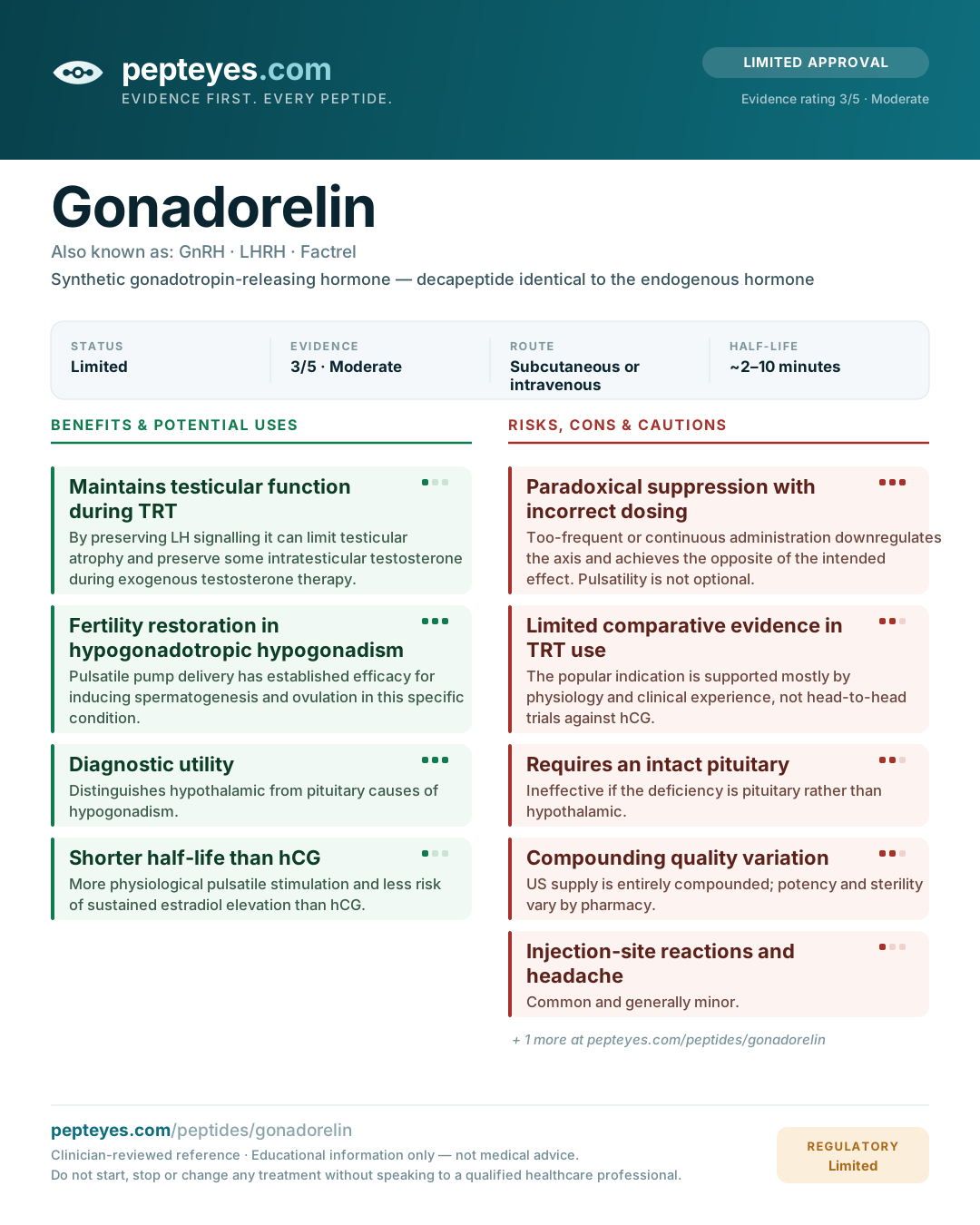
Benefits — Gonadorelin
- Maintains testicular function during TRT
By preserving LH signalling it can limit testicular atrophy and preserve some intratesticular testosterone during exogenous testosterone therapy.
- Fertility restoration in hypogonadotropic hypogonadism
Pulsatile pump delivery has established efficacy for inducing spermatogenesis and ovulation in this specific condition.
- Diagnostic utility
Distinguishes hypothalamic from pituitary causes of hypogonadism.
- Shorter half-life than hCG
More physiological pulsatile stimulation and less risk of sustained estradiol elevation than hCG.
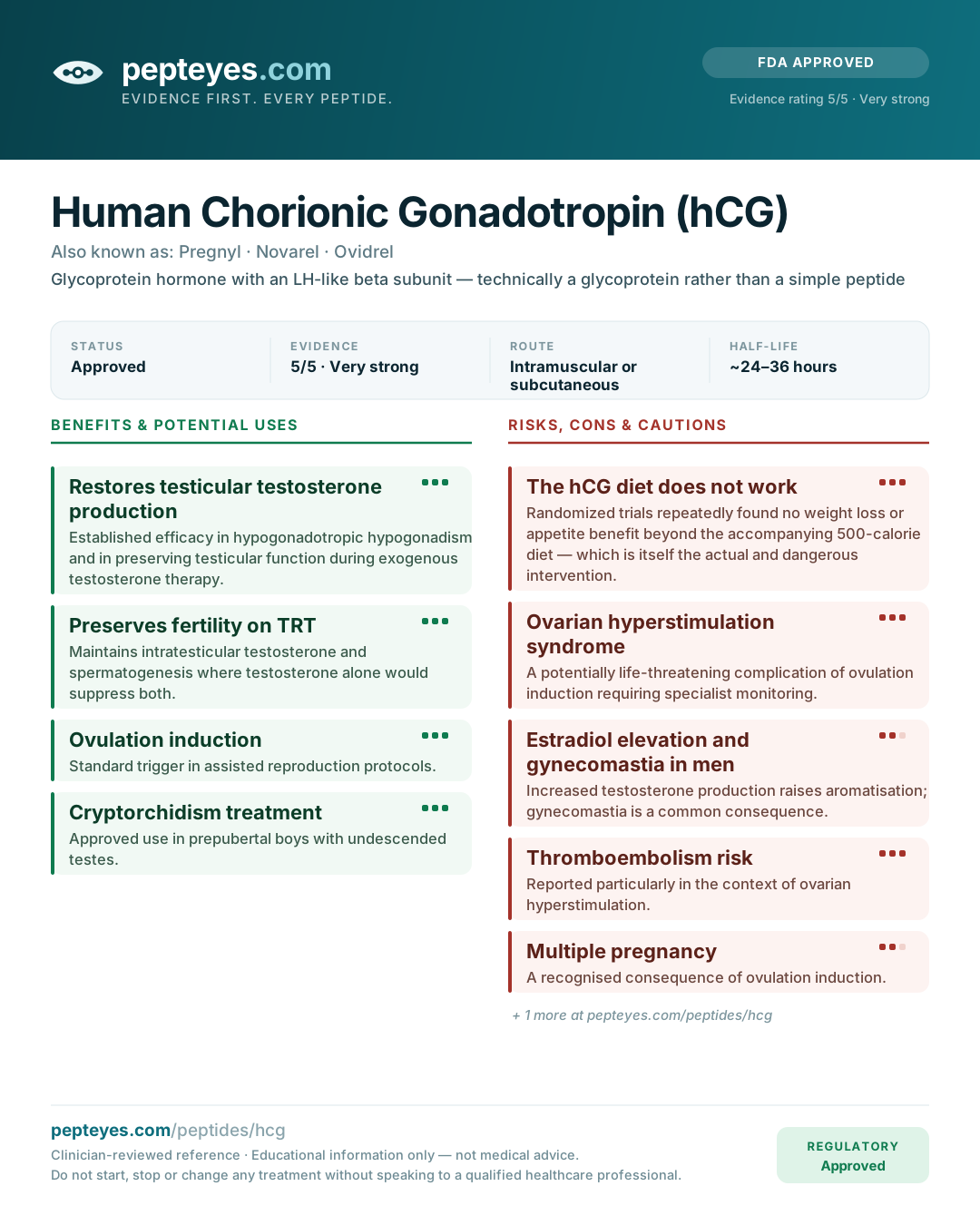
Benefits — Human Chorionic Gonadotropin (hCG)
- Restores testicular testosterone production
Established efficacy in hypogonadotropic hypogonadism and in preserving testicular function during exogenous testosterone therapy.
- Preserves fertility on TRT
Maintains intratesticular testosterone and spermatogenesis where testosterone alone would suppress both.
- Ovulation induction
Standard trigger in assisted reproduction protocols.
- Cryptorchidism treatment
Approved use in prepubertal boys with undescended testes.
Risks & cons — Gonadorelin
- Paradoxical suppression with incorrect dosing
Too-frequent or continuous administration downregulates the axis and achieves the opposite of the intended effect. Pulsatility is not optional.
- Limited comparative evidence in TRT use
The popular indication is supported mostly by physiology and clinical experience, not head-to-head trials against hCG.
- Requires an intact pituitary
Ineffective if the deficiency is pituitary rather than hypothalamic.
- Compounding quality variation
US supply is entirely compounded; potency and sterility vary by pharmacy.
- Injection-site reactions and headache
Common and generally minor.
Risks & cons — Human Chorionic Gonadotropin (hCG)
- The hCG diet does not work
Randomized trials repeatedly found no weight loss or appetite benefit beyond the accompanying 500-calorie diet — which is itself the actual and dangerous intervention.
- Ovarian hyperstimulation syndrome
A potentially life-threatening complication of ovulation induction requiring specialist monitoring.
- Estradiol elevation and gynecomastia in men
Increased testosterone production raises aromatisation; gynecomastia is a common consequence.
- Thromboembolism risk
Reported particularly in the context of ovarian hyperstimulation.
- Multiple pregnancy
A recognised consequence of ovulation induction.
A comparison is not a recommendation. Neither column is being suggested for you. Which — if either — is appropriate depends on your diagnosis, history and medications, and that is a conversation for a qualified clinician.