Supplied ready in solution
Sexual Health & Melanocortin
At a glance
Ten answers, each one line. Open any row for the detail behind it.
What it does The only approved drug that acts on sexual desire centrally rather than on blood flow…
The only approved drug that acts on sexual desire centrally rather than on blood flow peripherally. Approved for a specific indication in a specific population, and used far outside it — including in men, where it has never been approved.
Half-life ~2.7 hours — Documented
~2.7 hours
Typical studied dose Set on the approved label, which states the starting dose, how it is… — On the label
Set on the approved label, which states the starting dose, how it is increased and the maximum. Read it there rather than anywhere else — including here.
How often it is used Set on the approved label. The interval follows the half-life above… — On the label
Set on the approved label. The interval follows the half-life above, which is why some of these are weekly and others daily.
How it is taken Subcutaneous autoinjector, as needed — Documented
Subcutaneous autoinjector, as needed
Main side effects Transient blood pressure increase · Widespread off-label and grey-market use · Nausea — Carries serious risk
Transient blood pressure increase — Systolic rises of several mmHg with a compensatory heart-rate decrease. Contraindicated in uncontrolled hypertension or known cardiovascular disease.
Widespread off-label and grey-market use — Heavily sold as unapproved "research PT-141" for men and postmenopausal women — populations where efficacy and safety were not established.
Nausea — The dominant adverse effect — roughly 40% of patients in trials, and about 1 in 8 required an antiemetic.
Storage before mixing Supplied already in solution and kept refrigerated, not frozen. Freezing…
Supplied already in solution and kept refrigerated, not frozen. Freezing a protein solution can aggregate it, which is not always visible.
Shelf life after mixing Nothing to mix — it is not supplied as a powder. The relevant date is…
Nothing to mix — it is not supplied as a powder. The relevant date is the one printed on the product.
Evidence level 5/5 · Very strong — Documented
Multiple phase 3 randomized trials plus regulatory approval in a major market.
Regulatory status FDA Approved — Documented
FDA-approved (2019) for acquired, generalized hypoactive sexual desire disorder in premenopausal women Prescription drug for its labelled indication. "Research grade" PT-141 sold online is unapproved.
Overview
The only approved drug that acts on sexual desire centrally rather than on blood flow peripherally. Approved for a specific indication in a specific population, and used far outside it — including in men, where it has never been approved.
FDA ApprovedFDA-approved (2019) for acquired, generalized hypoactive sexual desire disorder in premenopausal women
| Regulatory status | FDA-approved (2019) for acquired, generalized hypoactive sexual desire disorder in premenopausal women |
|---|---|
| Drug class | Melanocortin receptor agonist (MC3R/MC4R) — cyclic heptapeptide |
| Route | Subcutaneous autoinjector, as needed |
| Half-life | ~2.7 hours |
| Evidence rating |
5/5 Very strong
Evidence rating 5 out of 5: Very strong
Multiple phase 3 randomized trials plus regulatory approval in a major market. |
| Studied in | RECONNECT phase 3 trials in premenopausal women with HSDD; earlier studies in erectile dysfunction including an intranasal formulation that was discontinued over blood-pressure effects. |
PT-141 (Bremelanotide) sequence & structure
PT-141 (Bremelanotide) is a 7-residue cyclic peptide with a free C-terminal acid, carrying D-amino acid substitutions, non-standard residues; molecular weight 1,025.2 Da.
lowercase = D-amino acid[bracketed] = non-standard residue
| Three-letter | Ac-Nle-Asp-His-D-Phe-Arg-Trp-Lys-OH |
|---|---|
| Length | 7 amino acid residues |
| Modifications |
|
| Molecular formula | C50H68N14O10 |
| Molecular weight | 1,025.2 Da (average, free base) |
| SMILES | CCCC[C@@H](C(=O)N[C@H]1CC(=O)NCCCC[C@H](NC(=O)[C@@H](NC(=O)[C@@H](NC(=O)[C@H](NC(=O)[C@@H](NC1=O)CC2=CN=CN2)CC3=CC=CC=C3)CCCN=C(N)N)CC4=CNC5=CC=CC=C54)C(=O)O)NC(=O)C |
| Identifiers | CAS 189691-06-3 · PubChem CID 9941379 · DrugBank DB11653 |
| Sources | DailyMed – VYLEESI (bremelanotide injection) label, section 11 DescriptionPubChem CID 9941379 (Bremelanotide) – formula, MW, IUPAC name, isomeric SMILES, synonyms incl. CAS 189691-06-3ChEMBL CHEMBL2070241 (BREMELANOTIDE) – formula C50H68N14O10, MW 1025.18, SMILES, INN/USAN synonymsKEGG DRUG D06569 Bremelanotide (USAN/INN) – formula, MW 1025.16, CAS 189691-06-3, ChEBI 177849FDA GSRS / precisionFDA UNII 6Y24O4F92S (Bremelanotide) – formula, CAS, lactam-cyclic IUPAC name |
Bremelanotide is cyclo-[Nle4,Asp5,D-Phe7,Lys10]alpha-MSH-(4-10): an Asp2-Lys7 side-chain lactam heptapeptide with a FREE ACID C-terminus, unlike its parent Melanotan II (C-terminal amide), with which vendors frequently confuse it. Vyleesi is supplied as bremelanotide acetate (KEGG D11629; C50H68N14O10·xCH3COOH, 1<=x<=2); formula and MW 1025.2 refer to the free base (ChEMBL 1025.18, KEGG 1025.16, exact mass 1024.5243). CAS 189691-06-3 (check digit verified) is confirmed by PubChem, KEGG and FDA GSRS; UNII 6Y24O4F92S.
Record confidence: high — two independent authoritative sources agree on the sequence and modifications. Every sequence on the site is listed with its sources on the peptide sequences index.
How it works
Activates melanocortin receptors in the hypothalamus, modulating dopaminergic pathways involved in sexual desire and arousal. Unlike PDE5 inhibitors, it acts on central desire circuits rather than on penile or genital vascular smooth muscle.
Evidence base
Rated 5 of 5 — Very strong. Multiple phase 3 randomized trials plus regulatory approval in a major market.
- Two adequately powered phase 3 trials with validated patient-reported endpoints.
Benefits and risks, weighed against the evidence
Every entry below carries the strength of the evidence behind it — three bars for strong human data, two for moderate, one for preliminary or preclinical work. The two columns are not equal by design: where a compound has more documented risk than demonstrated benefit, the lists say so.
Reported benefits
4 entries · 3 on strong human evidence
-
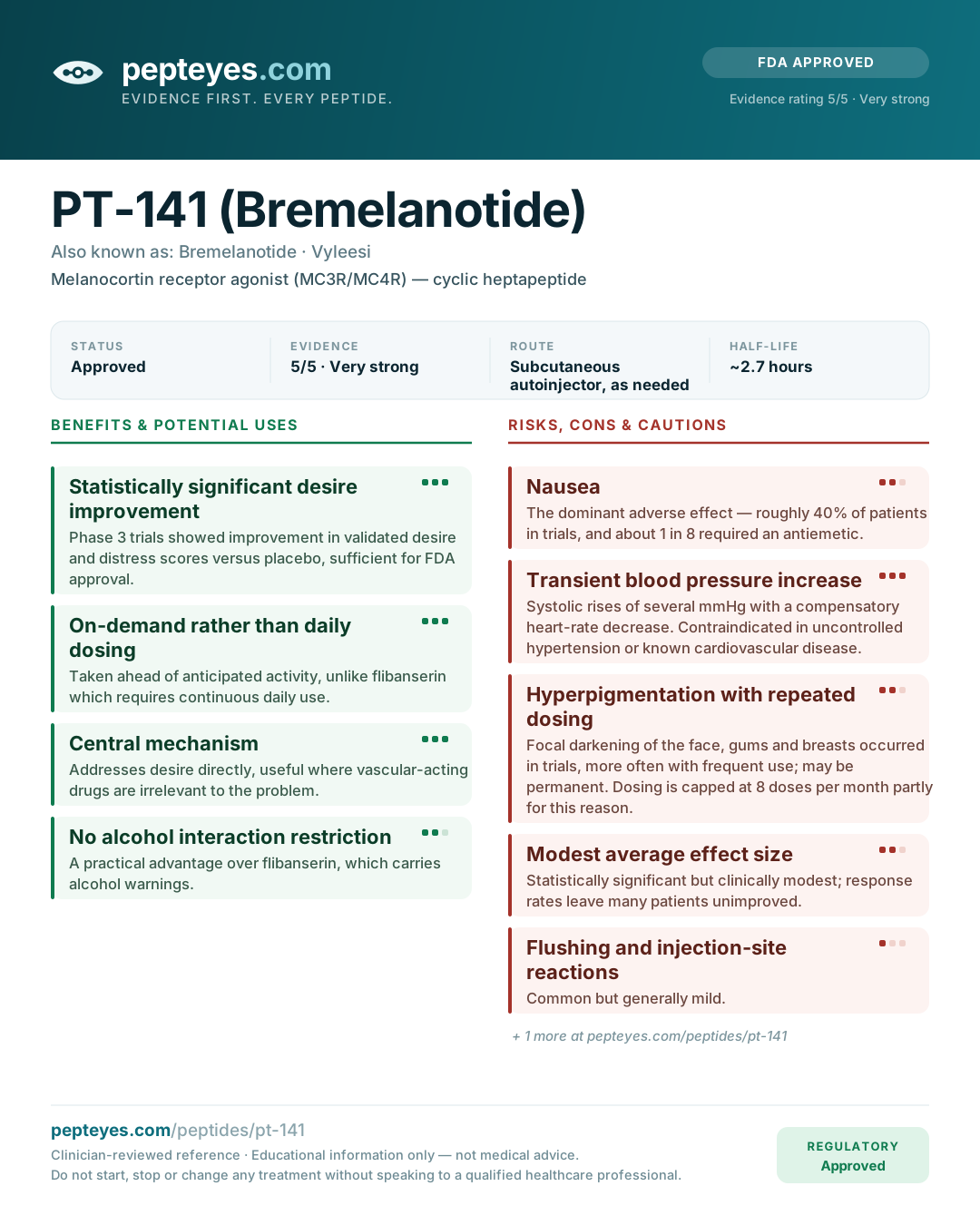
Statistically significant desire improvement
Phase 3 trials showed improvement in validated desire and distress scores versus placebo, sufficient for FDA approval.
Evidence: Strong evidence -
On-demand rather than daily dosing
Taken ahead of anticipated activity, unlike flibanserin which requires continuous daily use.
Evidence: Strong evidence -
Central mechanism
Addresses desire directly, useful where vascular-acting drugs are irrelevant to the problem.
Evidence: Strong evidence -
No alcohol interaction restriction
A practical advantage over flibanserin, which carries alcohol warnings.
Evidence: Moderate evidence
Risks and cautions
6 entries · 2 serious or common
-
Nausea
The dominant adverse effect — roughly 40% of patients in trials, and about 1 in 8 required an antiemetic.
Evidence: Moderate evidence -
Transient blood pressure increase
Systolic rises of several mmHg with a compensatory heart-rate decrease. Contraindicated in uncontrolled hypertension or known cardiovascular disease.
Evidence: Serious -
Hyperpigmentation with repeated dosing
Focal darkening of the face, gums and breasts occurred in trials, more often with frequent use; may be permanent. Dosing is capped at 8 doses per month partly for this reason.
Evidence: Moderate evidence -
Modest average effect size
Statistically significant but clinically modest; response rates leave many patients unimproved.
Evidence: Moderate evidence -
Flushing and injection-site reactions
Common but generally mild.
Evidence: Minor -
Widespread off-label and grey-market use
Heavily sold as unapproved "research PT-141" for men and postmenopausal women — populations where efficacy and safety were not established.
Evidence: Serious
Counts are not a score. A single serious risk can outweigh several well-supported benefits, and a long benefit list built on preclinical work outweighs nothing at all.
Opinion — what people actually report
6 themes · 1 reported benefit · 3 reported problems
This is the weakest tier on this site. These are themes drawn from public discussion — forums, subreddits and patient threads — not from trials. There is no control group, no denominator, and no way to confirm that what someone injected matched its label. People post when a result is dramatic and when something goes wrong, and rarely when nothing happens, so treat everything below as a description of the conversation rather than of the compound. The bars count how often a thing is said, not how well it is supported.
-
Effect on desire rather than mechanics Reported benefit. Dominant theme: Comes up in most discussions of this compound.
The most consistent report, and the one people find distinctive — it is described as wanting to, not as being able to, which is why it is discussed differently from PDE5 inhibitors.
-
Nausea is the limiting factor Reported problem. Dominant theme: Comes up in most discussions of this compound.
The dominant complaint by a wide margin, frequently severe enough that people reduce the dose or stop.
-
Flushing and headache Reported problem. Recurring: Raised regularly, though not by everyone.
Standard accompanying effects, generally described as manageable.
-
Onset is slow and the window is long Practical note. Dominant theme: Comes up in most discussions of this compound.
Hours rather than minutes, which posters describe as requiring planning and as the biggest practical difference from what they expected.
-
Darkening of skin, freckles and gums Reported problem. Recurring: Raised regularly, though not by everyone.
The melanocortin overlap with Melanotan II is raised often, particularly with repeated use.
-
Approved product versus grey-market vials Practical note. Recurring: Raised regularly, though not by everyone.
A clear split in the discussion between people prescribed Vyleesi and people using research-chemical bremelanotide, with very different quality assumptions.
Where the reports and the evidence part ways
The desire-versus-mechanics distinction the community draws is accurate and is what the trials found: bremelanotide acts centrally on melanocortin pathways rather than on vascular smooth muscle, and it was approved on improvements in desire and distress scores. Nausea rates in trials were high, matching the reports closely. Where accounts run past the evidence is in men, where use is overwhelmingly off-label — the approval is for premenopausal women with hypoactive sexual desire disorder, and the male development programme did not lead to approval. The effect size in the registration trials was also statistically clear but modest, which sits awkwardly beside the dramatic individual accounts forums select for.
Cheat sheet
The full sheet, all 77 compounds →The community reference numbers for this compound — reconstitution, working dose, cycle and bloodwork. Research and education only, not medical advice, and not part of the evidence-rated monograph above. Doses assume a 1mL / 100-unit insulin syringe — the calculator does the units for you.
Protocol overview
Dosing & reconstitution 10 mg vial
| WEEK | DAILY DOSE | UNITS PER INJECTION |
|---|---|---|
| Weeks 1 to 8 | 500 mcg (0.5 mg) | 5 units (0.05 mL) |
| Weeks 9 to 12 | 1,000 mcg (1.0 mg) | 10 units (0.10 mL) |
| Weeks 13 to 16 | 1,500 mcg (1.5 mg) | 15 units (0.15 mL) |
Frequency: Inject once daily subcutaneously (abdomen or thigh). The subcutaneous route provides approximately 100% bioavailability and is better tolerated than intranasal delivery. The FDA-approved on-demand regimen uses 1.75 mg SC before intercourse (max 8 doses/month); daily protocols at 2.5 mg have been studied in obese women for appetite and weight reduction, suggesting daily use can be tolerated. This schedule uses a conservative titration starting below the FDA on-demand dose.
On the master sheet
- Vial
- 10mg
- BAC
- 2mL
- Dose
- 1–2mg
- Route
- Inj/IN
- Cycle
- PRN
- Bloodwork
- BP monitoring
- Pre-mixed nasal spray: PT-141 10mg — Libido, arousal
Side-effect family — Melanotan II and PT-141: Nausea and facial flushing · Mole darkening (MT2) · Increased blood pressure. What helps, and the red flags →
Readers on PT-141 (Bremelanotide)
Questions and answers from readers, under generated names. Nothing here has been checked or reviewed by the site and none of it is medical advice. It is the least verified thing on this page — and it is here because people ask each other these things anyway, and most of the other places they can ask are run by sellers.
0 questions · 0 answers
No questions yet. Ask the first one above — it takes one box and an email address.
How names work, and the house rules
Names. Every verified address is given one generated name — two ordinary words — and keeps it. Nobody chooses a name and nobody can take another's. Posts marked desk were written by the site's own editorial desk, usually to open a thread; they carry a generated name like everyone else's and are held to the site's rules, which means they never state an amount.
What is not allowed. Selling, sourcing, vendor names, coupon codes and "message me" — posts that read that way are held and usually removed. Personal medical details you would not want public. Abuse. Instructions framed as what someone else should do.
What this is not. A reader's report of what happened to them is a report, not a finding, and an answer here is one person's view. Nothing in this section changes the evidence rating above it. If something you read here would change what you take, take it to a pharmacist or physician first.
Your data. Delete any post of yours at any time, or remove everything you have written together with your name. Details in the privacy notice.
Who should avoid it
- Uncontrolled hypertension
- Known cardiovascular disease
- Pregnancy
- Postmenopausal women and men (outside approved indication)
If used under medical supervision, monitor
- Blood pressure before initiation and periodically
- Skin and gum pigmentation
- Dose frequency — no more than one dose in 24 hours, 8 per month
Interactions
Not exhaustive. Always have a pharmacist or physician review your full medication list — including supplements.
- Antihypertensives — bremelanotide transiently raises blood pressure and can offset them
- Naltrexone — reduced exposure; concurrent use is not recommended
- Oral drugs with slow absorption — bremelanotide slows gastric emptying
- Alcohol — compounds nausea
Regulatory & legal status
Prescription drug for its labelled indication. "Research grade" PT-141 sold online is unapproved.
Infographic
Where to read further
We link to live literature searches rather than a frozen citation list, so you always see current results — including anything published after our last review.
- PubMed — all published literature on PT-141 (Bremelanotide)
- PubMed — randomized controlled trials only
- ClinicalTrials.gov — registered human trials
- DailyMed — official FDA prescribing information
Related peptides in Sexual Health & Melanocortin
Terms used on this page
- Sexual Desire vs Arousal
- Sexual desire is the motivational interest in sexual activity while arousal is the genital and subjective response to stimulation, and the two dissociate enough that trials measure them separately.
- Dopaminergic Signalling
- Dopaminergic signalling is neurotransmission by dopamine across anatomically separate pathways controlling movement, reward learning, executive function and prolactin release.
- Melanocortin System
- The melanocortin system is the POMC-derived signalling network in which alpha-MSH and ACTH act on five receptors to control pigmentation, adrenal steroid output, appetite and energy balance.
- Sample Size and Power Calculation
- Statistical power is the probability that a trial detects a real effect of a specified size, and the sample size calculation is the arithmetic that fixes how many participants that requires.
- Phase 3 Trial
- A Phase 3 trial is the large confirmatory study, powered for a prespecified clinical endpoint, on which a marketing application and the resulting product label are built.
- Placebo and Placebo Control
- A placebo is an inactive intervention matched to the real one in appearance and route, used as a control arm so that improvement caused by the drug can be separated from improvement that would occur anyway.
This page is educational information, not medical advice. It cannot account for your medical history, medications, or risk factors. Do not start, stop or change any treatment based on it. Speak to a qualified healthcare professional who knows your case.