Supplied as a lyophilised powder to reconstitute
Growth Hormone Axis
At a glance
Ten answers, each one line. Open any row for the detail behind it.
What it does The only GHRH-class peptide with full FDA approval.
The only GHRH-class peptide with full FDA approval. It raises endogenous growth hormone in a pulsatile, physiological pattern rather than replacing it, and has real trial data for visceral fat reduction.
Half-life 8–11 minutes subcutaneously on the current FDA labels (EGRIFTA… — Documented
8–11 minutes subcutaneously on the current FDA labels (EGRIFTA SV and WR); the discontinued 2010 formulation gave 26–38 minutes.
Typical studied dose Set on the approved label, which states the starting dose, how it is… — On the label
Set on the approved label, which states the starting dose, how it is increased and the maximum. Read it there rather than anywhere else — including here.
How often it is used The label schedule is once daily. Dosing intervals follow the half-life… — On the label
The label schedule is once daily. Dosing intervals follow the half-life above, and the prescribing information is what sets them.
How it is taken Subcutaneous, once daily — Documented
Subcutaneous, once daily
Main side effects Contraindicated in active malignancy · Glucose intolerance · Fluid retention, arthralgia, carpal tunnel — Carries serious risk
Contraindicated in active malignancy — GH/IGF-1 elevation is avoided where a growth-sensitive tumour may be present.
Glucose intolerance — GH is counter-regulatory to insulin; fasting glucose and HbA1c can rise, occasionally unmasking diabetes.
Fluid retention, arthralgia, carpal tunnel — Classic GH-excess side effects, dose-related.
Storage before mixing As a sealed lyophilised powder, refrigerated is typical and a freezer…
As a sealed lyophilised powder, refrigerated is typical and a freezer suits long storage; both should be dark and dry. A dry powder tolerates a few days out of the cold far better than anything in solution — which is why it ships that way.
Shelf life after mixing Once mixed it is refrigerated and treated as short-lived. Bacteriostatic…
Once mixed it is refrigerated and treated as short-lived. Bacteriostatic water contains a preservative and buys the longer window; sterile water contains none and buys a much shorter one. Peptides in solution also degrade on their own, so the container is only half the question.
Evidence level 5/5 · Very strong — Documented
Multiple phase 3 randomized trials plus regulatory approval in a major market.
Regulatory status FDA Approved — Documented
FDA-approved for reduction of excess visceral abdominal fat in HIV-associated lipodystrophy Prescription drug; on-label use is narrow. Compounded GHRH analogs sold for anti-aging are a different regulatory situation entirely.
Overview
The only GHRH-class peptide with full FDA approval. It raises endogenous growth hormone in a pulsatile, physiological pattern rather than replacing it, and has real trial data for visceral fat reduction.
FDA ApprovedFDA-approved for reduction of excess visceral abdominal fat in HIV-associated lipodystrophy
| Regulatory status | FDA-approved for reduction of excess visceral abdominal fat in HIV-associated lipodystrophy |
|---|---|
| Drug class | Stabilised growth hormone-releasing hormone (GHRH) analog |
| Route | Subcutaneous, once daily |
| Half-life | 8–11 minutes subcutaneously on the current FDA labels (EGRIFTA SV and WR); the discontinued 2010 formulation gave 26–38 minutes. |
| Evidence rating |
5/5 Very strong
Evidence rating 5 out of 5: Very strong
Multiple phase 3 randomized trials plus regulatory approval in a major market. |
| Studied in | Two phase 3 trials in HIV-associated lipodystrophy; investigator-led studies in NAFLD and in HIV-associated cognitive complaints. |
Tesamorelin sequence & structure
Tesamorelin is a 44-residue linear peptide with a C-terminal amide, carrying a fatty-acid side chain; molecular weight 5,135.9 Da.
| Three-letter | (3E)-Hex-3-enoyl-Tyr-Ala-Asp-Ala-Ile-Phe-Thr-Asn-Ser-Tyr-Arg-Lys-Val-Leu-Gly-Gln-Leu-Ser-Ala-Arg-Lys-Leu-Leu-Gln-Asp-Ile-Met-Ser-Arg-Gln-Gln-Gly-Glu-Ser-Asn-Gln-Glu-Arg-Gly-Ala-Arg-Ala-Arg-Leu-NH2 |
|---|---|
| Length | 44 amino acid residues |
| Modifications |
|
| Molecular formula | C221H366N72O67S |
| Molecular weight | 5,135.9 Da (average, free base) |
| Identifiers | CAS 218949-48-5 · PubChem CID 16137828 · DrugBank DB08869 · UniProt P01286 |
| Sources | DailyMed - EGRIFTA SV (tesamorelin) label, section 11 DescriptionFDA GSRS substance record, UNII MQG94M5EEO (tesamorelin; 44-residue sequence, (3E)-3-hexenoyl-Tyr1, Leu44 amide, CAS, DrugBank DB08869)KEGG DRUG D06655 (tesamorelin, USAN; formula, MW 5135.78, CAS)PubChem CID 16137828 (tesamorelin)UniProt P01286 SLIB_HUMAN (somatoliberin precursor; GHRH(1-44) = residues 32-75) |
Tesamorelin is the full-length native human GHRH(1-44)-NH2 sequence (UniProt P01286 residues 32-75) with a trans-3-hexenoyl group on the N-terminal tyrosine; formula and MW are for the free base (FDA label 5135.9 Da; KEGG 5135.78), whereas the drug is supplied as the acetate salt (C221H366N72O67S . xC2H4O2, x ~ 7; 2 mg tesamorelin = ~2.2 mg tesamorelin acetate, CAS 901758-09-6, UNII LGW5H38VE3). Sermorelin, by contrast, is unmodified GHRH(1-29)-NH2. Beware secondary records that give C215H357N71O67S / ~5040 Da (DrugCentral, GSRS calculated) - that is the unacylated peptide; the KEGG sequence text omits Val13 in error; and the ChEMBL biocomponent lists the sequence C-to-N.
Record confidence: high — two independent authoritative sources agree on the sequence and modifications. Every sequence on the site is listed with its sources on the peptide sequences index.
How it works
Binds pituitary GHRH receptors to stimulate endogenous GH secretion, preserving negative feedback and pulsatility. The resulting GH/IGF-1 rise promotes lipolysis, with a disproportionate effect on visceral adipose tissue.
Evidence base
Rated 5 of 5 — Very strong. Multiple phase 3 randomized trials plus regulatory approval in a major market.
- Two adequately powered phase 3 trials with imaging endpoints.
- Positive independent NIH-funded trial in a second indication.
Benefits and risks, weighed against the evidence
Every entry below carries the strength of the evidence behind it — three bars for strong human data, two for moderate, one for preliminary or preclinical work. The two columns are not equal by design: where a compound has more documented risk than demonstrated benefit, the lists say so.
Reported benefits
4 entries · 1 on strong human evidence
-
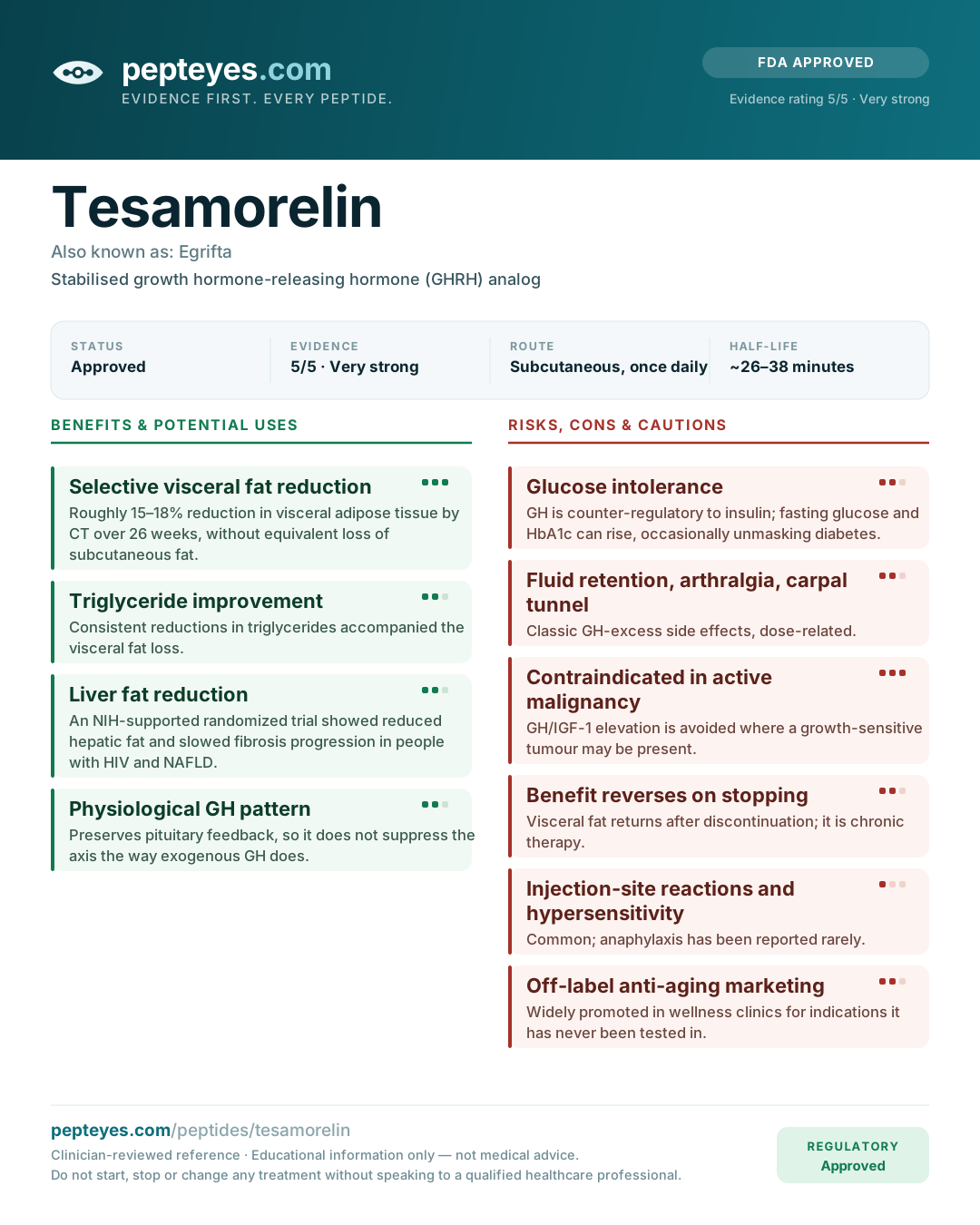
Selective visceral fat reduction
Roughly 15–18% reduction in visceral adipose tissue by CT over 26 weeks, without equivalent loss of subcutaneous fat.
Evidence: Strong evidence -
Triglyceride improvement
Consistent reductions in triglycerides accompanied the visceral fat loss.
Evidence: Moderate evidence -
Liver fat reduction
An NIH-supported randomized trial showed reduced hepatic fat and slowed fibrosis progression in people with HIV and NAFLD.
Evidence: Moderate evidence -
Physiological GH pattern
Preserves pituitary feedback, so it does not suppress the axis the way exogenous GH does.
Evidence: Moderate evidence
Risks and cautions
6 entries · 1 serious or common
-
Glucose intolerance
GH is counter-regulatory to insulin; fasting glucose and HbA1c can rise, occasionally unmasking diabetes.
Evidence: Moderate evidence -
Fluid retention, arthralgia, carpal tunnel
Classic GH-excess side effects, dose-related.
Evidence: Moderate evidence -
Contraindicated in active malignancy
GH/IGF-1 elevation is avoided where a growth-sensitive tumour may be present.
Evidence: Serious -
Benefit reverses on stopping
Visceral fat returns after discontinuation; it is chronic therapy.
Evidence: Moderate evidence -
Injection-site reactions and hypersensitivity
Common; anaphylaxis has been reported rarely.
Evidence: Minor -
Off-label anti-aging marketing
Widely promoted in wellness clinics for indications it has never been tested in.
Evidence: Moderate evidence
Counts are not a score. A single serious risk can outweigh several well-supported benefits, and a long benefit list built on preclinical work outweighs nothing at all.
Opinion — what people actually report
6 themes · 1 reported benefit · 3 reported problems
This is the weakest tier on this site. These are themes drawn from public discussion — forums, subreddits and patient threads — not from trials. There is no control group, no denominator, and no way to confirm that what someone injected matched its label. People post when a result is dramatic and when something goes wrong, and rarely when nothing happens, so treat everything below as a description of the conversation rather than of the compound. The bars count how often a thing is said, not how well it is supported.
-
Visceral fat reduction people can measure Reported benefit. Dominant theme: Comes up in most discussions of this compound.
Unusually for this class, reports describe a specific, checkable change — waist circumference falling while limb fat stays put. It is the compound most often credited with a concrete result.
-
Cost is the dominant barrier Reported problem. Dominant theme: Comes up in most discussions of this compound.
The most-discussed topic by a distance, and the reason most off-label interest ends in people choosing something cheaper.
-
Joint aches and swelling Reported problem. Recurring: Raised regularly, though not by everyone.
The standard growth-hormone-axis complaint appears here too, with arthralgia and fluid retention the most cited.
-
Glucose creeping up Reported problem. Recurring: Raised regularly, though not by everyone.
Raised by better-informed posters, sometimes with their own labs. Treated as the main reason not to run it indefinitely.
-
Regain on stopping is treated as certain Practical note. Recurring: Raised regularly, though not by everyone.
A consistent theme that the visceral fat comes back, which frames it as ongoing therapy rather than a course.
-
Off-label use is a small share of the conversation Practical note. Occasional: Reported by a minority, or in specific contexts.
Unlike most compounds here, much of the discussion comes from people using it for its approved indication.
Where the reports and the evidence part ways
This is one of the closest matches on the site between report and evidence. Phase 3 trials showed roughly 15% visceral adipose reduction in HIV-associated lipodystrophy, the fat returns after discontinuation, and glucose tolerance worsens in some patients — all three are exactly what the community describes. The divergence is about who. The evidence base is in HIV-associated lipodystrophy, a specific population with a specific pathology, and the off-label extension to general visceral fat in healthy people has not been tested at anything like that standard. It is a well-evidenced drug being used for a poorly evidenced purpose, which is a different problem from an unevidenced drug.
Cheat sheet
The full sheet, all 77 compounds →The community reference numbers for this compound — reconstitution, working dose, cycle and bloodwork. Research and education only, not medical advice, and not part of the evidence-rated monograph above. Doses assume a 1mL / 100-unit insulin syringe — the calculator does the units for you.
Protocol overview
Dosing & reconstitution 10 mg vial
| WEEK | DAILY DOSE | UNITS PER INJECTION |
|---|---|---|
| Week 1 | 1 mg (1,000 mcg) | 10 units (0.10 mL) |
| Weeks 2 to 12+ | 2 mg (2,000 mcg) | 20 units (0.20 mL) |
Frequency: Inject once daily subcutaneously, preferably in the evening to coincide with nocturnal GH release. The
On the master sheet
- Vial
- 10mg
- BAC
- 2mL
- Dose
- 1–2mg daily
- Route
- SubQ
- Cycle
- 12+ wks
- Time Off
- Goal-dependent
- Bloodwork
- IGF-1, glucose, hs-CRP
Readers on Tesamorelin
Questions and answers from readers, under generated names. Nothing here has been checked or reviewed by the site and none of it is medical advice. It is the least verified thing on this page — and it is here because people ask each other these things anyway, and most of the other places they can ask are run by sellers.
0 questions · 0 answers
No questions yet. Ask the first one above — it takes one box and an email address.
How names work, and the house rules
Names. Every verified address is given one generated name — two ordinary words — and keeps it. Nobody chooses a name and nobody can take another's. Posts marked desk were written by the site's own editorial desk, usually to open a thread; they carry a generated name like everyone else's and are held to the site's rules, which means they never state an amount.
What is not allowed. Selling, sourcing, vendor names, coupon codes and "message me" — posts that read that way are held and usually removed. Personal medical details you would not want public. Abuse. Instructions framed as what someone else should do.
What this is not. A reader's report of what happened to them is a report, not a finding, and an answer here is one person's view. Nothing in this section changes the evidence rating above it. If something you read here would change what you take, take it to a pharmacist or physician first.
Your data. Delete any post of yours at any time, or remove everything you have written together with your name. Details in the privacy notice.
Who should avoid it
- Pregnancy
- Active malignancy
- Disrupted hypothalamic-pituitary axis from surgery, radiation or trauma
- Uncontrolled diabetes (relative)
If used under medical supervision, monitor
- Fasting glucose and HbA1c
- IGF-1
- Waist circumference or CT visceral fat
- Age-appropriate cancer screening
Interactions
Not exhaustive. Always have a pharmacist or physician review your full medication list — including supplements.
- Insulin and antidiabetic drugs — glucose intolerance is a recognised effect; requirements may increase
- Corticosteroids — blunt the GH response
- CYP3A4 substrates — GH can alter clearance; relevant with antiretroviral regimens in the labelled population
- Simvastatin and ritonavir-boosted regimens — review interaction profiles in HIV patients
Regulatory & legal status
Prescription drug; on-label use is narrow. Compounded GHRH analogs sold for anti-aging are a different regulatory situation entirely.
Infographic
Where to read further
We link to live literature searches rather than a frozen citation list, so you always see current results — including anything published after our last review.
- PubMed — all published literature on Tesamorelin
- PubMed — randomized controlled trials only
- ClinicalTrials.gov — registered human trials
- DailyMed — official FDA prescribing information
Related peptides in Growth Hormone Axis
Terms used on this page
- Growth Hormone (GH)
- Growth hormone is a 191-amino-acid pituitary protein secreted in pulses that acts directly on tissues and indirectly through hepatic IGF-1, and is approved for a defined list of indications.
- Visceral Adipose Tissue (VAT)
- Visceral adipose tissue is the intra-abdominal fat surrounding the organs, metabolically distinct from subcutaneous fat and more closely linked to cardiometabolic risk.
- Negative Feedback Loop
- A negative feedback loop is a control arrangement in which the output of a system inhibits its own production, holding the regulated variable near a set point and limiting how far any stimulus can push it.
- Adiposity
- Adiposity is the total quantity and anatomical distribution of body fat, treated as an active endocrine tissue rather than as inert storage.
- Pulsatile vs Tonic Signalling
- Pulsatile signalling delivers a hormone in discrete bursts whose frequency and amplitude carry the message, while tonic signalling exposes the receptor continuously, and the two can produce opposite effects.
- Insulin-Like Growth Factor 1 (IGF-1)
- IGF-1 is a 70-amino-acid, proinsulin-like peptide produced mainly by the liver under growth hormone control, and it mediates most of the anabolic effects attributed to growth hormone.
This page is educational information, not medical advice. It cannot account for your medical history, medications, or risk factors. Do not start, stop or change any treatment based on it. Speak to a qualified healthcare professional who knows your case.