Supplied as a lyophilised powder to reconstitute
Growth Hormone Axis
At a glance
Ten answers, each one line. Open any row for the detail behind it.
What it does A laboratory reagent engineered to evade IGF-binding proteins so it stays active in cell…
A laboratory reagent engineered to evade IGF-binding proteins so it stays active in cell culture. Applying that design to a human body removes the buffering system that normally keeps IGF-1 signalling controlled — which is exactly the point of concern.
Half-life Not measured in humans. In rats LR3 clears ~10x faster than… — Documented
Not measured in humans. In rats LR3 clears ~10x faster than native IGF-1 because it barely binds IGFBPs; the 20-30 h figure has no PK basis.
Typical studied dose None established. No dose has ever been set for a human being, because… — Nothing established
None established. No dose has ever been set for a human being, because the studies that would set one have not been done. Any figure circulating for this compound was chosen by somebody selling it or by somebody guessing.
How often it is used No schedule exists. Cycles and intervals quoted for this compound come… — Nothing established
No schedule exists. Cycles and intervals quoted for this compound come from forums rather than from any study, and they vary because nothing anchors them.
How it is taken Subcutaneous (research reagent) — Documented
Subcutaneous (research reagent)
Main side effects Hypoglycemia · Cancer promotion concern · No human safety data whatsoever — Carries serious risk
Hypoglycemia — IGF-1 has meaningful insulin-receptor cross-reactivity; severe hypoglycemia is the most common acute harm reported with IGF-1 analogs.
Cancer promotion concern — Elevated IGF-1 signalling is epidemiologically associated with several cancers and is a core proliferative pathway. Unbuffered chronic elevation is the worst-case version of this exposure.
No human safety data whatsoever — There is no dose that has been shown to be safe in people, because none has been studied.
Storage before mixing As a sealed lyophilised powder, refrigerated is typical and a freezer…
As a sealed lyophilised powder, refrigerated is typical and a freezer suits long storage; both should be dark and dry. A dry powder tolerates a few days out of the cold far better than anything in solution — which is why it ships that way.
Shelf life after mixing Once mixed it is refrigerated and treated as short-lived. Bacteriostatic…
Once mixed it is refrigerated and treated as short-lived. Bacteriostatic water contains a preservative and buys the longer window; sterile water contains none and buys a much shorter one. Peptides in solution also degrade on their own, so the container is only half the question.
Evidence level 1/5 · Minimal — Nothing established
Animal or laboratory data only. No human efficacy evidence.
Regulatory status Research Use Only — Nothing established
Sold as a cell-culture research reagent. Never developed for human therapeutic use. WADA-prohibited. Not approved for human use anywhere. Sold under research-use-only labelling.
Overview
A laboratory reagent engineered to evade IGF-binding proteins so it stays active in cell culture. Applying that design to a human body removes the buffering system that normally keeps IGF-1 signalling controlled — which is exactly the point of concern.
Not approved for human use anywhereNo approval anywhere for human use. Sold under research-use labelling. Not approved for human use anywhere. Sold under research-use-only labelling.
| Regulatory status | Sold as a cell-culture research reagent. Never developed for human therapeutic use. WADA-prohibited. |
|---|---|
| Drug class | Modified insulin-like growth factor 1 analog with reduced binding-protein affinity |
| Route | Subcutaneous (research reagent) |
| Half-life | Not measured in humans. In rats LR3 clears ~10x faster than native IGF-1 because it barely binds IGFBPs; the 20-30 h figure has no PK basis. |
| Evidence rating |
1/5 Minimal
Evidence rating 1 out of 5: Minimal
Animal or laboratory data only. No human efficacy evidence. |
| Studied in | Cell culture and animal research only. No human clinical trials of the LR3 analog exist. |
IGF-1 LR3 sequence & structure
IGF-1 LR3 is a 83-residue protein of about 9,111.55 Da, catalogued under UniProt P05019. The full sequence is shown below.
| Three-letter | H-Met-Phe-Pro-Ala-Met-Pro-Leu-Ser-Ser-Leu-Phe-Val-Asn-Gly-Pro-Arg-Thr-Leu-Cys-Gly-Ala-Glu-Leu-Val-Asp-Ala-Leu-Gln-Phe-Val-Cys-Gly-Asp-Arg-Gly-Phe-Tyr-Phe-Asn-Lys-Pro-Thr-Gly-Tyr-Gly-Ser-Ser-Ser-Arg-Arg-Ala-Pro-Gln-Thr-Gly-Ile-Val-Asp-Glu-Cys-Cys-Phe-Arg-Ser-Cys-Asp-Leu-Arg-Arg-Leu-Glu-Met-Tyr-Cys-Ala-Pro-Leu-Lys-Pro-Ala-Lys-Ser-Ala-OH |
|---|---|
| Length | 83 amino acid residues |
| Modifications |
|
| Molecular formula | C400H619N111O115S9 |
| Molecular weight | 9,111.55 Da (average, free base) |
| Identifiers | CAS 143045-27-6 · UniProt P05019 |
| Which molecule | Long R3 IGF-1 is one defined 83-residue recombinant protein (FDA UNII M9L22Y19H9, CAS 143045-27-6). It is distinct from R3 IGF-1 (the 70-residue Glu3→Arg analogue without the extension), from Long IGF-1 (extension only, native Glu3), and from mecasermin/native human IGF-1 (70 residues, UniProt P05019 mature chain 49–118). This record describes the 83-mer sold as IGF-1 LR3, which is what the pepteyes monograph covers. |
| Sources | FDA GSRS (UNII M9L22Y19H9) – Long-(Arg3)insulin-like growth factor-I: 83-residue sequence, disulfides 19–61/31–74/60–65, CAS 143045-27-6PubChem Substance (FDA/SRS deposit SID 375085922) – LONG-(ARG3)INSULIN-LIKE GROWTH FACTOR-I, CAS 143045-27-6, UNII M9L22Y19H9, systematic name '1-13-somatotropin (swine), 1-L-methionine-12-L-valine-, (13->1')-protein with 3-L-arginine IGF-I (human)'UniProt P05019 – human IGF1 precursor (mature IGF-1A chain 49–118 = residues 14–83 here with Glu3→Arg; disulfides 6–48, 18–61, 47–52)UniProt P01248 – pig somatotropin (mature N-terminus FPAMPLSSLFAN…, confirming the extension is Met + pGH 1–11 with Ala12→Val, Asn13)Francis GL et al. 1992, J Mol Endocrinol 8:213–223 (PMID 1378742) – primary paper: Long [Arg3]-IGF-I fusion analogue (first 11 residues of methionyl porcine GH + IGF-I with Glu3→Arg) |
Sequence and the three disulfides are taken directly from the FDA GSRS record (UNII M9L22Y19H9) and are independently consistent with UniProt P05019 (IGF-1 49–118), UniProt P01248 (porcine GH N-terminus) and the Francis 1992 primary paper; Wikipedia's sequence box and ProSpec agree. Formula/MW are computed for the disulfide-bonded (three S–S) protein; the widely copied vendor/Wikipedia values C400H625N111O115S9 / 9117.6 Da correspond to the fully reduced chain (+6 H) — no authoritative source publishes a formula, hence confidence medium. Wikipedia's prose and some vendors misprint the extension as MFPAMPLLSLFVN; the correct extension is MFPAMPLSSLFVN. CAS 946870-92-4 also circulates on vendor sites; the FDA/GSRS- and PubChem-registered CAS is 143045-27-6 (check digit validated).
Record confidence: medium — one authoritative source, or sources agree on the sequence but not on every identifier. Every sequence on the site is listed with its sources on the peptide sequences index.
How it works
Binds the IGF-1 receptor, driving PI3K/Akt and MAPK signalling: protein synthesis, satellite-cell activation, cell proliferation and survival. The R3 substitution and 13-residue N-terminal extension drastically reduce IGFBP binding, producing sustained unbuffered receptor activation.
Evidence base
Rated 1 of 5 — Minimal. Animal or laboratory data only. No human efficacy evidence.
- Zero human clinical trials. Everything known comes from cell culture and animals.
Benefits and risks, weighed against the evidence
Every entry below carries the strength of the evidence behind it — three bars for strong human data, two for moderate, one for preliminary or preclinical work. The two columns are not equal by design: where a compound has more documented risk than demonstrated benefit, the lists say so.
Reported benefits
2 entries
-
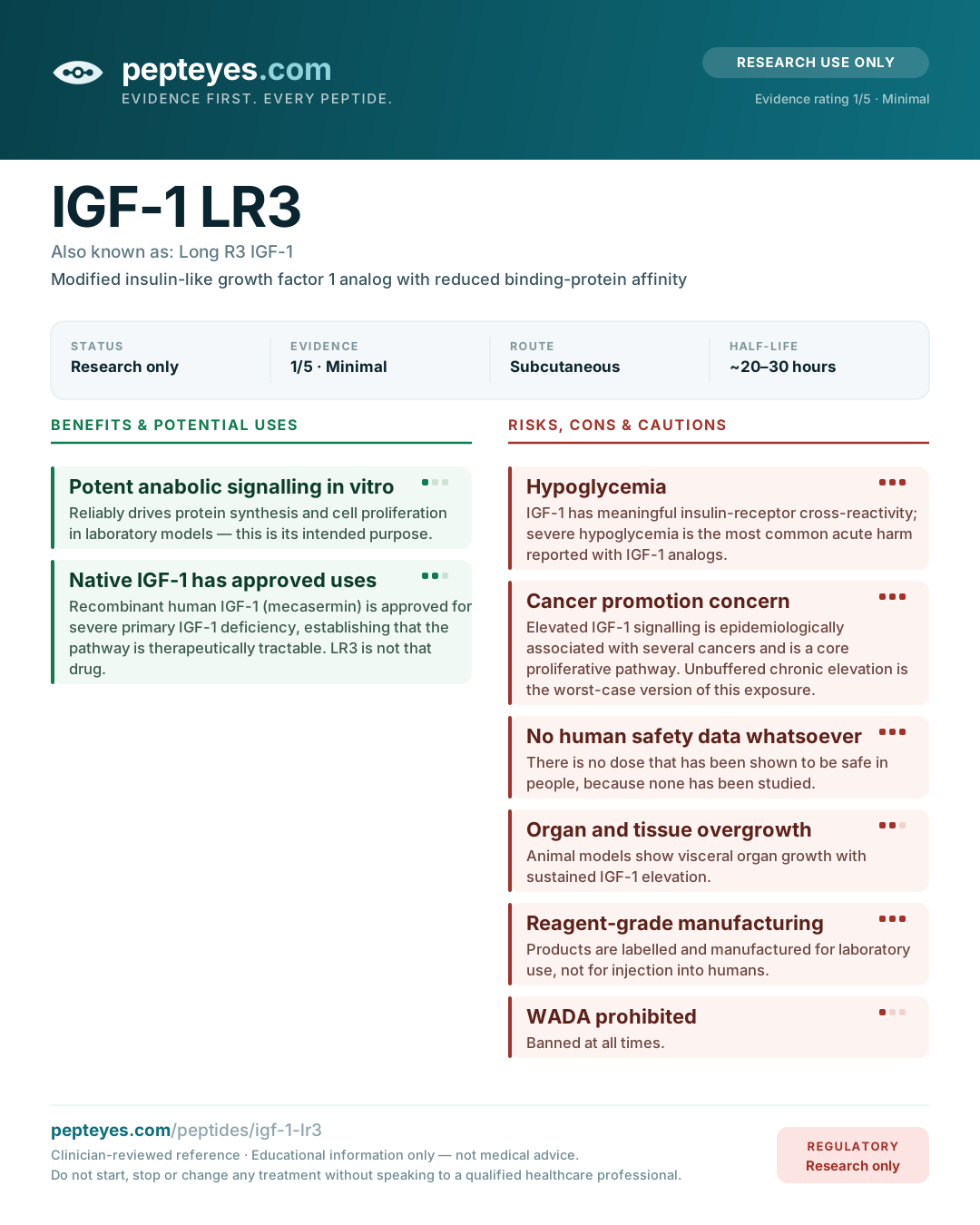
Potent anabolic signalling in vitro
Reliably drives protein synthesis and cell proliferation in laboratory models — this is its intended purpose.
Evidence: Preliminary -
Native IGF-1 has approved uses
Recombinant human IGF-1 (mecasermin) is approved for severe primary IGF-1 deficiency, establishing that the pathway is therapeutically tractable. LR3 is not that drug.
Evidence: Moderate evidence
Risks and cautions
6 entries · 4 serious or common
-
Hypoglycemia
IGF-1 has meaningful insulin-receptor cross-reactivity; severe hypoglycemia is the most common acute harm reported with IGF-1 analogs.
Evidence: Serious -
Cancer promotion concern
Elevated IGF-1 signalling is epidemiologically associated with several cancers and is a core proliferative pathway. Unbuffered chronic elevation is the worst-case version of this exposure.
Evidence: Serious -
No human safety data whatsoever
There is no dose that has been shown to be safe in people, because none has been studied.
Evidence: Serious -
Organ and tissue overgrowth
Animal models show visceral organ growth with sustained IGF-1 elevation.
Evidence: Moderate evidence -
Reagent-grade manufacturing
Products are labelled and manufactured for laboratory use, not for injection into humans.
Evidence: Serious -
WADA prohibited
Banned at all times.
Evidence: Minor
Counts are not a score. A single serious risk can outweigh several well-supported benefits, and a long benefit list built on preclinical work outweighs nothing at all.
Opinion — what people actually report
5 themes · 1 reported benefit · 3 reported problems
This is the weakest tier on this site. These are themes drawn from public discussion — forums, subreddits and patient threads — not from trials. There is no control group, no denominator, and no way to confirm that what someone injected matched its label. People post when a result is dramatic and when something goes wrong, and rarely when nothing happens, so treat everything below as a description of the conversation rather than of the compound. The bars count how often a thing is said, not how well it is supported.
-
Localised fullness and pumps Reported benefit. Recurring: Raised regularly, though not by everyone.
The most common report, and one that posters themselves frequently attribute to fluid and glycogen rather than tissue growth.
-
Hypoglycaemia is the standing fear Reported problem. Dominant theme: Comes up in most discussions of this compound.
The most serious and most-discussed risk, with reports of shakiness, sweating and confusion. Treated far more seriously than the risks of most compounds here.
-
The cancer question is unavoidable Reported problem. Dominant theme: Comes up in most discussions of this compound.
IGF-1 signalling and tumour promotion is the concern raised most often, and the one that keeps experienced posters away.
-
Counterfeits are assumed to be widespread Practical note. Dominant theme: Comes up in most discussions of this compound.
Because it is expensive and difficult to make, the working assumption in most threads is that a large share of what is sold is not what it claims to be.
-
Gut discomfort and bloating Reported problem. Occasional: Reported by a minority, or in specific contexts.
Reported by a minority, sometimes attributed to intestinal growth effects.
Where the reports and the evidence part ways
The hypoglycaemia risk is real and mechanistically expected — IGF-1 has meaningful insulin-like activity at the insulin receptor. The cancer concern is also grounded: epidemiological associations between IGF-1 levels and several cancers are well documented, though association is not the same as a demonstrated effect of exogenous administration, and the community sometimes states it as though it were. On the other side, the anabolic claims that motivate use have no controlled human evidence in healthy trained people. Mecasermin, the approved IGF-1 product, is licensed for severe primary IGF-1 deficiency in children — a completely different context that is regularly cited as though it validated physique use.
Cheat sheet
The full sheet, all 77 compounds →The community reference numbers for this compound — reconstitution, working dose, cycle and bloodwork. Research and education only, not medical advice, and not part of the evidence-rated monograph above. Doses assume a 1mL / 100-unit insulin syringe — the calculator does the units for you.
Protocol overview
Dosing & reconstitution 1 mg vial
| WEEK | DAILY DOSE | UNITS PER INJECTION |
|---|---|---|
| Weeks 1 to 2 | 20 mcg (0.02 mg) | 2 units (0.02 mL) |
| Weeks 3 to 4 | 40 mcg (0.04 mg) | 4 units (0.04 mL) |
| Weeks 5 to 8 | 50 mcg (0.05 mg) | 5 units (0.05 mL) |
Frequency: Inject once daily subcutaneously, typically in the morning or post-workout with food intake to mitigate insulin-like effects on blood glucose. For 10 unit (0.10 mL) or smaller administrations, consider 30- or 50-unit insulin syringes for improved readability.
On the master sheet
- Vial
- 1mg
- BAC
- 1mL acetic
- Dose
- 20–50mcg daily
- Route
- SubQ
- Cycle
- 4–6 wks
- Time Off
- 4 wks
- Bloodwork
- IGF-1, glucose, kidney
Storage note: Sensitive. 3 weeks reconstituted max. Full storage guide →
Readers on IGF-1 LR3
Questions and answers from readers, under generated names. Nothing here has been checked or reviewed by the site and none of it is medical advice. It is the least verified thing on this page — and it is here because people ask each other these things anyway, and most of the other places they can ask are run by sellers.
0 questions · 0 answers
No questions yet. Ask the first one above — it takes one box and an email address.
How names work, and the house rules
Names. Every verified address is given one generated name — two ordinary words — and keeps it. Nobody chooses a name and nobody can take another's. Posts marked desk were written by the site's own editorial desk, usually to open a thread; they carry a generated name like everyone else's and are held to the site's rules, which means they never state an amount.
What is not allowed. Selling, sourcing, vendor names, coupon codes and "message me" — posts that read that way are held and usually removed. Personal medical details you would not want public. Abuse. Instructions framed as what someone else should do.
What this is not. A reader's report of what happened to them is a report, not a finding, and an answer here is one person's view. Nothing in this section changes the evidence rating above it. If something you read here would change what you take, take it to a pharmacist or physician first.
Your data. Delete any post of yours at any time, or remove everything you have written together with your name. Details in the privacy notice.
Who should avoid it
- All human use — this is a laboratory reagent, not a medicine
If used under medical supervision, monitor
- Not applicable
Interactions
Not exhaustive. Always have a pharmacist or physician review your full medication list — including supplements.
- Insulin — additive and potentially severe hypoglycemia
- Growth hormone and secretagogues — compound IGF-1 elevation
- Corticosteroids — oppose the anabolic effect
Regulatory & legal status
Not approved for human use anywhere. Sold under research-use-only labelling.
Infographic
Where to read further
We link to live literature searches rather than a frozen citation list, so you always see current results — including anything published after our last review.
- PubMed — all published literature on IGF-1 LR3
- PubMed — randomized controlled trials only
- ClinicalTrials.gov — registered human trials
Related peptides in Growth Hormone Axis
Terms used on this page
- Insulin-Like Growth Factor 1 (IGF-1)
- IGF-1 is a 70-amino-acid, proinsulin-like peptide produced mainly by the liver under growth hormone control, and it mediates most of the anabolic effects attributed to growth hormone.
- N-Terminus
- The N-terminus is the end of a peptide chain bearing a free alpha-amino group, the point from which sequences are written and from which aminopeptidases and DPP-4 begin degrading the molecule.
- Off-Target Activity
- Off-target activity is any interaction a compound has with proteins other than its intended target, and it is a matter of degree rather than a property a drug either has or lacks.
- Hypoglycaemia
- Hypoglycaemia is a plasma glucose concentration low enough to risk harm, graded in three consensus levels ending in severe events that require another person's assistance.
- Peptide Analog
- A peptide analog is a molecule built from a native peptide sequence with deliberate substitutions or chemical modifications intended to change its stability, duration or receptor profile.
- Preclinical Study and Animal Model
- Preclinical studies are the laboratory, cell and animal experiments done before any human exposure, establishing mechanism, target engagement and the toxicology package that permits a first trial.
This page is educational information, not medical advice. It cannot account for your medical history, medications, or risk factors. Do not start, stop or change any treatment based on it. Speak to a qualified healthcare professional who knows your case.