PE-22-28 vs Semax
These are not equivalent in evidence Semax is rated 2/5 and PE-22-28 is rated 1/5 — a gap of 1 level on our scale. Similar marketing does not mean similar proof.
| PE-22-28 Research Use Only | Semax Limited Approval | |
|---|---|---|
| Evidence rating |
1/5 Minimal
Evidence rating 1 out of 5: Minimal
|
2/5 Limited
Evidence rating 2 out of 5: Limited
|
| Regulatory status | Not approved by any regulator and not in any registered human trial as of September 2026; it circulates under a research-use-only label. | Registered in Russia for stroke, cognitive disorders and optic nerve conditions. Not approved in the US, EU or UK. |
| Category | Cognitive & Neurological | Cognitive & Neurological |
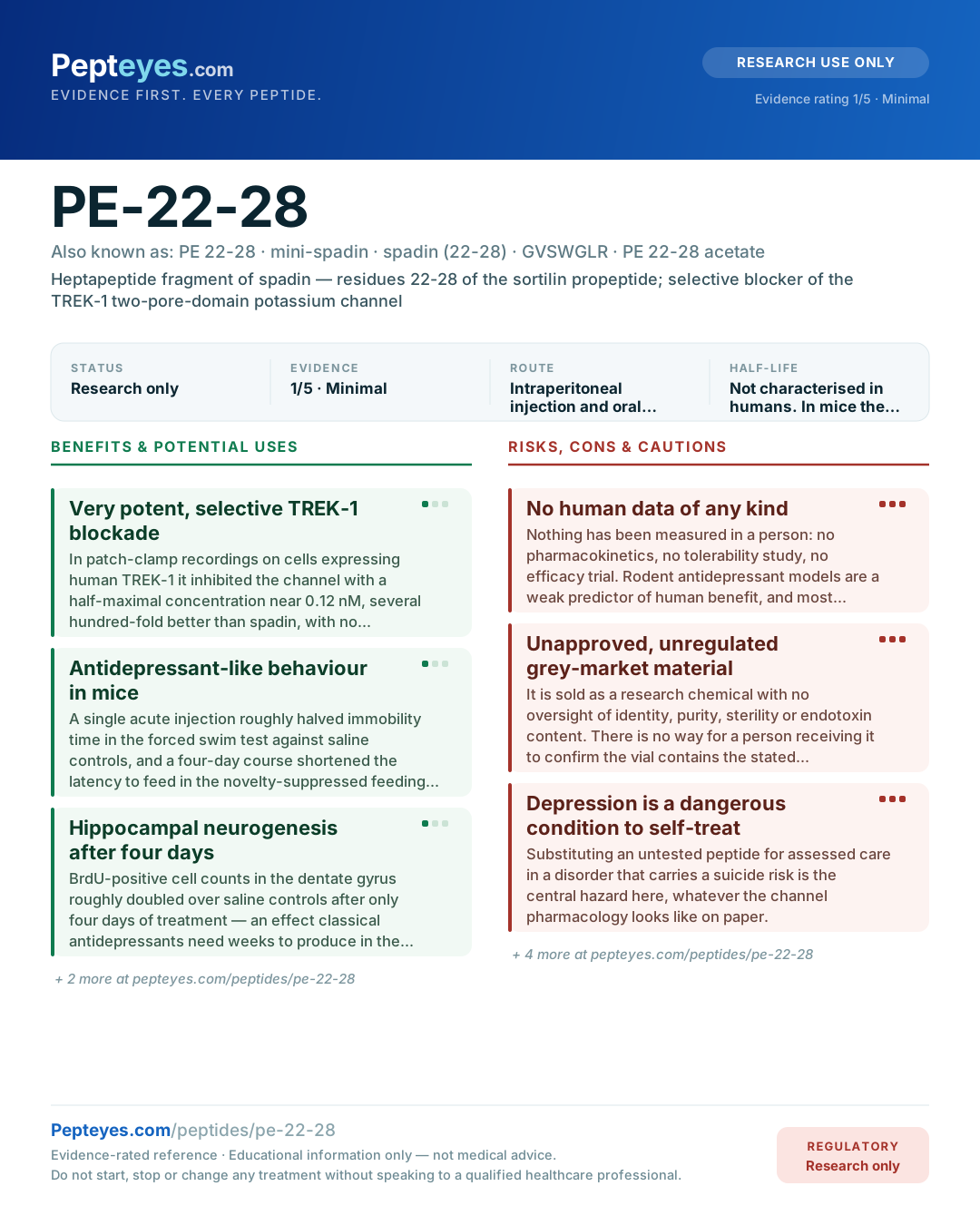
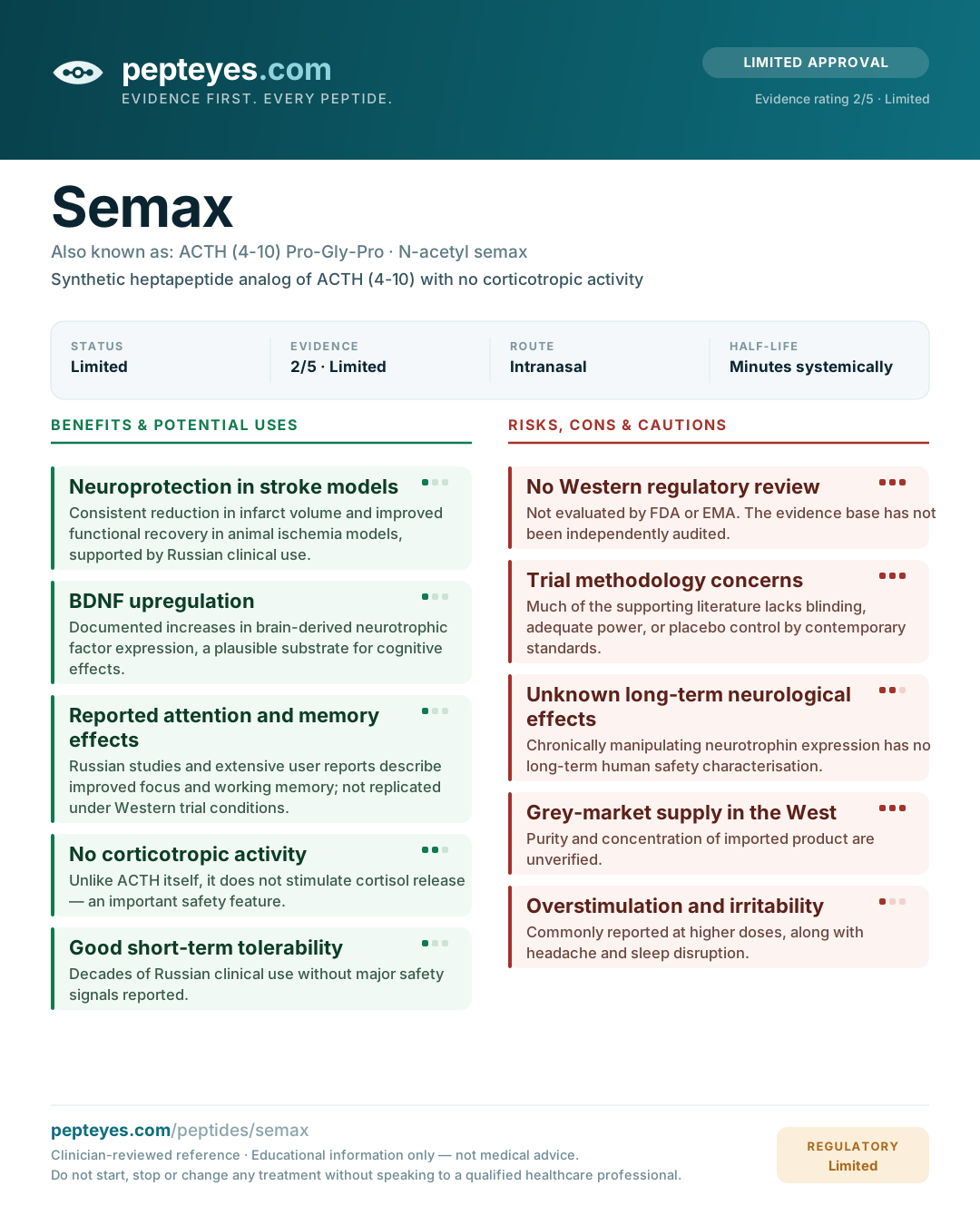
| Drug class | Heptapeptide fragment of spadin — residues 22-28 of the sortilin propeptide; selective blocker of the TREK-1 two-pore-domain potassium channel | Synthetic heptapeptide analog of ACTH (4-10) with no corticotropic activity |
| Route | Intraperitoneal injection and oral gavage in mice; not established in humans. | Intranasal (primary), subcutaneous |
| Half-life | Not characterised in humans. In mice the antidepressant-like effect of one injection lasted about 23 hours, against roughly 7 for spadin. | No human PK published; rat data show rapid blood degradation. Russian label: one intranasal dose acts 20–24 h — effect duration, not half-life. |
| Sequence length | 7 residues | 7 residues |
| Molecular weight | 773.9 Da | 813.9 Da |
| Studied in | Patch-clamp work on cell lines expressing human TREK-1, plus mouse forced swim, learned helplessness and novelty-suppressed feeding models with hippocampal BrdU counts, reported by the Heurteaux and Borsotto group in 2017. No registered human trial exists. | Russian clinical trials in ischemic stroke, cognitive impairment, optic nerve atrophy and ADHD; extensive Russian preclinical neuroprotection work. |
| Who should avoid it |
|
|
| Legal status | PE-22-28 has no marketing authorisation in the United States, the European Union or the United Kingdom, and is not a licensed medicine anywhere in the world. It is not a controlled substance; it moves under a research-use-only label, which is a labelling convention rather than any legal permission to give it to a person. It is not named individually on the WADA Prohibited List, but the S0 non-approved-substances clause covers pharmacological agents with no current approval by any government health authority, which includes this one. There is no compounding pathway for it in the US. | Prescription medicine in Russia. Unapproved elsewhere; import for personal use occupies a legal grey area. |
Benefits — PE-22-28
- Very potent, selective TREK-1 blockade
In patch-clamp recordings on cells expressing human TREK-1 it inhibited the channel with a half-maximal concentration near 0.12 nM, several hundred-fold better than spadin, with no measurable effect on TREK-2, TRAAK, TRESK, TASK-1 or the cardiac hERG channel.
- Antidepressant-like behaviour in mice
A single acute injection roughly halved immobility time in the forced swim test against saline controls, and a four-day course shortened the latency to feed in the novelty-suppressed feeding test in a corticosterone model of depression.
- Hippocampal neurogenesis after four days
BrdU-positive cell counts in the dentate gyrus roughly doubled over saline controls after only four days of treatment — an effect classical antidepressants need weeks to produce in the same models.
- Longer duration of action than spadin
In mice the antidepressant-like effect in the forced swim test persisted up to about 23 hours after one injection, against roughly 7 hours for spadin, which the authors attribute to the shortened sequence resisting the proteases that clear the parent peptide.
- Synaptic marker increase in cortical neurons
PSD-95 expression in cultured mouse cortical neurons roughly doubled by 36 hours after exposure. This is a marker of synaptogenesis in a dish, not a behavioural or clinical outcome.
Benefits — Semax
- Neuroprotection in stroke models
Consistent reduction in infarct volume and improved functional recovery in animal ischemia models, supported by Russian clinical use.
- BDNF upregulation
Documented increases in brain-derived neurotrophic factor expression, a plausible substrate for cognitive effects.
- Reported attention and memory effects
Russian studies and extensive user reports describe improved focus and working memory; not replicated under Western trial conditions.
- No corticotropic activity
Unlike ACTH itself, it does not stimulate cortisol release — an important safety feature.
- Good short-term tolerability
Decades of Russian clinical use without major safety signals reported.
Risks & cons — PE-22-28
- No human data of any kind
Nothing has been measured in a person: no pharmacokinetics, no tolerability study, no efficacy trial. Rodent antidepressant models are a weak predictor of human benefit, and most compounds that pass them fail later.
- Unapproved, unregulated grey-market material
It is sold as a research chemical with no oversight of identity, purity, sterility or endotoxin content. There is no way for a person receiving it to confirm the vial contains the stated heptapeptide at all.
- Depression is a dangerous condition to self-treat
Substituting an untested peptide for assessed care in a disorder that carries a suicide risk is the central hazard here, whatever the channel pharmacology looks like on paper.
- Single-laboratory evidence base
Almost all of the published work traces to one group in France. The potency, selectivity and duration figures have not been independently replicated by another laboratory.
- Chronic channel blockade is unstudied
TREK-1 sits in the heart, gut and sensory neurons as well as the brain. The 2017 work screened the hERG channel in a dish and ran behavioural studies over days; nothing has examined the months of exposure a mood treatment would involve.
Risks & cons — Semax
- No Western regulatory review
Not evaluated by FDA or EMA. The evidence base has not been independently audited.
- Trial methodology concerns
Much of the supporting literature lacks blinding, adequate power, or placebo control by contemporary standards.
- Unknown long-term neurological effects
Chronically manipulating neurotrophin expression has no long-term human safety characterisation.
- Grey-market supply in the West
Purity and concentration of imported product are unverified.
- Overstimulation and irritability
Commonly reported at higher doses, along with headache and sleep disruption.
A comparison is not a recommendation. Neither column is being suggested for you. Which — if either — is appropriate depends on your diagnosis, history and medications, and that is a conversation for a qualified clinician.