Melanotan II vs PT-141 (Bremelanotide)
The approved melanocortin drug and the compound it was derived from.
The distinction that mattersPT-141 was developed from Melanotan II specifically to isolate the sexual-arousal effect without the pigmentation effect. PT-141 is FDA-approved for one indication; Melanotan II is approved nowhere.
These are not equivalent in evidence PT-141 (Bremelanotide) is rated 5/5 and Melanotan II is rated 1/5 — a gap of 4 levels on our scale. Similar marketing does not mean similar proof.
| Melanotan II Research Use Only | PT-141 (Bremelanotide) FDA Approved | |
|---|---|---|
| Evidence rating |
1/5 Minimal
Evidence rating 1 out of 5: Minimal
|
5/5 Very strong
Evidence rating 5 out of 5: Very strong
|
| Regulatory status | Not approved anywhere. Regulators in the US, UK, Australia and across the EU have issued explicit consumer safety warnings against it. | FDA-approved (2019) for acquired, generalized hypoactive sexual desire disorder in premenopausal women |
| Category | Sexual Health & Melanocortin | Sexual Health & Melanocortin |
| Drug class | Non-selective melanocortin receptor agonist (MC1R/MC3R/MC4R/MC5R) | Melanocortin receptor agonist (MC3R/MC4R) — cyclic heptapeptide |
| Route | Subcutaneous (illicit) | Subcutaneous autoinjector, as needed |
| Half-life | No published human pharmacokinetics. The only disposition study is a rat IV one showing biphasic clearance; the 1-2 h figure is not a human measurement. | ~2.7 hours |
| Sequence length | 7 residues | 7 residues |
| Molecular weight | 1,024.2 Da | 1,025.2 Da |
| Studied in | Early academic studies of tanning and sexual function in the 1990s. No completed development program; superseded by the selective and approved afamelanotide. | RECONNECT phase 3 trials in premenopausal women with HSDD; earlier studies in erectile dysfunction including an intranasal formulation that was discontinued over blood-pressure effects. |
| Who should avoid it |
|
|
| Legal status | Illegal to sell for human use in the US, UK, EU and Australia. Not approved anywhere. | Prescription drug for its labelled indication. "Research grade" PT-141 sold online is unapproved. |
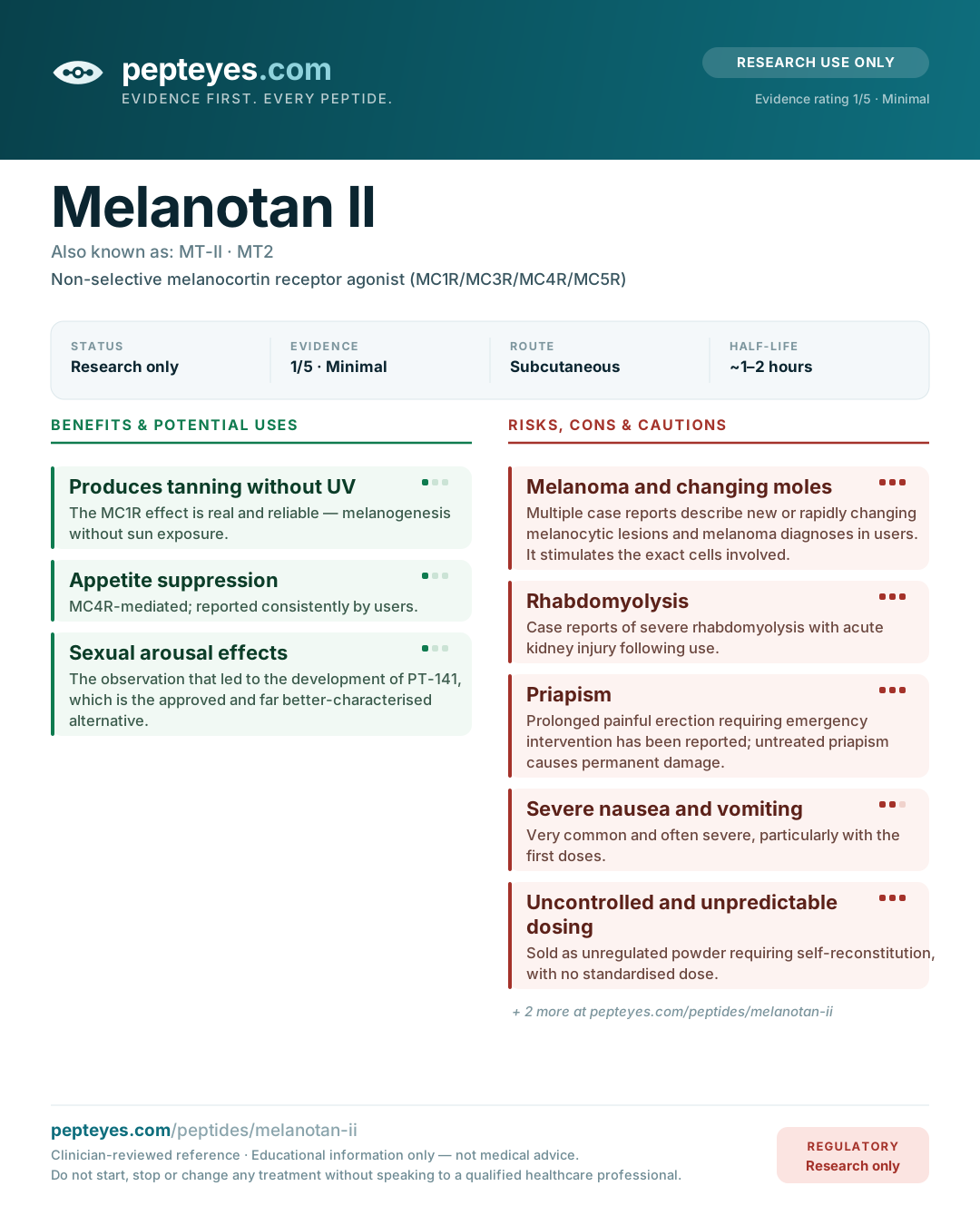
Benefits — Melanotan II
- Produces tanning without UV
The MC1R effect is real and reliable — melanogenesis without sun exposure.
- Appetite suppression
MC4R-mediated; reported consistently by users.
- Sexual arousal effects
The observation that led to the development of PT-141, which is the approved and far better-characterised alternative.
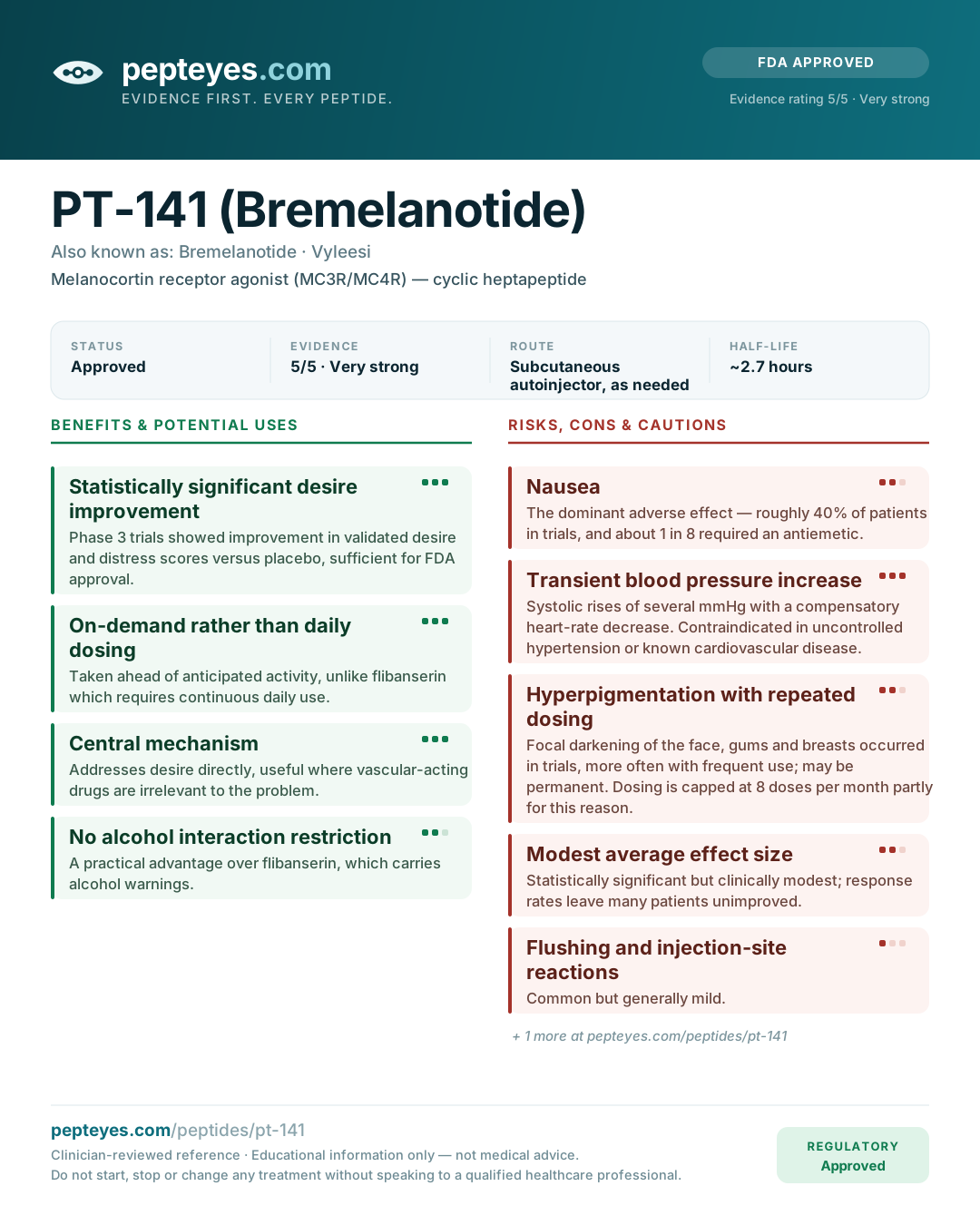
Benefits — PT-141 (Bremelanotide)
- Statistically significant desire improvement
Phase 3 trials showed improvement in validated desire and distress scores versus placebo, sufficient for FDA approval.
- On-demand rather than daily dosing
Taken ahead of anticipated activity, unlike flibanserin which requires continuous daily use.
- Central mechanism
Addresses desire directly, useful where vascular-acting drugs are irrelevant to the problem.
- No alcohol interaction restriction
A practical advantage over flibanserin, which carries alcohol warnings.
Risks & cons — Melanotan II
- Melanoma and changing moles
Multiple case reports describe new or rapidly changing melanocytic lesions and melanoma diagnoses in users. It stimulates the exact cells involved.
- Rhabdomyolysis
Case reports of severe rhabdomyolysis with acute kidney injury following use.
- Priapism
Prolonged painful erection requiring emergency intervention has been reported; untreated priapism causes permanent damage.
- Severe nausea and vomiting
Very common and often severe, particularly with the first doses.
- Uncontrolled and unpredictable dosing
Sold as unregulated powder requiring self-reconstitution, with no standardised dose.
Risks & cons — PT-141 (Bremelanotide)
- Nausea
The dominant adverse effect — roughly 40% of patients in trials, and about 1 in 8 required an antiemetic.
- Transient blood pressure increase
Systolic rises of several mmHg with a compensatory heart-rate decrease. Contraindicated in uncontrolled hypertension or known cardiovascular disease.
- Hyperpigmentation with repeated dosing
Focal darkening of the face, gums and breasts occurred in trials, more often with frequent use; may be permanent. Dosing is capped at 8 doses per month partly for this reason.
- Modest average effect size
Statistically significant but clinically modest; response rates leave many patients unimproved.
- Flushing and injection-site reactions
Common but generally mild.
A comparison is not a recommendation. Neither column is being suggested for you. Which — if either — is appropriate depends on your diagnosis, history and medications, and that is a conversation for a qualified clinician.