Epitalon vs Thymalin
The distinction that mattersBoth come from the same Russian gerontology research tradition and are sold together as an anti-aging pair. Neither has independent replication outside that tradition.
| Epitalon Research Use Only | Thymalin Limited Approval | |
|---|---|---|
| Evidence rating |
2/5 Limited
Evidence rating 2 out of 5: Limited
|
2/5 Limited
Evidence rating 2 out of 5: Limited
|
| Regulatory status | Not approved in the US, EU or UK. Used in Russian gerontology practice. Widely sold as an anti-aging research peptide. | Registered in Russia as an immunomodulator. Not approved in the US, EU or UK. |
| Category | Longevity & Mitochondrial | Immune & Anti-inflammatory |
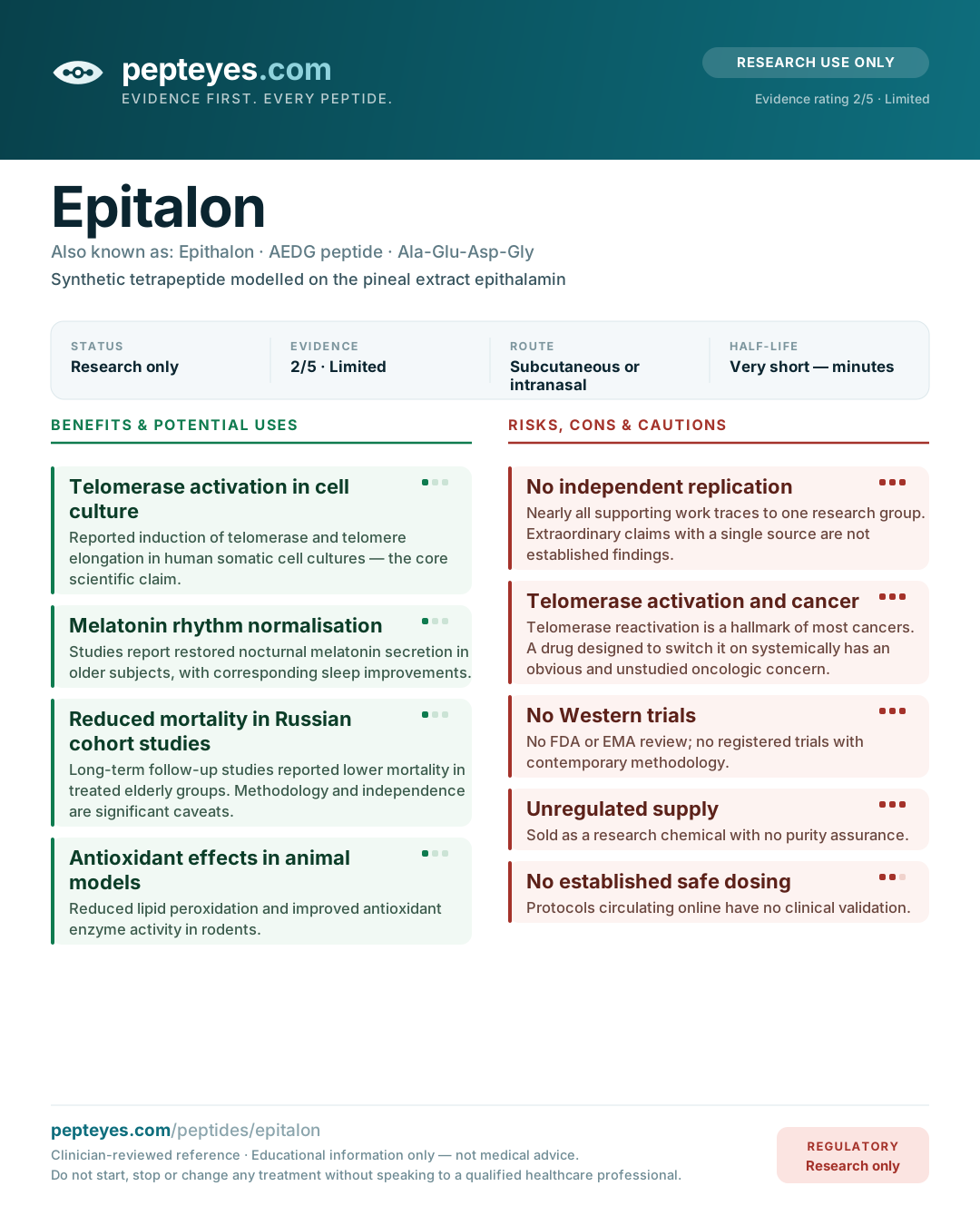
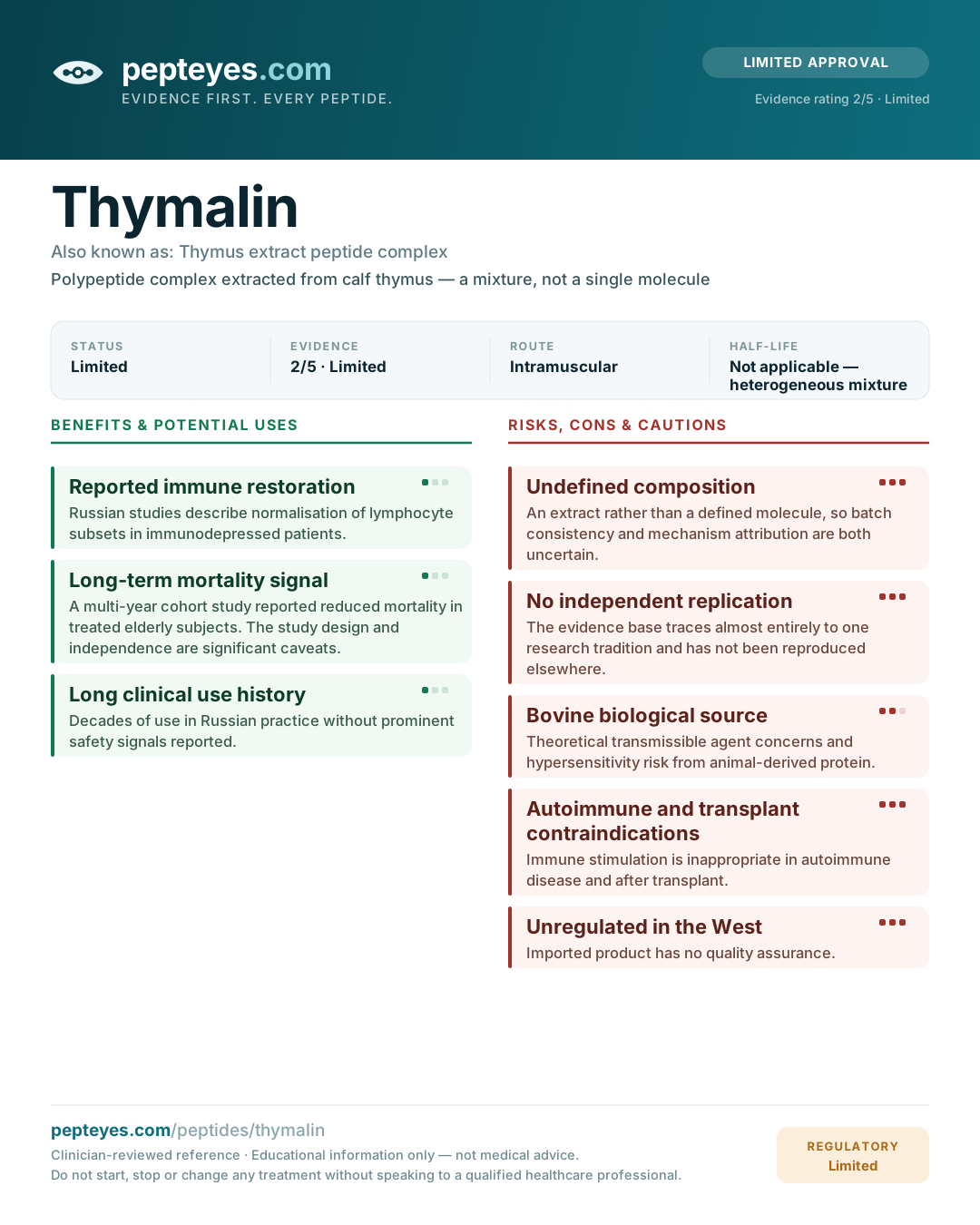
| Drug class | Synthetic tetrapeptide modelled on the pineal extract epithalamin | Polypeptide complex extracted from calf thymus — a mixture, not a single molecule |
| Route | Subcutaneous or intranasal (research) | Intramuscular |
| Half-life | Never measured. No pharmacokinetic study of Epitalon has been published in any species; reviews only note that short peptides like it degrade fast in vivo. | Not applicable — heterogeneous mixture |
| Sequence length | 4 residues | Mixture — no single sequence |
| Molecular weight | 390.4 Da | — |
| Studied in | Russian studies in elderly cohorts reporting reduced mortality over multi-year follow-up; cell culture telomerase work; rodent lifespan studies. | Russian clinical studies in immunodeficiency and post-surgical infection; a long-term gerontology cohort study reporting mortality reduction in elderly participants. |
| Who should avoid it |
|
|
| Legal status | Not approved for human use in the US, EU or UK. | Registered in Russia; unapproved elsewhere. |
Benefits — Epitalon
- Telomerase activation in cell culture
Reported induction of telomerase and telomere elongation in human somatic cell cultures — the core scientific claim.
- Melatonin rhythm normalisation
Studies report restored nocturnal melatonin secretion in older subjects, with corresponding sleep improvements.
- Reduced mortality in Russian cohort studies
Long-term follow-up studies reported lower mortality in treated elderly groups. Methodology and independence are significant caveats.
- Antioxidant effects in animal models
Reduced lipid peroxidation and improved antioxidant enzyme activity in rodents.
Benefits — Thymalin
- Reported immune restoration
Russian studies describe normalisation of lymphocyte subsets in immunodepressed patients.
- Long-term mortality signal
A multi-year cohort study reported reduced mortality in treated elderly subjects. The study design and independence are significant caveats.
- Long clinical use history
Decades of use in Russian practice without prominent safety signals reported.
Risks & cons — Epitalon
- No independent replication
Nearly all supporting work traces to one research group. Extraordinary claims with a single source are not established findings.
- Telomerase activation and cancer
Telomerase reactivation is a hallmark of most cancers. A drug designed to switch it on systemically has an obvious and unstudied oncologic concern.
- No Western trials
No FDA or EMA review; no registered trials with contemporary methodology.
- Unregulated supply
Sold as a research chemical with no purity assurance.
- No established safe dosing
Protocols circulating online have no clinical validation.
Risks & cons — Thymalin
- Undefined composition
An extract rather than a defined molecule, so batch consistency and mechanism attribution are both uncertain.
- No independent replication
The evidence base traces almost entirely to one research tradition and has not been reproduced elsewhere.
- Bovine biological source
Theoretical transmissible agent concerns and hypersensitivity risk from animal-derived protein.
- Autoimmune and transplant contraindications
Immune stimulation is inappropriate in autoimmune disease and after transplant.
- Unregulated in the West
Imported product has no quality assurance.
A comparison is not a recommendation. Neither column is being suggested for you. Which — if either — is appropriate depends on your diagnosis, history and medications, and that is a conversation for a qualified clinician.