CJC-1295 vs Ipamorelin
The most-stacked pair in the growth hormone market: a GHRH analogue and a ghrelin-receptor agonist, sold together, neither approved, both still in Category 2.
The distinction that mattersDifferent mechanisms, routinely combined. CJC-1295 acts on the GHRH receptor; ipamorelin acts on the ghrelin receptor. Neither combination has been tested in a clinical trial.
| CJC-1295 Research Use Only | Ipamorelin Research Use Only | |
|---|---|---|
| Evidence rating |
2/5 Limited
Evidence rating 2 out of 5: Limited
|
2/5 Limited
Evidence rating 2 out of 5: Limited
|
| Regulatory status | Investigational; clinical development discontinued. Not approved. Widely sold grey-market. | Investigational only, and not approved anywhere. Two phase 2 trials in postoperative recovery of gastrointestinal function were completed without demonstrating benefit, after which development was abandoned. Widely supplied through wellness clinics and research-chemical sellers, which is not the same as being lawfully available. |
| Category | Growth Hormone Axis | Growth Hormone Axis |
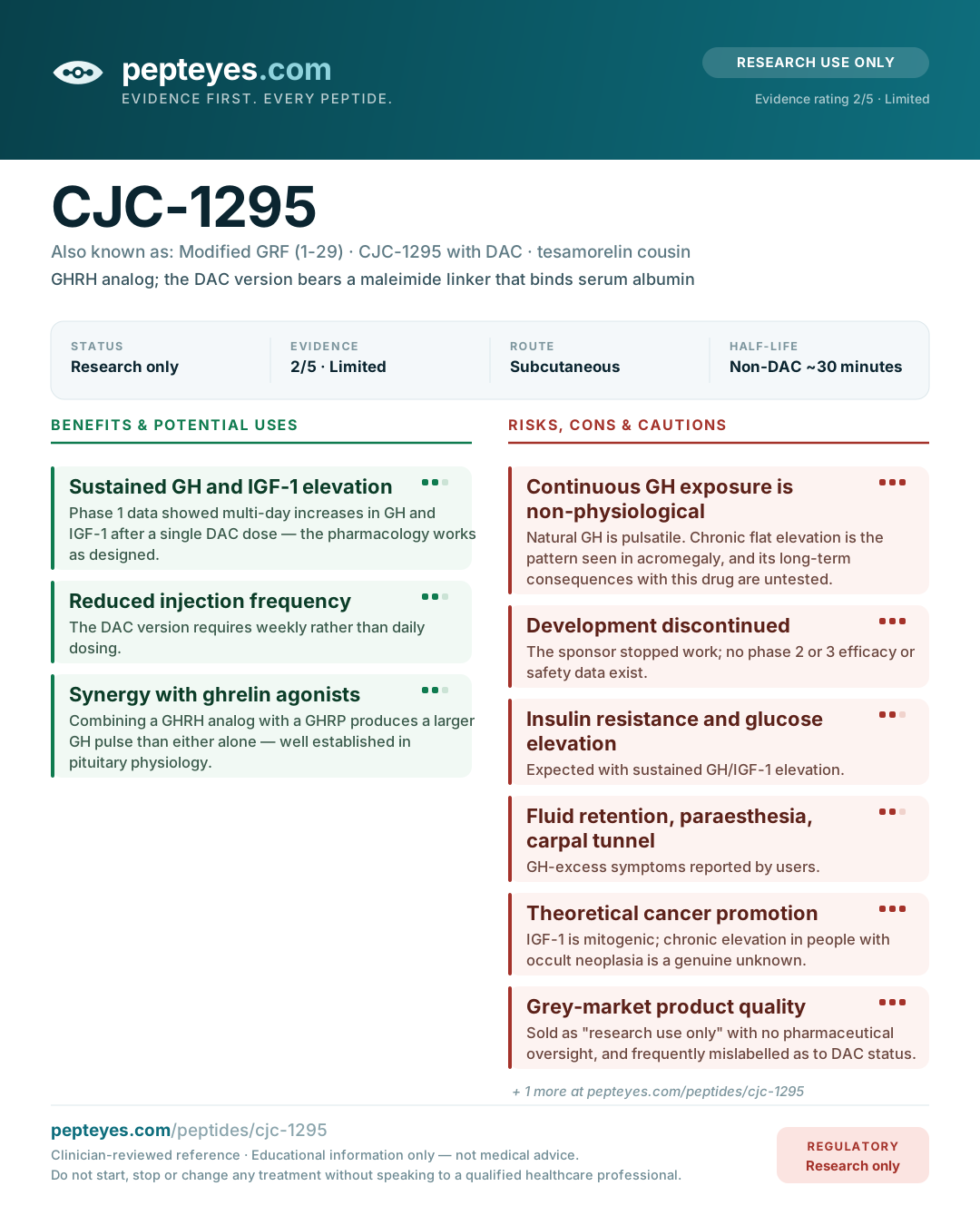
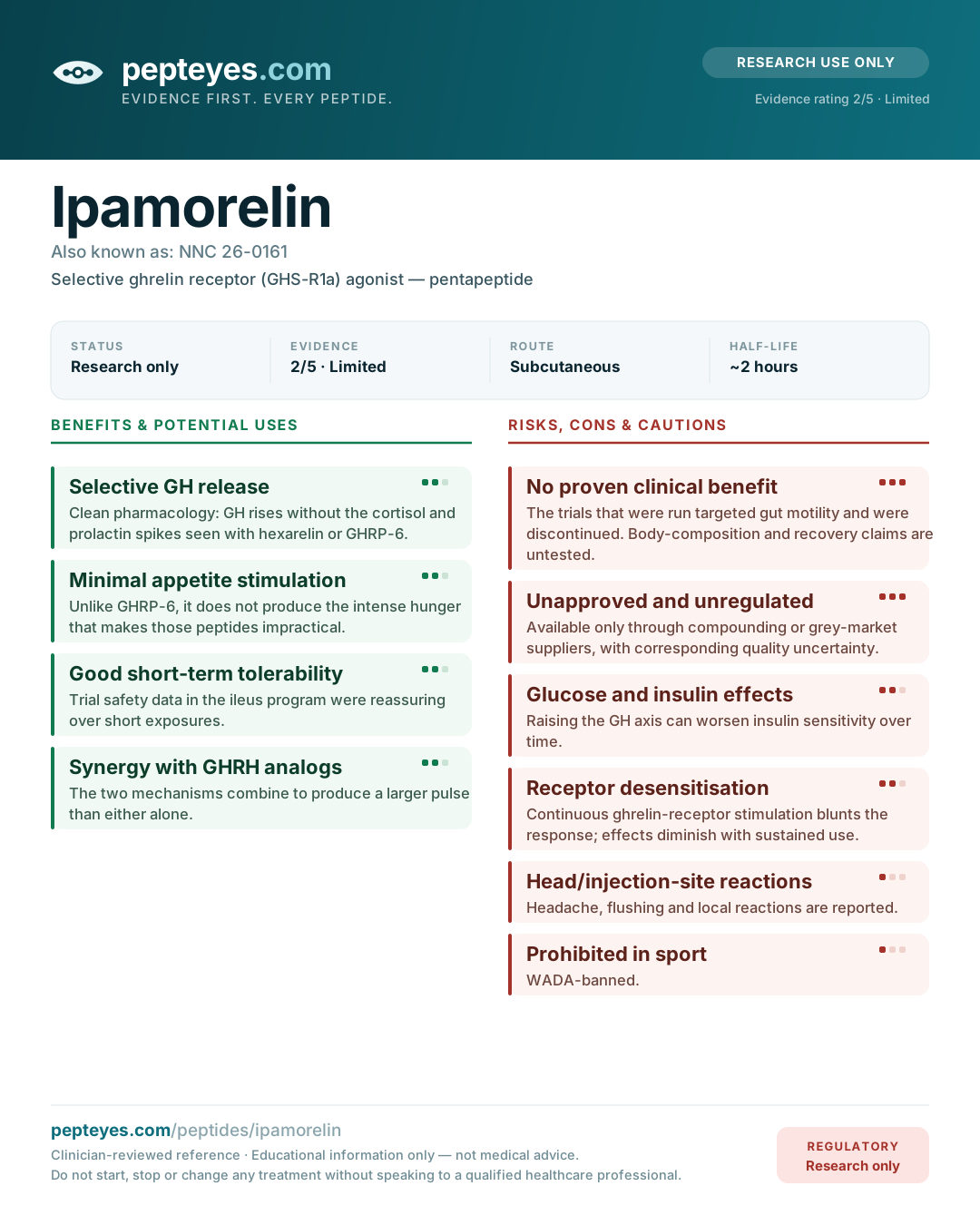
| Drug class | GHRH analog; the DAC version bears a maleimide linker that binds serum albumin | Selective ghrelin receptor (GHS-R1a) agonist — pentapeptide |
| Route | Subcutaneous (research) | Subcutaneous (research) |
| Half-life | CJC-1295 with DAC: 5.8–8.1 days in healthy adults, once bound to albumin. CJC-1295 without DAC (modified GRF(1-29)): minutes — no human half-life has ever been published for it, and the figure usually quoted is inferred from sermorelin and native GRF(1-29). | ~2 hours |
| Sequence length | 30 residues | 5 residues |
| Molecular weight | 3,647.3 Da | 711.9 Da |
| Studied in | CJC-1295 with DAC: two randomised, double-blind, placebo-controlled ascending-dose trials in healthy adults running 28 and 49 days, measuring GH, IGF-1 and drug pharmacokinetics, plus one overnight GH-pulsatility study. One phase 2 efficacy trial — 12 weeks, multicentre, randomised, double-blind, placebo-controlled, in HIV-associated visceral adiposity — was terminated in July 2006 with no results posted or published, and it is the only CJC-1295 study ever entered on ClinicalTrials.gov. The peptide sold without DAC has no controlled human study at all. | Healthy-volunteer intravenous pharmacokinetics and GH response (1999); two completed phase 2 trials of postoperative recovery of gastrointestinal function, neither positive, after which development stopped; rodent studies of gut motility, longitudinal bone growth and bone mineral content. |
| Who should avoid it |
|
|
| Legal status | Not approved for human use in the US, EU or UK. Sale for human consumption is unlawful. | Not approved by the FDA, the EMA or any comparable regulator for any indication, and not eligible for lawful pharmacy compounding in the United States. Selling it for human use is unlawful. “Research use only” or “not for human consumption” labelling is a seller’s disclaimer about intended use, not a regulatory category, and confers nothing on the buyer. The compounding position is disputed and moving; the dated record is on this page. |
Benefits — CJC-1295
- Sustained GH and IGF-1 elevation
Phase 1 data showed multi-day increases in GH and IGF-1 after a single DAC dose — the pharmacology works as designed.
- Reduced injection frequency
The DAC version requires weekly rather than daily dosing.
- Synergy with ghrelin agonists
Combining a GHRH analog with a GHRP produces a larger GH pulse than either alone — well established in pituitary physiology.
- GH pulsatility survives continuous stimulation
Healthy young men sampled every 20 minutes across an overnight period, before and one week after a single injection of the DAC version, showed unchanged GH pulse frequency and amplitude while trough GH rose about seven-fold; mean GH rose 46% and IGF-1 45%. Unlike injected growth hormone, the rise stays pituitary-mediated rather than replacing pituitary output. One small single-dose study, one lab.
- The response appears to plateau rather than climb
In that same study the two doses compared produced no different GH or IGF-1 response, and the IGF-1 rise correlated with no measured parameter of GH secretion — consistent with a ceiling set by somatotroph capacity rather than by how much drug arrives. Never confirmed in a larger study.
Benefits — Ipamorelin
- Selective GH release
Clean pharmacology: GH rises without the cortisol and prolactin spikes seen with hexarelin or GHRP-6.
- Minimal appetite stimulation
Unlike GHRP-6, it does not produce the intense hunger that makes those peptides impractical.
- Good short-term tolerability
Trial safety data in the ileus program were reassuring over short exposures.
- Synergy with GHRH analogs
The two mechanisms combine to produce a larger pulse than either alone.
- A measurable, reproducible GH pulse in healthy humans
A 1999 dose-escalation study in healthy male volunteers (eight men at each of five ascending intravenous infusion rates) found dose-proportional pharmacokinetics, a terminal half-life near two hours, and a single episode of GH release peaking around 40 minutes and decaying to negligible concentrations at every exposure tested. This is the clearest human evidence the compound does what it says — and it is evidence about a hormone measurement, not about anything a person would notice.
Risks & cons — CJC-1295
- Continuous GH exposure is non-physiological
Natural GH is pulsatile. Chronic flat elevation is the pattern seen in acromegaly, and its long-term consequences with this drug are untested.
- Development discontinued
The sponsor stopped work; no phase 2 or 3 efficacy or safety data exist.
- Insulin resistance and glucose elevation
Expected with sustained GH/IGF-1 elevation.
- Fluid retention, paraesthesia, carpal tunnel
GH-excess symptoms reported by users.
- Theoretical cancer promotion
IGF-1 is mitogenic; chronic elevation in people with occult neoplasia is a genuine unknown.
Risks & cons — Ipamorelin
- No proven clinical benefit
The trials that were run targeted gut motility and were discontinued. Body-composition and recovery claims are untested.
- Unapproved and unregulated
Available only through compounding or grey-market suppliers, with corresponding quality uncertainty.
- Glucose and insulin effects
Raising the GH axis can worsen insulin sensitivity over time.
- Receptor desensitisation
Continuous ghrelin-receptor stimulation blunts the response; effects diminish with sustained use.
- Head/injection-site reactions
Headache, flushing and local reactions are reported.
A comparison is not a recommendation. Neither column is being suggested for you. Which — if either — is appropriate depends on your diagnosis, history and medications, and that is a conversation for a qualified clinician.