BPC-157 vs Larazotide Acetate
The only "leaky gut" drug to reach phase 3, against the one that never ran a trial.
The distinction that mattersBoth marketed for "leaky gut". Larazotide is the only tight-junction drug to reach phase 3 — where it failed. BPC-157 has never had a published randomized human trial at all.
These are not equivalent in evidence Larazotide Acetate is rated 3/5 and BPC-157 is rated 1/5 — a gap of 2 levels on our scale. Similar marketing does not mean similar proof.
| BPC-157 Research Use Only | Larazotide Acetate In Clinical Trials | |
|---|---|---|
| Evidence rating |
1/5 Minimal
Evidence rating 1 out of 5: Minimal
|
3/5 Moderate
Evidence rating 3 out of 5: Moderate
|
| Regulatory status | Not approved anywhere. Its US pharmacy-compounding status moved twice in 2026 (see the dated record below); it remains an unapproved drug. WADA-prohibited since 2022. | Reached phase 3 for celiac disease; the trial did not meet its primary endpoint and was discontinued in 2022. Not approved. |
| Category | Healing & Tissue Repair | Gut & Gastrointestinal |
| Drug class | Synthetic pentadecapeptide derived from a sequence in human gastric juice protein BPC | Octapeptide tight-junction regulator (zonulin antagonist) |
| Route | No approved route. Research and grey-market use is mostly subcutaneous, intramuscular or oral; the small published human literature used rectal enema, intra-articular injection, intravesical instillation and intravenous infusion, and the first randomised trial uses subcutaneous injection. | Oral |
| Half-life | Not established in humans. In rats and dogs the plasma elimination half-life of the intact peptide is well under thirty minutes with linear, dose-proportional kinetics, and intramuscular bioavailability is roughly 14-51% depending on species; the two-person human infusion pilot was consistent with rapid clearance. Reported biological effects last hours to days, a mismatch no one has explained. | Minimal systemic absorption — acts locally in the gut lumen |
| Sequence length | 15 residues | 8 residues |
| Molecular weight | 1,419.6 Da | 725.9 Da |
| Studied in | Extensive rodent models of tendon, ligament, muscle, bone, gut, liver, nerve and vascular injury, with more than 80% of the published literature coming from a single affiliated group at the University of Zagreb. Human exposure is small and almost entirely uncontrolled: a Pliva programme in inflammatory bowel disease (PL 14736) delivered as a rectal enema — a phase 1 in healthy volunteers and a randomised placebo-controlled phase 2 in ulcerative colitis, both reported only as meeting abstracts, the phase 2 showing no separation from placebo — a separate oral-tablet phase 1 that closed without posting results, and three small pilot reports covering intra-articular injection for knee pain, intravesical instillation for interstitial cystitis, and intravenous infusion in two people. A randomised placebo-controlled phase 2 in acute hamstring strain began recruiting in 2026. | Multiple phase 2 trials in celiac disease showing symptom benefit; the CeDLara phase 3 trial, stopped for futility at interim analysis. |
| Who should avoid it |
|
|
| Legal status | Not an approved drug in any country, and not a lawful dietary supplement. Sold under "research use only" labelling that confers no legality for human use. Whether a US pharmacy may compound it is a separate, moving question, recorded with dates below; no answer to it makes a research-use vial lawful to sell for human use. | Investigational; development discontinued. |
Benefits — BPC-157
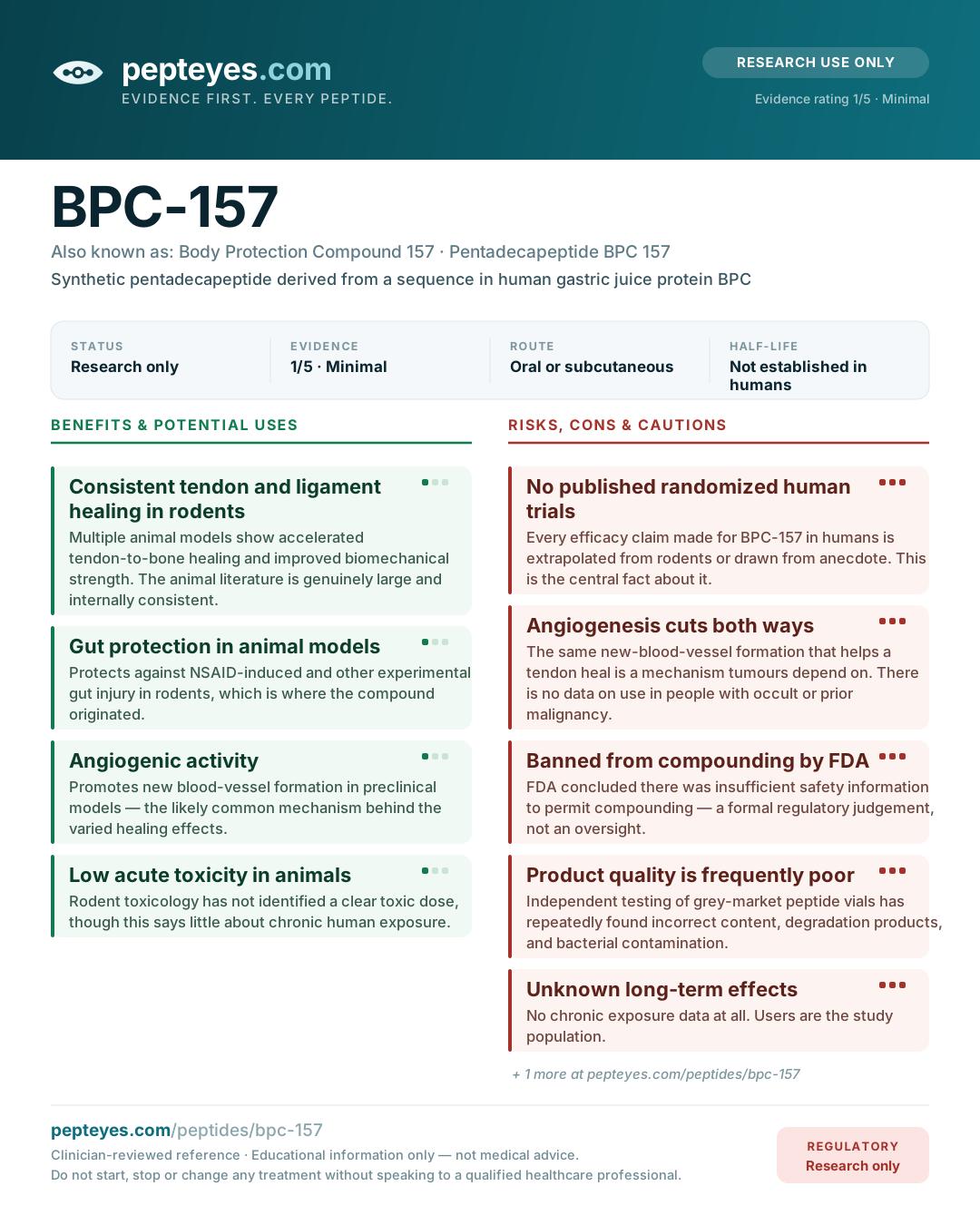
- Consistent tendon and ligament healing in rodents
Multiple animal models show accelerated tendon-to-bone healing and improved biomechanical strength. The animal literature is genuinely large and internally consistent.
- Gut protection in animal models
Protects against NSAID-induced and other experimental gut injury in rodents, which is where the compound originated.
- Angiogenic activity
Promotes new blood-vessel formation in preclinical models — the likely common mechanism behind the varied healing effects.
- Low acute toxicity in animals
Rodent toxicology has not identified a clear toxic dose, though this says little about chronic human exposure.
- Closure of surgically created gut fistulas in rats
More specific than general mucosal protection. In the fistula work FDA summarised for its own review, colocutaneous fistulas in treated rats were about 40% smaller than vehicle controls from the third day after surgery and had closed macroscopically by day 28, while vehicle fistulas had shrunk by under a quarter. That is a hard surgical endpoint rather than a symptom score, which is what makes it interesting — but FDA also noted no supporting histopathology, no dose-response (two dose levels gave the same result), no test of treatment started later after the injury, and it comes from the same affiliated group as most of the literature, with no independent replication and no human counterpart.
Benefits — Larazotide Acetate
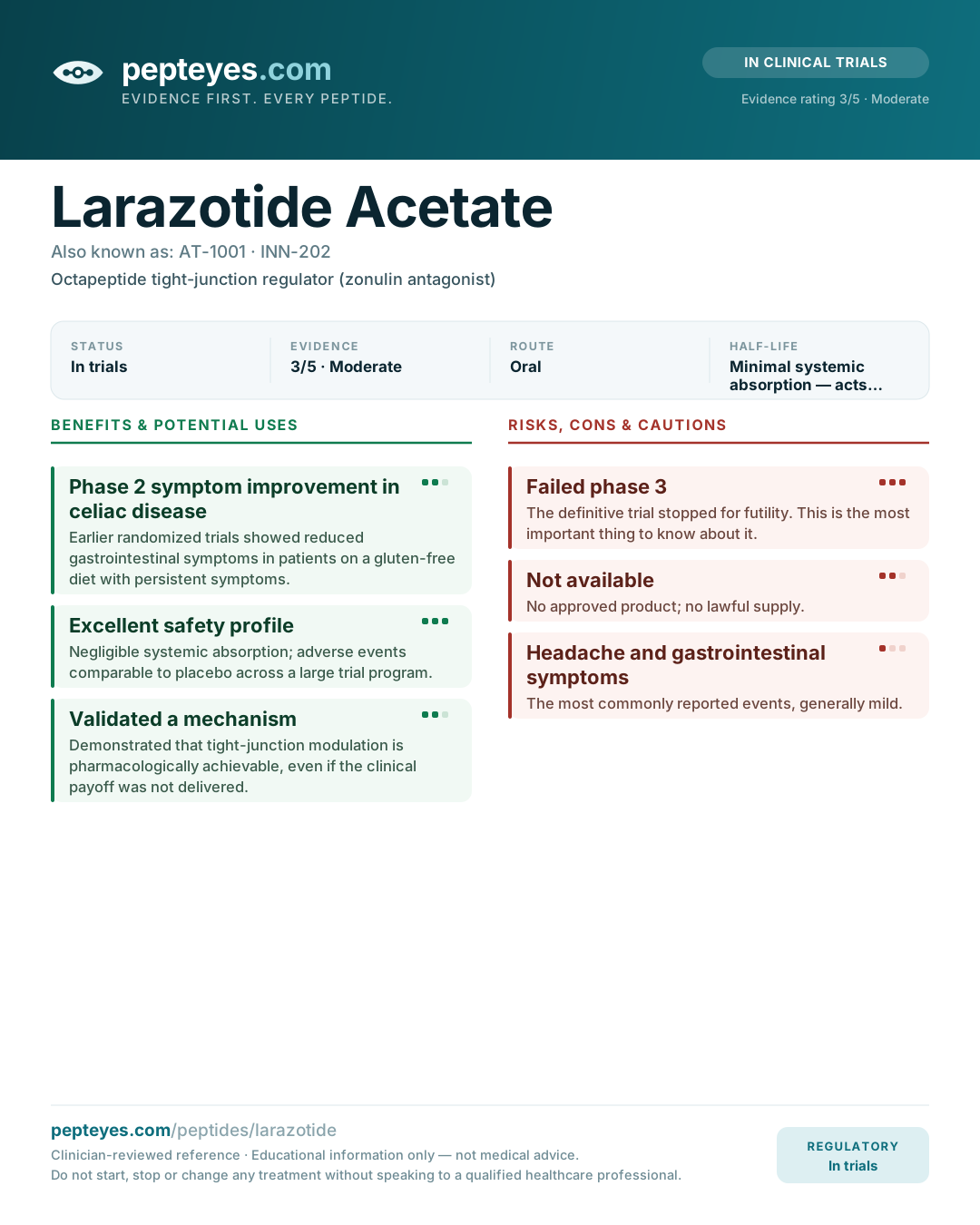
- Phase 2 symptom improvement in celiac disease
Earlier randomized trials showed reduced gastrointestinal symptoms in patients on a gluten-free diet with persistent symptoms.
- Excellent safety profile
Negligible systemic absorption; adverse events comparable to placebo across a large trial program.
- Validated a mechanism
Demonstrated that tight-junction modulation is pharmacologically achievable, even if the clinical payoff was not delivered.
Risks & cons — BPC-157
- No published randomized human trials
Every efficacy claim made for BPC-157 in humans is extrapolated from rodents or drawn from anecdote. This is the central fact about it.
- Angiogenesis cuts both ways
The same new-blood-vessel formation that helps a tendon heal is a mechanism tumours depend on. There is no data on use in people with occult or prior malignancy.
- The safety findings behind the 2023 listing were never answered
FDA reviewers judged the substance not well characterised: no control of specified impurities, aggregates, bioburden or endotoxin on a certificate of analysis, immunogenicity risk that rises for injected routes, and no identified molecular target. The listing that followed has since been withdrawn, but no new data resolved those findings — the position changed, the evidence did not.
- Product quality is frequently poor
Independent testing of grey-market peptide vials has repeatedly found incorrect content, degradation products, and bacterial contamination.
- Unknown long-term effects
No chronic exposure data at all. Users are the study population.
Risks & cons — Larazotide Acetate
- Failed phase 3
The definitive trial stopped for futility. This is the most important thing to know about it.
- Not available
No approved product; no lawful supply.
- Headache and gastrointestinal symptoms
The most commonly reported events, generally mild.
A comparison is not a recommendation. Neither column is being suggested for you. Which — if either — is appropriate depends on your diagnosis, history and medications, and that is a conversation for a qualified clinician.