Afamelanotide vs Melanotan II
The unapproved tanning peptide against its approved, selective counterpart.
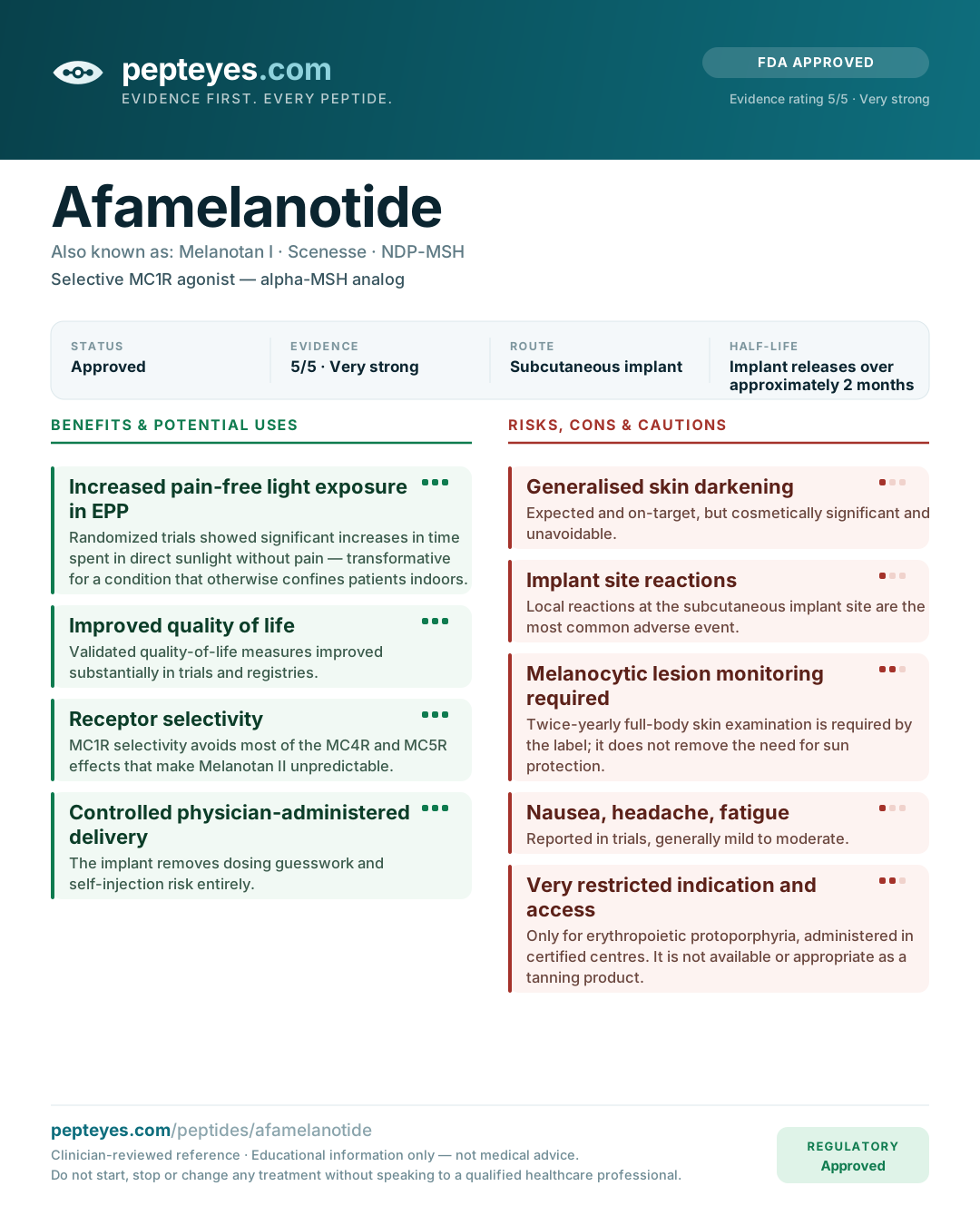
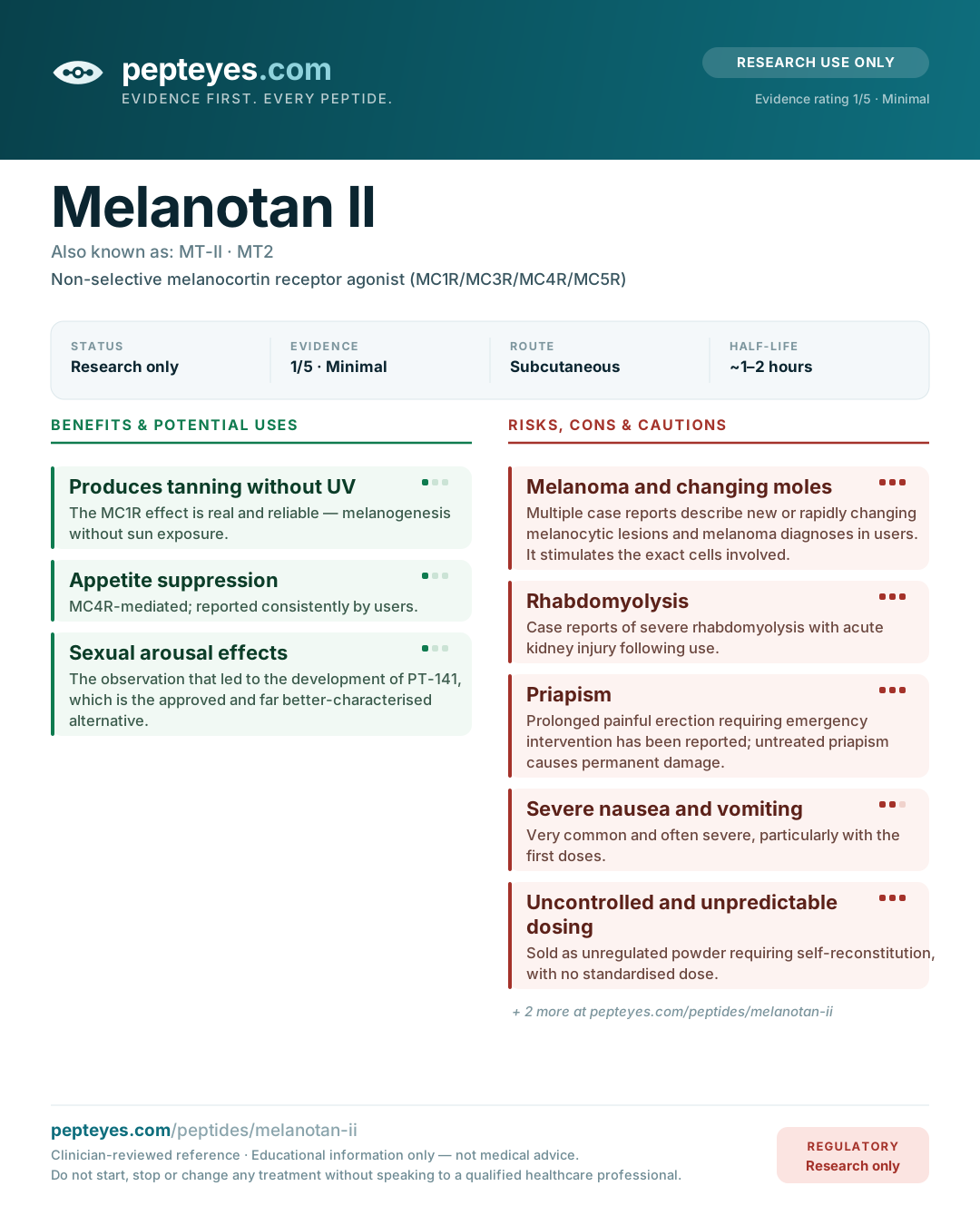
The distinction that mattersAfamelanotide is Melanotan I: selective, approved, physician-implanted, for a rare disease. Melanotan II is non-selective, unapproved, self-injected, and carries worldwide regulator warnings.
These are not equivalent in evidence Afamelanotide is rated 5/5 and Melanotan II is rated 1/5 — a gap of 4 levels on our scale. Similar marketing does not mean similar proof.
| Afamelanotide FDA Approved | Melanotan II Research Use Only | |
|---|---|---|
| Evidence rating |
5/5 Very strong
Evidence rating 5 out of 5: Very strong
|
1/5 Minimal
Evidence rating 1 out of 5: Minimal
|
| Regulatory status | FDA-approved (2019) and EMA-approved to increase pain-free light exposure in adults with erythropoietic protoporphyria | Not approved anywhere. Regulators in the US, UK, Australia and across the EU have issued explicit consumer safety warnings against it. |
| Category | Sexual Health & Melanocortin | Sexual Health & Melanocortin |
| Drug class | Selective MC1R agonist — alpha-MSH analog | Non-selective melanocortin receptor agonist (MC1R/MC3R/MC4R/MC5R) |
| Route | Subcutaneous implant (controlled release over ~2 months) | Subcutaneous (illicit) |
| Half-life | ~30 minutes (US label ~0.7 h); the implant releases most drug within 48 h and over 90% by day 5, with plasma levels gone by day 10. | No published human pharmacokinetics. The only disposition study is a rat IV one showing biphasic clearance; the 1-2 h figure is not a human measurement. |
| Sequence length | 13 residues | 7 residues |
| Molecular weight | 1,646.9 Da | 1,024.2 Da |
| Studied in | Randomized controlled trials in erythropoietic protoporphyria in the US and Europe; long-term post-authorisation safety registries. | Early academic studies of tanning and sexual function in the 1990s. No completed development program; superseded by the selective and approved afamelanotide. |
| Who should avoid it |
|
|
| Legal status | Approved prescription implant, administered by certified healthcare professionals only. | Illegal to sell for human use in the US, UK, EU and Australia. Not approved anywhere. |
Benefits — Afamelanotide
- Increased pain-free light exposure in EPP
Randomized trials showed significant increases in time spent in direct sunlight without pain — transformative for a condition that otherwise confines patients indoors.
- Improved quality of life
Validated quality-of-life measures improved substantially in trials and registries.
- Receptor selectivity
MC1R selectivity avoids most of the MC4R and MC5R effects that make Melanotan II unpredictable.
- Controlled physician-administered delivery
The implant removes dosing guesswork and self-injection risk entirely.
Benefits — Melanotan II
- Produces tanning without UV
The MC1R effect is real and reliable — melanogenesis without sun exposure.
- Appetite suppression
MC4R-mediated; reported consistently by users.
- Sexual arousal effects
The observation that led to the development of PT-141, which is the approved and far better-characterised alternative.
Risks & cons — Afamelanotide
- Generalised skin darkening
Expected and on-target, but cosmetically significant and unavoidable.
- Implant site reactions
Local reactions at the subcutaneous implant site are the most common adverse event.
- Melanocytic lesion monitoring required
Twice-yearly full-body skin examination is required by the label; it does not remove the need for sun protection.
- Nausea, headache, fatigue
Reported in trials, generally mild to moderate.
- Very restricted indication and access
Only for erythropoietic protoporphyria, administered in certified centres. It is not available or appropriate as a tanning product.
Risks & cons — Melanotan II
- Melanoma and changing moles
Multiple case reports describe new or rapidly changing melanocytic lesions and melanoma diagnoses in users. It stimulates the exact cells involved.
- Rhabdomyolysis
Case reports of severe rhabdomyolysis with acute kidney injury following use.
- Priapism
Prolonged painful erection requiring emergency intervention has been reported; untreated priapism causes permanent damage.
- Severe nausea and vomiting
Very common and often severe, particularly with the first doses.
- Uncontrolled and unpredictable dosing
Sold as unregulated powder requiring self-reconstitution, with no standardised dose.
A comparison is not a recommendation. Neither column is being suggested for you. Which — if either — is appropriate depends on your diagnosis, history and medications, and that is a conversation for a qualified clinician.