Supplied as a lyophilised powder to reconstitute
Antimicrobial & Antibiotic
At a glance
Ten answers, each one line. Open any row for the detail behind it.
What it does Seventy years old and still a first-line drug — the definitive answer to anyone who thinks…
Seventy years old and still a first-line drug — the definitive answer to anyone who thinks peptide therapeutics are new. It is also the clearest example of route determining everything: intravenous vancomycin treats bloodstream infection and cannot treat C. difficile, while oral vancomycin treats C. difficile and cannot treat anything else.
Half-life ~4–6 hours with normal renal function — Documented
~4–6 hours with normal renal function
Typical studied dose Set on the approved label, which states the starting dose, how it is… — On the label
Set on the approved label, which states the starting dose, how it is increased and the maximum. Read it there rather than anywhere else — including here.
How often it is used Set on the approved label. The interval follows the half-life above… — On the label
Set on the approved label. The interval follows the half-life above, which is why some of these are weekly and others daily.
How it is taken Intravenous; oral for C. difficile colitis (not absorbed) — Documented
Intravenous; oral for C. difficile colitis (not absorbed)
Main side effects Nephrotoxicity · Requires therapeutic drug monitoring · DRESS and severe cutaneous reactions — Carries serious risk
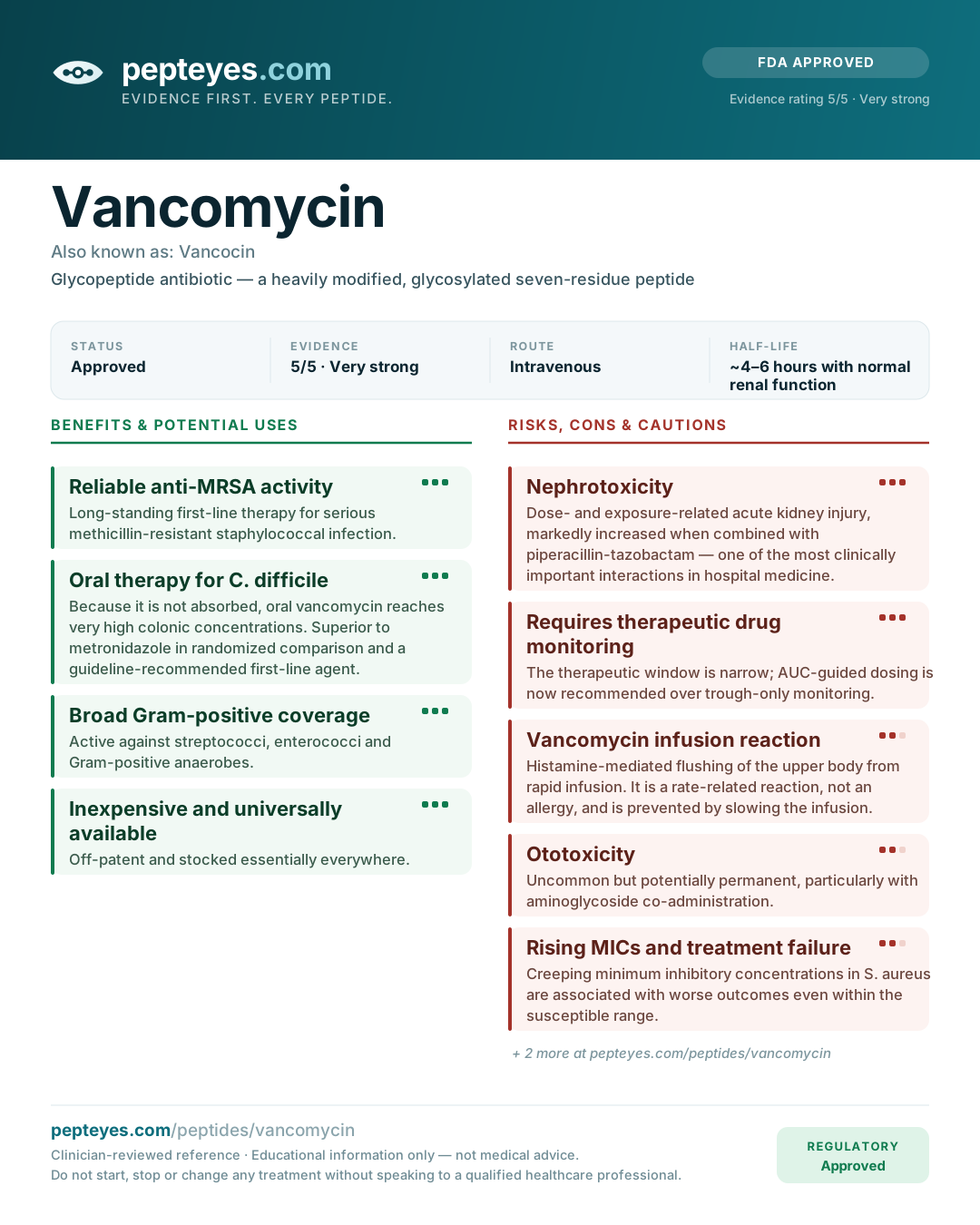
Nephrotoxicity — Dose- and exposure-related acute kidney injury, markedly increased when combined with piperacillin-tazobactam — one of the most clinically important interactions in hospital medicine.
Requires therapeutic drug monitoring — The therapeutic window is narrow; AUC-guided dosing is now recommended over trough-only monitoring.
DRESS and severe cutaneous reactions — Vancomycin is among the more common causes of DRESS syndrome.
Storage before mixing As a sealed lyophilised powder, refrigerated is typical and a freezer…
As a sealed lyophilised powder, refrigerated is typical and a freezer suits long storage; both should be dark and dry. A dry powder tolerates a few days out of the cold far better than anything in solution — which is why it ships that way.
Shelf life after mixing Once mixed it is refrigerated and treated as short-lived. Bacteriostatic…
Once mixed it is refrigerated and treated as short-lived. Bacteriostatic water contains a preservative and buys the longer window; sterile water contains none and buys a much shorter one. Peptides in solution also degrade on their own, so the container is only half the question.
Evidence level 5/5 · Very strong — Documented
Multiple phase 3 randomized trials plus regulatory approval in a major market.
Regulatory status FDA Approved — Documented
FDA-approved for serious Gram-positive infections including MRSA, and orally for Clostridioides difficile infection. Prescription antibiotic.
Overview
Seventy years old and still a first-line drug — the definitive answer to anyone who thinks peptide therapeutics are new. It is also the clearest example of route determining everything: intravenous vancomycin treats bloodstream infection and cannot treat C. difficile, while oral vancomycin treats C. difficile and cannot treat anything else.
FDA ApprovedFDA-approved for serious Gram-positive infections including MRSA, and orally for Clostridioides difficile infection.
| Regulatory status | FDA-approved for serious Gram-positive infections including MRSA, and orally for Clostridioides difficile infection. |
|---|---|
| Drug class | Glycopeptide antibiotic — a heavily modified, glycosylated seven-residue peptide |
| Route | Intravenous; oral for C. difficile colitis (not absorbed) |
| Half-life | ~4–6 hours with normal renal function |
| Evidence rating |
5/5 Very strong
Evidence rating 5 out of 5: Very strong
Multiple phase 3 randomized trials plus regulatory approval in a major market. |
| Studied in | Seven decades of clinical use, numerous randomized trials, and randomized comparisons against fidaxomicin and metronidazole for C. difficile. |
Vancomycin sequence & structure
Vancomycin is a 7-residue cyclic peptide with a free C-terminal acid, carrying D-amino acid substitutions, non-standard residues; molecular weight 1,449.27 Da.
* Hpg: O-L-vancosaminyl-β-D-glucosyl
lowercase = D-amino acid[bracketed] = non-standard residue* = side-chain modification
| Three-letter | H-D-MeLeu-D-βOHClTyr-Asn-D-Hpg(O-L-vancosaminyl-β-D-glucosyl)-D-Hpg-βOHClTyr-Dpg-OH |
|---|---|
| Length | 7 amino acid residues |
| Modifications |
|
| Molecular formula | C66H75Cl2N9O24 |
| Molecular weight | 1,449.27 Da (average, free base) |
| SMILES | CN[C@H](CC(C)C)C(=O)N[C@H]1C(=O)N[C@@H](CC(N)=O)C(=O)N[C@H]2C(=O)N[C@H]3C(=O)N[C@H](C(=O)N[C@H](C(=O)O)c4cc(O)cc(O)c4-c4cc3ccc4O)[C@H](O)c3ccc(c(Cl)c3)Oc3cc2cc(c3O[C@@H]2O[C@H](CO)[C@@H](O)[C@H](O)[C@H]2O[C@H]2C[C@](C)(N)[C@H](O)[C@H](C)O2)Oc2ccc(cc2Cl)[C@H]1O |
| Identifiers | CAS 1404-90-6 · PubChem CID 14969 · DrugBank DB00512 |
| Which molecule | Vancomycin (INN; Vancocin) is a single defined molecule, the major factor B of the Amycolatopsis orientalis fermentation; this record describes the free base. Marketed products are the hydrochloride salt (C66H75Cl2N9O24·HCl, MW 1485.71 per the FDA label). |
| Sources | PubChem CID 14969 (formula, MW, IUPAC name with CIP descriptors, isomeric SMILES, InChIKey)PubChem CID 14969 synonyms (CAS 1404-90-6, DB00512, CHEBI:28001, CHEMBL262777, UNII 6Q205EH1VU)KEGG DRUG D00212 vancomycin (formula, MW 1449.25, CAS, glycopeptide class, producer organism)ChEMBL CHEMBL262777DailyMed – Vancomycin Hydrochloride for Injection, USP (Mylan Institutional) |
Nonribosomal glycopeptide, so no UniProt precursor exists and the residues are written as bracketed codes; the D/L pattern D-D-L-D-D-L-L follows from the CIP descriptors in the PubChem IUPAC name (Leu 2R; residues 2, 4, 5 R; residues 3, 6, 7 S) and the SMILES above regenerates the shared PubChem/ChEBI/ChEMBL InChIKey MYPYJXKWCTUITO-LYRMYLQWSA-N, whereas some secondary web sources print inconsistent D/L labels for the phenylglycines. Average MW is quoted as 1449.2–1449.27 across PubChem, KEGG and the SMILES-computed value. ChEMBL classes vancomycin as a small molecule; it is recorded here as a peptide because of its heptapeptide core. No NovoPro Labs product page exists for vancomycin, so no vendor cross-check was used.
Record confidence: high — two independent authoritative sources agree on the sequence and modifications. Every sequence on the site is listed with its sources on the peptide sequences index.
How it works
Binds the D-alanyl-D-alanine terminus of peptidoglycan precursors, physically blocking transglycosylation and transpeptidation and halting cell wall synthesis. Resistance arises when organisms substitute D-alanyl-D-lactate, which drops binding affinity a thousandfold.
Evidence base
Rated 5 of 5 — Very strong. Multiple phase 3 randomized trials plus regulatory approval in a major market.
- Seven decades of use plus modern randomized comparisons in C. difficile.
- Dosing guidance has changed substantially — AUC-guided dosing superseded trough-only targets.
Benefits and risks, weighed against the evidence
Every entry below carries the strength of the evidence behind it — three bars for strong human data, two for moderate, one for preliminary or preclinical work. The two columns are not equal by design: where a compound has more documented risk than demonstrated benefit, the lists say so.
Reported benefits
4 entries · 4 on strong human evidence
-
Reliable anti-MRSA activity
Long-standing first-line therapy for serious methicillin-resistant staphylococcal infection.
Evidence: Strong evidence -
Oral therapy for C. difficile
Because it is not absorbed, oral vancomycin reaches very high colonic concentrations. Superior to metronidazole in randomized comparison and a guideline-recommended first-line agent.
Evidence: Strong evidence -
Broad Gram-positive coverage
Active against streptococci, enterococci and Gram-positive anaerobes.
Evidence: Strong evidence -
Inexpensive and universally available
Off-patent and stocked essentially everywhere.
Evidence: Strong evidence
Risks and cautions
7 entries · 3 serious or common
-
Nephrotoxicity
Dose- and exposure-related acute kidney injury, markedly increased when combined with piperacillin-tazobactam — one of the most clinically important interactions in hospital medicine.
Evidence: Serious -
Requires therapeutic drug monitoring
The therapeutic window is narrow; AUC-guided dosing is now recommended over trough-only monitoring.
Evidence: Serious -
Vancomycin infusion reaction
Histamine-mediated flushing of the upper body from rapid infusion. It is a rate-related reaction, not an allergy, and is prevented by slowing the infusion.
Evidence: Moderate evidence -
Ototoxicity
Uncommon but potentially permanent, particularly with aminoglycoside co-administration.
Evidence: Moderate evidence -
Rising MICs and treatment failure
Creeping minimum inhibitory concentrations in S. aureus are associated with worse outcomes even within the susceptible range.
Evidence: Moderate evidence -
Slow bactericidal activity
Kills more slowly than beta-lactams; not the preferred agent for methicillin-susceptible S. aureus.
Evidence: Moderate evidence -
DRESS and severe cutaneous reactions
Vancomycin is among the more common causes of DRESS syndrome.
Evidence: Serious
Counts are not a score. A single serious risk can outweigh several well-supported benefits, and a long benefit list built on preclinical work outweighs nothing at all.
Opinion — what people actually report
No community discussion to summarise
There is no meaningful community self-report for vancomycin in the sense this section uses. It is a hospital antibiotic, given intravenously under supervision with therapeutic drug monitoring, or orally for C. difficile infection. What patient discussion exists concerns infusion reactions and the experience of prolonged intravenous therapy rather than any elective use. Nobody is choosing this compound, which is why the evidence base — decades of clinical use and pharmacokinetic study — is the only relevant guide.
Readers on Vancomycin
Questions and answers from readers, under generated names. Nothing here has been checked or reviewed by the site and none of it is medical advice. It is the least verified thing on this page — and it is here because people ask each other these things anyway, and most of the other places they can ask are run by sellers.
0 questions · 0 answers
No questions yet. Ask the first one above — it takes one box and an email address.
How names work, and the house rules
Names. Every verified address is given one generated name — two ordinary words — and keeps it. Nobody chooses a name and nobody can take another's. Posts marked desk were written by the site's own editorial desk, usually to open a thread; they carry a generated name like everyone else's and are held to the site's rules, which means they never state an amount.
What is not allowed. Selling, sourcing, vendor names, coupon codes and "message me" — posts that read that way are held and usually removed. Personal medical details you would not want public. Abuse. Instructions framed as what someone else should do.
What this is not. A reader's report of what happened to them is a report, not a finding, and an answer here is one person's view. Nothing in this section changes the evidence rating above it. If something you read here would change what you take, take it to a pharmacist or physician first.
Your data. Delete any post of yours at any time, or remove everything you have written together with your name. Details in the privacy notice.
Who should avoid it
- Known vancomycin hypersensitivity or prior DRESS
- Caution in pre-existing renal impairment
- Avoid combining with piperacillin-tazobactam where an alternative exists
If used under medical supervision, monitor
- AUC-guided therapeutic drug monitoring (preferred) or trough levels
- Serum creatinine at least every 2–3 days
- Audiometry with prolonged therapy or aminoglycoside co-use
- Infusion rate — at least 1 hour per gram
Interactions
Not exhaustive. Always have a pharmacist or physician review your full medication list — including supplements.
- Piperacillin-tazobactam — substantially increased nephrotoxicity risk
- Aminoglycosides — additive nephro- and ototoxicity
- Loop diuretics — additive ototoxicity
- NSAIDs and contrast media — additive renal risk
Commonly confused with
These mix-ups cause real harm — two products sold under one name, or two molecules whose effects run in opposite directions.
Both treat MRSA, and both are peptides. Vancomycin works in the lung; daptomycin is inactivated by surfactant and must never be used for pneumonia.
Compare side by sideRegulatory & legal status
Prescription antibiotic.
Infographic
Where to read further
We link to live literature searches rather than a frozen citation list, so you always see current results — including anything published after our last review.
- PubMed — all published literature on Vancomycin
- PubMed — randomized controlled trials only
- ClinicalTrials.gov — registered human trials
- DailyMed — official FDA prescribing information
Related peptides in Antimicrobial & Antibiotic
Terms used on this page
- Intravenous Administration (IV)
- Intravenous administration delivers drug directly into the bloodstream, giving complete bioavailability by definition and making it the reference route against which all others are measured.
- Binding Affinity
- Binding affinity is the strength of the reversible interaction between a ligand and its target, expressed as the concentration at which half the target is occupied at equilibrium.
- Therapeutic Window
- The therapeutic window is the range of exposure above the concentration needed for effect and below the one producing unacceptable harm, and its width decides how tightly dosing must be controlled.
This page is educational information, not medical advice. It cannot account for your medical history, medications, or risk factors. Do not start, stop or change any treatment based on it. Speak to a qualified healthcare professional who knows your case.