Semaglutide vs Tirzepatide
The two dominant weight-loss drugs. Different receptor targets, different outcome evidence.
The distinction that mattersBoth weekly injections for weight and glucose, and frequently swapped between. Tirzepatide adds GIP agonism and produces larger average weight loss; semaglutide has the stronger cardiovascular and kidney outcome evidence.
| Semaglutide FDA Approved | Tirzepatide FDA Approved | |
|---|---|---|
| Evidence rating |
5/5 Very strong
Evidence rating 5 out of 5: Very strong
|
5/5 Very strong
Evidence rating 5 out of 5: Very strong
|
| Regulatory status | FDA-approved for type 2 diabetes, chronic weight management, and cardiovascular risk reduction in obesity | FDA-approved for type 2 diabetes, chronic weight management, and obstructive sleep apnea in obesity |
| Category | Metabolic & Weight | Metabolic & Weight |
| Drug class | GLP-1 receptor agonist — 31-amino-acid acylated analog of human GLP-1 | Dual GIP / GLP-1 receptor agonist — 39-amino-acid acylated peptide |
| Route | Subcutaneous, once weekly (oral tablet daily formulation also marketed) | Subcutaneous, once weekly |
| Half-life | ~7 days (fatty-acid acylation drives albumin binding) | ~5 days |
| Sequence length | 31 residues | 39 residues |
| Molecular weight | 4,113.6 Da | 4,813.5 Da |
| Studied in | STEP program (obesity), SUSTAIN program (type 2 diabetes), SELECT (cardiovascular outcomes), STEP-HFpEF (heart failure with preserved ejection fraction), FLOW (diabetic kidney disease). | SURPASS program (type 2 diabetes), SURMOUNT program (obesity, sleep apnea, heart failure), SURPASS-CVOT (cardiovascular outcomes). |
| Who should avoid it |
|
|
| Legal status | Prescription drug. Compounded versions are permitted only under specific FDA conditions, which have narrowed as shortages resolved. Peptides sold online as "research semaglutide" are unapproved and unverified. | Prescription drug. FDA has stated tirzepatide is no longer in shortage, which sharply restricts lawful compounding. |
Benefits — Semaglutide
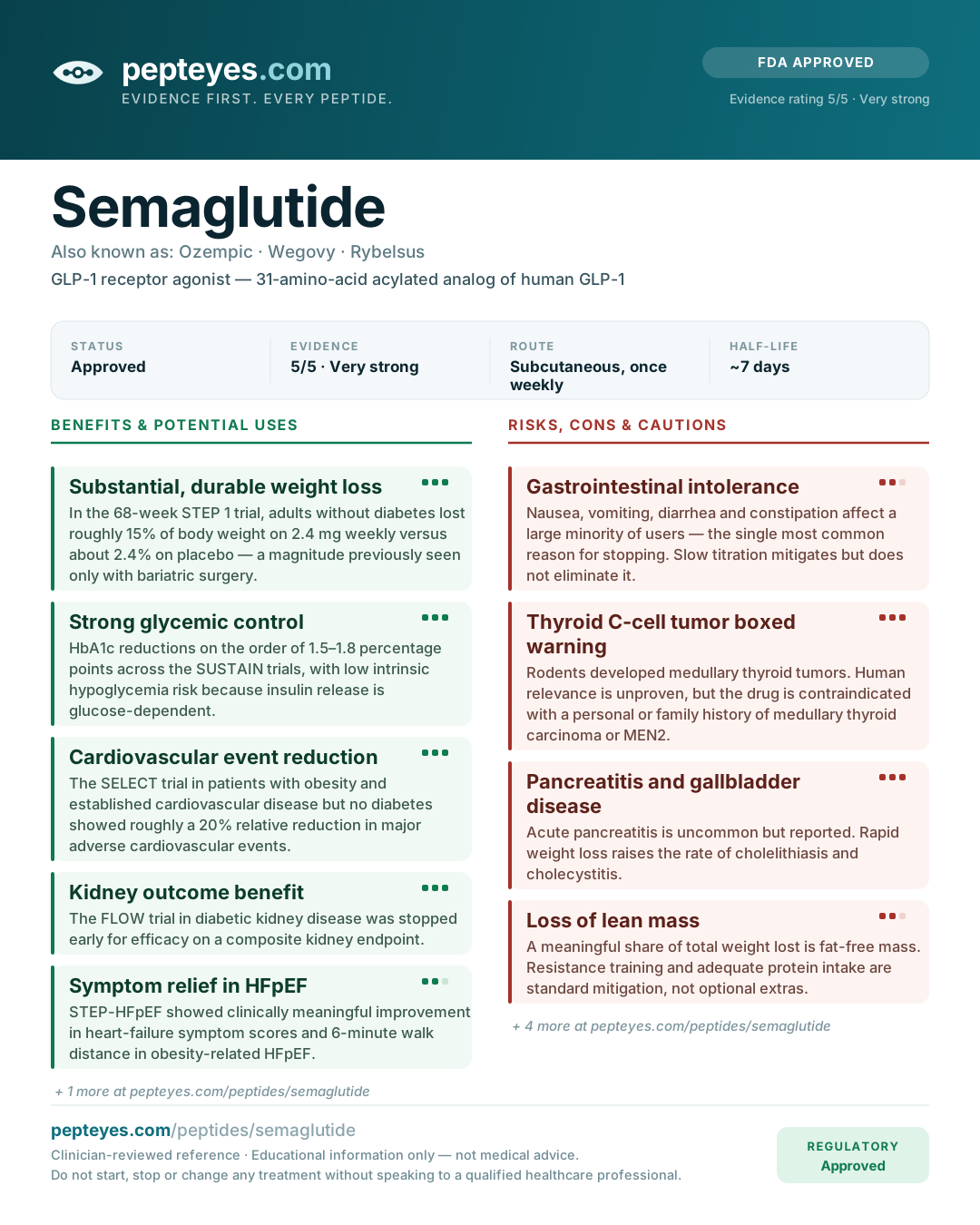
- Substantial, durable weight loss
In the 68-week STEP 1 trial, adults without diabetes lost roughly 15% of body weight on 2.4 mg weekly versus about 2.4% on placebo — a magnitude previously seen only with bariatric surgery.
- Strong glycemic control
HbA1c reductions on the order of 1.5–1.8 percentage points across the SUSTAIN trials, with low intrinsic hypoglycemia risk because insulin release is glucose-dependent.
- Cardiovascular event reduction
The SELECT trial in patients with obesity and established cardiovascular disease but no diabetes showed roughly a 20% relative reduction in major adverse cardiovascular events.
- Kidney outcome benefit
The FLOW trial in diabetic kidney disease was stopped early for efficacy on a composite kidney endpoint.
- Symptom relief in HFpEF
STEP-HFpEF showed clinically meaningful improvement in heart-failure symptom scores and 6-minute walk distance in obesity-related HFpEF.
Benefits — Tirzepatide
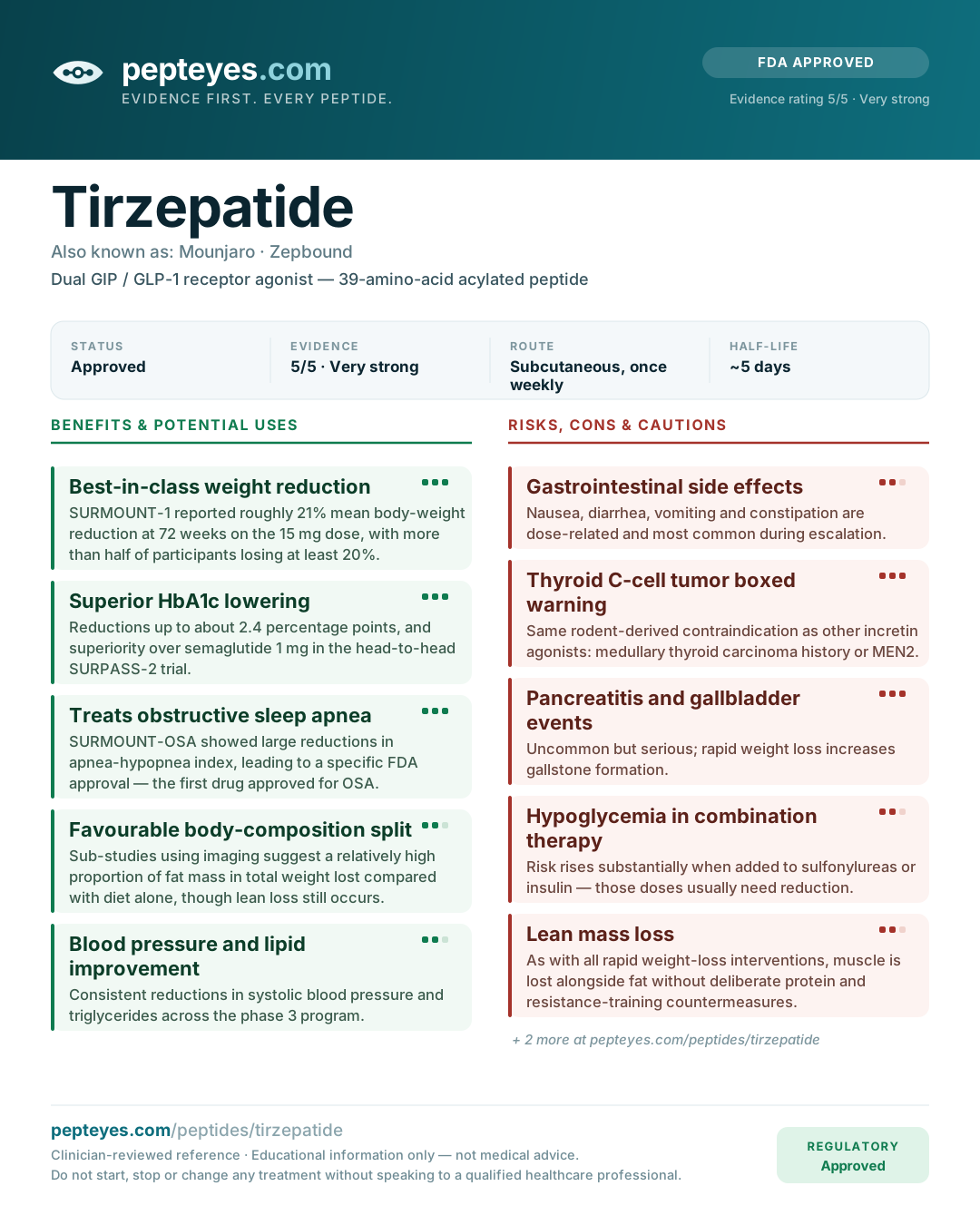
- Best-in-class weight reduction
SURMOUNT-1 reported roughly 21% mean body-weight reduction at 72 weeks on the 15 mg dose, with more than half of participants losing at least 20%.
- Superior HbA1c lowering
Reductions up to about 2.4 percentage points, and superiority over semaglutide 1 mg in the head-to-head SURPASS-2 trial.
- Treats obstructive sleep apnea
SURMOUNT-OSA showed large reductions in apnea-hypopnea index, leading to a specific FDA approval — the first drug approved for OSA.
- Favourable body-composition split
Sub-studies using imaging suggest a relatively high proportion of fat mass in total weight lost compared with diet alone, though lean loss still occurs.
- Blood pressure and lipid improvement
Consistent reductions in systolic blood pressure and triglycerides across the phase 3 program.
Risks & cons — Semaglutide
- Gastrointestinal intolerance
Nausea, vomiting, diarrhea and constipation affect a large minority of users — the single most common reason for stopping. Slow titration mitigates but does not eliminate it.
- Thyroid C-cell tumor boxed warning
Rodents developed medullary thyroid tumors. Human relevance is unproven, but the drug is contraindicated with a personal or family history of medullary thyroid carcinoma or MEN2.
- Pancreatitis and gallbladder disease
Acute pancreatitis is uncommon but reported. Rapid weight loss raises the rate of cholelithiasis and cholecystitis.
- Loss of lean mass
A meaningful share of total weight lost is fat-free mass. Resistance training and adequate protein intake are standard mitigation, not optional extras.
- Delayed gastric emptying and anesthesia risk
Retained gastric contents have prompted anesthesia societies to issue pre-procedural fasting and withholding guidance because of aspiration risk.
Risks & cons — Tirzepatide
- Gastrointestinal side effects
Nausea, diarrhea, vomiting and constipation are dose-related and most common during escalation.
- Thyroid C-cell tumor boxed warning
Same rodent-derived contraindication as other incretin agonists: medullary thyroid carcinoma history or MEN2.
- Pancreatitis and gallbladder events
Uncommon but serious; rapid weight loss increases gallstone formation.
- Hypoglycemia in combination therapy
Risk rises substantially when added to sulfonylureas or insulin — those doses usually need reduction.
- Lean mass loss
As with all rapid weight-loss interventions, muscle is lost alongside fat without deliberate protein and resistance-training countermeasures.
A comparison is not a recommendation. Neither column is being suggested for you. Which — if either — is appropriate depends on your diagnosis, history and medications, and that is a conversation for a qualified clinician.