Retatrutide vs Survodutide
The distinction that mattersBoth add glucagon agonism. Survodutide is a dual agonist with a biopsy-confirmed liver endpoint in phase 2; retatrutide is a triple agonist with the larger weight-loss numbers.
| Retatrutide In Clinical Trials | Survodutide In Clinical Trials | |
|---|---|---|
| Evidence rating |
3/5 Moderate
Evidence rating 3 out of 5: Moderate
|
3/5 Moderate
Evidence rating 3 out of 5: Moderate
|
| Regulatory status | Phase 3 (TRIUMPH program). Not approved anywhere. Widely and illegally sold grey-market. | Phase 3 (SYNCHRONIZE program) in obesity and in metabolic dysfunction-associated steatohepatitis. Not approved. |
| Category | Metabolic & Weight | Metabolic & Weight |
| Drug class | Triple GLP-1 / GIP / glucagon receptor agonist | Dual glucagon / GLP-1 receptor agonist |
| Route | Subcutaneous, once weekly (investigational) | Subcutaneous, once weekly (investigational) |
| Half-life | ~6 days | ~6 days |
| Sequence length | 39 residues | 29 residues |
| Molecular weight | 4,731.4 Da | 4,231.7 Da |
| Studied in | Phase 2 obesity and type 2 diabetes trials; phase 3 TRIUMPH trials ongoing across obesity, diabetes, knee osteoarthritis and sleep apnea. | Phase 2 obesity and MASH trials; SYNCHRONIZE phase 3 program in obesity, obesity with type 2 diabetes, and MASH. |
| Who should avoid it |
|
|
| Legal status | Investigational. Not approved by FDA, EMA, or any comparable regulator. Sale for human use is unlawful; "research chemical" labelling does not change that. | Investigational. Not approved by any regulator. |
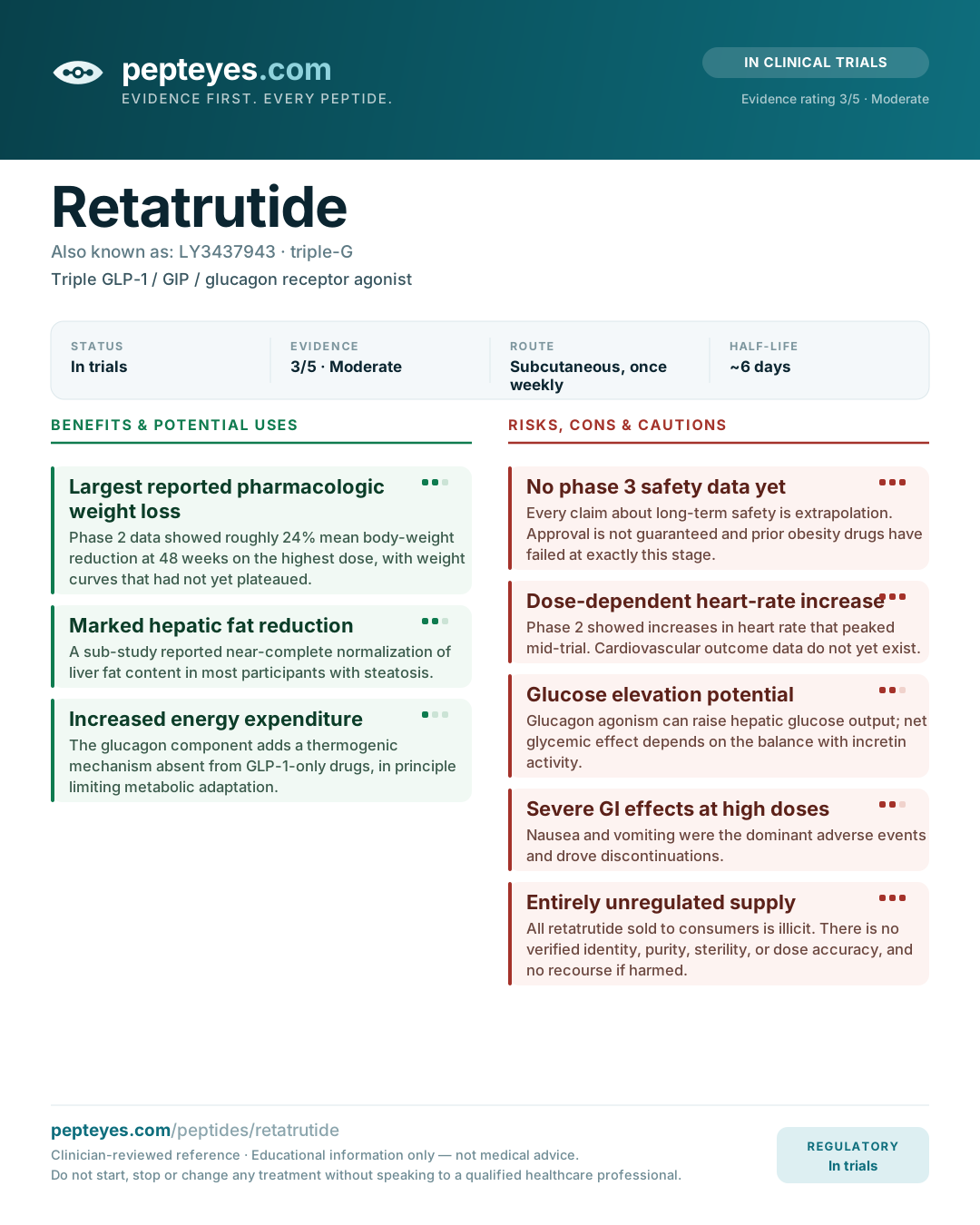
Benefits — Retatrutide
- Largest reported pharmacologic weight loss
Phase 2 data showed roughly 24% mean body-weight reduction at 48 weeks on the highest dose, with weight curves that had not yet plateaued.
- Marked hepatic fat reduction
A sub-study reported near-complete normalization of liver fat content in most participants with steatosis.
- Increased energy expenditure
The glucagon component adds a thermogenic mechanism absent from GLP-1-only drugs, in principle limiting metabolic adaptation.
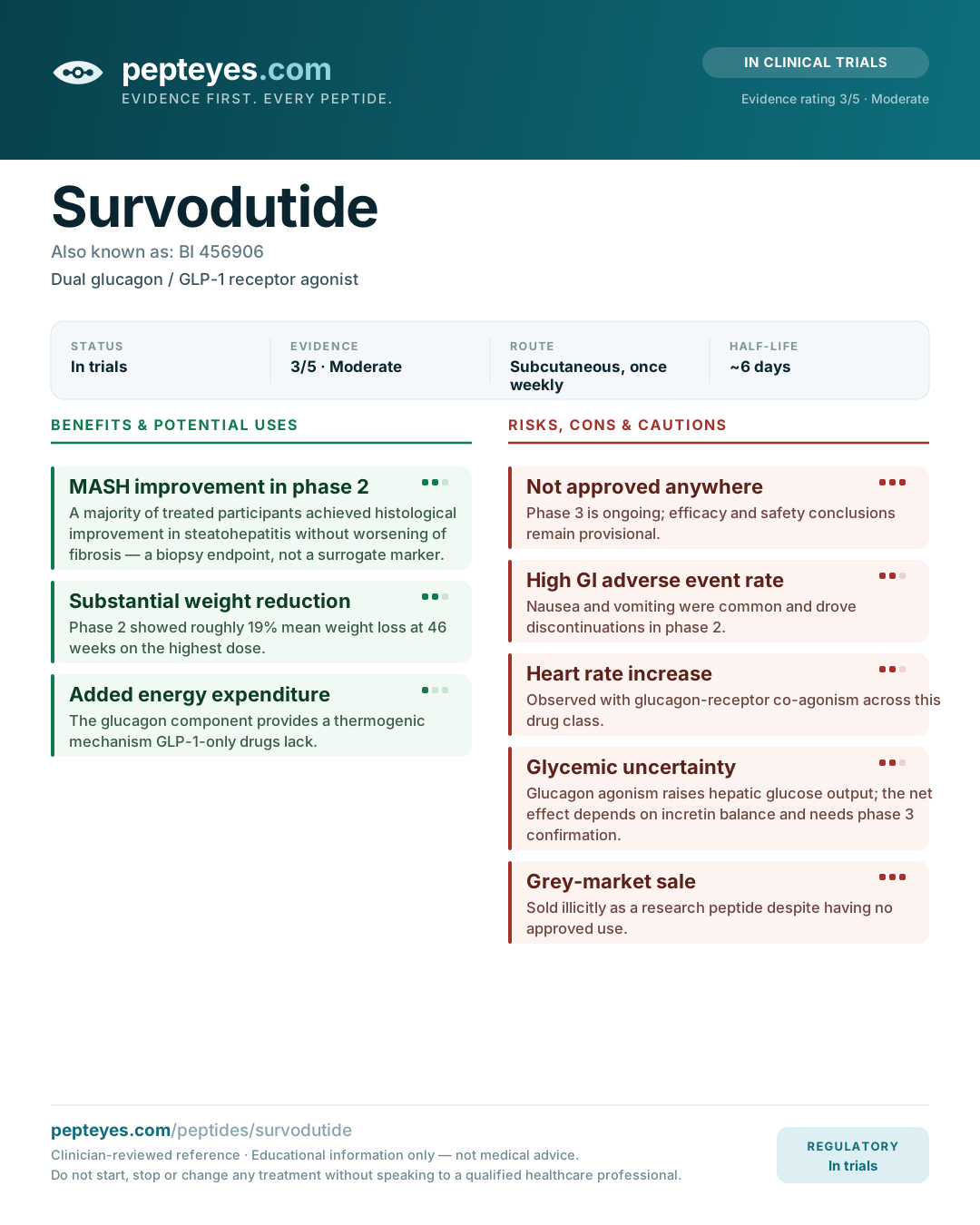
Benefits — Survodutide
- MASH improvement in phase 2
A majority of treated participants achieved histological improvement in steatohepatitis without worsening of fibrosis — a biopsy endpoint, not a surrogate marker.
- Substantial weight reduction
Phase 2 showed roughly 19% mean weight loss at 46 weeks on the highest dose.
- Added energy expenditure
The glucagon component provides a thermogenic mechanism GLP-1-only drugs lack.
Risks & cons — Retatrutide
- No phase 3 safety data yet
Every claim about long-term safety is extrapolation. Approval is not guaranteed and prior obesity drugs have failed at exactly this stage.
- Dose-dependent heart-rate increase
Phase 2 showed increases in heart rate that peaked mid-trial. Cardiovascular outcome data do not yet exist.
- Glucose elevation potential
Glucagon agonism can raise hepatic glucose output; net glycemic effect depends on the balance with incretin activity.
- Severe GI effects at high doses
Nausea and vomiting were the dominant adverse events and drove discontinuations.
- Entirely unregulated supply
All retatrutide sold to consumers is illicit. There is no verified identity, purity, sterility, or dose accuracy, and no recourse if harmed.
Risks & cons — Survodutide
- Not approved anywhere
Phase 3 is ongoing; efficacy and safety conclusions remain provisional.
- High GI adverse event rate
Nausea and vomiting were common and drove discontinuations in phase 2.
- Heart rate increase
Observed with glucagon-receptor co-agonism across this drug class.
- Glycemic uncertainty
Glucagon agonism raises hepatic glucose output; the net effect depends on incretin balance and needs phase 3 confirmation.
- Grey-market sale
Sold illicitly as a research peptide despite having no approved use.
A comparison is not a recommendation. Neither column is being suggested for you. Which — if either — is appropriate depends on your diagnosis, history and medications, and that is a conversation for a qualified clinician.