GHRP-2 vs Ipamorelin
The distinction that mattersBoth ghrelin receptor agonists. Ipamorelin is selective and spares cortisol and prolactin; GHRP-2 is more potent at releasing GH but raises both.
These are not equivalent in evidence GHRP-2 is rated 3/5 and Ipamorelin is rated 2/5 — a gap of 1 level on our scale. Similar marketing does not mean similar proof.
| GHRP-2 Limited Approval | Ipamorelin Research Use Only | |
|---|---|---|
| Evidence rating |
3/5 Moderate
Evidence rating 3 out of 5: Moderate
|
2/5 Limited
Evidence rating 2 out of 5: Limited
|
| Regulatory status | Approved in Japan as a diagnostic agent for GH deficiency. Not approved in the US or EU for therapeutic use. | Investigational only, and not approved anywhere. Two phase 2 trials in postoperative recovery of gastrointestinal function were completed without demonstrating benefit, after which development was abandoned. Widely supplied through wellness clinics and research-chemical sellers, which is not the same as being lawfully available. |
| Category | Growth Hormone Axis | Growth Hormone Axis |
| Drug class | Growth hormone-releasing peptide — synthetic hexapeptide ghrelin mimetic | Selective ghrelin receptor (GHS-R1a) agonist — pentapeptide |
| Route | Subcutaneous or intravenous | Subcutaneous (research) |
| Half-life | ~33 min (t1/2 0.55 h) after IV — measured in children, the only published human study; no adult figure exists. | ~2 hours |
| Sequence length | 6 residues | 5 residues |
| Molecular weight | 818 Da | 711.9 Da |
| Studied in | Diagnostic validation studies in Japan; short-term GH secretion studies; small studies in cachexia. | Healthy-volunteer intravenous pharmacokinetics and GH response (1999); two completed phase 2 trials of postoperative recovery of gastrointestinal function, neither positive, after which development stopped; rodent studies of gut motility, longitudinal bone growth and bone mineral content. |
| Who should avoid it |
|
|
| Legal status | Diagnostic approval in Japan only. Not lawful for therapeutic sale in the US. | Not approved by the FDA, the EMA or any comparable regulator for any indication, and not eligible for lawful pharmacy compounding in the United States. Selling it for human use is unlawful. “Research use only” or “not for human consumption” labelling is a seller’s disclaimer about intended use, not a regulatory category, and confers nothing on the buyer. The compounding position is disputed and moving; the dated record is on this page. |
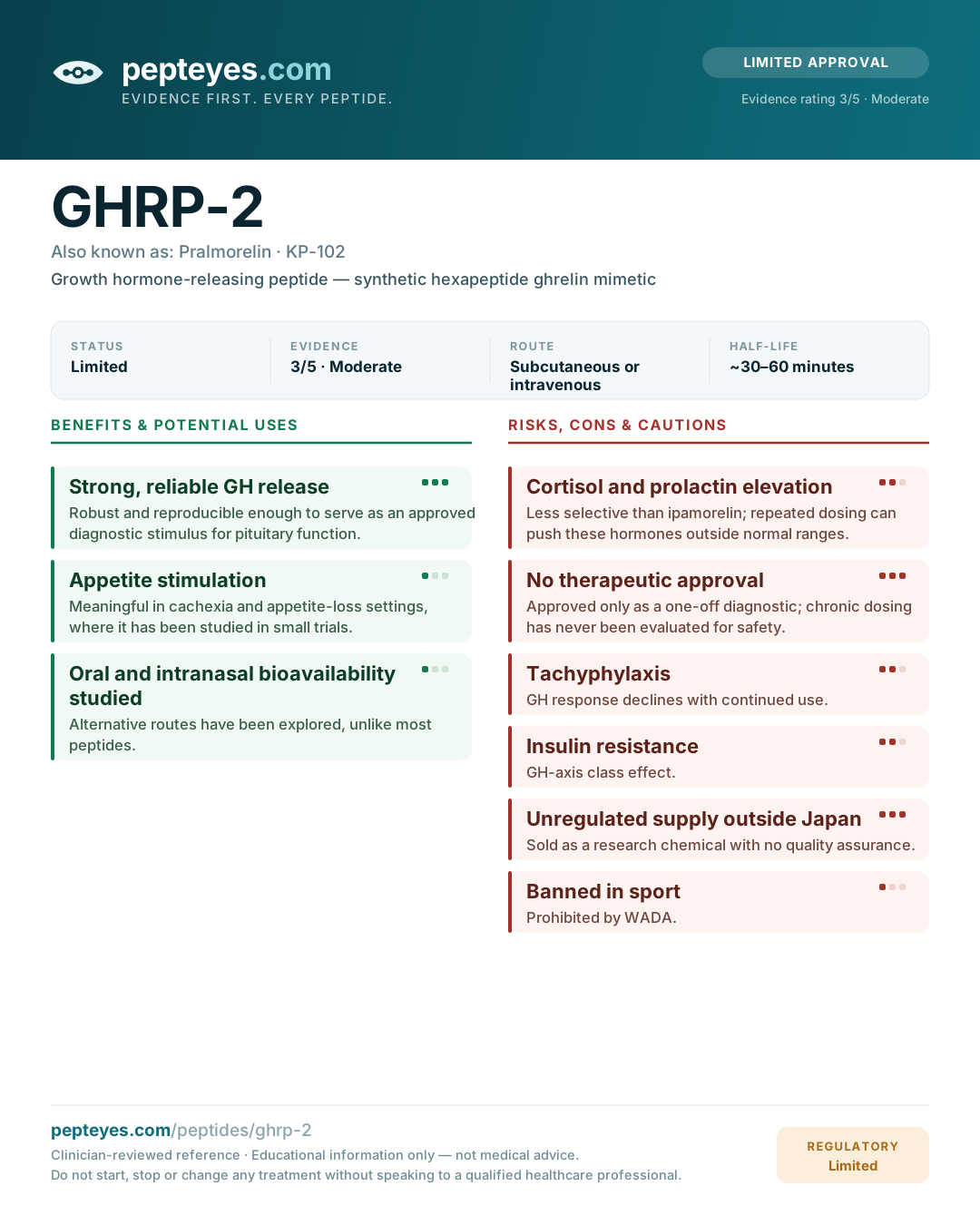
Benefits — GHRP-2
- Strong, reliable GH release
Robust and reproducible enough to serve as an approved diagnostic stimulus for pituitary function.
- Appetite stimulation
Meaningful in cachexia and appetite-loss settings, where it has been studied in small trials.
- Oral and intranasal bioavailability studied
Alternative routes have been explored, unlike most peptides.
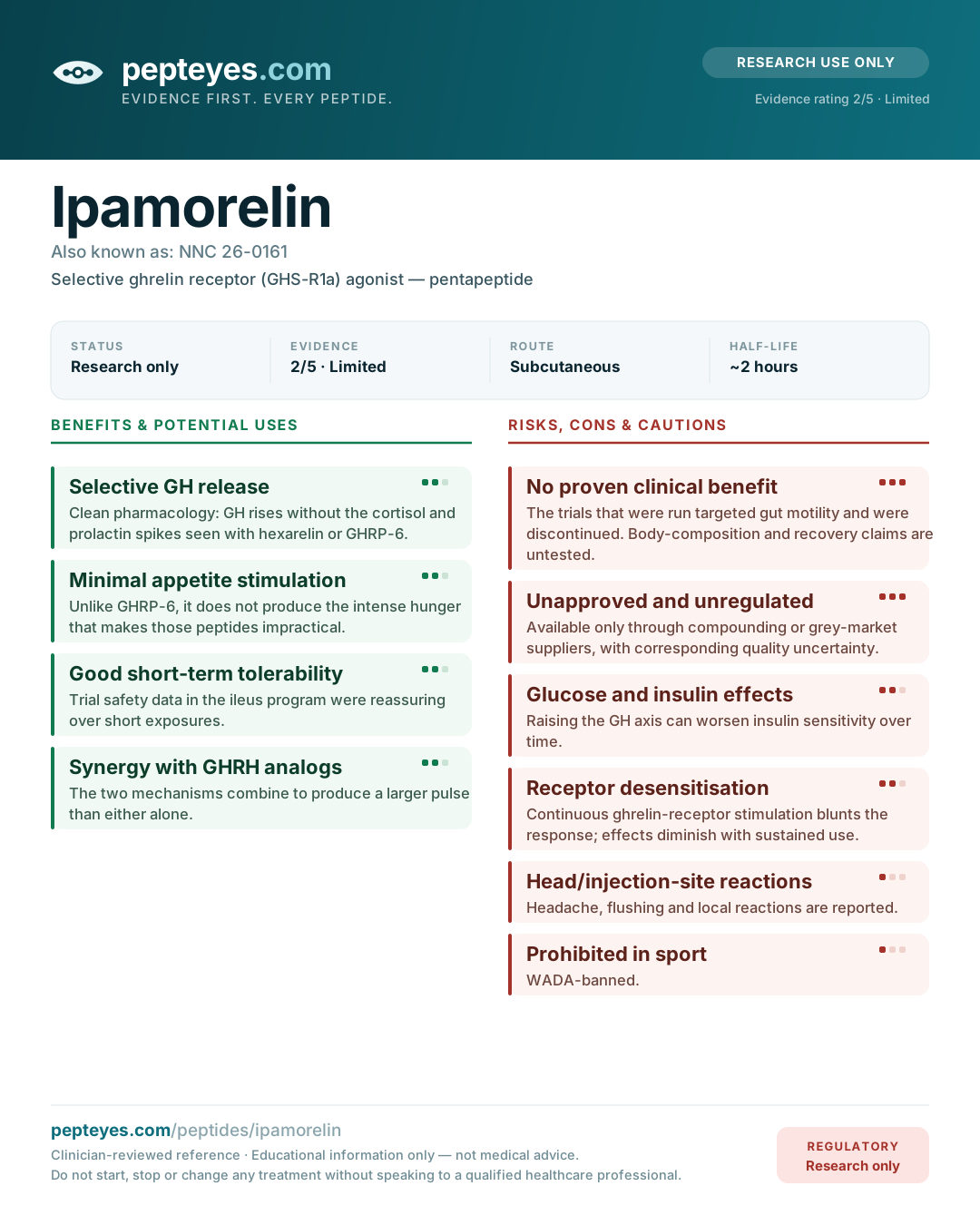
Benefits — Ipamorelin
- Selective GH release
Clean pharmacology: GH rises without the cortisol and prolactin spikes seen with hexarelin or GHRP-6.
- Minimal appetite stimulation
Unlike GHRP-6, it does not produce the intense hunger that makes those peptides impractical.
- Good short-term tolerability
Trial safety data in the ileus program were reassuring over short exposures.
- Synergy with GHRH analogs
The two mechanisms combine to produce a larger pulse than either alone.
- A measurable, reproducible GH pulse in healthy humans
A 1999 dose-escalation study in healthy male volunteers (eight men at each of five ascending intravenous infusion rates) found dose-proportional pharmacokinetics, a terminal half-life near two hours, and a single episode of GH release peaking around 40 minutes and decaying to negligible concentrations at every exposure tested. This is the clearest human evidence the compound does what it says — and it is evidence about a hormone measurement, not about anything a person would notice.
Risks & cons — GHRP-2
- Cortisol and prolactin elevation
Less selective than ipamorelin; repeated dosing can push these hormones outside normal ranges.
- No therapeutic approval
Approved only as a one-off diagnostic; chronic dosing has never been evaluated for safety.
- Tachyphylaxis
GH response declines with continued use.
- Insulin resistance
GH-axis class effect.
- Unregulated supply outside Japan
Sold as a research chemical with no quality assurance.
Risks & cons — Ipamorelin
- No proven clinical benefit
The trials that were run targeted gut motility and were discontinued. Body-composition and recovery claims are untested.
- Unapproved and unregulated
Available only through compounding or grey-market suppliers, with corresponding quality uncertainty.
- Glucose and insulin effects
Raising the GH axis can worsen insulin sensitivity over time.
- Receptor desensitisation
Continuous ghrelin-receptor stimulation blunts the response; effects diminish with sustained use.
- Head/injection-site reactions
Headache, flushing and local reactions are reported.
A comparison is not a recommendation. Neither column is being suggested for you. Which — if either — is appropriate depends on your diagnosis, history and medications, and that is a conversation for a qualified clinician.