Davunetide vs Dihexa
The distinction that mattersBoth neuroactive peptides marketed on synaptic mechanisms. Davunetide actually ran a properly powered phase 3 trial and failed. Dihexa has never been given to a human in a published study.
These are not equivalent in evidence Davunetide is rated 3/5 and Dihexa is rated 1/5 — a gap of 2 levels on our scale. Similar marketing does not mean similar proof.
| Davunetide In Clinical Trials | Dihexa Research Use Only | |
|---|---|---|
| Evidence rating |
3/5 Moderate
Evidence rating 3 out of 5: Moderate
|
1/5 Minimal
Evidence rating 1 out of 5: Minimal
|
| Regulatory status | Failed a phase 3 trial in progressive supranuclear palsy in 2012. Later explored for ADNP syndrome. Not approved. | Preclinical only. No human trials have been conducted. Not approved anywhere. |
| Category | Cognitive & Neurological | Cognitive & Neurological |
| Drug class | Eight-amino-acid fragment of activity-dependent neuroprotective protein (ADNP) | Angiotensin IV analog — small oligopeptide HGF/c-Met potentiator |
| Route | Intranasal or intravenous (investigational) | Oral or subcutaneous (research) |
| Half-life | Rapid biphasic elimination in the human phase 1 (intranasal and IV); no half-life figure was published, and lumbar CSF exposure was under 4% of plasma. | Not established in humans — no published human trial. Only rodent data exist, and the key 2013 rodent paper carries an editorial expression of concern. |
| Sequence length | 8 residues | 3 residues |
| Molecular weight | 824.9 Da | 504.7 Da |
| Studied in | Phase 2 in amnestic mild cognitive impairment and schizophrenia; a large randomized phase 3 trial in progressive supranuclear palsy; later work in ADNP syndrome. | Rodent models of cognitive impairment, including scopolamine-induced deficits and Parkinson models. No human studies at all. |
| Who should avoid it |
|
|
| Legal status | Investigational; development for the primary indication discontinued. | Not approved anywhere. Sold under research-use-only labelling. |
Benefits — Davunetide
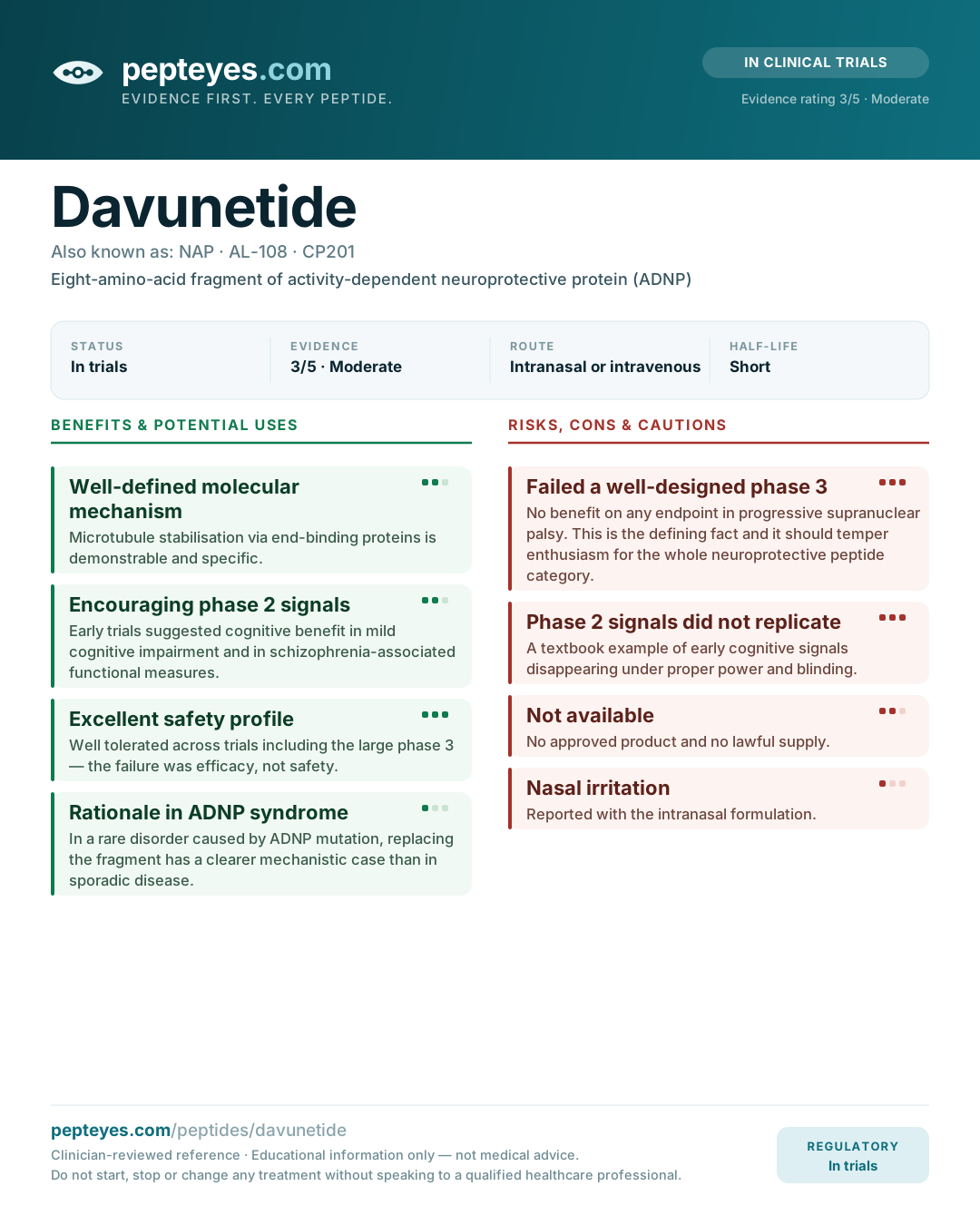
- Well-defined molecular mechanism
Microtubule stabilisation via end-binding proteins is demonstrable and specific.
- Encouraging phase 2 signals
Early trials suggested cognitive benefit in mild cognitive impairment and in schizophrenia-associated functional measures.
- Excellent safety profile
Well tolerated across trials including the large phase 3 — the failure was efficacy, not safety.
- Rationale in ADNP syndrome
In a rare disorder caused by ADNP mutation, replacing the fragment has a clearer mechanistic case than in sporadic disease.
Benefits — Dihexa
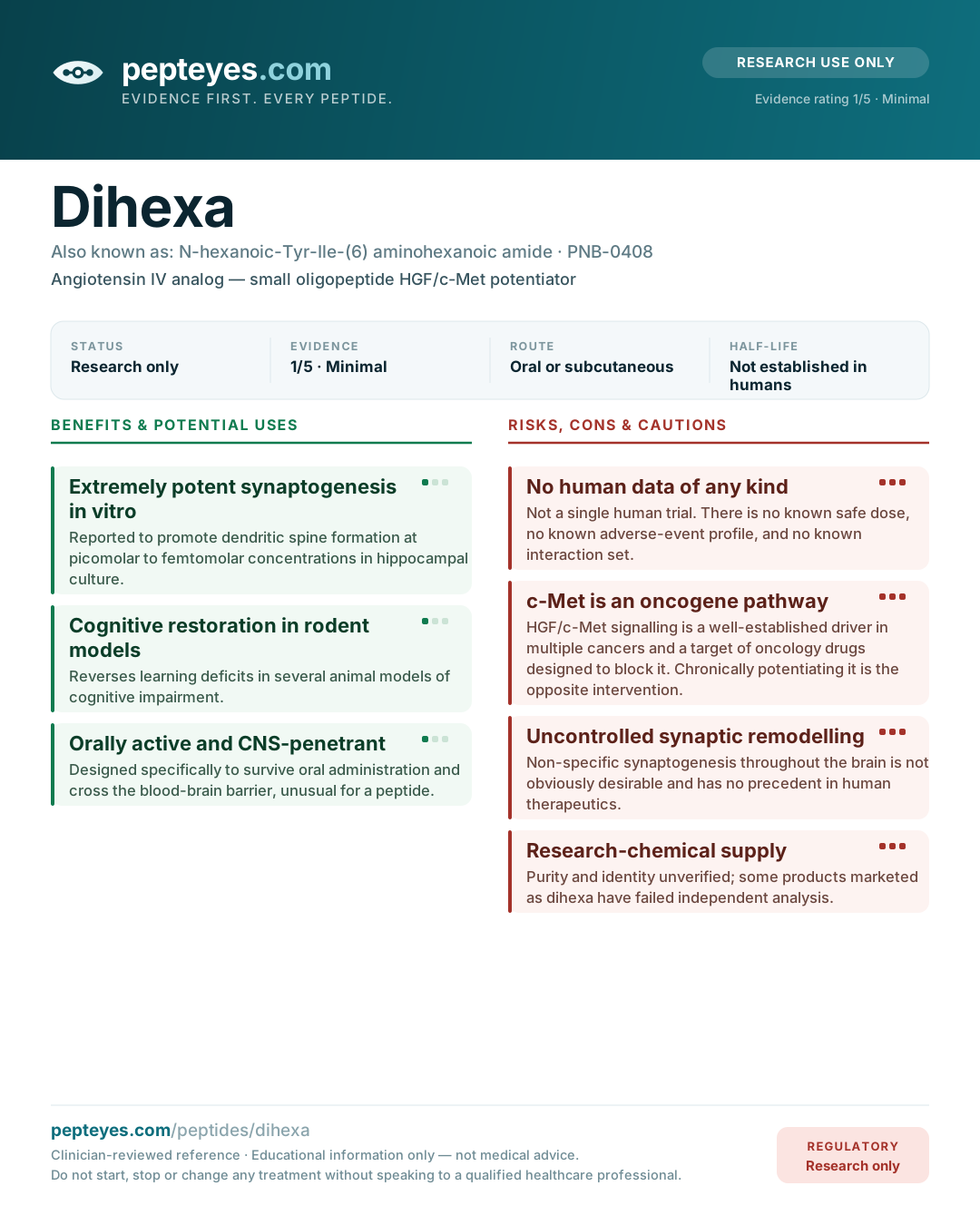
- Extremely potent synaptogenesis in vitro
Reported to promote dendritic spine formation at picomolar to femtomolar concentrations in hippocampal culture.
- Cognitive restoration in rodent models
Reverses learning deficits in several animal models of cognitive impairment.
- Orally active and CNS-penetrant
Designed specifically to survive oral administration and cross the blood-brain barrier, unusual for a peptide.
Risks & cons — Davunetide
- Failed a well-designed phase 3
No benefit on any endpoint in progressive supranuclear palsy. This is the defining fact and it should temper enthusiasm for the whole neuroprotective peptide category.
- Phase 2 signals did not replicate
A textbook example of early cognitive signals disappearing under proper power and blinding.
- Not available
No approved product and no lawful supply.
- Nasal irritation
Reported with the intranasal formulation.
Risks & cons — Dihexa
- No human data of any kind
Not a single human trial. There is no known safe dose, no known adverse-event profile, and no known interaction set.
- c-Met is an oncogene pathway
HGF/c-Met signalling is a well-established driver in multiple cancers and a target of oncology drugs designed to block it. Chronically potentiating it is the opposite intervention.
- Uncontrolled synaptic remodelling
Non-specific synaptogenesis throughout the brain is not obviously desirable and has no precedent in human therapeutics.
- Retracted foundational papers
Two of the core dihexa papers from the originating laboratory were retracted in 2025 for data falsification, so the mechanism and cognition claims rest on a compromised evidence base.
- Research-chemical supply
Purity and identity unverified; some products marketed as dihexa have failed independent analysis.
A comparison is not a recommendation. Neither column is being suggested for you. Which — if either — is appropriate depends on your diagnosis, history and medications, and that is a conversation for a qualified clinician.