Supplied as eye drops
Ophthalmic
At a glance
Ten answers, each one line. Open any row for the detail behind it.
What it does Genuinely a peptide — a cyclic eleven-residue peptide made by a soil fungus — and arguably…
Genuinely a peptide — a cyclic eleven-residue peptide made by a soil fungus — and arguably the most consequential one in medicine. It made organ transplantation routine. Its ophthalmic form is the reason chronic dry eye became a treatable inflammatory disease rather than something you managed with drops.
Half-life ~8.4 h terminal for the modified formulation (Neoral) and ~19… — Documented
~8.4 h terminal for the modified formulation (Neoral) and ~19 h for Sandimmune; ophthalmic use gives negligible systemic exposure.
Typical studied dose Set on the approved label, which states the starting dose, how it is… — On the label
Set on the approved label, which states the starting dose, how it is increased and the maximum. Read it there rather than anywhere else — including here.
How often it is used Set on the approved label. The interval follows the half-life above… — On the label
Set on the approved label. The interval follows the half-life above, which is why some of these are weekly and others daily.
How it is taken Ophthalmic emulsion; also oral and intravenous for systemic use — Documented
Ophthalmic emulsion; also oral and intravenous for systemic use
Main side effects Systemic use is nephrotoxic · Systemic use raises malignancy and infection risk · Extensive systemic drug interactions — Carries serious risk
Systemic use is nephrotoxic — Dose-related and often progressive renal impairment is the principal limitation of oral ciclosporin, requiring level monitoring throughout.
Systemic use raises malignancy and infection risk — Sustained T-cell suppression increases lymphoma, skin cancer and opportunistic infection risk. None of this applies to eye drops.
Extensive systemic drug interactions — A CYP3A4 substrate with a long and clinically important interaction list.
Storage before mixing Refrigerated until first opened, then as the label directs. An eye…
Refrigerated until first opened, then as the label directs. An eye preparation is the one case where sterility is not a background worry but the whole point: the tip must touch nothing, and a shared bottle is not a thing.
Shelf life after mixing Nothing to mix — it is not supplied as a powder. The relevant date is…
Nothing to mix — it is not supplied as a powder. The relevant date is the one printed on the product.
Evidence level 5/5 · Very strong — Documented
Multiple phase 3 randomized trials plus regulatory approval in a major market.
Regulatory status FDA Approved — Documented
FDA-approved as an ophthalmic emulsion for keratoconjunctivitis sicca, and systemically for transplant rejection prophylaxis and several autoimmune conditions. Prescription drug in both ophthalmic and systemic forms.
Overview
Genuinely a peptide — a cyclic eleven-residue peptide made by a soil fungus — and arguably the most consequential one in medicine. It made organ transplantation routine. Its ophthalmic form is the reason chronic dry eye became a treatable inflammatory disease rather than something you managed with drops.
FDA ApprovedFDA-approved as an ophthalmic emulsion for keratoconjunctivitis sicca, and systemically for transplant rejection prophylaxis and several autoimmune conditions.
| Regulatory status | FDA-approved as an ophthalmic emulsion for keratoconjunctivitis sicca, and systemically for transplant rejection prophylaxis and several autoimmune conditions. |
|---|---|
| Drug class | Cyclic undecapeptide of fungal origin, containing several non-standard amino acids |
| Route | Ophthalmic emulsion; also oral and intravenous for systemic use |
| Half-life | ~8.4 h terminal for the modified formulation (Neoral) and ~19 h for Sandimmune; ophthalmic use gives negligible systemic exposure. |
| Evidence rating |
5/5 Very strong
Evidence rating 5 out of 5: Very strong
Multiple phase 3 randomized trials plus regulatory approval in a major market. |
| Studied in | Large randomized trials in transplantation, psoriasis and rheumatoid arthritis; multiple randomized ophthalmic trials in dry eye disease. |
Ciclosporin (Cyclosporine A) sequence & structure
Ciclosporin (Cyclosporine A) is a 11-residue cyclic peptide with a free C-terminal acid, carrying D-amino acid substitutions, non-standard residues; molecular weight 1,202.63 Da.
lowercase = D-amino acid[bracketed] = non-standard residue
| Three-letter | cyclo(MeBmt-Abu-Sar-MeLeu-Val-MeLeu-Ala-D-Ala-MeLeu-MeLeu-MeVal) |
|---|---|
| Length | 11 amino acid residues |
| Modifications |
|
| Molecular formula | C62H111N11O12 |
| Molecular weight | 1,202.63 Da (average, free base) |
| SMILES | CC[C@H]1C(=O)N(CC(=O)N([C@H](C(=O)N[C@H](C(=O)N([C@H](C(=O)N[C@H](C(=O)N[C@@H](C(=O)N([C@H](C(=O)N([C@H](C(=O)N([C@H](C(=O)N([C@H](C(=O)N1)[C@@H]([C@H](C)C/C=C/C)O)C)C(C)C)C)CC(C)C)C)CC(C)C)C)C)C)CC(C)C)C)C(C)C)CC(C)C)C)C |
| Identifiers | CAS 59865-13-3 · PubChem CID 5284373 · DrugBank DB00091 |
| Which molecule | "Ciclosporin" (INN) = cyclosporin A (CsA), the major Tolypocladium inflatum (Beauveria nivea) metabolite and the active ingredient of Sandimmune/Neoral/Restasis. The fungus also produces minor congeners (cyclosporins B–Z, e.g. cyclosporin B has Ala2, cyclosporin C has Thr2); this record describes cyclosporin A only. |
| Sources | PubChem CID 5284373 (Cyclosporin A) — PUG REST properties and CASChEMBL CHEMBL160 (Cyclosporine)KEGG DRUG D00184 / COMPOUND C05086 (Cyclosporin A) — formula, MW, CAS, NRP residue sequenceChEBI CHEBI:4031 (cyclosporin A) — JCBN systematic cyclo-peptide nameDailyMed — Sandimmune (cyclosporine) label, Description section (Novartis) |
Residue numbering follows the standard convention with MeBmt as position 1; the FDA label and the ChEBI/JCBN name write the same ring starting from Ala7 (cyclo[L-Ala-D-Ala-MeLeu-MeLeu-MeVal-MeBmt-Abu-Sar-MeLeu-Val-MeLeu]), which is the identical molecule. It is a neutral, highly lipophilic non-ribosomal peptide supplied as the free base (no salt form); pharmaceutical products are oil/microemulsion (Neoral) or Cremophor-based (Sandimmune) formulations. MW is quoted as 1202.6 (PubChem), 1202.61 (KEGG) and 1202.63 (ChEMBL) depending on atomic-weight tables; 79217-60-0 is a second (deprecated/alternate) CAS seen in PubChem and Wikidata for the same substance. Not endogenous, so no UniProt accession.
Record confidence: high — two independent authoritative sources agree on the sequence and modifications. Every sequence on the site is listed with its sources on the peptide sequences index.
How it works
Binds cyclophilin; the complex inhibits calcineurin, blocking dephosphorylation of NFAT and preventing transcription of IL-2 and other cytokines required for T-cell activation. On the ocular surface this interrupts the self-sustaining inflammatory cycle that damages lacrimal tissue.
Evidence base
Rated 5 of 5 — Very strong. Multiple phase 3 randomized trials plus regulatory approval in a major market.
- One of the most thoroughly studied drugs in medicine, across transplantation, rheumatology, dermatology and ophthalmology.
- Ophthalmic and systemic risk profiles are almost entirely separate — do not transfer one to the other.
Benefits and risks, weighed against the evidence
Every entry below carries the strength of the evidence behind it — three bars for strong human data, two for moderate, one for preliminary or preclinical work. The two columns are not equal by design: where a compound has more documented risk than demonstrated benefit, the lists say so.
Reported benefits
5 entries · 5 on strong human evidence
-
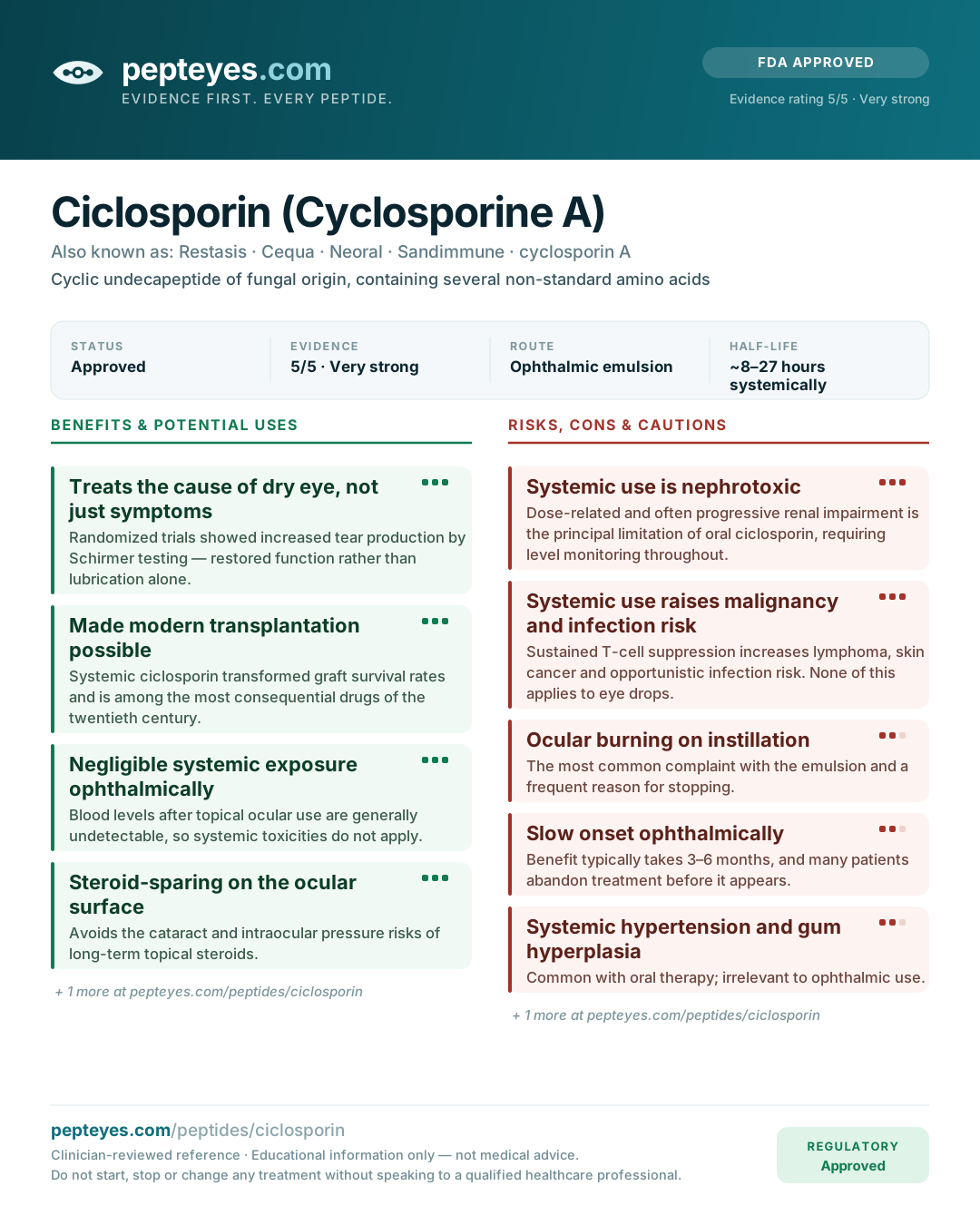
Treats the cause of dry eye, not just symptoms
Randomized trials showed increased tear production by Schirmer testing — restored function rather than lubrication alone.
Evidence: Strong evidence -
Made modern transplantation possible
Systemic ciclosporin transformed graft survival rates and is among the most consequential drugs of the twentieth century.
Evidence: Strong evidence -
Negligible systemic exposure ophthalmically
Blood levels after topical ocular use are generally undetectable, so systemic toxicities do not apply.
Evidence: Strong evidence -
Steroid-sparing on the ocular surface
Avoids the cataract and intraocular pressure risks of long-term topical steroids.
Evidence: Strong evidence -
Effective in several autoimmune diseases
Systemic use has randomized evidence in severe psoriasis, rheumatoid arthritis and nephrotic syndrome.
Evidence: Strong evidence
Risks and cautions
6 entries · 3 serious or common
-
Systemic use is nephrotoxic
Dose-related and often progressive renal impairment is the principal limitation of oral ciclosporin, requiring level monitoring throughout.
Evidence: Serious -
Systemic use raises malignancy and infection risk
Sustained T-cell suppression increases lymphoma, skin cancer and opportunistic infection risk. None of this applies to eye drops.
Evidence: Serious -
Ocular burning on instillation
The most common complaint with the emulsion and a frequent reason for stopping.
Evidence: Moderate evidence -
Slow onset ophthalmically
Benefit typically takes 3–6 months, and many patients abandon treatment before it appears.
Evidence: Moderate evidence -
Systemic hypertension and gum hyperplasia
Common with oral therapy; irrelevant to ophthalmic use.
Evidence: Moderate evidence -
Extensive systemic drug interactions
A CYP3A4 substrate with a long and clinically important interaction list.
Evidence: Serious
Counts are not a score. A single serious risk can outweigh several well-supported benefits, and a long benefit list built on preclinical work outweighs nothing at all.
Opinion — what people actually report
4 themes · 1 reported benefit · 2 reported problems
This is the weakest tier on this site. These are themes drawn from public discussion — forums, subreddits and patient threads — not from trials. There is no control group, no denominator, and no way to confirm that what someone injected matched its label. People post when a result is dramatic and when something goes wrong, and rarely when nothing happens, so treat everything below as a description of the conversation rather than of the compound. The bars count how often a thing is said, not how well it is supported.
-
Burning and stinging on instillation Reported problem. Dominant theme: Comes up in most discussions of this compound.
The dominant complaint from dry eye patients, and the most common reason people stop before it has had time to work.
-
It takes months, and people are not always told Reported problem. Dominant theme: Comes up in most discussions of this compound.
A recurring frustration — the benefit builds over three to six months, and patients expecting artificial-tear-like relief abandon it early.
-
Genuinely helpful once established Reported benefit. Recurring: Raised regularly, though not by everyone.
Positive reports come mostly from people who persisted past the first months.
-
Formulation matters Practical note. Recurring: Raised regularly, though not by everyone.
Emulsion versus nanomicellar versus compounded preparations are compared at length, mainly on tolerability.
Where the reports and the evidence part ways
Reports match the trial evidence well: onset is slow, burning is the most common adverse effect, and the benefit is real but modest. The most useful thing the community surfaces is a communication failure rather than a pharmacological one — early discontinuation because nobody explained the timeline is the main reason the drug underperforms in practice, and that is not something the trials measure. It is also worth noting this is a cyclic peptide rather than a conventional small molecule, which is why it appears in this library at all.
Readers on Ciclosporin (Cyclosporine A)
Questions and answers from readers, under generated names. Nothing here has been checked or reviewed by the site and none of it is medical advice. It is the least verified thing on this page — and it is here because people ask each other these things anyway, and most of the other places they can ask are run by sellers.
0 questions · 0 answers
No questions yet. Ask the first one above — it takes one box and an email address.
How names work, and the house rules
Names. Every verified address is given one generated name — two ordinary words — and keeps it. Nobody chooses a name and nobody can take another's. Posts marked desk were written by the site's own editorial desk, usually to open a thread; they carry a generated name like everyone else's and are held to the site's rules, which means they never state an amount.
What is not allowed. Selling, sourcing, vendor names, coupon codes and "message me" — posts that read that way are held and usually removed. Personal medical details you would not want public. Abuse. Instructions framed as what someone else should do.
What this is not. A reader's report of what happened to them is a report, not a finding, and an answer here is one person's view. Nothing in this section changes the evidence rating above it. If something you read here would change what you take, take it to a pharmacist or physician first.
Your data. Delete any post of yours at any time, or remove everything you have written together with your name. Details in the privacy notice.
Who should avoid it
- Ocular infection — do not use the emulsion during active infection
- Systemic use: uncontrolled hypertension, significant renal impairment, active malignancy
- Contact lenses should be removed before instillation and reinserted after 15 minutes
If used under medical supervision, monitor
- Ophthalmic: symptom and Schirmer response at 3–6 months
- Systemic: trough levels, serum creatinine, blood pressure, potassium, lipids
- Systemic: skin surveillance for malignancy
Interactions
Not exhaustive. Always have a pharmacist or physician review your full medication list — including supplements.
- Systemic: CYP3A4 inhibitors (ketoconazole, macrolides, grapefruit) raise levels sharply
- Systemic: CYP3A4 inducers (rifampicin, phenytoin, St John's wort) cause graft-threatening drops
- Systemic: statins — increased rhabdomyolysis risk
- Systemic: NSAIDs and aminoglycosides — additive nephrotoxicity
- Ophthalmic: minimal, given negligible absorption
Regulatory & legal status
Prescription drug in both ophthalmic and systemic forms.
Infographic
Where to read further
We link to live literature searches rather than a frozen citation list, so you always see current results — including anything published after our last review.
- PubMed — all published literature on Ciclosporin (Cyclosporine A)
- PubMed — randomized controlled trials only
- ClinicalTrials.gov — registered human trials
- DailyMed — official FDA prescribing information
Related peptides in Ophthalmic
Terms used on this page
- Cytokine
- Cytokines are small secreted signalling proteins acting at picomolar concentrations over short distances to coordinate immune cells, characterised by pleiotropy and extensive functional redundancy.
- T Cell
- T cells are the lymphocytes of adaptive cellular immunity, each carrying a uniquely rearranged receptor that recognises a peptide fragment only when it is displayed by an MHC molecule.
- Cyclization and Cyclic Peptides
- Cyclization joins a peptide's ends or side chains into a ring, removing free termini, restricting conformation and typically raising both protease resistance and receptor affinity.
This page is educational information, not medical advice. It cannot account for your medical history, medications, or risk factors. Do not start, stop or change any treatment based on it. Speak to a qualified healthcare professional who knows your case.