Thymosin Alpha-1 vs TB-500 / Thymosin Beta-4
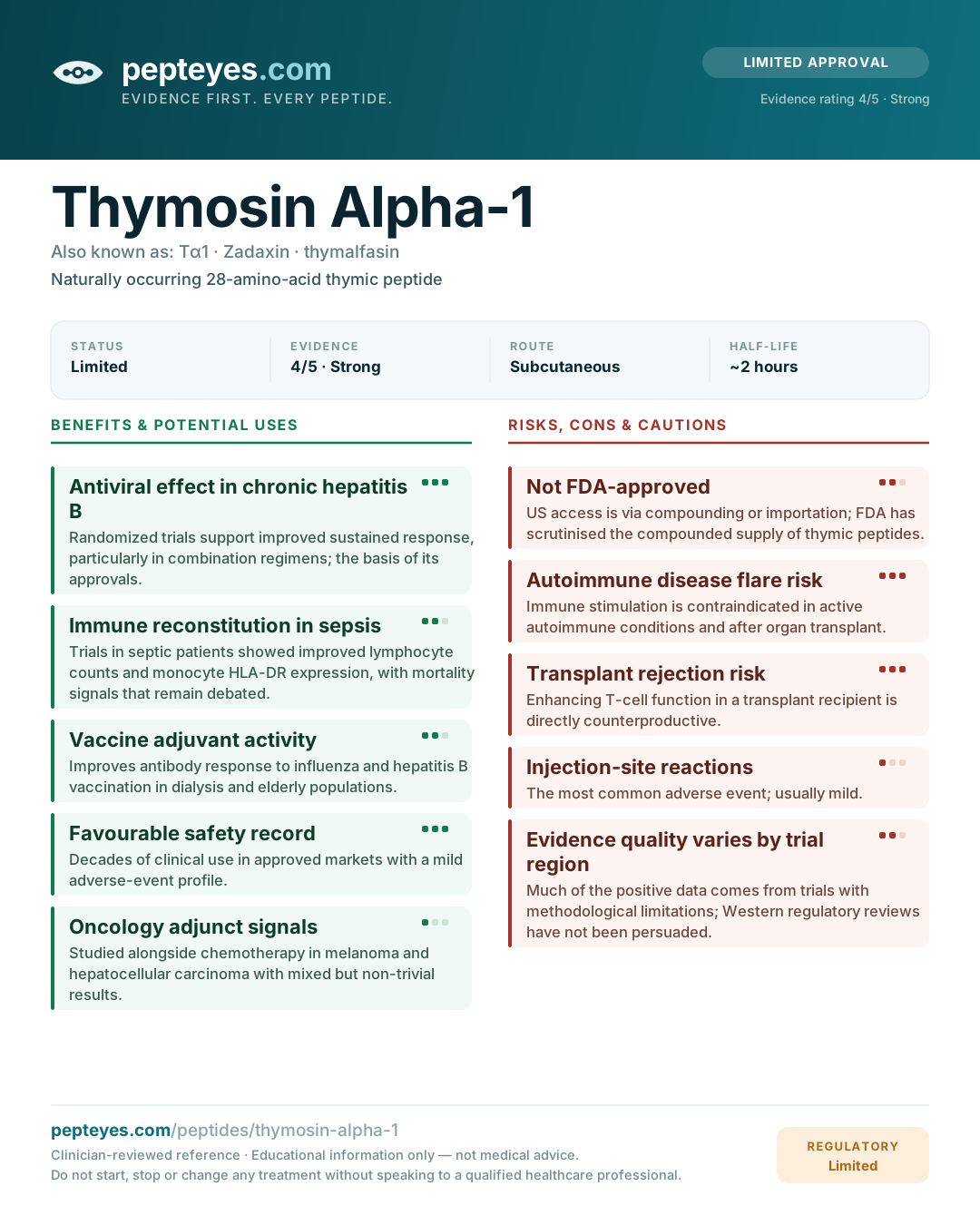
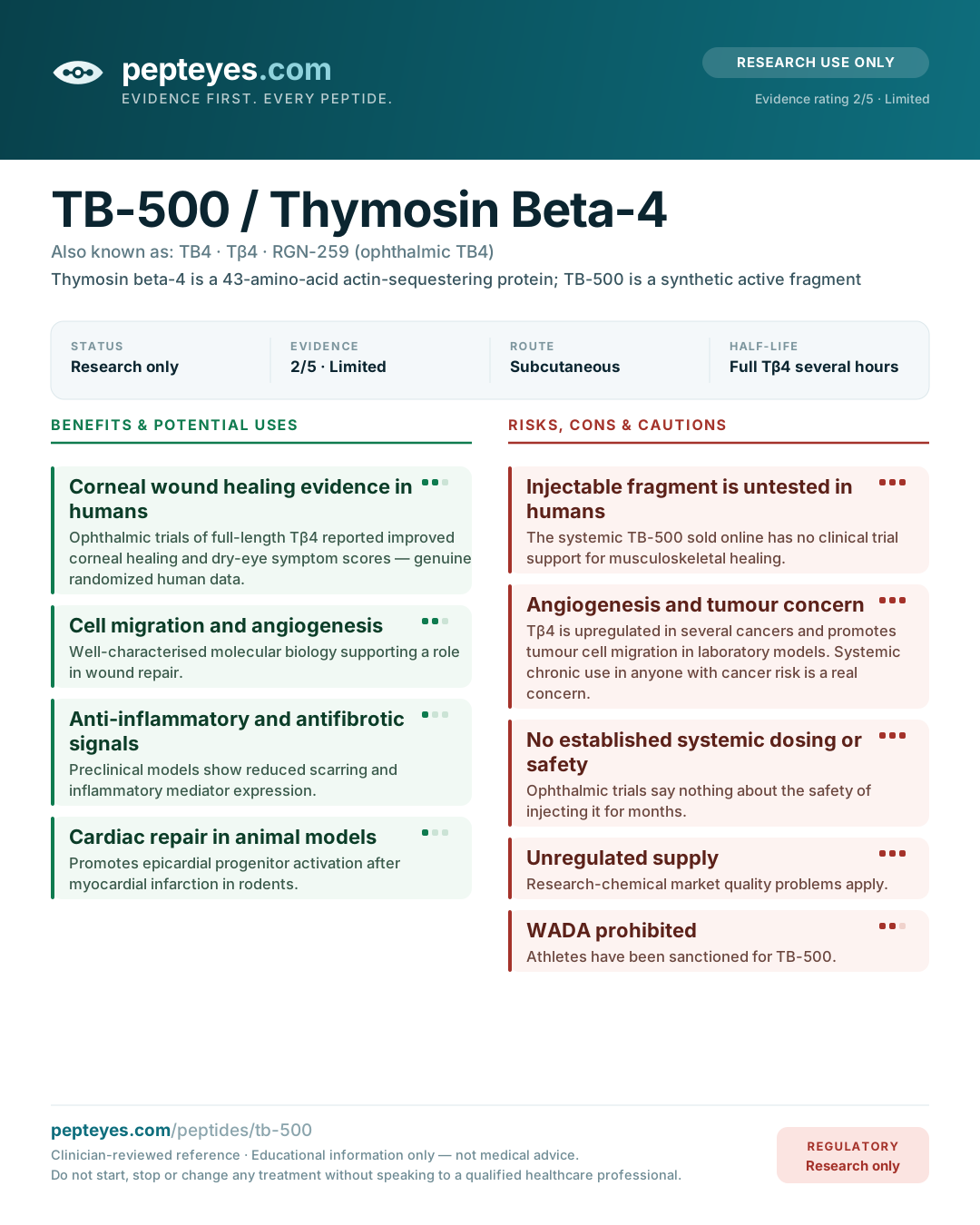
The distinction that mattersDifferent molecules despite similar names. Thymosin alpha-1 is a defined 28-residue immune peptide approved in 30+ countries; thymosin beta-4 (TB-500) is an actin-binding repair peptide that is approved nowhere.
These are not equivalent in evidence Thymosin Alpha-1 is rated 4/5 and TB-500 / Thymosin Beta-4 is rated 2/5 — a gap of 2 levels on our scale. Similar marketing does not mean similar proof.
| Thymosin Alpha-1 Limited Approval | TB-500 / Thymosin Beta-4 Research Use Only | |
|---|---|---|
| Evidence rating |
4/5 Strong
Evidence rating 4 out of 5: Strong
|
2/5 Limited
Evidence rating 2 out of 5: Limited
|
| Regulatory status | Approved in more than 30 countries for hepatitis B/C and as a vaccine adjuvant. Not FDA-approved; US orphan designations exist. | Full-length Tβ4 has reached phase 2/3 trials for dry eye and corneal wounds. The injectable TB-500 fragment sold to consumers is unapproved. WADA-prohibited. |
| Category | Immune & Anti-inflammatory | Healing & Tissue Repair |
| Drug class | Naturally occurring 28-amino-acid thymic peptide | Thymosin beta-4 is a 43-amino-acid actin-sequestering protein; TB-500 is a synthetic active fragment |
| Route | Subcutaneous | Subcutaneous (research); topical/ophthalmic in trials |
| Half-life | ~2 hours | Full Tβ4 several hours; fragment not well characterised |
| Studied in | Randomized trials in chronic hepatitis B and C, sepsis (including a large Chinese sepsis RCT), severe COVID-19 cohorts, and as an adjunct in several cancers. | Phase 2/3 ophthalmic trials for dry eye disease and neurotrophic keratopathy; phase 2 dermal wound trials in venous stasis and epidermolysis bullosa; preclinical cardiac and CNS injury models. |
| Who should avoid it |
|
|
| Legal status | Approved outside the US. In the US it is unapproved; access routes are legally constrained. | Ophthalmic Tβ4 remains investigational. Injectable TB-500 is unapproved and not lawfully sold for human use. |
Benefits — Thymosin Alpha-1
- Antiviral effect in chronic hepatitis B
Randomized trials support improved sustained response, particularly in combination regimens; the basis of its approvals.
- Immune reconstitution in sepsis
Trials in septic patients showed improved lymphocyte counts and monocyte HLA-DR expression, with mortality signals that remain debated.
- Vaccine adjuvant activity
Improves antibody response to influenza and hepatitis B vaccination in dialysis and elderly populations.
- Favourable safety record
Decades of clinical use in approved markets with a mild adverse-event profile.
- Oncology adjunct signals
Studied alongside chemotherapy in melanoma and hepatocellular carcinoma with mixed but non-trivial results.
Benefits — TB-500 / Thymosin Beta-4
- Corneal wound healing evidence in humans
Ophthalmic trials of full-length Tβ4 reported improved corneal healing and dry-eye symptom scores — genuine randomized human data.
- Cell migration and angiogenesis
Well-characterised molecular biology supporting a role in wound repair.
- Anti-inflammatory and antifibrotic signals
Preclinical models show reduced scarring and inflammatory mediator expression.
- Cardiac repair in animal models
Promotes epicardial progenitor activation after myocardial infarction in rodents.
Risks & cons — Thymosin Alpha-1
- Not FDA-approved
US access is via compounding or importation; FDA has scrutinised the compounded supply of thymic peptides.
- Autoimmune disease flare risk
Immune stimulation is contraindicated in active autoimmune conditions and after organ transplant.
- Transplant rejection risk
Enhancing T-cell function in a transplant recipient is directly counterproductive.
- Injection-site reactions
The most common adverse event; usually mild.
- Evidence quality varies by trial region
Much of the positive data comes from trials with methodological limitations; Western regulatory reviews have not been persuaded.
Risks & cons — TB-500 / Thymosin Beta-4
- Injectable fragment is untested in humans
The systemic TB-500 sold online has no clinical trial support for musculoskeletal healing.
- Angiogenesis and tumour concern
Tβ4 is upregulated in several cancers and promotes tumour cell migration in laboratory models. Systemic chronic use in anyone with cancer risk is a real concern.
- No established systemic dosing or safety
Ophthalmic trials say nothing about the safety of injecting it for months.
- Unregulated supply
Research-chemical market quality problems apply.
- WADA prohibited
Athletes have been sanctioned for TB-500.
A comparison is not a recommendation. Neither column is being suggested for you. Which — if either — is appropriate depends on your diagnosis, history and medications, and that is a conversation for a qualified clinician.