TB-500 / Thymosin Beta-4 vs BPC-157
The two most commonly stacked healing peptides, and what evidence each has.
The distinction that mattersCommonly stacked. Both lack human trial evidence for tendon and muscle repair.
These are not equivalent in evidence TB-500 / Thymosin Beta-4 is rated 2/5 and BPC-157 is rated 1/5 — a gap of 1 level on our scale. Similar marketing does not mean similar proof.
| TB-500 / Thymosin Beta-4 Research Use Only | BPC-157 Research Use Only | |
|---|---|---|
| Evidence rating |
2/5 Limited
Evidence rating 2 out of 5: Limited
|
1/5 Minimal
Evidence rating 1 out of 5: Minimal
|
| Regulatory status | Full-length Tβ4 has reached phase 2/3 trials for dry eye and corneal wounds. The injectable TB-500 fragment sold to consumers is unapproved. WADA-prohibited. | Not approved. FDA placed BPC-157 in Category 2 of its bulk-substance review in 2023, barring it from lawful compounding. WADA-prohibited since 2022. |
| Category | Healing & Tissue Repair | Healing & Tissue Repair |
| Drug class | Thymosin beta-4 is a 43-amino-acid actin-sequestering protein; TB-500 is a synthetic active fragment | Synthetic pentadecapeptide derived from a sequence in human gastric juice protein BPC |
| Route | Subcutaneous (research); topical/ophthalmic in trials | Oral or subcutaneous (research) |
| Half-life | Full Tβ4 several hours; fragment not well characterised | Not established in humans |
| Studied in | Phase 2/3 ophthalmic trials for dry eye disease and neurotrophic keratopathy; phase 2 dermal wound trials in venous stasis and epidermolysis bullosa; preclinical cardiac and CNS injury models. | Extensive rodent models of tendon, ligament, muscle, bone, gut and nerve injury, largely from a small number of affiliated research groups. Early human safety work exists for an oral formulation in inflammatory bowel disease; efficacy results were never published in the peer-reviewed literature. |
| Who should avoid it |
|
|
| Legal status | Ophthalmic Tβ4 remains investigational. Injectable TB-500 is unapproved and not lawfully sold for human use. | Not an approved drug. Not a lawful dietary supplement. Not eligible for pharmacy compounding in the US. Sold under "research use only" labelling that does not confer legality for human use. |
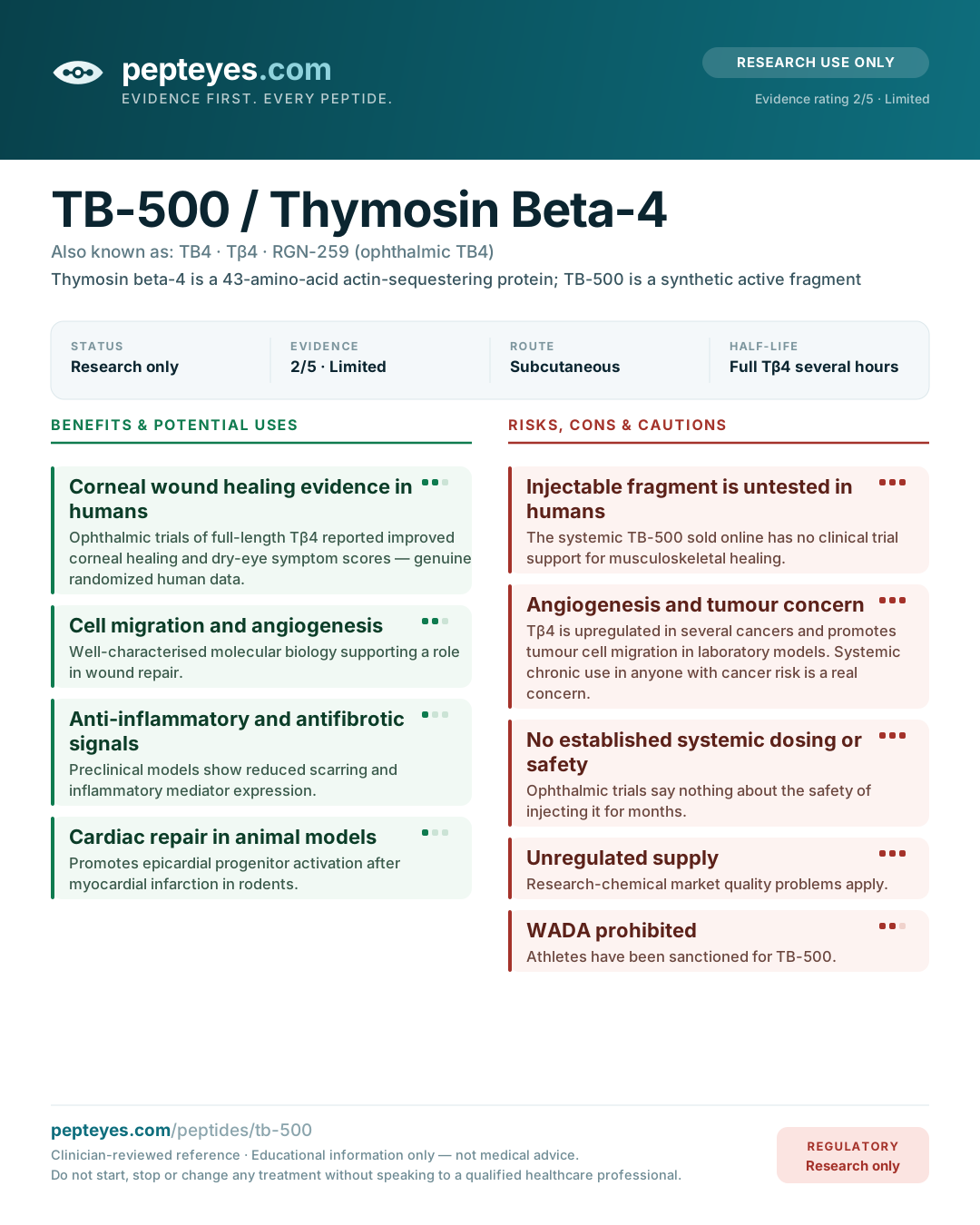
Benefits — TB-500 / Thymosin Beta-4
- Corneal wound healing evidence in humans
Ophthalmic trials of full-length Tβ4 reported improved corneal healing and dry-eye symptom scores — genuine randomized human data.
- Cell migration and angiogenesis
Well-characterised molecular biology supporting a role in wound repair.
- Anti-inflammatory and antifibrotic signals
Preclinical models show reduced scarring and inflammatory mediator expression.
- Cardiac repair in animal models
Promotes epicardial progenitor activation after myocardial infarction in rodents.
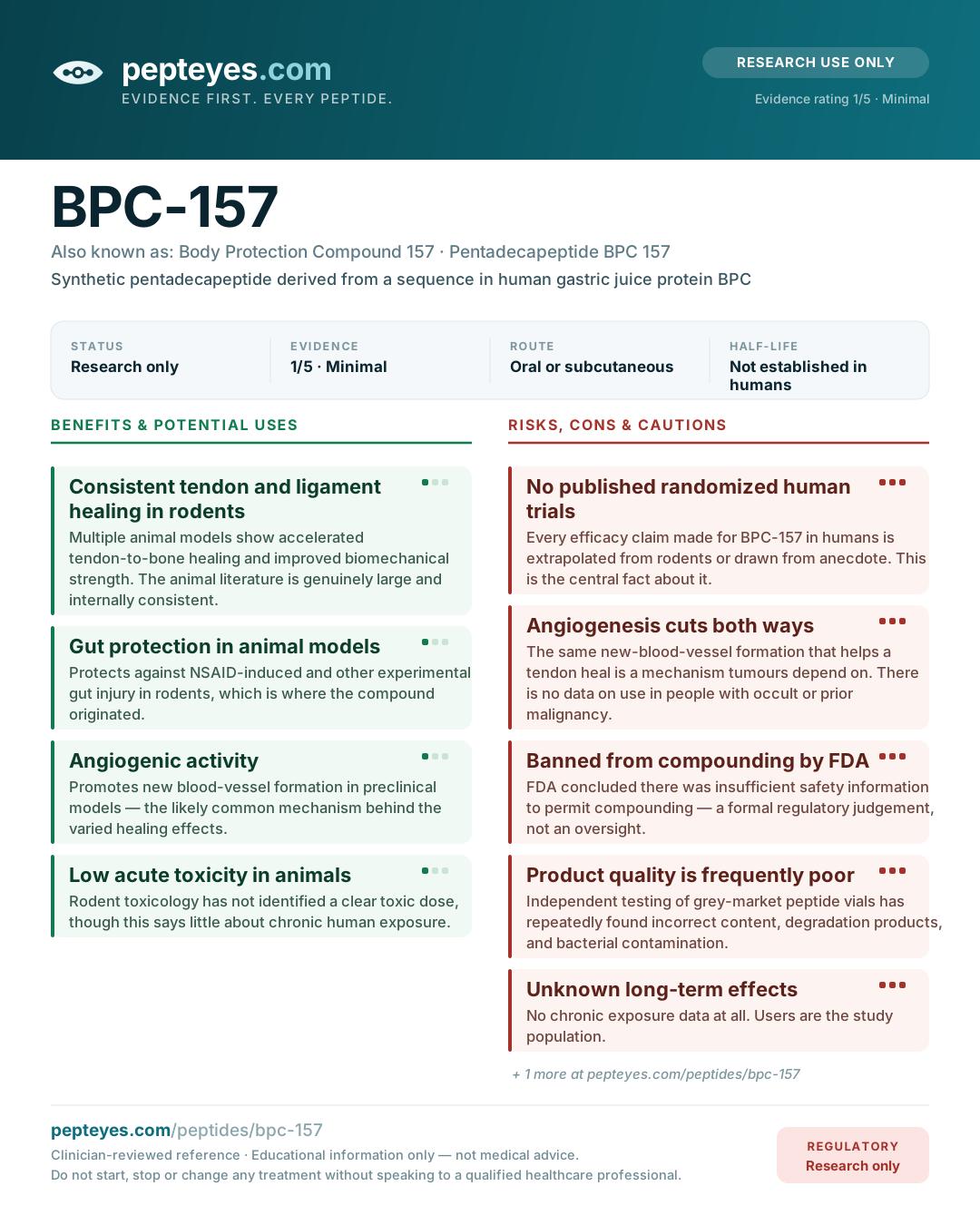
Benefits — BPC-157
- Consistent tendon and ligament healing in rodents
Multiple animal models show accelerated tendon-to-bone healing and improved biomechanical strength. The animal literature is genuinely large and internally consistent.
- Gut protection in animal models
Protects against NSAID-induced and other experimental gut injury in rodents, which is where the compound originated.
- Angiogenic activity
Promotes new blood-vessel formation in preclinical models — the likely common mechanism behind the varied healing effects.
- Low acute toxicity in animals
Rodent toxicology has not identified a clear toxic dose, though this says little about chronic human exposure.
Risks & cons — TB-500 / Thymosin Beta-4
- Injectable fragment is untested in humans
The systemic TB-500 sold online has no clinical trial support for musculoskeletal healing.
- Angiogenesis and tumour concern
Tβ4 is upregulated in several cancers and promotes tumour cell migration in laboratory models. Systemic chronic use in anyone with cancer risk is a real concern.
- No established systemic dosing or safety
Ophthalmic trials say nothing about the safety of injecting it for months.
- Unregulated supply
Research-chemical market quality problems apply.
- WADA prohibited
Athletes have been sanctioned for TB-500.
Risks & cons — BPC-157
- No published randomized human trials
Every efficacy claim made for BPC-157 in humans is extrapolated from rodents or drawn from anecdote. This is the central fact about it.
- Angiogenesis cuts both ways
The same new-blood-vessel formation that helps a tendon heal is a mechanism tumours depend on. There is no data on use in people with occult or prior malignancy.
- Banned from compounding by FDA
FDA concluded there was insufficient safety information to permit compounding — a formal regulatory judgement, not an oversight.
- Product quality is frequently poor
Independent testing of grey-market peptide vials has repeatedly found incorrect content, degradation products, and bacterial contamination.
- Unknown long-term effects
No chronic exposure data at all. Users are the study population.
A comparison is not a recommendation. Neither column is being suggested for you. Which — if either — is appropriate depends on your diagnosis, history and medications, and that is a conversation for a qualified clinician.