Semax vs Selank
The distinction that mattersDeveloped at the same Russian institute and usually sold together. Semax targets cognition and neuroprotection; Selank targets anxiety. Both are registered in Russia and nowhere else.
| Semax Limited Approval | Selank Limited Approval | |
|---|---|---|
| Evidence rating |
2/5 Limited
Evidence rating 2 out of 5: Limited
|
2/5 Limited
Evidence rating 2 out of 5: Limited
|
| Regulatory status | Registered in Russia for stroke, cognitive disorders and optic nerve conditions. Not approved in the US, EU or UK. | Registered in Russia as an anxiolytic. Not approved in the US, EU or UK. |
| Category | Cognitive & Neurological | Cognitive & Neurological |
| Drug class | Synthetic heptapeptide analog of ACTH (4-10) with no corticotropic activity | Synthetic heptapeptide analog of the immunomodulatory peptide tuftsin |
| Route | Intranasal (primary), subcutaneous | Intranasal (primary) |
| Half-life | Minutes systemically; central effects outlast plasma levels | Short; central effects persist longer than plasma levels |
| Studied in | Russian clinical trials in ischemic stroke, cognitive impairment, optic nerve atrophy and ADHD; extensive Russian preclinical neuroprotection work. | Russian randomized comparisons against benzodiazepines in generalized anxiety disorder; preclinical anxiolytic and antidepressant models. |
| Who should avoid it |
|
|
| Legal status | Prescription medicine in Russia. Unapproved elsewhere; import for personal use occupies a legal grey area. | Prescription medicine in Russia; unapproved elsewhere. |
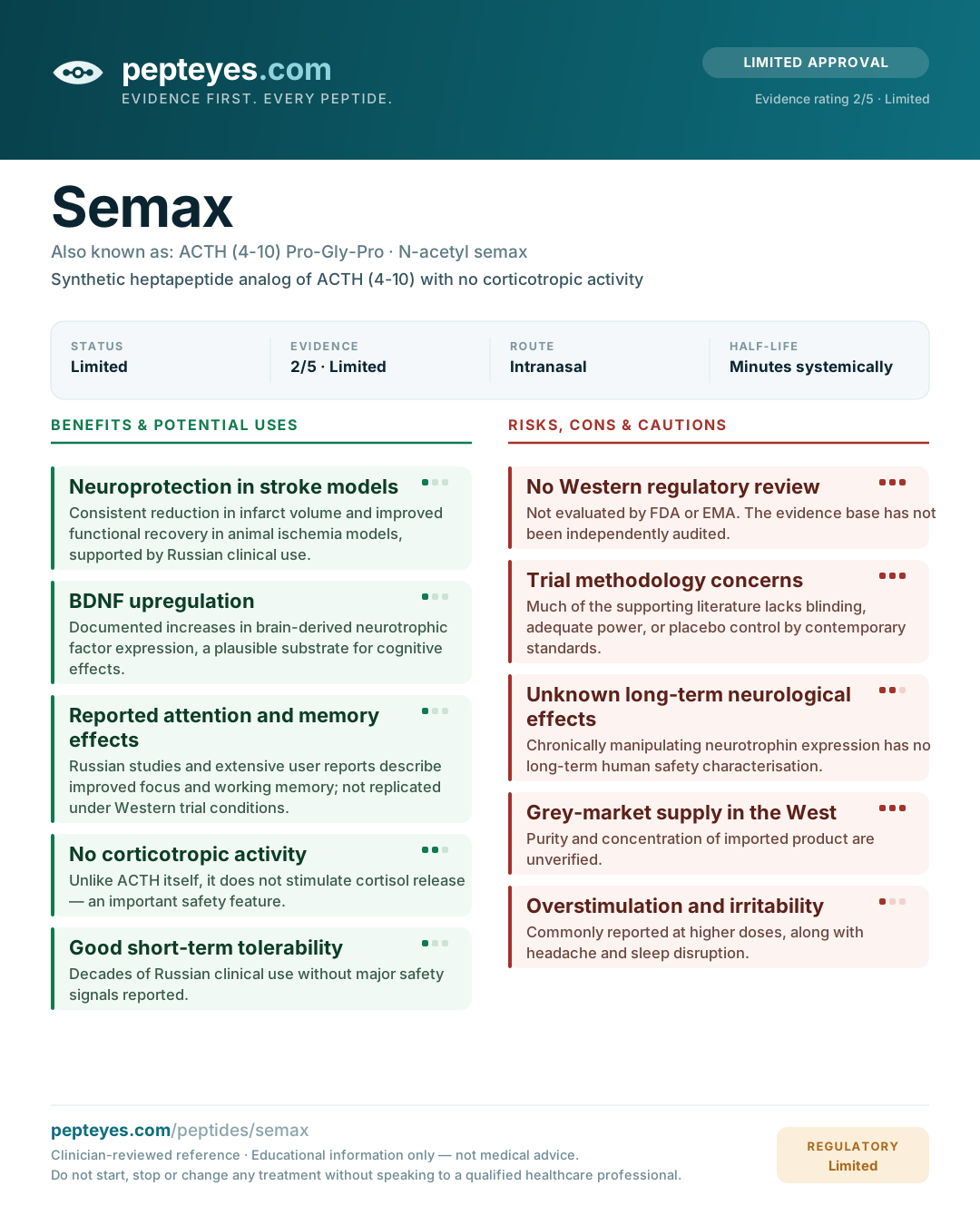
Benefits — Semax
- Neuroprotection in stroke models
Consistent reduction in infarct volume and improved functional recovery in animal ischemia models, supported by Russian clinical use.
- BDNF upregulation
Documented increases in brain-derived neurotrophic factor expression, a plausible substrate for cognitive effects.
- Reported attention and memory effects
Russian studies and extensive user reports describe improved focus and working memory; not replicated under Western trial conditions.
- No corticotropic activity
Unlike ACTH itself, it does not stimulate cortisol release — an important safety feature.
- Good short-term tolerability
Decades of Russian clinical use without major safety signals reported.
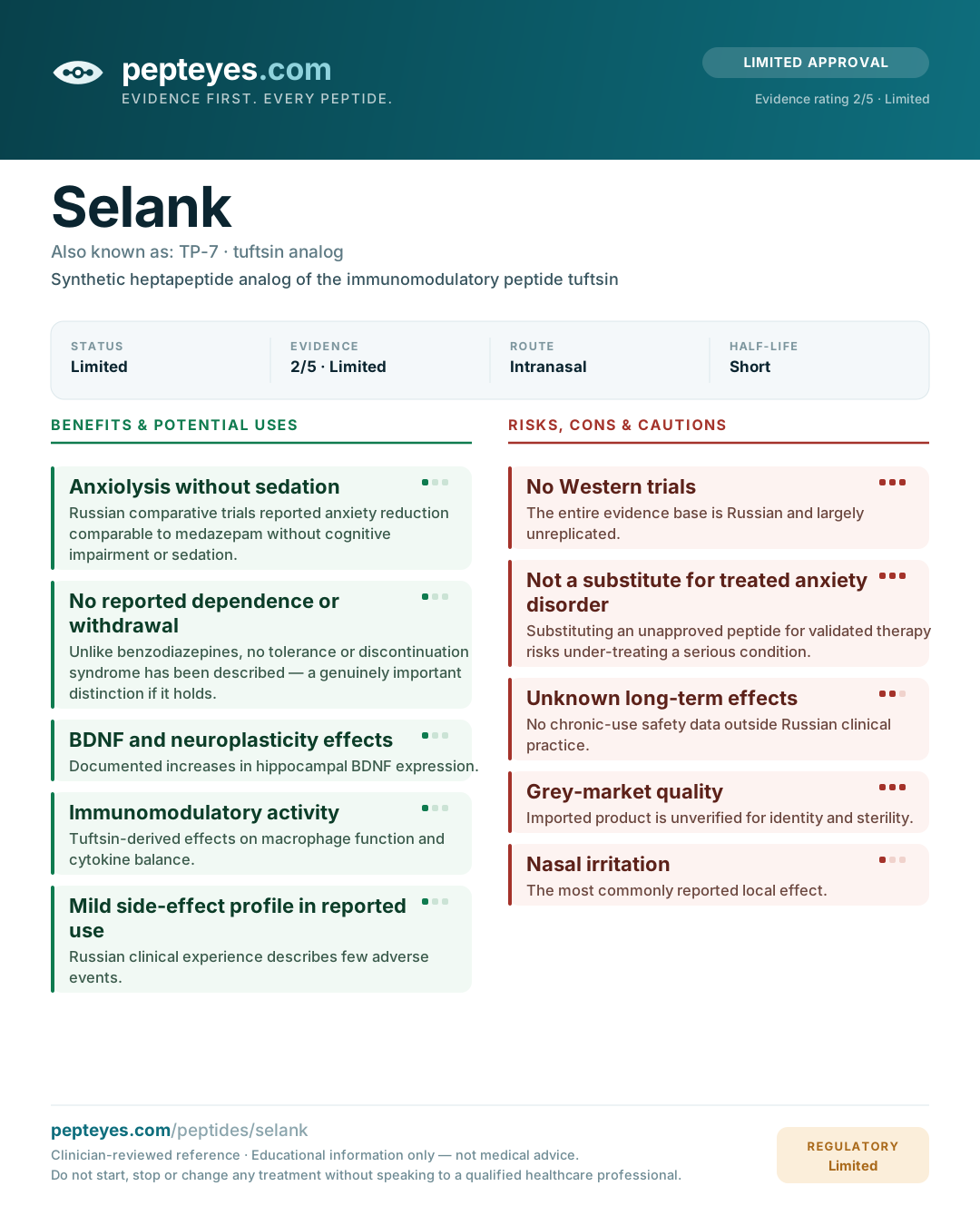
Benefits — Selank
- Anxiolysis without sedation
Russian comparative trials reported anxiety reduction comparable to medazepam without cognitive impairment or sedation.
- No reported dependence or withdrawal
Unlike benzodiazepines, no tolerance or discontinuation syndrome has been described — a genuinely important distinction if it holds.
- BDNF and neuroplasticity effects
Documented increases in hippocampal BDNF expression.
- Immunomodulatory activity
Tuftsin-derived effects on macrophage function and cytokine balance.
- Mild side-effect profile in reported use
Russian clinical experience describes few adverse events.
Risks & cons — Semax
- No Western regulatory review
Not evaluated by FDA or EMA. The evidence base has not been independently audited.
- Trial methodology concerns
Much of the supporting literature lacks blinding, adequate power, or placebo control by contemporary standards.
- Unknown long-term neurological effects
Chronically manipulating neurotrophin expression has no long-term human safety characterisation.
- Grey-market supply in the West
Purity and concentration of imported product are unverified.
- Overstimulation and irritability
Commonly reported at higher doses, along with headache and sleep disruption.
Risks & cons — Selank
- No Western trials
The entire evidence base is Russian and largely unreplicated.
- Not a substitute for treated anxiety disorder
Substituting an unapproved peptide for validated therapy risks under-treating a serious condition.
- Unknown long-term effects
No chronic-use safety data outside Russian clinical practice.
- Grey-market quality
Imported product is unverified for identity and sterility.
- Nasal irritation
The most commonly reported local effect.
A comparison is not a recommendation. Neither column is being suggested for you. Which — if either — is appropriate depends on your diagnosis, history and medications, and that is a conversation for a qualified clinician.