Palmitoyl Tripeptide-1 vs Matrixyl (Palmitoyl Pentapeptide-4)
The distinction that mattersMatrixyl is palmitoyl pentapeptide-4 (Pal-KTTKS). "Matrixyl 3000" and "Synthe'6" are different blends that include palmitoyl tripeptide-1. The names are marketing, not chemistry.
| Palmitoyl Tripeptide-1 Cosmetic Ingredient | Matrixyl (Palmitoyl Pentapeptide-4) Cosmetic Ingredient | |
|---|---|---|
| Evidence rating |
3/5 Moderate
Evidence rating 3 out of 5: Moderate
|
3/5 Moderate
Evidence rating 3 out of 5: Moderate
|
| Regulatory status | Widely used cosmetic ingredient, typically paired with palmitoyl tetrapeptide-7 in commercial formulations. | Established cosmetic ingredient with published controlled human studies, including a comparison against retinol. |
| Category | Skin & Cosmetic | Skin & Cosmetic |
| Drug class | Lipidated tripeptide — the GHK sequence conjugated to palmitic acid | Lipidated pentapeptide — a collagen fragment conjugated to palmitic acid |
| Route | Topical | Topical |
| Half-life | Not applicable — topical | Not applicable — topical |
| Studied in | Controlled topical studies of the combination product measuring wrinkle depth and dermal density; fibroblast and ex-vivo skin work. | A 12-week double-blind split-face trial versus vehicle; a comparative study against retinol; multiple fibroblast and ex-vivo skin studies. |
| Who should avoid it |
|
|
| Legal status | Lawful cosmetic ingredient. | Lawful cosmetic ingredient. |
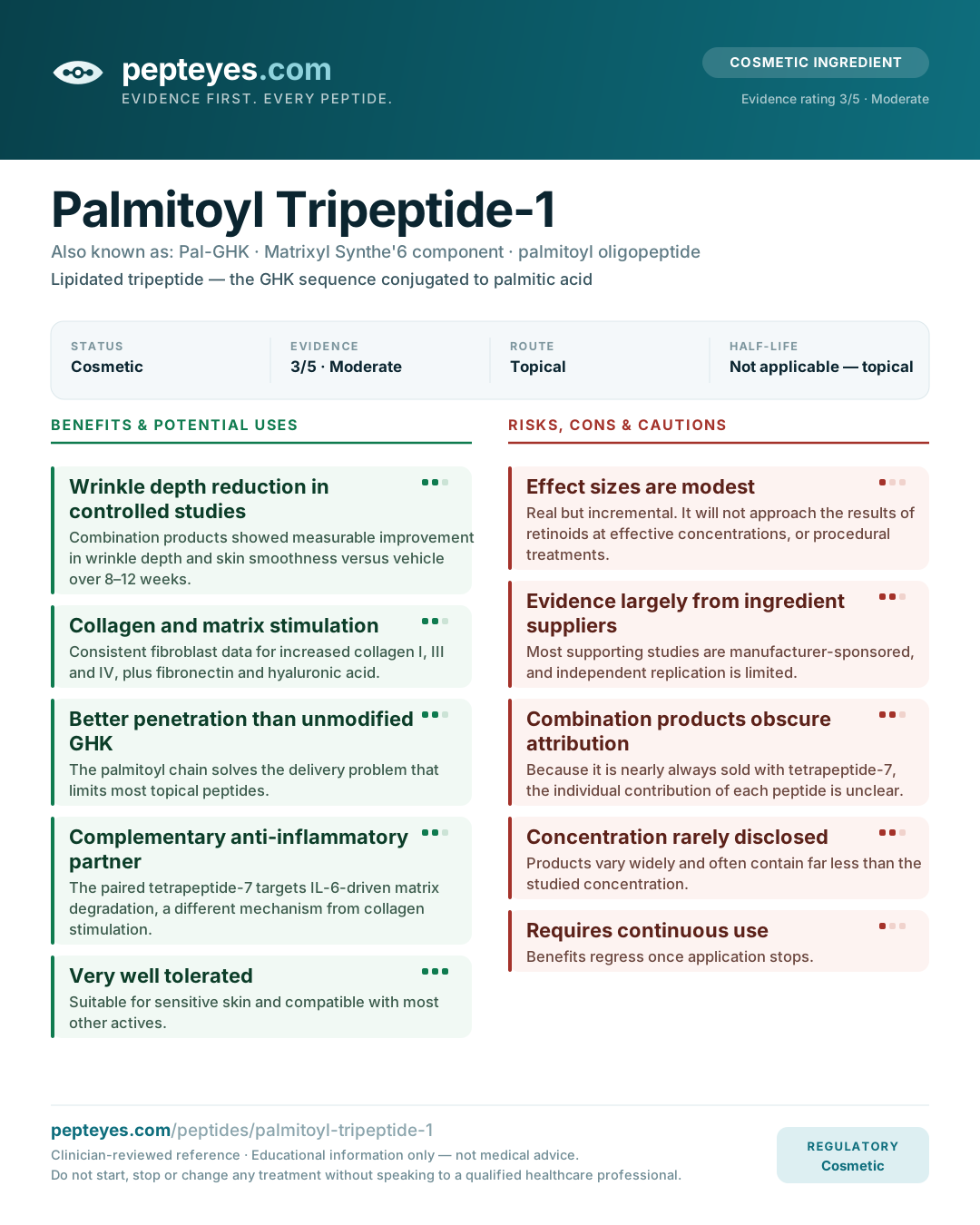
Benefits — Palmitoyl Tripeptide-1
- Wrinkle depth reduction in controlled studies
Combination products showed measurable improvement in wrinkle depth and skin smoothness versus vehicle over 8–12 weeks.
- Collagen and matrix stimulation
Consistent fibroblast data for increased collagen I, III and IV, plus fibronectin and hyaluronic acid.
- Better penetration than unmodified GHK
The palmitoyl chain solves the delivery problem that limits most topical peptides.
- Complementary anti-inflammatory partner
The paired tetrapeptide-7 targets IL-6-driven matrix degradation, a different mechanism from collagen stimulation.
- Very well tolerated
Suitable for sensitive skin and compatible with most other actives.
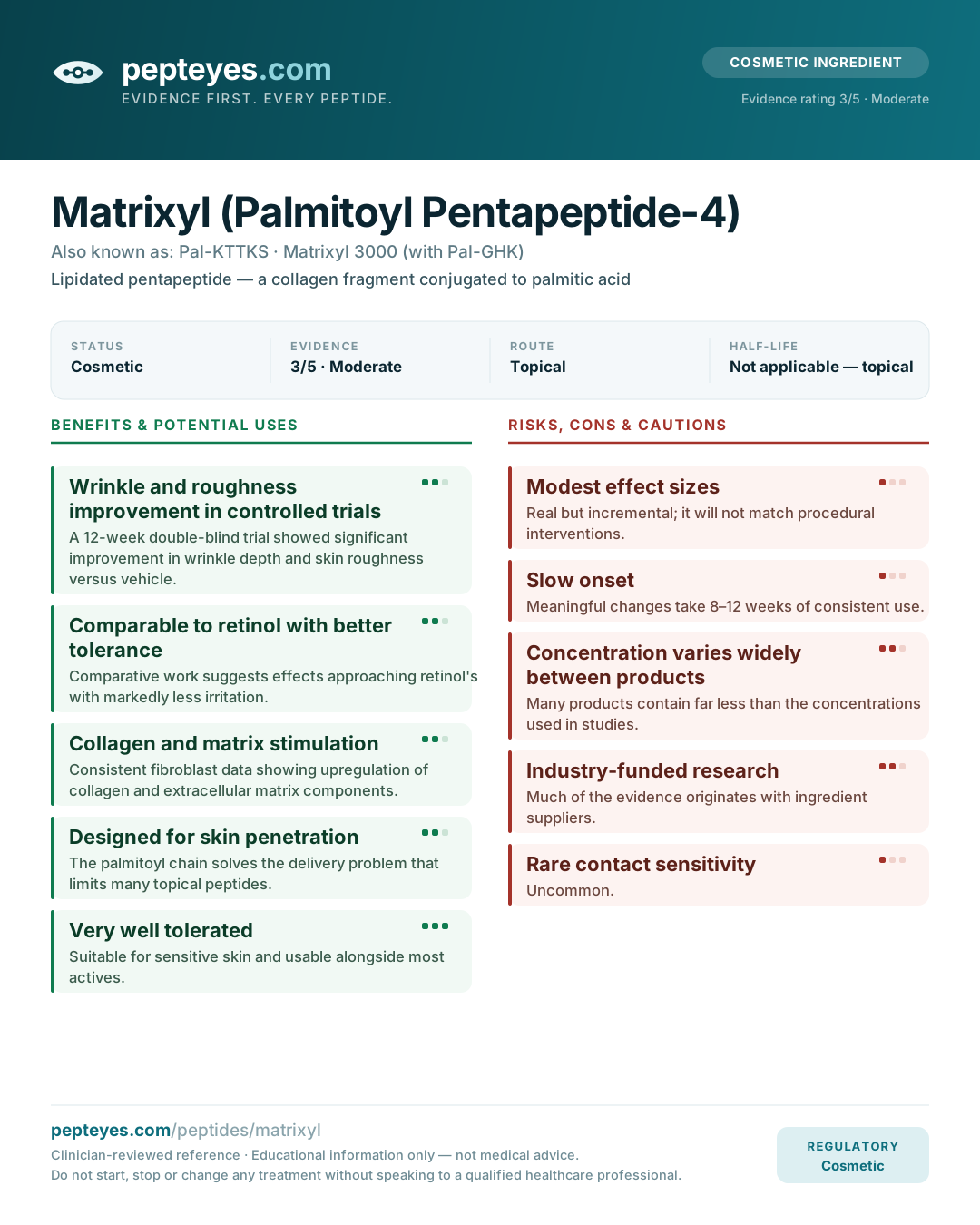
Benefits — Matrixyl (Palmitoyl Pentapeptide-4)
- Wrinkle and roughness improvement in controlled trials
A 12-week double-blind trial showed significant improvement in wrinkle depth and skin roughness versus vehicle.
- Comparable to retinol with better tolerance
Comparative work suggests effects approaching retinol's with markedly less irritation.
- Collagen and matrix stimulation
Consistent fibroblast data showing upregulation of collagen and extracellular matrix components.
- Designed for skin penetration
The palmitoyl chain solves the delivery problem that limits many topical peptides.
- Very well tolerated
Suitable for sensitive skin and usable alongside most actives.
Risks & cons — Palmitoyl Tripeptide-1
- Effect sizes are modest
Real but incremental. It will not approach the results of retinoids at effective concentrations, or procedural treatments.
- Evidence largely from ingredient suppliers
Most supporting studies are manufacturer-sponsored, and independent replication is limited.
- Combination products obscure attribution
Because it is nearly always sold with tetrapeptide-7, the individual contribution of each peptide is unclear.
- Concentration rarely disclosed
Products vary widely and often contain far less than the studied concentration.
- Requires continuous use
Benefits regress once application stops.
Risks & cons — Matrixyl (Palmitoyl Pentapeptide-4)
- Modest effect sizes
Real but incremental; it will not match procedural interventions.
- Slow onset
Meaningful changes take 8–12 weeks of consistent use.
- Concentration varies widely between products
Many products contain far less than the concentrations used in studies.
- Industry-funded research
Much of the evidence originates with ingredient suppliers.
- Rare contact sensitivity
Uncommon.
A comparison is not a recommendation. Neither column is being suggested for you. Which — if either — is appropriate depends on your diagnosis, history and medications, and that is a conversation for a qualified clinician.