Leuprolide vs Gonadorelin
Same receptor, opposite effect — dosing frequency reverses the outcome.
The distinction that mattersSame receptor, opposite outcome. Gonadorelin given in pulses stimulates the axis and is used to preserve testicular function. Leuprolide given continuously suppresses it to castrate levels. The dosing pattern, not the molecule, decides the direction.
These are not equivalent in evidence Leuprolide is rated 5/5 and Gonadorelin is rated 3/5 — a gap of 2 levels on our scale. Similar marketing does not mean similar proof.
| Leuprolide FDA Approved | Gonadorelin Limited Approval | |
|---|---|---|
| Evidence rating |
5/5 Very strong
Evidence rating 5 out of 5: Very strong
|
3/5 Moderate
Evidence rating 3 out of 5: Moderate
|
| Regulatory status | FDA-approved for advanced prostate cancer, endometriosis, uterine fibroids and central precocious puberty. | Historically FDA-approved as a diagnostic (Factrel, since discontinued in the US). Now widely supplied through compounding pharmacies for testicular support during testosterone therapy. |
| Category | Hormonal & Reproductive | Hormonal & Reproductive |
| Drug class | GnRH receptor superagonist — nonapeptide analog of gonadotropin-releasing hormone | Synthetic gonadotropin-releasing hormone — decapeptide identical to the endogenous hormone |
| Route | Subcutaneous or intramuscular depot (monthly to 6-monthly) | Subcutaneous or intravenous |
| Half-life | ~3 hours (depot formulations release over months) | ~2–10 minutes |
| Studied in | Decades of randomized trials in prostate cancer, endometriosis, uterine fibroids and central precocious puberty. | Historic diagnostic validation studies; pulsatile pump therapy for hypogonadotropic hypogonadism; limited data in the TRT-adjunct context where it is now mostly used. |
| Who should avoid it |
|
|
| Legal status | Prescription drug. | No approved US product; lawful access is via patient-specific compounding under prescription. |
Benefits — Leuprolide
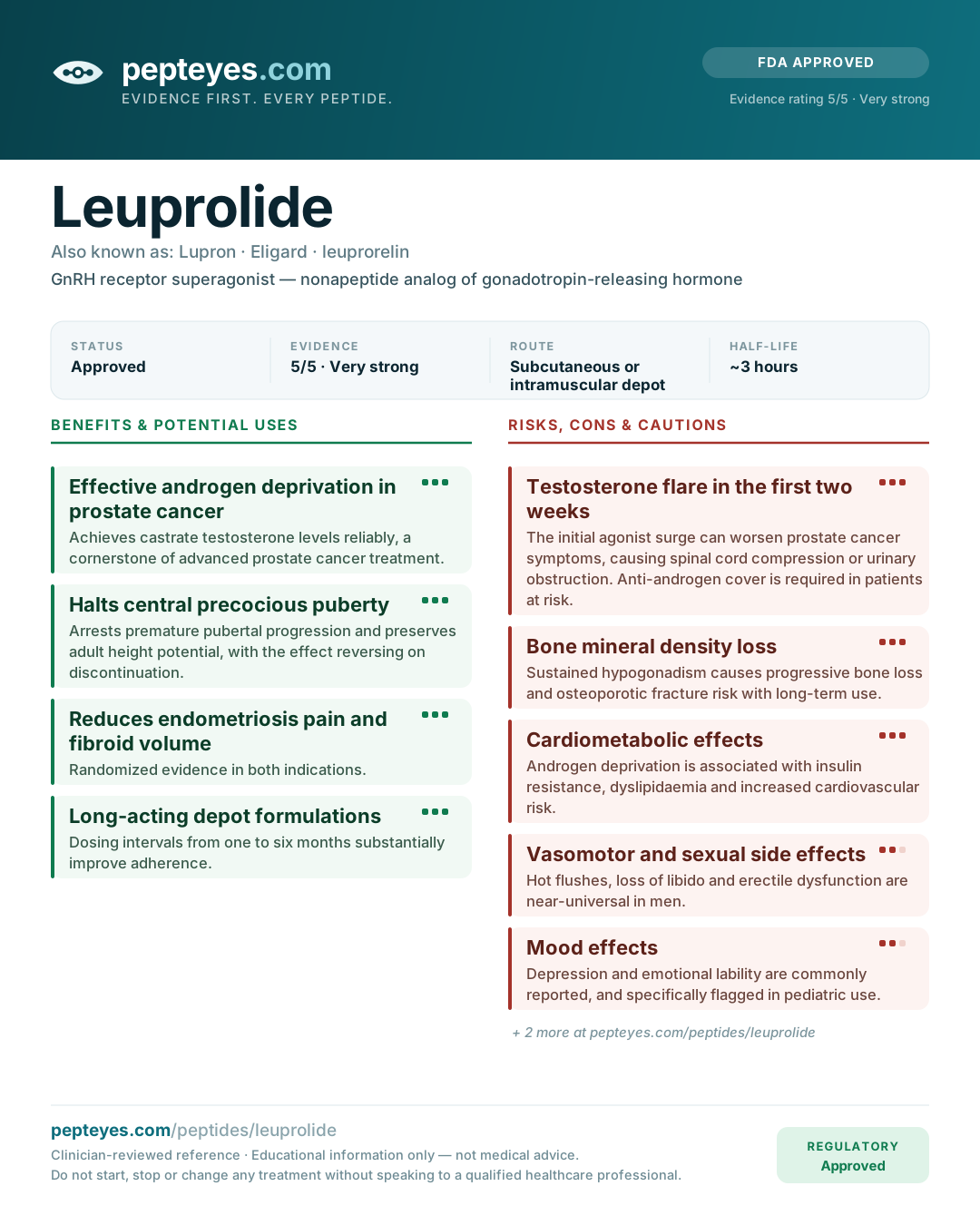
- Effective androgen deprivation in prostate cancer
Achieves castrate testosterone levels reliably, a cornerstone of advanced prostate cancer treatment.
- Halts central precocious puberty
Arrests premature pubertal progression and preserves adult height potential, with the effect reversing on discontinuation.
- Reduces endometriosis pain and fibroid volume
Randomized evidence in both indications.
- Long-acting depot formulations
Dosing intervals from one to six months substantially improve adherence.
Benefits — Gonadorelin
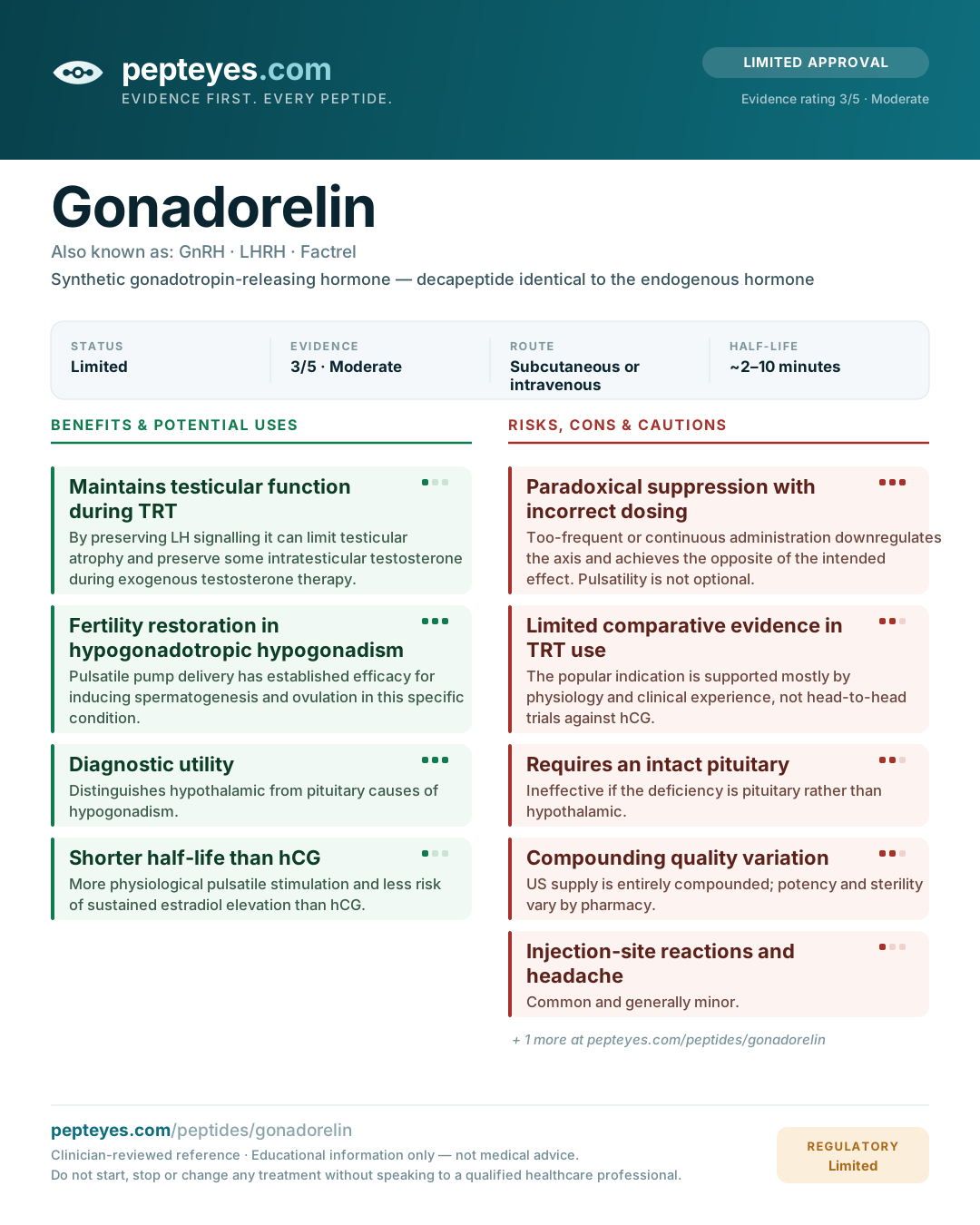
- Maintains testicular function during TRT
By preserving LH signalling it can limit testicular atrophy and preserve some intratesticular testosterone during exogenous testosterone therapy.
- Fertility restoration in hypogonadotropic hypogonadism
Pulsatile pump delivery has established efficacy for inducing spermatogenesis and ovulation in this specific condition.
- Diagnostic utility
Distinguishes hypothalamic from pituitary causes of hypogonadism.
- Shorter half-life than hCG
More physiological pulsatile stimulation and less risk of sustained estradiol elevation than hCG.
Risks & cons — Leuprolide
- Testosterone flare in the first two weeks
The initial agonist surge can worsen prostate cancer symptoms, causing spinal cord compression or urinary obstruction. Anti-androgen cover is required in patients at risk.
- Bone mineral density loss
Sustained hypogonadism causes progressive bone loss and osteoporotic fracture risk with long-term use.
- Cardiometabolic effects
Androgen deprivation is associated with insulin resistance, dyslipidaemia and increased cardiovascular risk.
- Vasomotor and sexual side effects
Hot flushes, loss of libido and erectile dysfunction are near-universal in men.
- Mood effects
Depression and emotional lability are commonly reported, and specifically flagged in pediatric use.
Risks & cons — Gonadorelin
- Paradoxical suppression with incorrect dosing
Too-frequent or continuous administration downregulates the axis and achieves the opposite of the intended effect. Pulsatility is not optional.
- Limited comparative evidence in TRT use
The popular indication is supported mostly by physiology and clinical experience, not head-to-head trials against hCG.
- Requires an intact pituitary
Ineffective if the deficiency is pituitary rather than hypothalamic.
- Compounding quality variation
US supply is entirely compounded; potency and sterility vary by pharmacy.
- Injection-site reactions and headache
Common and generally minor.
A comparison is not a recommendation. Neither column is being suggested for you. Which — if either — is appropriate depends on your diagnosis, history and medications, and that is a conversation for a qualified clinician.