Larazotide Acetate vs BPC-157
The only "leaky gut" drug to reach phase 3, against the one that never ran a trial.
The distinction that mattersBoth marketed for "leaky gut". Larazotide is the only tight-junction drug to reach phase 3 — where it failed. BPC-157 has never had a published randomized human trial at all.
These are not equivalent in evidence Larazotide Acetate is rated 3/5 and BPC-157 is rated 1/5 — a gap of 2 levels on our scale. Similar marketing does not mean similar proof.
| Larazotide Acetate In Clinical Trials | BPC-157 Research Use Only | |
|---|---|---|
| Evidence rating |
3/5 Moderate
Evidence rating 3 out of 5: Moderate
|
1/5 Minimal
Evidence rating 1 out of 5: Minimal
|
| Regulatory status | Reached phase 3 for celiac disease; the trial did not meet its primary endpoint and was discontinued in 2022. Not approved. | Not approved. FDA placed BPC-157 in Category 2 of its bulk-substance review in 2023, barring it from lawful compounding. WADA-prohibited since 2022. |
| Category | Gut & Gastrointestinal | Healing & Tissue Repair |
| Drug class | Octapeptide tight-junction regulator (zonulin antagonist) | Synthetic pentadecapeptide derived from a sequence in human gastric juice protein BPC |
| Route | Oral | Oral or subcutaneous (research) |
| Half-life | Minimal systemic absorption — acts locally in the gut lumen | Not established in humans |
| Studied in | Multiple phase 2 trials in celiac disease showing symptom benefit; the CeDLara phase 3 trial, stopped for futility at interim analysis. | Extensive rodent models of tendon, ligament, muscle, bone, gut and nerve injury, largely from a small number of affiliated research groups. Early human safety work exists for an oral formulation in inflammatory bowel disease; efficacy results were never published in the peer-reviewed literature. |
| Who should avoid it |
|
|
| Legal status | Investigational; development discontinued. | Not an approved drug. Not a lawful dietary supplement. Not eligible for pharmacy compounding in the US. Sold under "research use only" labelling that does not confer legality for human use. |
Benefits — Larazotide Acetate
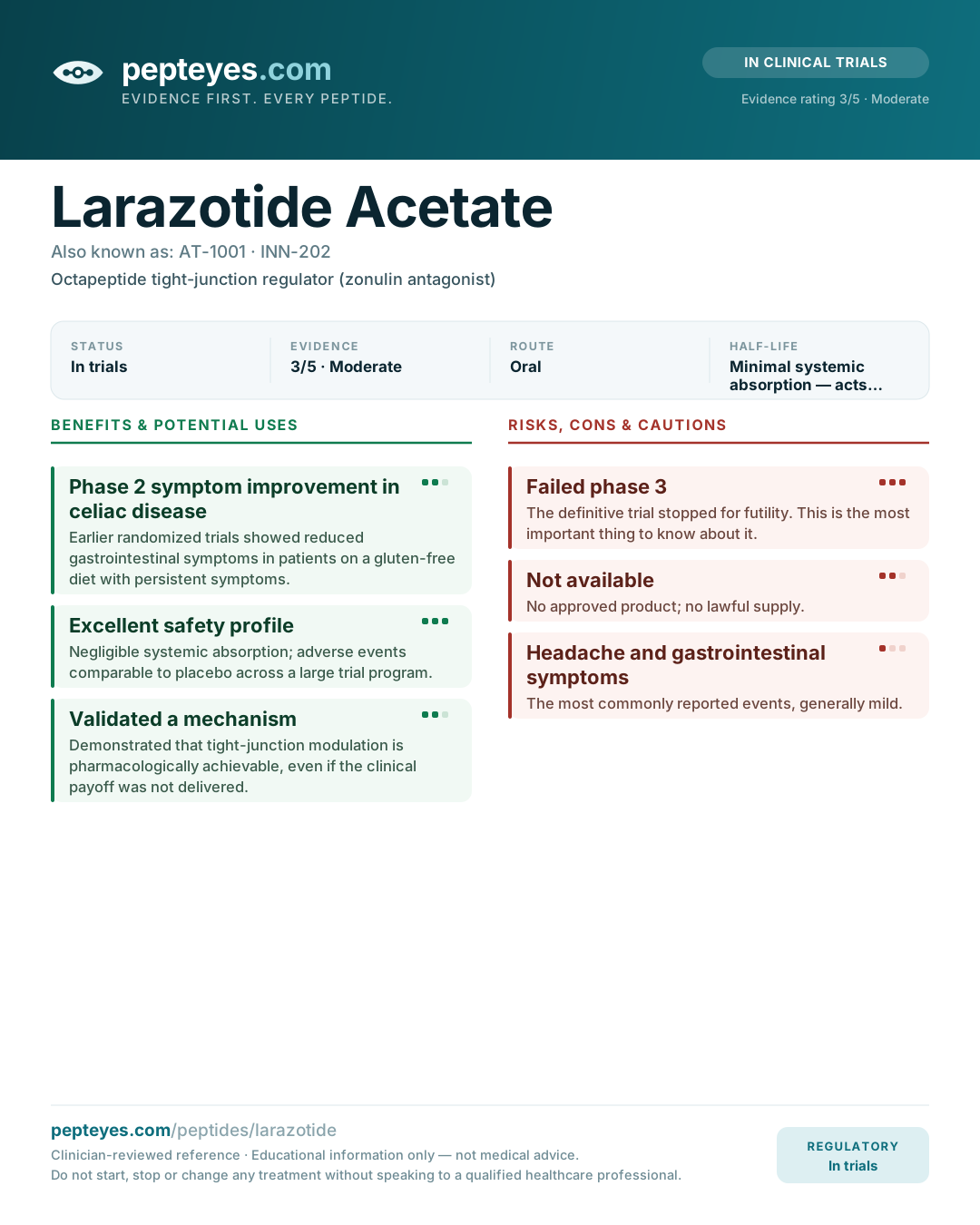
- Phase 2 symptom improvement in celiac disease
Earlier randomized trials showed reduced gastrointestinal symptoms in patients on a gluten-free diet with persistent symptoms.
- Excellent safety profile
Negligible systemic absorption; adverse events comparable to placebo across a large trial program.
- Validated a mechanism
Demonstrated that tight-junction modulation is pharmacologically achievable, even if the clinical payoff was not delivered.
Benefits — BPC-157
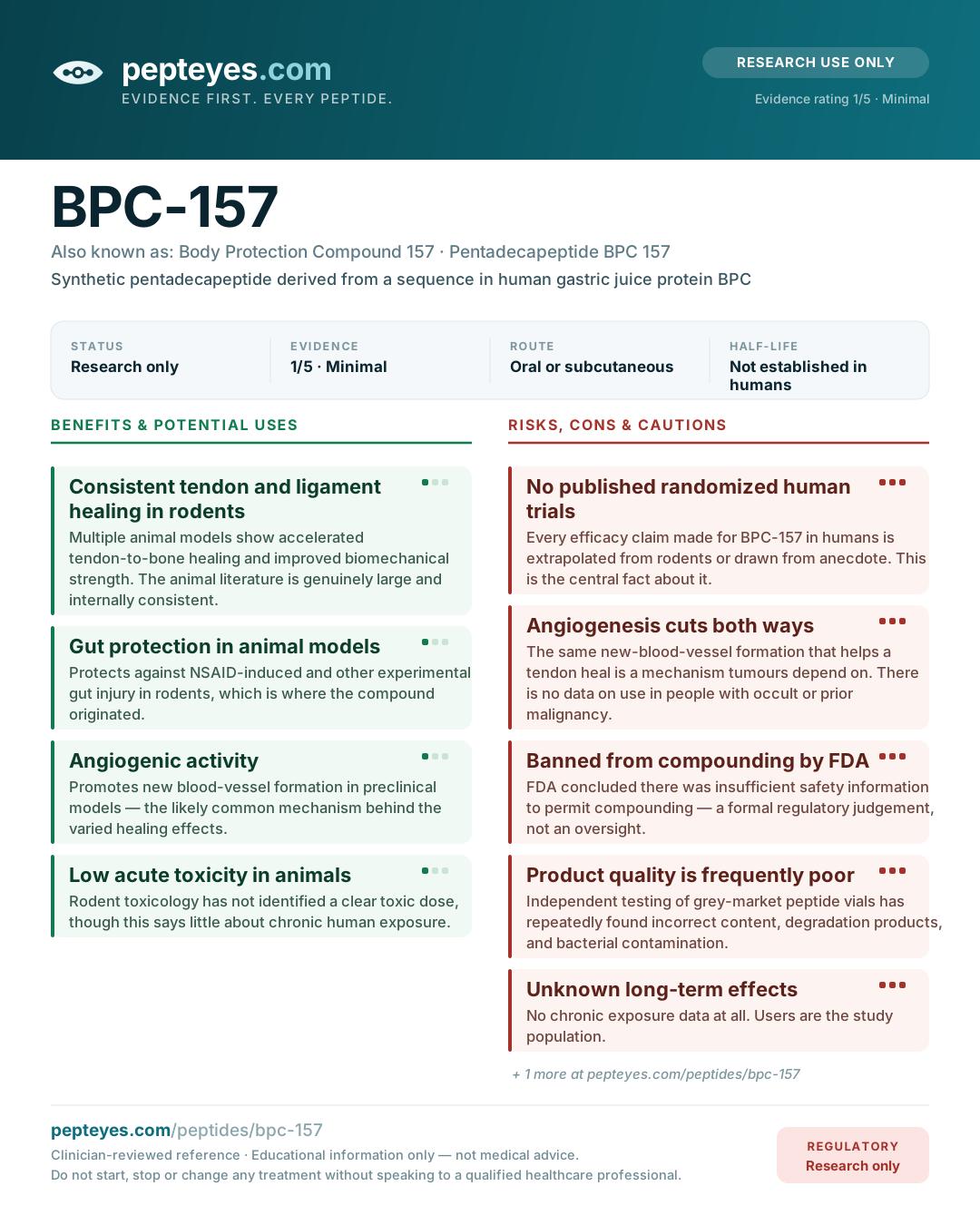
- Consistent tendon and ligament healing in rodents
Multiple animal models show accelerated tendon-to-bone healing and improved biomechanical strength. The animal literature is genuinely large and internally consistent.
- Gut protection in animal models
Protects against NSAID-induced and other experimental gut injury in rodents, which is where the compound originated.
- Angiogenic activity
Promotes new blood-vessel formation in preclinical models — the likely common mechanism behind the varied healing effects.
- Low acute toxicity in animals
Rodent toxicology has not identified a clear toxic dose, though this says little about chronic human exposure.
Risks & cons — Larazotide Acetate
- Failed phase 3
The definitive trial stopped for futility. This is the most important thing to know about it.
- Not available
No approved product; no lawful supply.
- Headache and gastrointestinal symptoms
The most commonly reported events, generally mild.
Risks & cons — BPC-157
- No published randomized human trials
Every efficacy claim made for BPC-157 in humans is extrapolated from rodents or drawn from anecdote. This is the central fact about it.
- Angiogenesis cuts both ways
The same new-blood-vessel formation that helps a tendon heal is a mechanism tumours depend on. There is no data on use in people with occult or prior malignancy.
- Banned from compounding by FDA
FDA concluded there was insufficient safety information to permit compounding — a formal regulatory judgement, not an oversight.
- Product quality is frequently poor
Independent testing of grey-market peptide vials has repeatedly found incorrect content, degradation products, and bacterial contamination.
- Unknown long-term effects
No chronic exposure data at all. Users are the study population.
A comparison is not a recommendation. Neither column is being suggested for you. Which — if either — is appropriate depends on your diagnosis, history and medications, and that is a conversation for a qualified clinician.