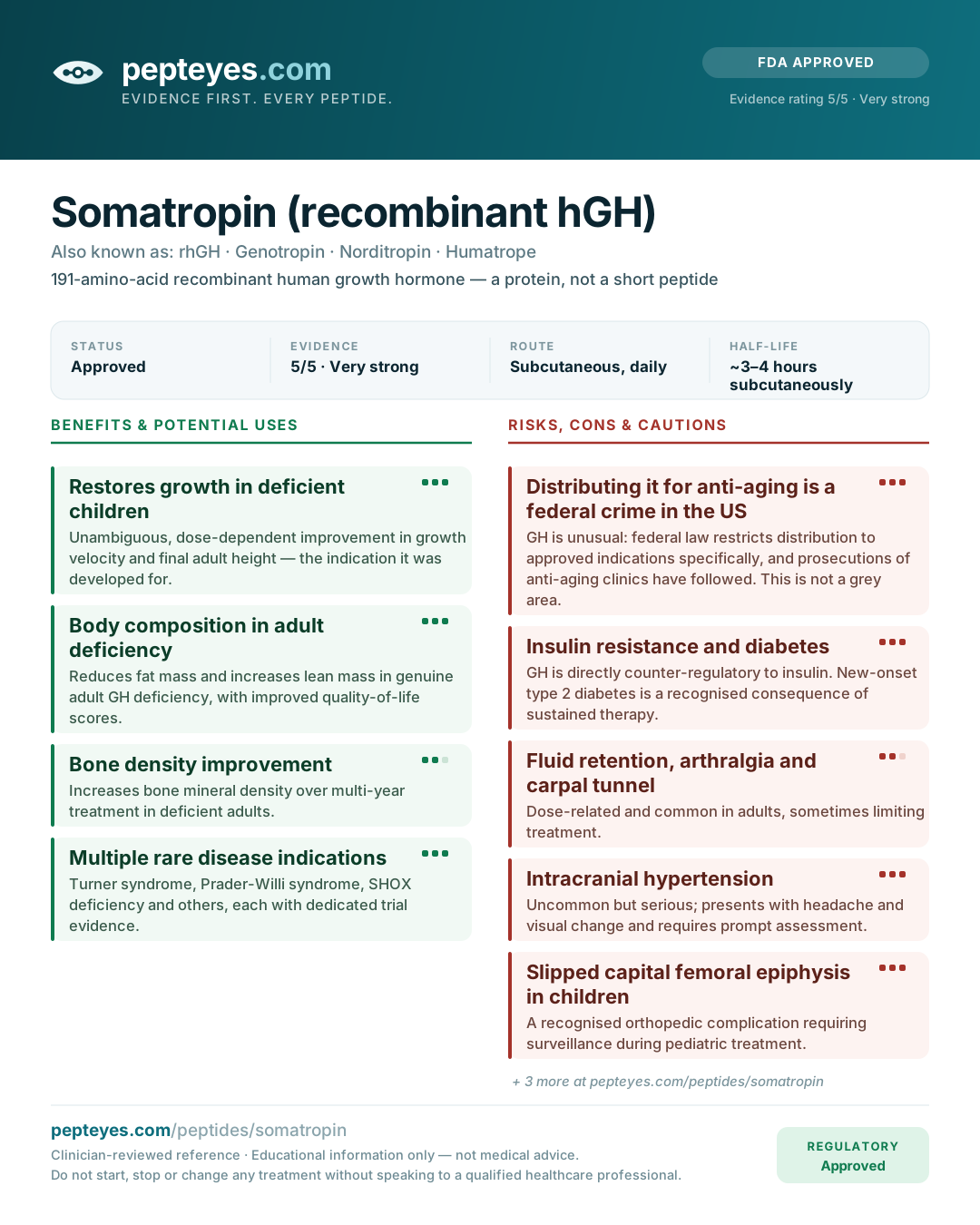
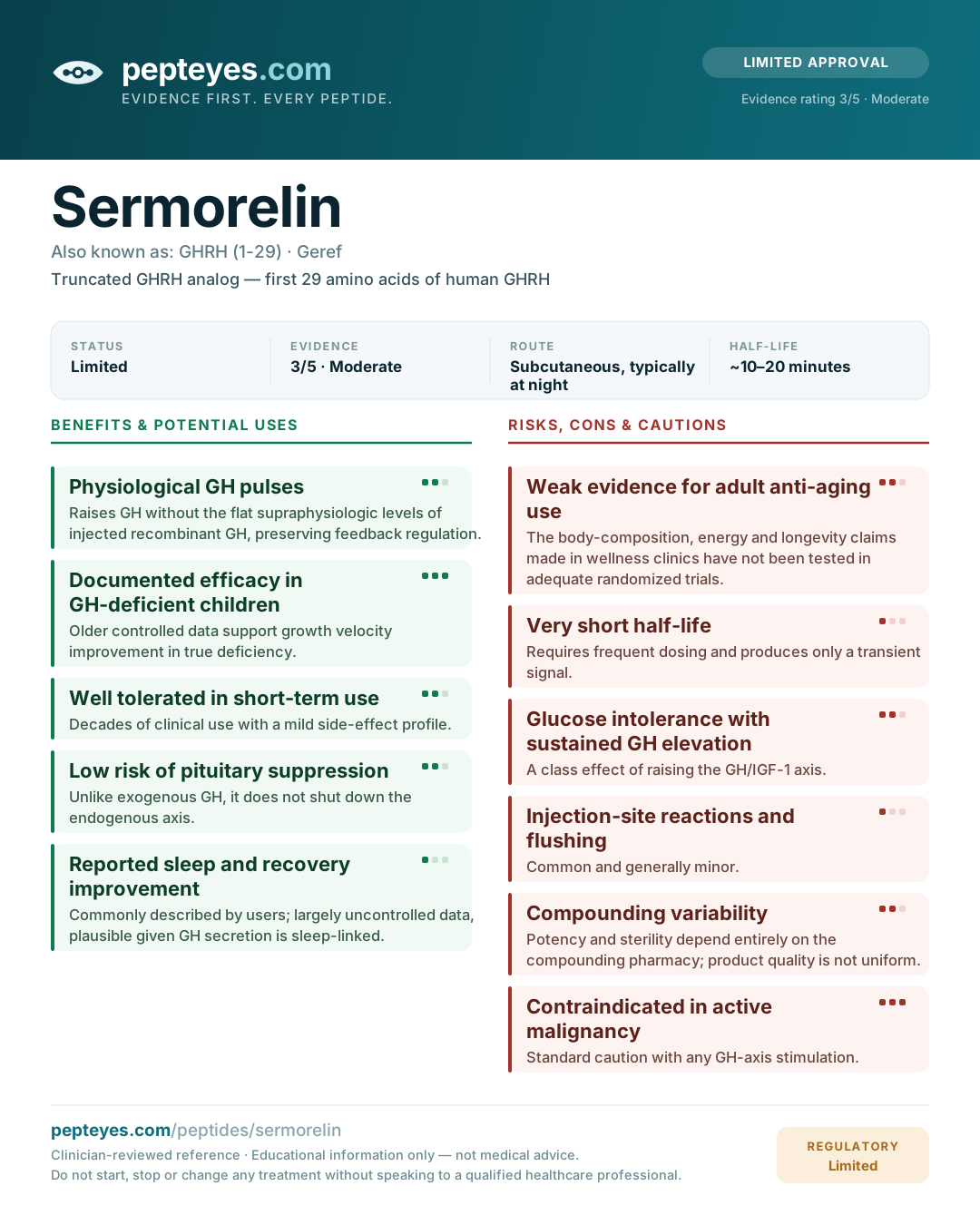
Somatropin (recombinant hGH) vs Sermorelin
Stimulating your own growth hormone versus replacing it outright.
The distinction that mattersSermorelin stimulates your pituitary to release its own GH and preserves feedback control. Somatropin replaces GH directly, suppresses endogenous secretion, and carries the full acromegaly-like side effect profile.
These are not equivalent in evidence Somatropin (recombinant hGH) is rated 5/5 and Sermorelin is rated 3/5 — a gap of 2 levels on our scale. Similar marketing does not mean similar proof.
| Somatropin (recombinant hGH) FDA Approved | Sermorelin Limited Approval | |
|---|---|---|
| Evidence rating |
5/5 Very strong
Evidence rating 5 out of 5: Very strong
|
3/5 Moderate
Evidence rating 3 out of 5: Moderate
|
| Regulatory status | FDA-approved for growth hormone deficiency, Turner syndrome, Prader-Willi syndrome, short bowel syndrome and several other indications. Distribution for anti-aging use is specifically prohibited by US federal law. | Formerly FDA-approved (Geref) as a pediatric GH diagnostic; withdrawn from the US market in 2008. Now supplied through compounding pharmacies. |
| Category | Growth Hormone Axis | Growth Hormone Axis |
| Drug class | 191-amino-acid recombinant human growth hormone — a protein, not a short peptide | Truncated GHRH analog — first 29 amino acids of human GHRH |
| Route | Subcutaneous, daily (or weekly for long-acting analogs) | Subcutaneous, typically at night |
| Half-life | ~3–4 hours subcutaneously | ~10–20 minutes |
| Studied in | Decades of randomized trials across pediatric and adult deficiency states; large post-marketing safety registries such as KIGS and NordiNet. | Historic pediatric GH-deficiency diagnosis and treatment studies; small older trials in adults; extensive uncontrolled clinical use. |
| Who should avoid it |
|
|
| Legal status | Prescription drug. US federal law (21 U.S.C. § 333(e)) prohibits distribution for any use other than approved indications, making anti-aging distribution a criminal offence. | No longer an approved US drug product; lawful access is via patient-specific compounding under a prescription. FDA has scrutinised this category closely. |
Benefits — Somatropin (recombinant hGH)
- Restores growth in deficient children
Unambiguous, dose-dependent improvement in growth velocity and final adult height — the indication it was developed for.
- Body composition in adult deficiency
Reduces fat mass and increases lean mass in genuine adult GH deficiency, with improved quality-of-life scores.
- Bone density improvement
Increases bone mineral density over multi-year treatment in deficient adults.
- Multiple rare disease indications
Turner syndrome, Prader-Willi syndrome, SHOX deficiency and others, each with dedicated trial evidence.
Benefits — Sermorelin
- Physiological GH pulses
Raises GH without the flat supraphysiologic levels of injected recombinant GH, preserving feedback regulation.
- Documented efficacy in GH-deficient children
Older controlled data support growth velocity improvement in true deficiency.
- Well tolerated in short-term use
Decades of clinical use with a mild side-effect profile.
- Low risk of pituitary suppression
Unlike exogenous GH, it does not shut down the endogenous axis.
- Reported sleep and recovery improvement
Commonly described by users; largely uncontrolled data, plausible given GH secretion is sleep-linked.
Risks & cons — Somatropin (recombinant hGH)
- Distributing it for anti-aging is a federal crime in the US
GH is unusual: federal law restricts distribution to approved indications specifically, and prosecutions of anti-aging clinics have followed. This is not a grey area.
- Insulin resistance and diabetes
GH is directly counter-regulatory to insulin. New-onset type 2 diabetes is a recognised consequence of sustained therapy.
- Fluid retention, arthralgia and carpal tunnel
Dose-related and common in adults, sometimes limiting treatment.
- Intracranial hypertension
Uncommon but serious; presents with headache and visual change and requires prompt assessment.
- Slipped capital femoral epiphysis in children
A recognised orthopedic complication requiring surveillance during pediatric treatment.
Risks & cons — Sermorelin
- Weak evidence for adult anti-aging use
The body-composition, energy and longevity claims made in wellness clinics have not been tested in adequate randomized trials.
- Very short half-life
Requires frequent dosing and produces only a transient signal.
- Glucose intolerance with sustained GH elevation
A class effect of raising the GH/IGF-1 axis.
- Injection-site reactions and flushing
Common and generally minor.
- Compounding variability
Potency and sterility depend entirely on the compounding pharmacy; product quality is not uniform.
A comparison is not a recommendation. Neither column is being suggested for you. Which — if either — is appropriate depends on your diagnosis, history and medications, and that is a conversation for a qualified clinician.