Sermorelin vs CJC-1295
Pulsatile versus continuous growth hormone stimulation.
The distinction that mattersCJC-1295 without DAC is functionally a sermorelin analog with a slightly longer half-life. CJC-1295 with DAC lasts about a week and produces continuous rather than pulsatile GH elevation — a fundamentally different exposure pattern. Vendors frequently do not specify which one they are selling.
These are not equivalent in evidence Sermorelin is rated 3/5 and CJC-1295 is rated 2/5 — a gap of 1 level on our scale. Similar marketing does not mean similar proof.
| Sermorelin Limited Approval | CJC-1295 Research Use Only | |
|---|---|---|
| Evidence rating |
3/5 Moderate
Evidence rating 3 out of 5: Moderate
|
2/5 Limited
Evidence rating 2 out of 5: Limited
|
| Regulatory status | Formerly FDA-approved (Geref) as a pediatric GH diagnostic; withdrawn from the US market in 2008. Now supplied through compounding pharmacies. | Investigational; clinical development discontinued. Not approved. Widely sold grey-market. |
| Category | Growth Hormone Axis | Growth Hormone Axis |
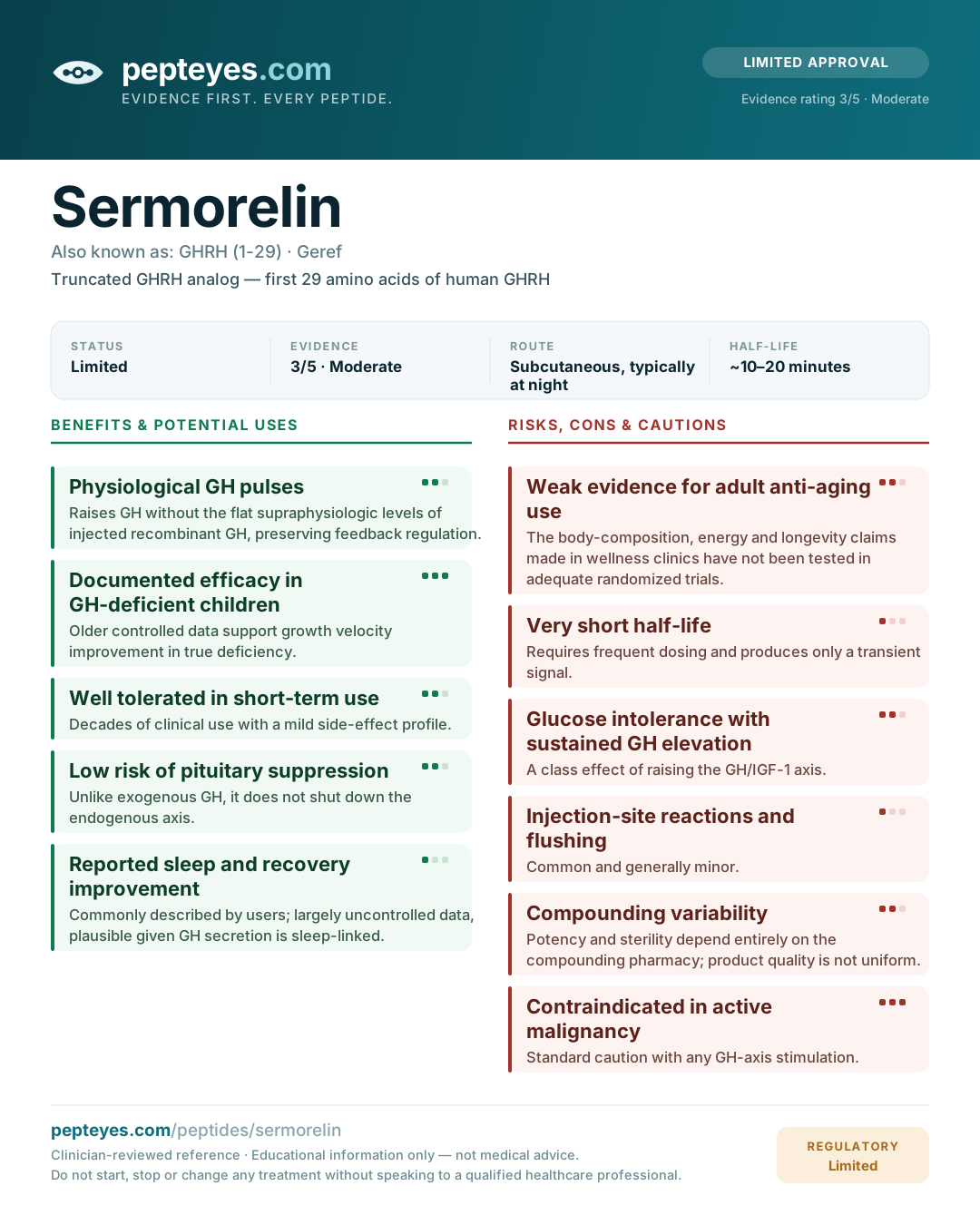
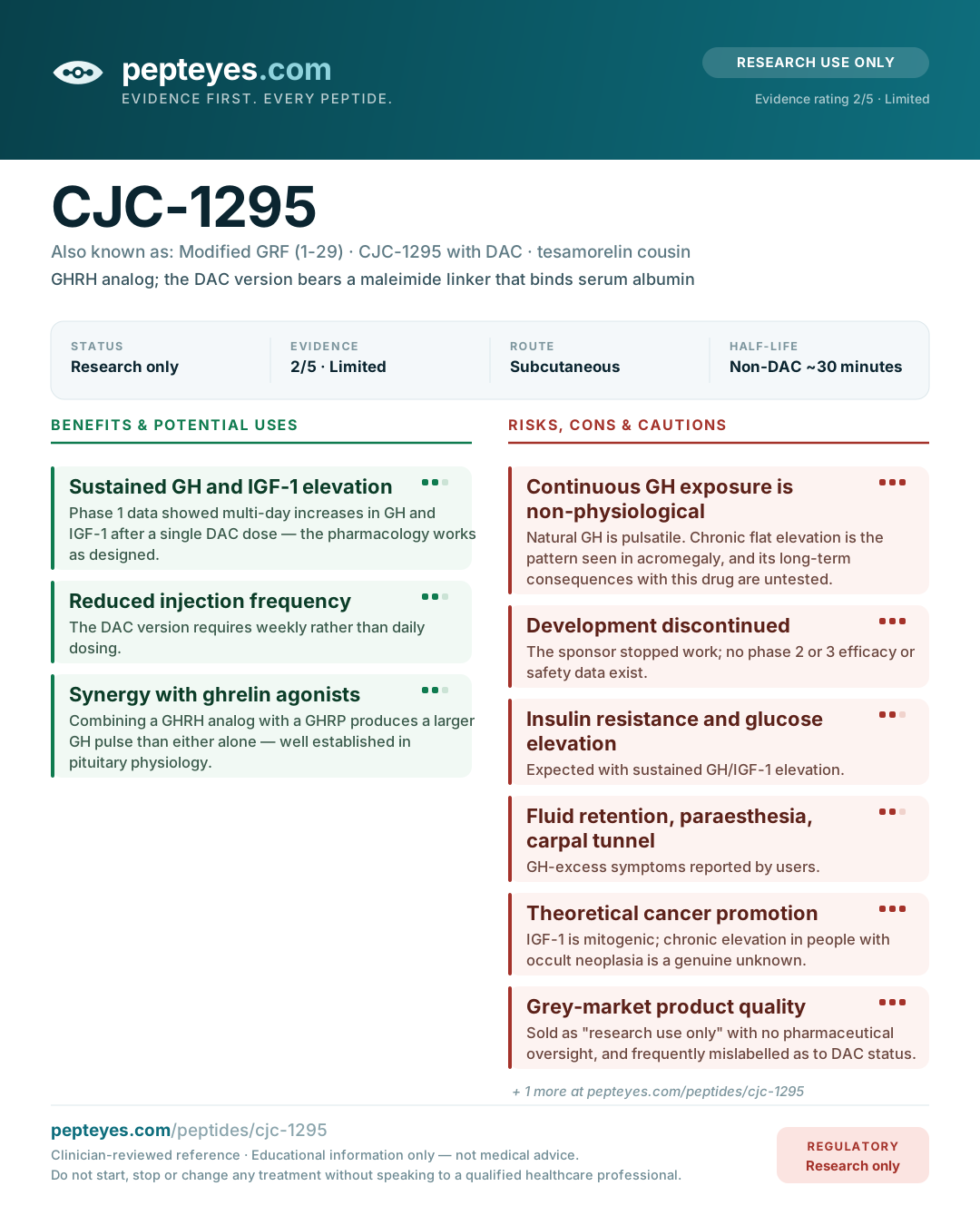
| Drug class | Truncated GHRH analog — first 29 amino acids of human GHRH | GHRH analog; the DAC version bears a maleimide linker that binds serum albumin |
| Route | Subcutaneous, typically at night | Subcutaneous (research) |
| Half-life | ~10–20 minutes | Non-DAC ~30 minutes; with DAC roughly 6–8 days |
| Studied in | Historic pediatric GH-deficiency diagnosis and treatment studies; small older trials in adults; extensive uncontrolled clinical use. | Small phase 1 pharmacokinetic and safety studies in healthy adults; development halted. |
| Who should avoid it |
|
|
| Legal status | No longer an approved US drug product; lawful access is via patient-specific compounding under a prescription. FDA has scrutinised this category closely. | Not approved for human use in the US, EU or UK. Sale for human consumption is unlawful. |
Benefits — Sermorelin
- Physiological GH pulses
Raises GH without the flat supraphysiologic levels of injected recombinant GH, preserving feedback regulation.
- Documented efficacy in GH-deficient children
Older controlled data support growth velocity improvement in true deficiency.
- Well tolerated in short-term use
Decades of clinical use with a mild side-effect profile.
- Low risk of pituitary suppression
Unlike exogenous GH, it does not shut down the endogenous axis.
- Reported sleep and recovery improvement
Commonly described by users; largely uncontrolled data, plausible given GH secretion is sleep-linked.
Benefits — CJC-1295
- Sustained GH and IGF-1 elevation
Phase 1 data showed multi-day increases in GH and IGF-1 after a single DAC dose — the pharmacology works as designed.
- Reduced injection frequency
The DAC version requires weekly rather than daily dosing.
- Synergy with ghrelin agonists
Combining a GHRH analog with a GHRP produces a larger GH pulse than either alone — well established in pituitary physiology.
Risks & cons — Sermorelin
- Weak evidence for adult anti-aging use
The body-composition, energy and longevity claims made in wellness clinics have not been tested in adequate randomized trials.
- Very short half-life
Requires frequent dosing and produces only a transient signal.
- Glucose intolerance with sustained GH elevation
A class effect of raising the GH/IGF-1 axis.
- Injection-site reactions and flushing
Common and generally minor.
- Compounding variability
Potency and sterility depend entirely on the compounding pharmacy; product quality is not uniform.
Risks & cons — CJC-1295
- Continuous GH exposure is non-physiological
Natural GH is pulsatile. Chronic flat elevation is the pattern seen in acromegaly, and its long-term consequences with this drug are untested.
- Development discontinued
The sponsor stopped work; no phase 2 or 3 efficacy or safety data exist.
- Insulin resistance and glucose elevation
Expected with sustained GH/IGF-1 elevation.
- Fluid retention, paraesthesia, carpal tunnel
GH-excess symptoms reported by users.
- Theoretical cancer promotion
IGF-1 is mitogenic; chronic elevation in people with occult neoplasia is a genuine unknown.
A comparison is not a recommendation. Neither column is being suggested for you. Which — if either — is appropriate depends on your diagnosis, history and medications, and that is a conversation for a qualified clinician.