Plecanatide vs Linaclotide
Two guanylate cyclase-C agonists with different pH behaviour.
The distinction that mattersSame receptor and indications. The differences are the parent molecule (uroguanylin vs bacterial enterotoxin), pH-sensitivity, and the pediatric age cut-off in the boxed warning.
These are not equivalent in evidence Linaclotide is rated 5/5 and Plecanatide is rated 4/5 — a gap of 1 level on our scale. Similar marketing does not mean similar proof.
| Plecanatide FDA Approved | Linaclotide FDA Approved | |
|---|---|---|
| Evidence rating |
4/5 Strong
Evidence rating 4 out of 5: Strong
|
5/5 Very strong
Evidence rating 5 out of 5: Very strong
|
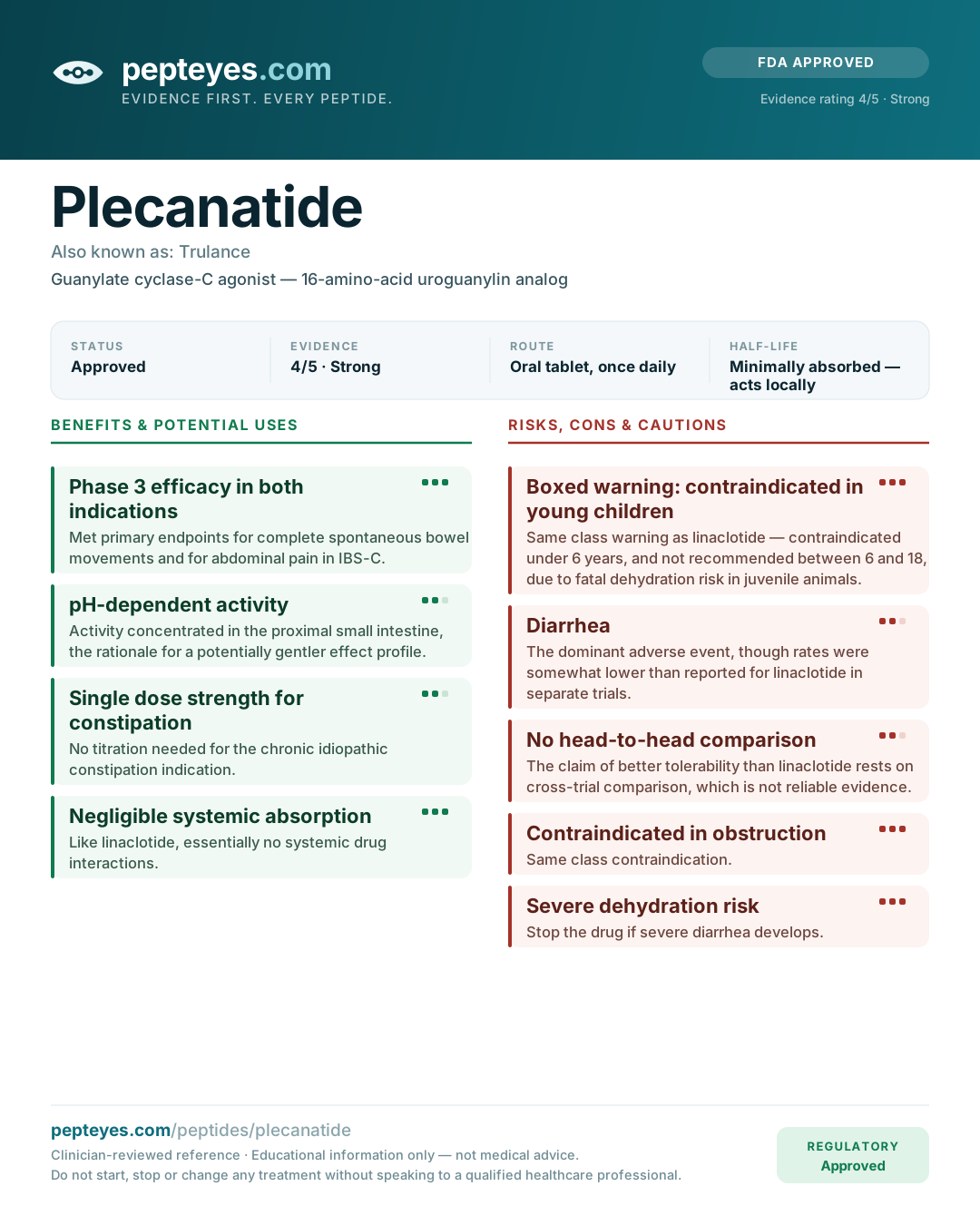
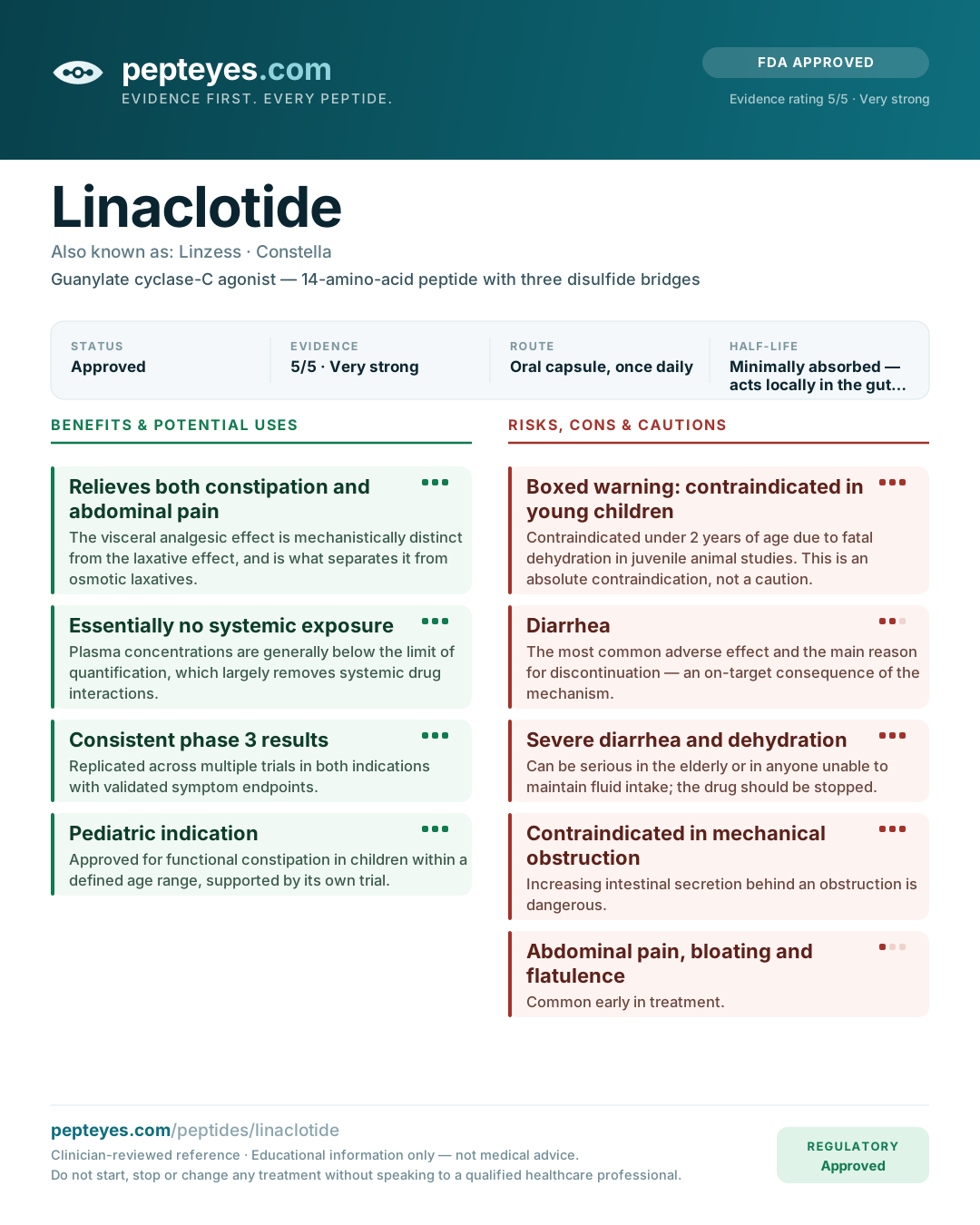
| Regulatory status | FDA-approved for chronic idiopathic constipation and for irritable bowel syndrome with constipation. | FDA-approved for irritable bowel syndrome with constipation and for chronic idiopathic constipation, including a pediatric indication. |
| Category | Gut & Gastrointestinal | Gut & Gastrointestinal |
| Drug class | Guanylate cyclase-C agonist — 16-amino-acid uroguanylin analog | Guanylate cyclase-C agonist — 14-amino-acid peptide with three disulfide bridges |
| Route | Oral tablet, once daily | Oral capsule, once daily |
| Half-life | Minimally absorbed — acts locally | Minimally absorbed — acts locally in the gut lumen |
| Studied in | Phase 3 trials in chronic idiopathic constipation and in IBS-C. | Multiple phase 3 trials in IBS-C and chronic idiopathic constipation; a dedicated pediatric functional constipation program. |
| Who should avoid it |
|
|
| Legal status | Prescription drug. | Prescription drug. |
Benefits — Plecanatide
- Phase 3 efficacy in both indications
Met primary endpoints for complete spontaneous bowel movements and for abdominal pain in IBS-C.
- pH-dependent activity
Activity concentrated in the proximal small intestine, the rationale for a potentially gentler effect profile.
- Single dose strength for constipation
No titration needed for the chronic idiopathic constipation indication.
- Negligible systemic absorption
Like linaclotide, essentially no systemic drug interactions.
Benefits — Linaclotide
- Relieves both constipation and abdominal pain
The visceral analgesic effect is mechanistically distinct from the laxative effect, and is what separates it from osmotic laxatives.
- Essentially no systemic exposure
Plasma concentrations are generally below the limit of quantification, which largely removes systemic drug interactions.
- Consistent phase 3 results
Replicated across multiple trials in both indications with validated symptom endpoints.
- Pediatric indication
Approved for functional constipation in children within a defined age range, supported by its own trial.
Risks & cons — Plecanatide
- Boxed warning: contraindicated in young children
Same class warning as linaclotide — contraindicated under 6 years, and not recommended between 6 and 18, due to fatal dehydration risk in juvenile animals.
- Diarrhea
The dominant adverse event, though rates were somewhat lower than reported for linaclotide in separate trials.
- No head-to-head comparison
The claim of better tolerability than linaclotide rests on cross-trial comparison, which is not reliable evidence.
- Contraindicated in obstruction
Same class contraindication.
- Severe dehydration risk
Stop the drug if severe diarrhea develops.
Risks & cons — Linaclotide
- Boxed warning: contraindicated in young children
Contraindicated under 2 years of age due to fatal dehydration in juvenile animal studies. This is an absolute contraindication, not a caution.
- Diarrhea
The most common adverse effect and the main reason for discontinuation — an on-target consequence of the mechanism.
- Severe diarrhea and dehydration
Can be serious in the elderly or in anyone unable to maintain fluid intake; the drug should be stopped.
- Contraindicated in mechanical obstruction
Increasing intestinal secretion behind an obstruction is dangerous.
- Abdominal pain, bloating and flatulence
Common early in treatment.
A comparison is not a recommendation. Neither column is being suggested for you. Which — if either — is appropriate depends on your diagnosis, history and medications, and that is a conversation for a qualified clinician.