Oxytocin vs Desmopressin
The distinction that mattersOxytocin and vasopressin differ by two amino acids, which is why high-dose oxytocin causes water retention and hyponatremia. Desmopressin is the engineered V2-selective vasopressin analog.
| Oxytocin FDA Approved | Desmopressin FDA Approved | |
|---|---|---|
| Evidence rating |
5/5 Very strong
Evidence rating 5 out of 5: Very strong
|
5/5 Very strong
Evidence rating 5 out of 5: Very strong
|
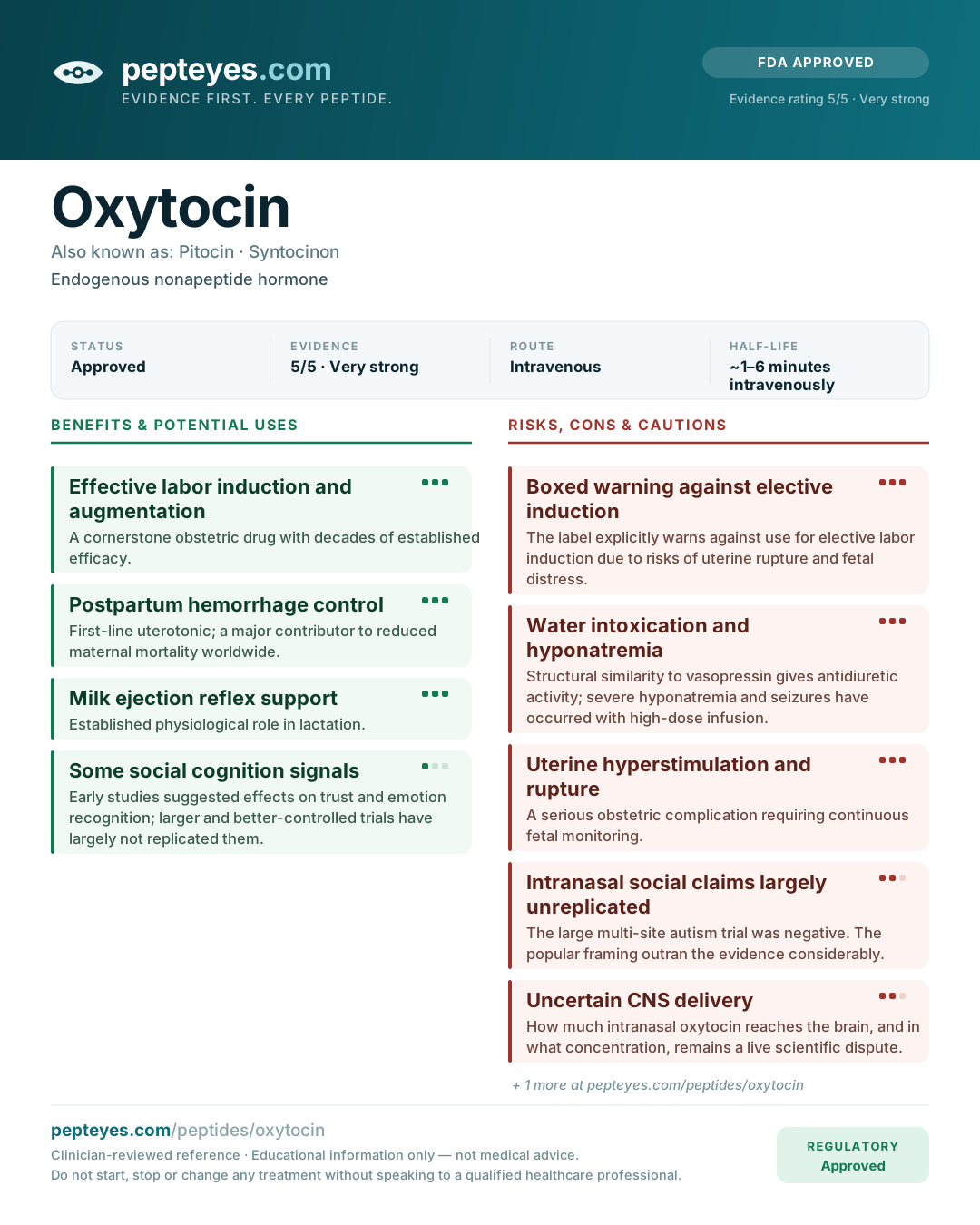
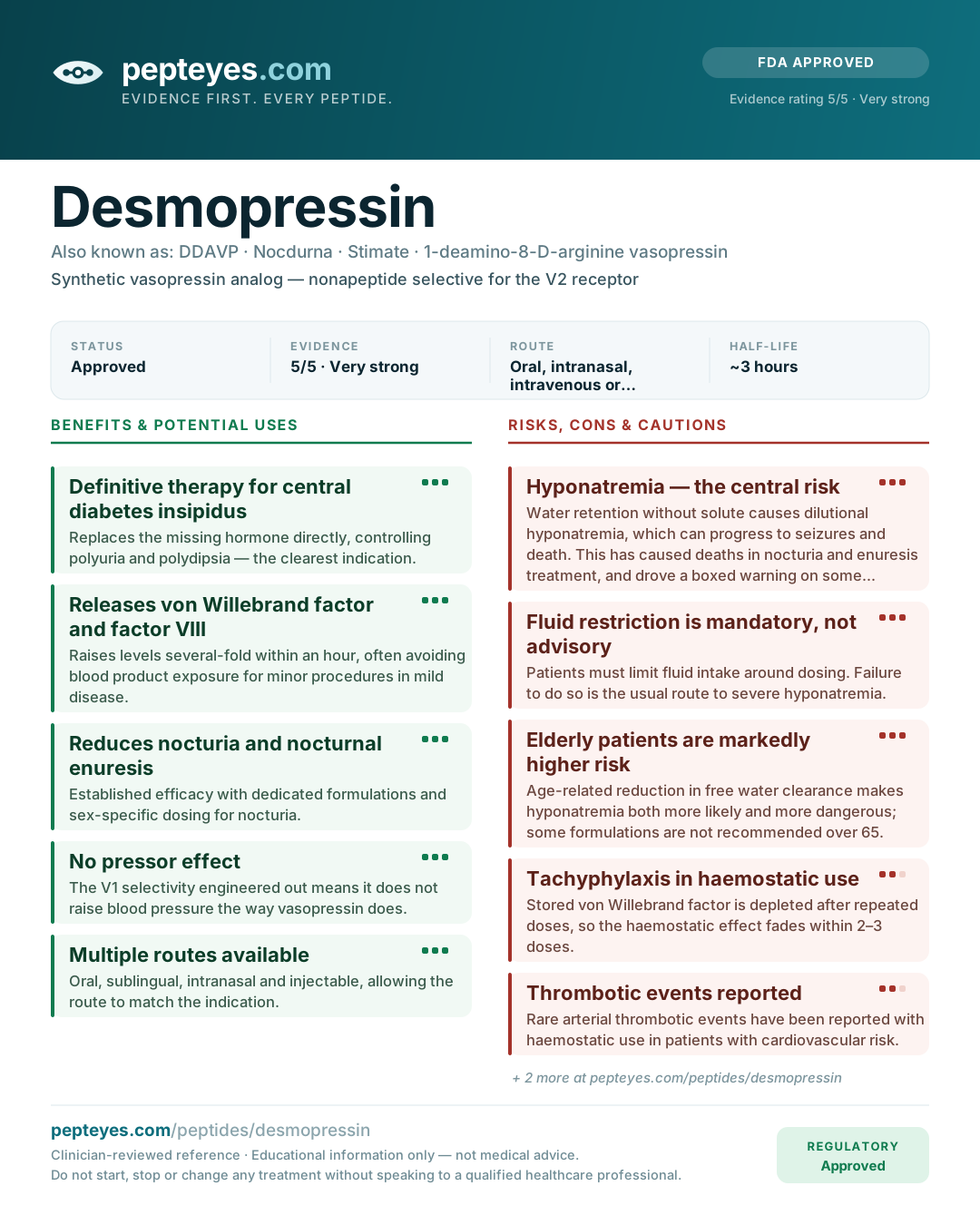
| Regulatory status | FDA-approved for labor induction and postpartum hemorrhage control. Intranasal use for social, psychiatric and relationship indications is off-label and not supported by consistent trial evidence. | FDA-approved for central diabetes insipidus, primary nocturnal enuresis, nocturia, and for bleeding in mild haemophilia A and von Willebrand disease type 1. |
| Category | Hormonal & Reproductive | Cardiac & Vascular |
| Drug class | Endogenous nonapeptide hormone | Synthetic vasopressin analog — nonapeptide selective for the V2 receptor |
| Route | Intravenous (approved obstetric use); intranasal (research and off-label) | Oral, intranasal, intravenous or subcutaneous |
| Half-life | ~1–6 minutes intravenously | ~3 hours (biological effect considerably longer) |
| Studied in | Extensive obstetric use and trials; numerous randomized trials of intranasal oxytocin in autism spectrum disorder, schizophrenia, PTSD and social anxiety, with predominantly negative or inconsistent results. | Decades of trials across diabetes insipidus, nocturia, enuresis, and haemostatic use in mild haemophilia A and von Willebrand disease. |
| Who should avoid it |
|
|
| Legal status | Prescription drug for approved obstetric indications. Compounded intranasal oxytocin is off-label. | Prescription drug across all formulations. |
Benefits — Oxytocin
- Effective labor induction and augmentation
A cornerstone obstetric drug with decades of established efficacy.
- Postpartum hemorrhage control
First-line uterotonic; a major contributor to reduced maternal mortality worldwide.
- Milk ejection reflex support
Established physiological role in lactation.
- Some social cognition signals
Early studies suggested effects on trust and emotion recognition; larger and better-controlled trials have largely not replicated them.
Benefits — Desmopressin
- Definitive therapy for central diabetes insipidus
Replaces the missing hormone directly, controlling polyuria and polydipsia — the clearest indication.
- Releases von Willebrand factor and factor VIII
Raises levels several-fold within an hour, often avoiding blood product exposure for minor procedures in mild disease.
- Reduces nocturia and nocturnal enuresis
Established efficacy with dedicated formulations and sex-specific dosing for nocturia.
- No pressor effect
The V1 selectivity engineered out means it does not raise blood pressure the way vasopressin does.
- Multiple routes available
Oral, sublingual, intranasal and injectable, allowing the route to match the indication.
Risks & cons — Oxytocin
- Boxed warning against elective induction
The label explicitly warns against use for elective labor induction due to risks of uterine rupture and fetal distress.
- Water intoxication and hyponatremia
Structural similarity to vasopressin gives antidiuretic activity; severe hyponatremia and seizures have occurred with high-dose infusion.
- Uterine hyperstimulation and rupture
A serious obstetric complication requiring continuous fetal monitoring.
- Intranasal social claims largely unreplicated
The large multi-site autism trial was negative. The popular framing outran the evidence considerably.
- Uncertain CNS delivery
How much intranasal oxytocin reaches the brain, and in what concentration, remains a live scientific dispute.
Risks & cons — Desmopressin
- Hyponatremia — the central risk
Water retention without solute causes dilutional hyponatremia, which can progress to seizures and death. This has caused deaths in nocturia and enuresis treatment, and drove a boxed warning on some formulations.
- Fluid restriction is mandatory, not advisory
Patients must limit fluid intake around dosing. Failure to do so is the usual route to severe hyponatremia.
- Elderly patients are markedly higher risk
Age-related reduction in free water clearance makes hyponatremia both more likely and more dangerous; some formulations are not recommended over 65.
- Tachyphylaxis in haemostatic use
Stored von Willebrand factor is depleted after repeated doses, so the haemostatic effect fades within 2–3 doses.
- Thrombotic events reported
Rare arterial thrombotic events have been reported with haemostatic use in patients with cardiovascular risk.
A comparison is not a recommendation. Neither column is being suggested for you. Which — if either — is appropriate depends on your diagnosis, history and medications, and that is a conversation for a qualified clinician.