MOTS-c vs Elamipretide (SS-31)
Two mitochondrial peptides at opposite ends of the evidence scale.
The distinction that mattersBoth marketed as mitochondrial peptides. Elamipretide completed multiple phase 3 trials and holds an approval for one ultra-rare disease; MOTS-c has never been given to humans in a controlled trial.
These are not equivalent in evidence Elamipretide (SS-31) is rated 4/5 and MOTS-c is rated 1/5 — a gap of 3 levels on our scale. Similar marketing does not mean similar proof.
| MOTS-c Research Use Only | Elamipretide (SS-31) Limited Approval | |
|---|---|---|
| Evidence rating |
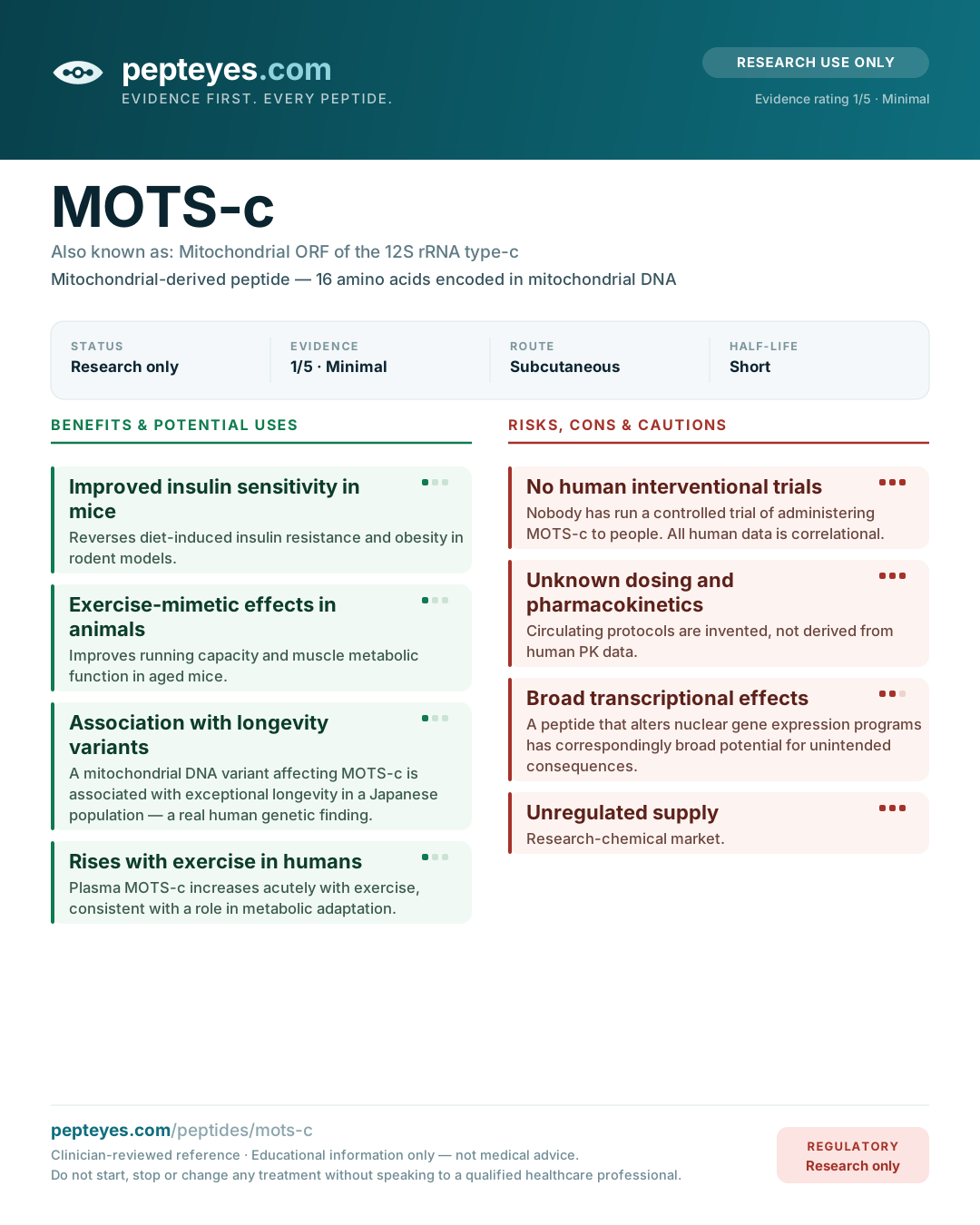
1/5 Minimal
Evidence rating 1 out of 5: Minimal
|
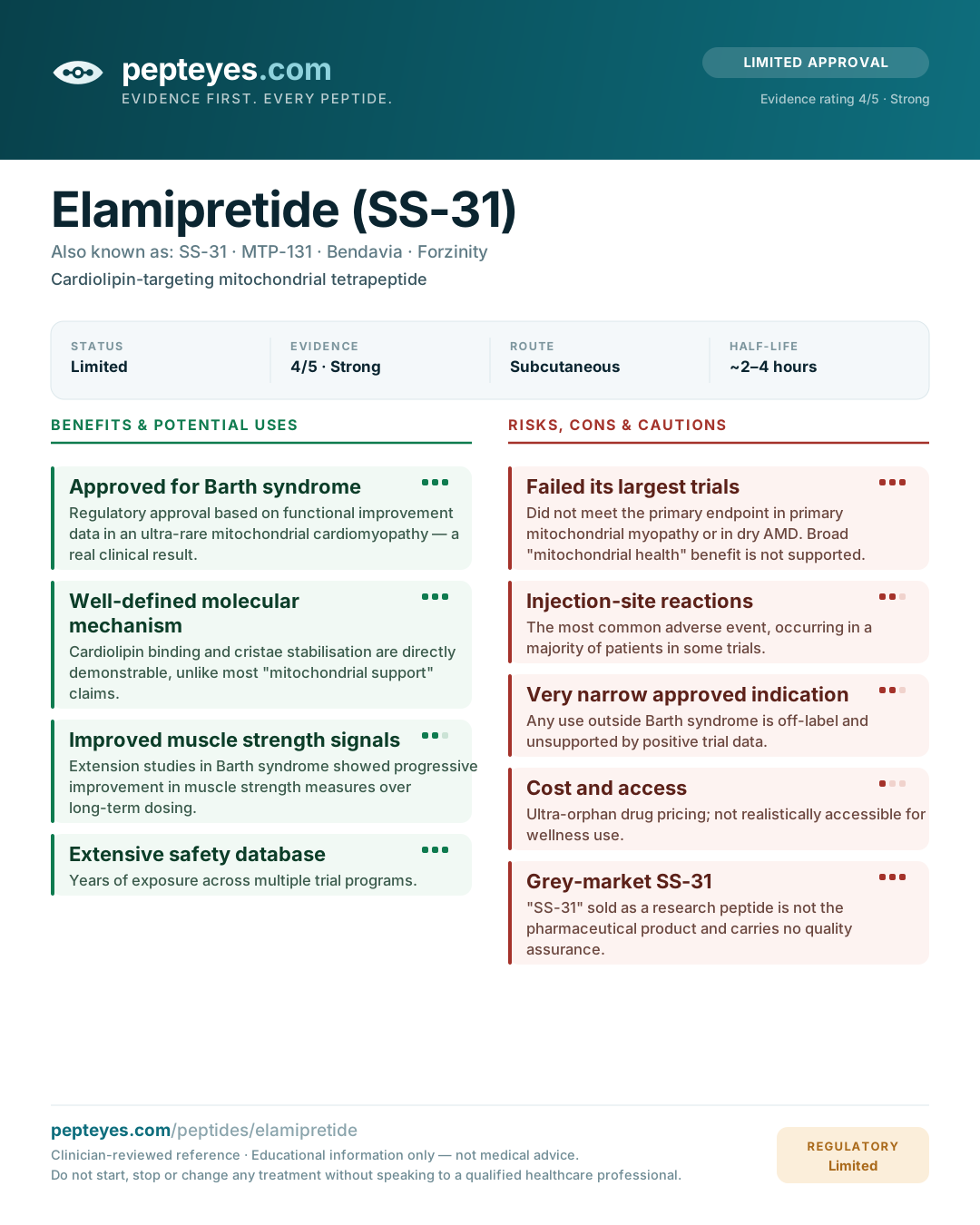
4/5 Strong
Evidence rating 4 out of 5: Strong
|
| Regulatory status | Not approved. Active academic research subject; no completed human efficacy trials. | Approved in the US for Barth syndrome, an ultra-rare mitochondrial disorder. Trials in primary mitochondrial myopathy and dry AMD did not meet primary endpoints. |
| Category | Longevity & Mitochondrial | Longevity & Mitochondrial |
| Drug class | Mitochondrial-derived peptide — 16 amino acids encoded in mitochondrial DNA | Cardiolipin-targeting mitochondrial tetrapeptide |
| Route | Subcutaneous (research) | Subcutaneous |
| Half-life | Short; not well characterised in humans | ~2–4 hours |
| Studied in | Mouse metabolic and exercise studies; human observational work correlating plasma MOTS-c with metabolic health, exercise and longevity phenotypes. | Phase 3 trials in primary mitochondrial myopathy (MMPOWER-3), Barth syndrome (TAZPOWER and extension), dry age-related macular degeneration, and heart failure. |
| Who should avoid it |
|
|
| Legal status | Not approved for human use. | Approved for a single ultra-rare indication. Research-grade "SS-31" is a separate, unapproved product. |
Benefits — MOTS-c
- Improved insulin sensitivity in mice
Reverses diet-induced insulin resistance and obesity in rodent models.
- Exercise-mimetic effects in animals
Improves running capacity and muscle metabolic function in aged mice.
- Association with longevity variants
A mitochondrial DNA variant affecting MOTS-c is associated with exceptional longevity in a Japanese population — a real human genetic finding.
- Rises with exercise in humans
Plasma MOTS-c increases acutely with exercise, consistent with a role in metabolic adaptation.
Benefits — Elamipretide (SS-31)
- Approved for Barth syndrome
Regulatory approval based on functional improvement data in an ultra-rare mitochondrial cardiomyopathy — a real clinical result.
- Well-defined molecular mechanism
Cardiolipin binding and cristae stabilisation are directly demonstrable, unlike most "mitochondrial support" claims.
- Improved muscle strength signals
Extension studies in Barth syndrome showed progressive improvement in muscle strength measures over long-term dosing.
- Extensive safety database
Years of exposure across multiple trial programs.
Risks & cons — MOTS-c
- No human interventional trials
Nobody has run a controlled trial of administering MOTS-c to people. All human data is correlational.
- Unknown dosing and pharmacokinetics
Circulating protocols are invented, not derived from human PK data.
- Broad transcriptional effects
A peptide that alters nuclear gene expression programs has correspondingly broad potential for unintended consequences.
- Unregulated supply
Research-chemical market.
Risks & cons — Elamipretide (SS-31)
- Failed its largest trials
Did not meet the primary endpoint in primary mitochondrial myopathy or in dry AMD. Broad "mitochondrial health" benefit is not supported.
- Injection-site reactions
The most common adverse event, occurring in a majority of patients in some trials.
- Very narrow approved indication
Any use outside Barth syndrome is off-label and unsupported by positive trial data.
- Cost and access
Ultra-orphan drug pricing; not realistically accessible for wellness use.
- Grey-market SS-31
"SS-31" sold as a research peptide is not the pharmaceutical product and carries no quality assurance.
A comparison is not a recommendation. Neither column is being suggested for you. Which — if either — is appropriate depends on your diagnosis, history and medications, and that is a conversation for a qualified clinician.